

We Meet in the Intervals
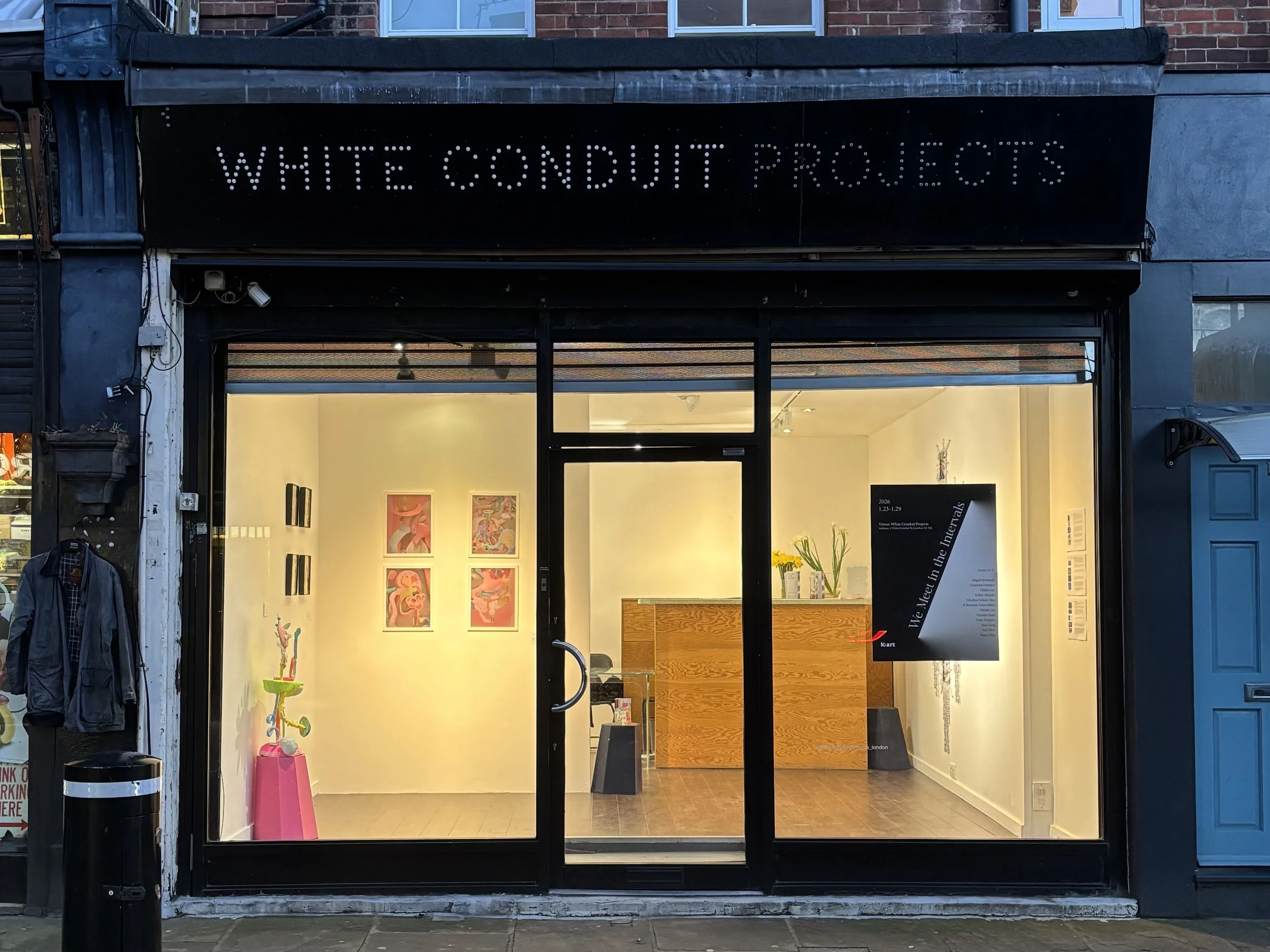
Amidst an era defined by speed, categorization, and the pressure for clear narratives, We Meet in the Intervals offers a space for reflection. This exhibition proposes that meaningful change often unfolds not inside fixed structures, but within the overlooked, fertile gaps between them. Bringing together eleven international artists across various mediums, the show maps the interstitial through three interconnected lenses: architecture and time, body and memory, and energy and materiality. Together, the works reimagine the pause, the gap, and the threshold as active sites—places where perception shifts, identity is remade, and new meanings gradually take shape.
The most immediate encounter with the interval is spatial and temporal, found in the transitional zones that frame modern existence—the corridors, stairwells, commutes, and waiting periods that connect one point of purpose to another. Within this realm, the exhibition presents a dialectic between detached observation and intimate immersion, between the alienation of non-places and their poetic reclamation.
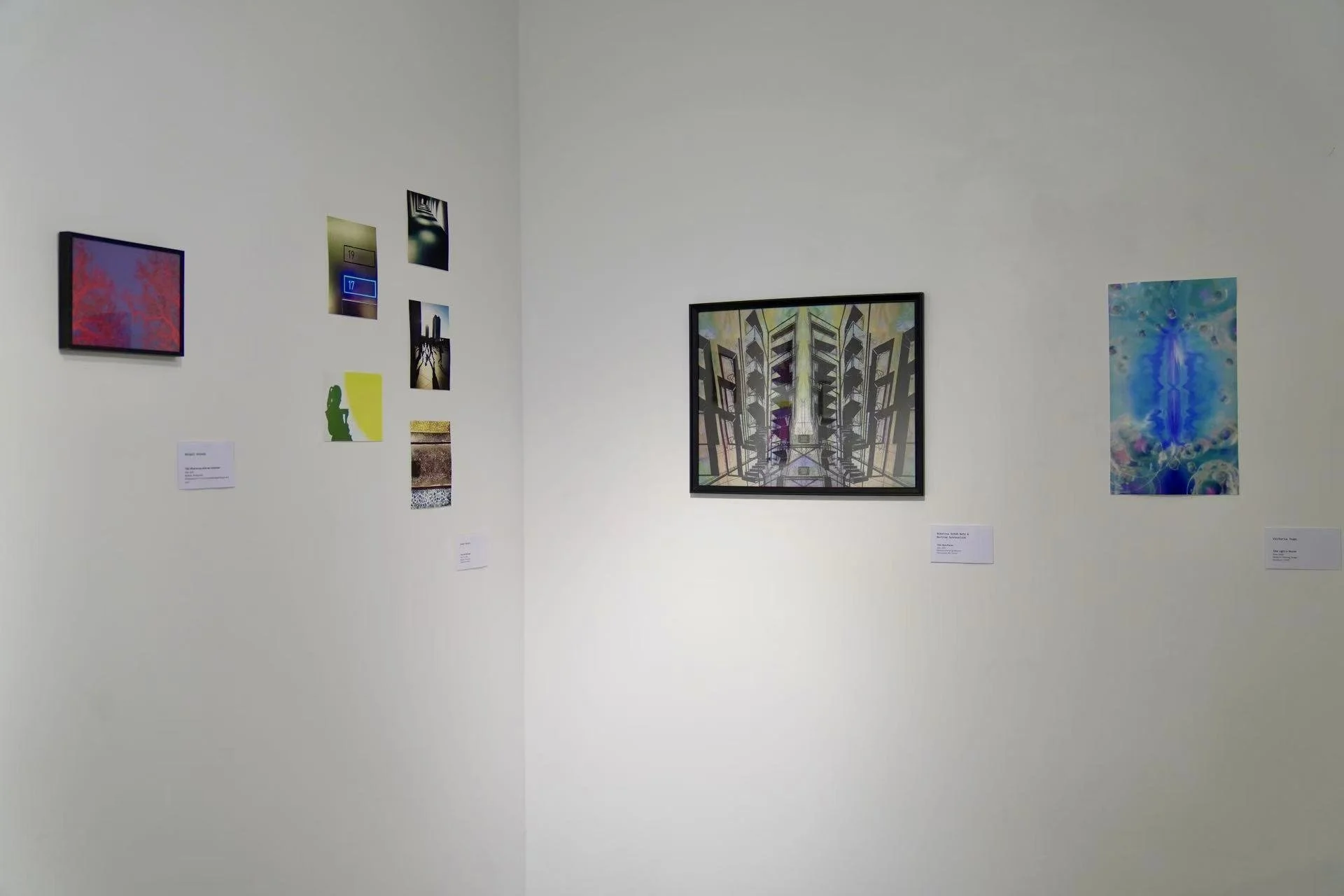
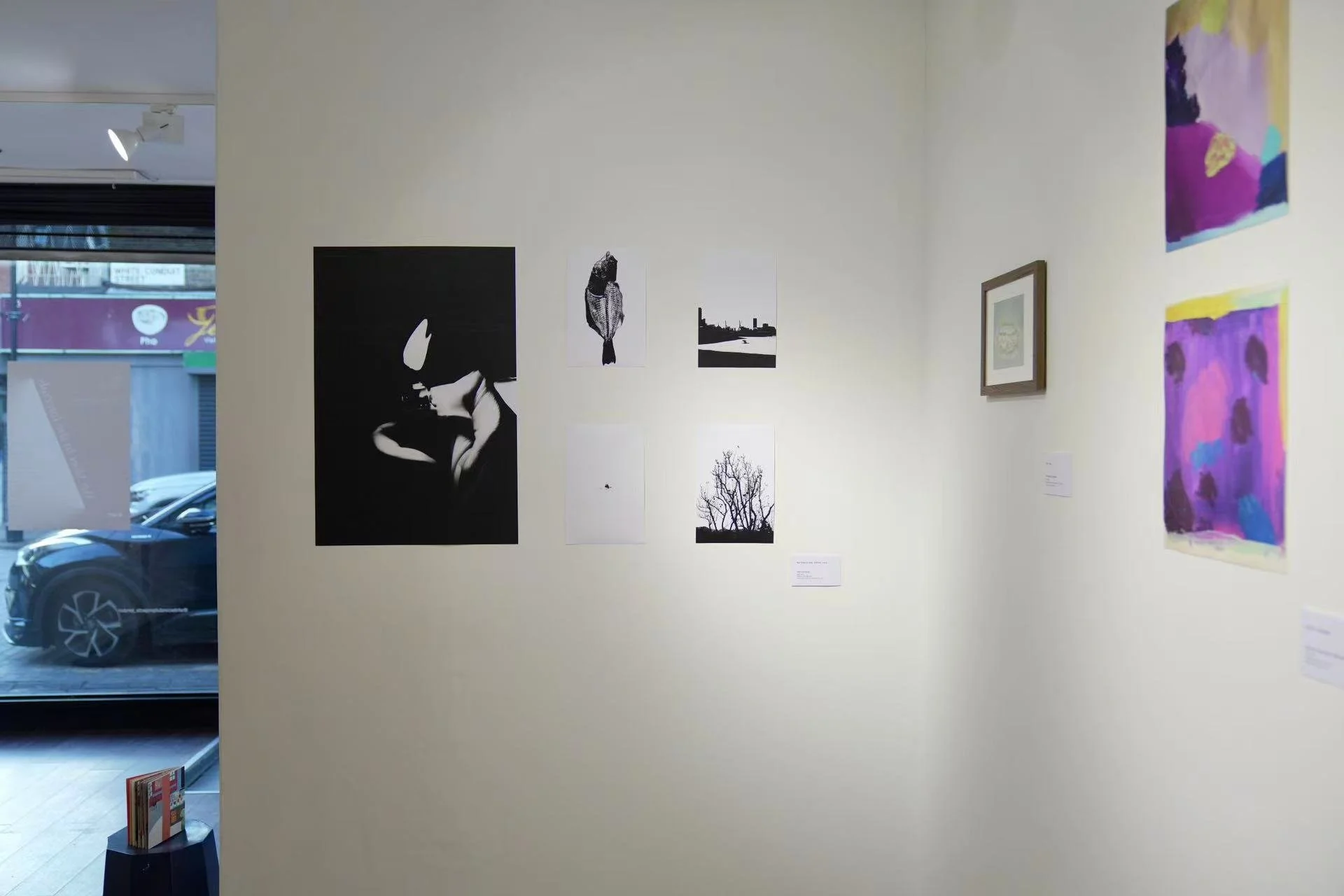
Artists Karlkanitrunk, Nikolina Schuh Netz, and Bertram Schrecklich adopt a methodical approach to the built environment. Lee’s photographic practice performs a deliberate act of subtraction, surgically removing narrative context and environmental noise to isolate architectural fragments. The resulting images are suspended tableaux of pure form, line, and surface, forcing the viewer into a decelerated, contemplative gaze. Her work constructs the interval as a deliberate vacuum for aesthetic and phenomenological focus. Similarly, Netz and Schrecklich’s digitally conceived Non-Places renders transitional architecture—staircases, platforms, passages—as mirrored, labyrinthine compositions devoid of clear entry, exit, or function. These disorienting spaces make the very condition of transition palpable, offering a potent critique of functionalist design by highlighting its purposeless yet omnipresent byproducts. While formally compelling and conceptually sharp, a potential critique of their shared approach lies in its potential to aestheticize alienation. The cool, precise detachment of their work risks presenting spatial and social disconnection as an object of purely formal beauty, potentially neutralizing its critical edge.
This architectural austerity is powerfully counterbalanced by artists who inject the temporal gaps of everyday life with personal memory, melancholy, and poetic resonance. Keiko Ohnishi’s photographic series operates as a quiet act of reclamation. Snatching fleeting moments from an office worker’s commute—a play of light on a wet pavement, a shadow crossing a wall—she transforms mundane interstices into visual haikus. These works suggest that personal awareness and beauty can colonize the mechanical, imposed intervals of capitalist routine. On a more explicitly autobiographical note, Xiao Yang’s poignant illustration internalizes the spatial interval. The recurring image of an old, worn white van—the vehicle of frequent childhood relocations—becomes a metaphor for the self as a mobile, perpetual interval. The dominant, moody green tone evokes a sense of being forever en route, where belonging is defined not by a fixed destination but by the melancholic, continuous state of movement itself. Together, Ohnishi and Yang reclaim the interstitial spaces of daily life, framing them not as dead time or empty space, but as reservoirs of subjective emotion, memory, and quiet reflection.
If architecture and routine define external intervals, the second thematic cluster explores the internal ones—the gaps within and between memory, identity, and the lived experience of the body. Here, the self is presented not as a stable entity, but as a porous, contested site of continuous negotiation and becoming.
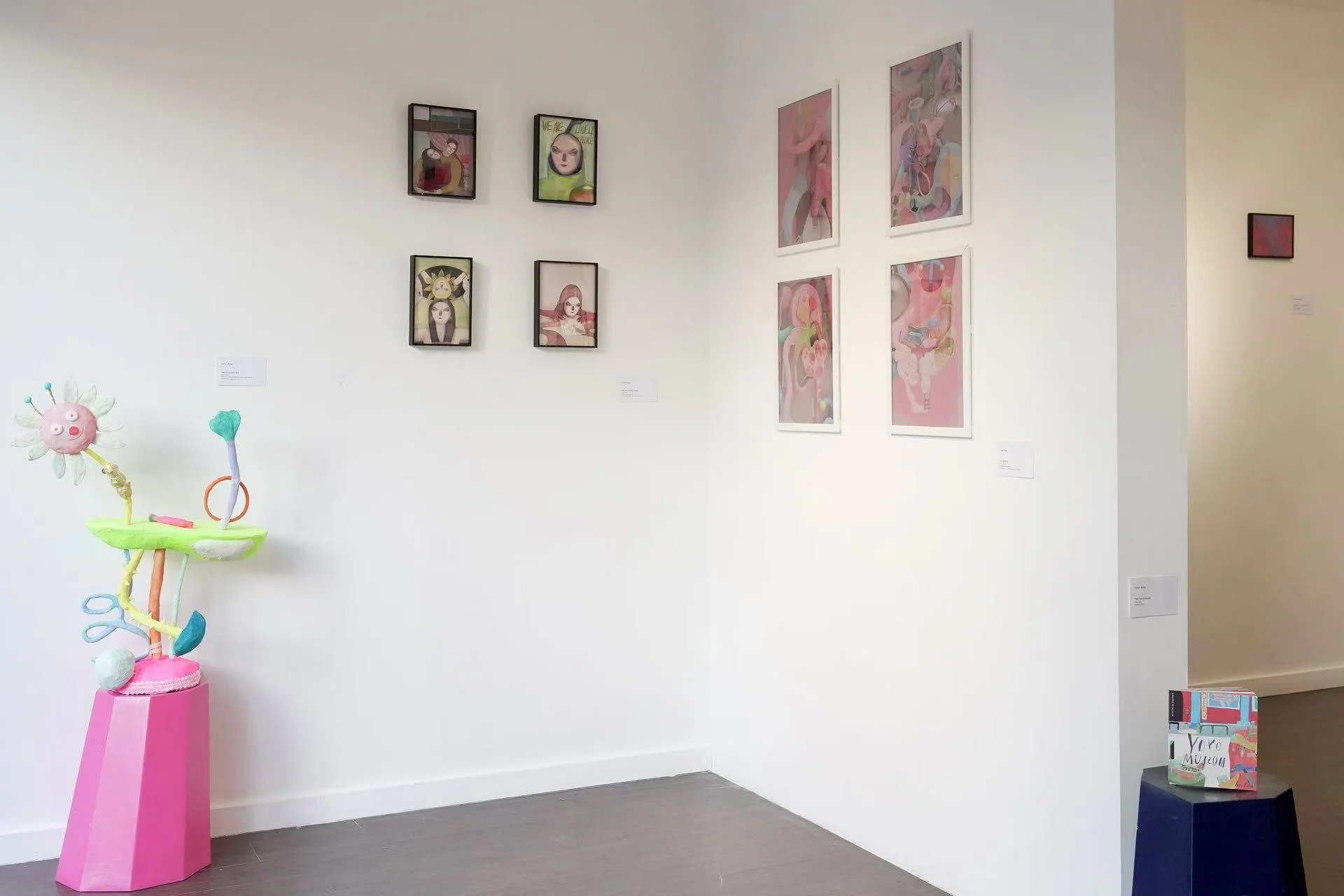
The female body, in particular, is examined as a primary terrain of interstitial struggle. Yun Wen’s feminist video and photographic series Light That Candle employs stark, symbolic imagery—specifically, burning and unburned candles within abstracted bodily spaces—to create an archive of silenced experiences. The work viscerally charts the negotiation between biological stages (puberty, development, reproduction) and the pressures of social discipline. Its power derives from its urgent, non-verbal evocation of pain, endurance, and potential resistance. However, one might note that its symbolic language, while effective, draws upon a well-established feminist lexicon that occasionally borders on the archetypal, leaving less room for the messier, more contradictory textures of individual experience.
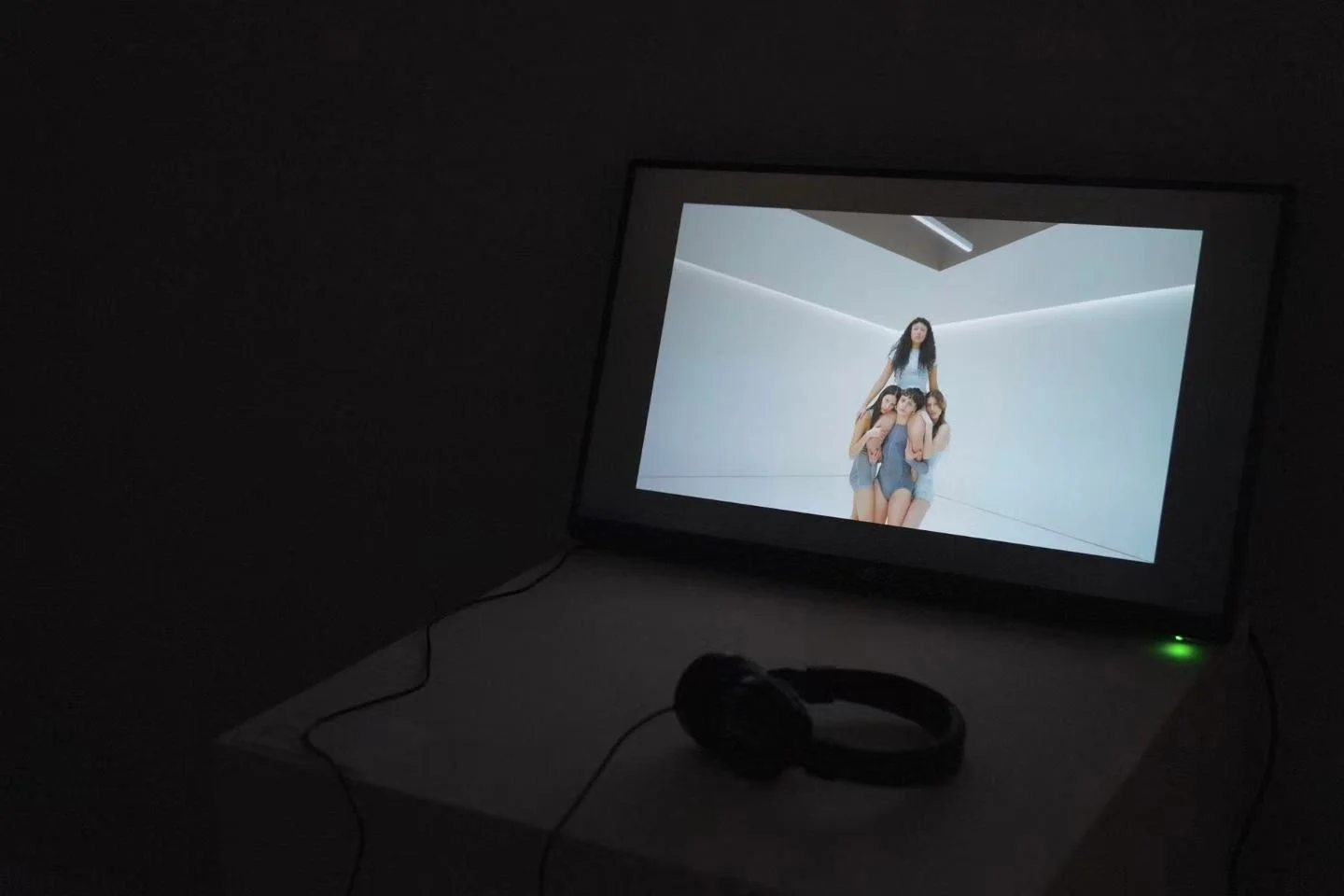
Caterina Danzico’s video work AMAMI offers a contrasting, fluid model of embodied identity. Inspired by Jungian archetypes of goddess energies, it frames the self as a performative, relational process occurring across the permeable threshold of the skin. The work emphasizes touch, exchange, and co-presence, championing a multifaceted, paradoxical identity that exists fundamentally “in relation to others.” Danzico’s interval is connective and generative, a membrane through which the self is constantly reshaped through encounter.
Vitoria Yuan’s work draws upon the imagery of amniotic fluid and the inner sea. Its blue, semi-transparent membrane references cellular boundaries, the womb, and the ocean. The central newborn form embodies hope and emergent life, contained within a softened contour reminiscent of the female body, evoking the protective forces of both mother and sea. By merging the microscopic with the mythic, it reimagines the body as a fluid cosmos where protection, permeability, and renewal coexist—a quiet reflection on feminine care, origin, and the soft architectures that sustain life.
The exhibition further extends this investigation into the cognitive and mnemonic realms. Abigail Kennedy’s photographs use the intrusive, emotional charge of red light projected onto natural landscapes to visualize how potent feelings like anger or pain distort recollection. Her work insightfully posits memory not as a faithful archival record, but as an active, generative—and inherently unreliable—gap between lived experience and the stories we later tell ourselves. Complementing this, Viisti Dickens’ vibrant, cascading compositions capture the frenetic quality of contemporary consciousness. Her work embodies the cognitive interval as a state of hyper-stimulated becoming, where digital scrolling, daydreams, cultural identity, and daily obligations collide in a continuous, colorful stream. Dickens simultaneously critiques the saturation of our mental interstices by digital and social demands, while also celebrating their chaotic, creative potential.
The exhibition’s most speculative and materially engaged inquiries culminate in a compelling critical dialogue between the digital/speculative and the tactile/material, primarily staged through the works of Shenlu Liu and Yuna Ding. This contrast forms the conceptual core of the show’s investigation into the limits of perception and form.
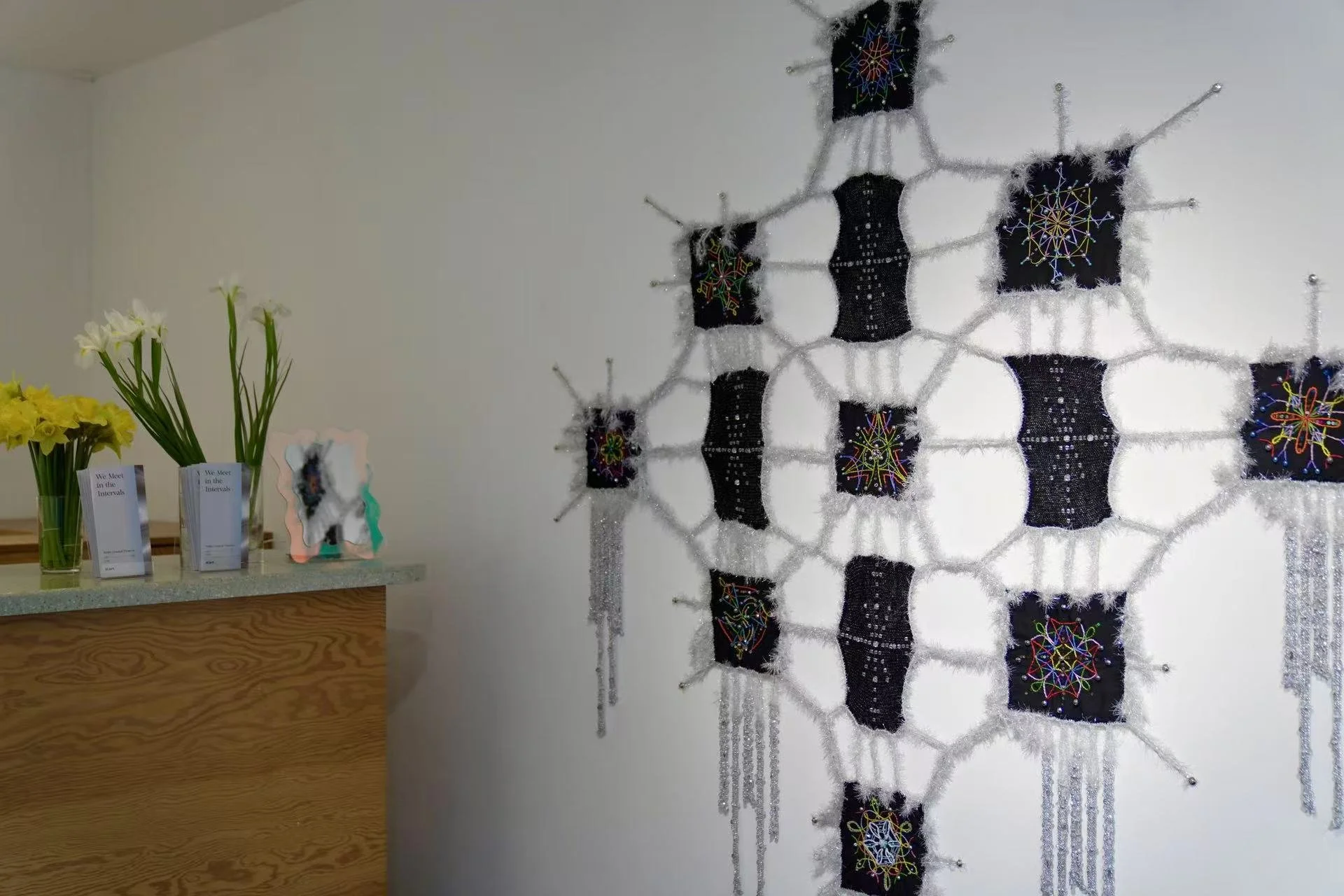
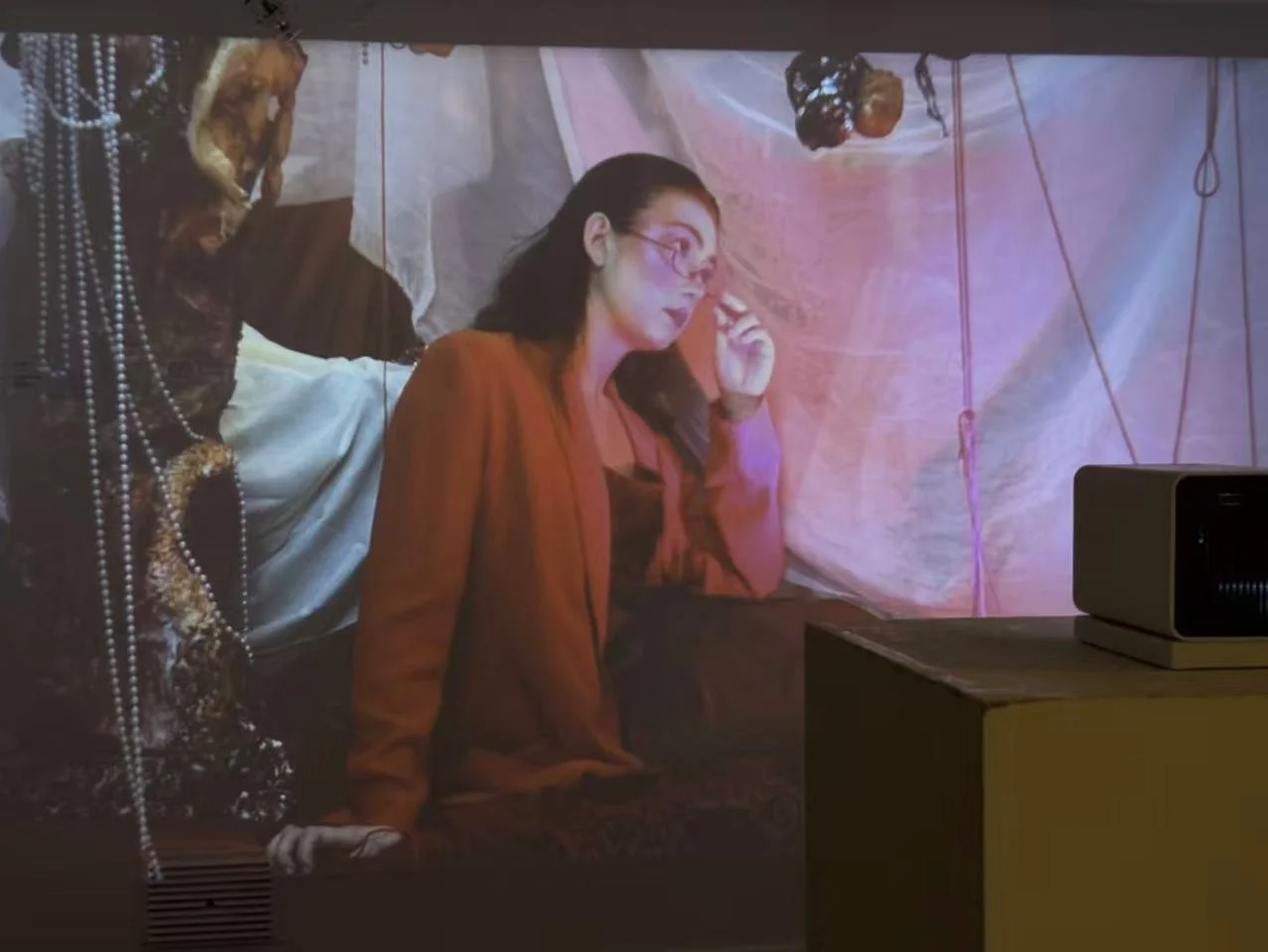
Shenlu Liu’s textile art Woven Sigils turns to the artisanal to map the invisible. Through embroidery and beading on black fabric, Liu channels crystal energy into thirteen “sigils”—luminous nodes physically interconnected by silver veins acting as conduits. Augmented by flowing water and hanging bells, the work transforms visual topography into a resonant, multi-sensory field, proposing the artwork as an active “crystal network” capable of harmonizing with the viewer.
However, a critical tension arises in this shift from representation to enactment. By explicitly aiming for “purification” and healing, the piece risks blurring the line between art installation and functional altar. This challenges the viewer: while the work dazzles materially, its full activation demands a suspension of disbelief regarding these esoteric mechanics, potentially leaving skeptical observers to appreciate the craft while remaining detached from the intended spiritual transmission.
Building upon this material inquiry, Yuna Ding's practice extends into specific explorations of the body and relational thresholds. Her series We are lovely people offers a tender yet incisive look at intimacy as a space where identities blur and reconfigure. Drawing from her experience as a mother, overlapping figures and mediated boundaries examine connection as constantly tested and reformed. In a collaborative project for her son's fifth birthday, she transforms his whimsical drawings of airplanes into a shared artistic language, preserving a self-centered yet magical childhood perspective. Conversely, the digital project WARMENG constructs a virtual, internal world. Using 3D illustration and sound, it visualizes the interaction between emotions, hormones, and physiology, metaphorically mapping "happy hormones" to reveal the hidden energy operating within the body's structure. Together, these works traverse the interstitial spaces of relationship, memory, and internal sensation, grounding ethereal concepts in personal and bodily experience.
We Meet in the Intervals succeeds in constructing a multifaceted, compelling argument for the critical importance of the in-between. It guides us on a coherent journey from the external spaces that structure our movements, through the internal labyrinths of memory and identity-formation, to the fundamental, speculative thresholds between energy and matter.
The exhibition consistently posits that within these gaps—whether imposed by systems, lived through the body, or contemplated at the limits of perception—lies not passive emptiness, but a space of active potential: for questioning fixed categories, for becoming otherwise, and for imagining new forms of connection that acknowledge fracture and ambiguity.
The final, resonant dialogue between Shenlu Liu’s ethereal, system-visualizing projections and Yuna Ding’s deeply embodied yet ambiguously mediated forms captures a defining tension of our contemporary moment. It reflects a dual yearning: to map and comprehend the vast, often invisible systems (digital, energetic, social) that surround and permeate us, and simultaneously, to anchor ourselves in the tangible, imperfect, and sensually rich evidence of embodied experience and the material world. The interval, as this thoughtful and provocative exhibition convincingly demonstrates, is the very site where this fraught, necessary, and endlessly generative negotiation takes place.
Edited by Alicia Puig
Published January 28, 2026.