Touch, Wonder, and Creative Courage: A Conversation with Leisa Rich
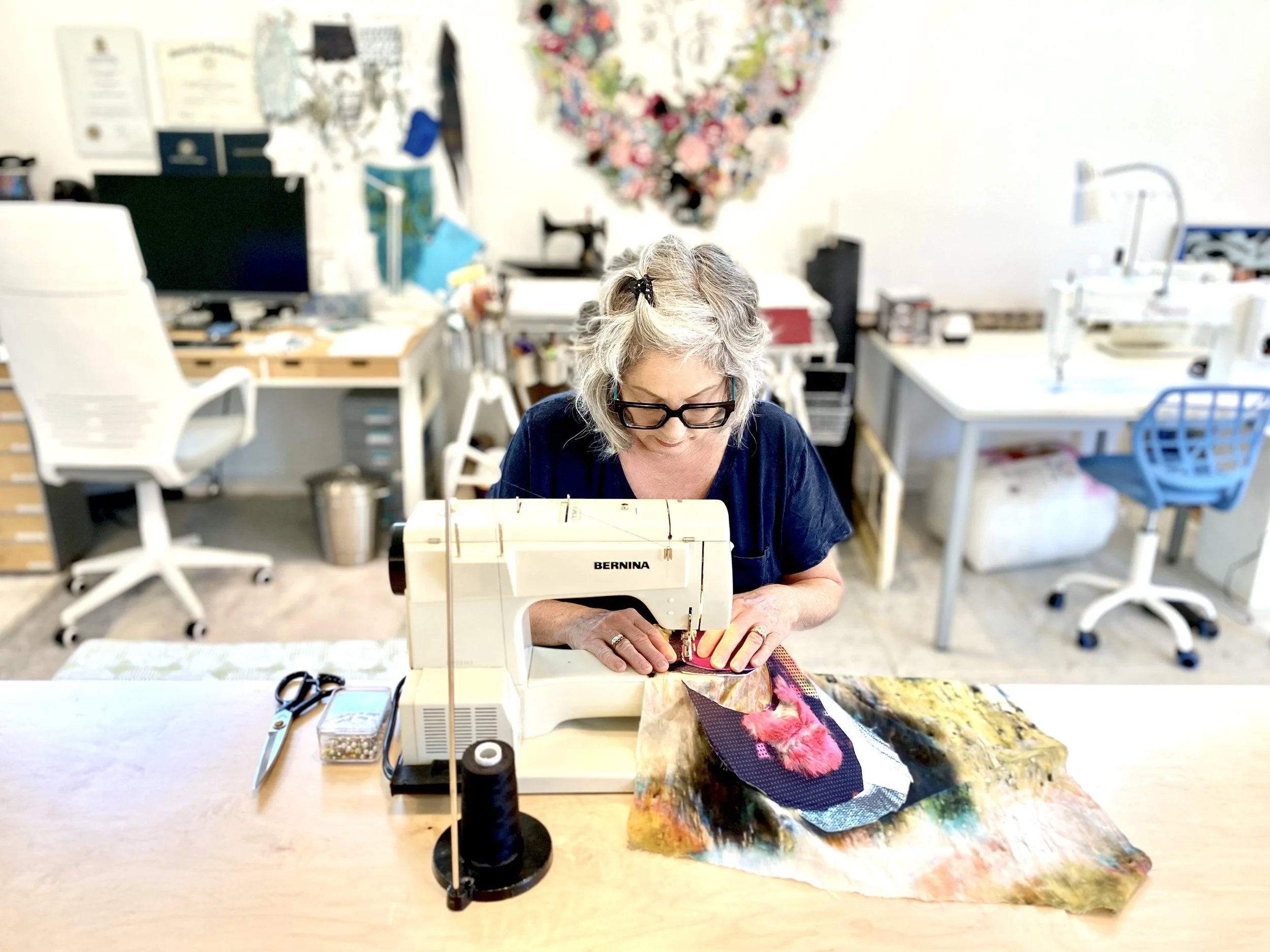
Leisa Rich is an experimental artist who transforms the common and alternative in unique ways using fibre materials and processes, mixed and repurposed media, 3D printing, laser engraving and AI. She is a fearless creative explorer. Rich holds MFA, BFA and B.Ed. Art degrees. She is featured in notable museums, galleries, books and interviews. Rich has published a children's book and a series of How-To art books. Her work is in permanent collections of Delta Airlines Inc., Hilton Hotels, Pro-Demnity Insurance, Emory Healthcare, The Dallas Museum of Art, in private homes, and more. She is a recipient of distinguished fellowships and awards. Rich moved back to her home country Canada in 2020 after living abroad for many years.
Learn more: www.monaleisa.com
You describe your childhood hospital stay as the beginning of your fiber journey. How did those early tactile experiences shape the way you work with materials today?
My early connection to tactility was twofold. As a baby/toddler I couldn't fall asleep until I ran the satin edge of my blanket through my fingers from one end to the other. At age 2 I ended up in the hospital on and off for most of the next couple of years due to issues with my ears that resulted in deafness. During that time my mother would bring me Barbie doll clothes that she made from her work and party clothes, some of which were satiny and some she handknit. I would also finger paint in the hospital art room. These smooth, nubbly and squishy materials activated my senses of touch and sight and compensated for my loss of hearing. I am recreating that immersive feeling, getting lost in "playing" with various materials, that gives me peace and comfort.
Your practice spans fiber techniques, 3D printing, laser engraving, and AI. How do you decide which medium or process is right for a particular concept?
For me, it is a combination of things that help me make the choices I do of which materials and techniques to apply to a work. Firstly, it would be an innate excitement and curiosity I have always had about experimentation and discovery. A very astute art teacher in 9th grade assessed me well when she stated that "Leisa is impatient to do the things she wants to do." Secondly, I kept going back to school to improve my art: a BFA early on, then a B.Ed- Art while raising one child and running a wearable art design business, and an MFA in my mid 40's while raising two children and teaching part-time. Lastly, I am married to a Futurist, and due to his own innate curiosity about everything tech and future-forward, we were early adopters of 3D printing, laser, and now AI. These things help me to make decisions that are objective, as I am grounded in theory and experience with knowing what is right practically, and what my subjective self intuitively knows is right.
As a "senior" now aged 65, I keep learning and growing and experimenting. I hate being bored.
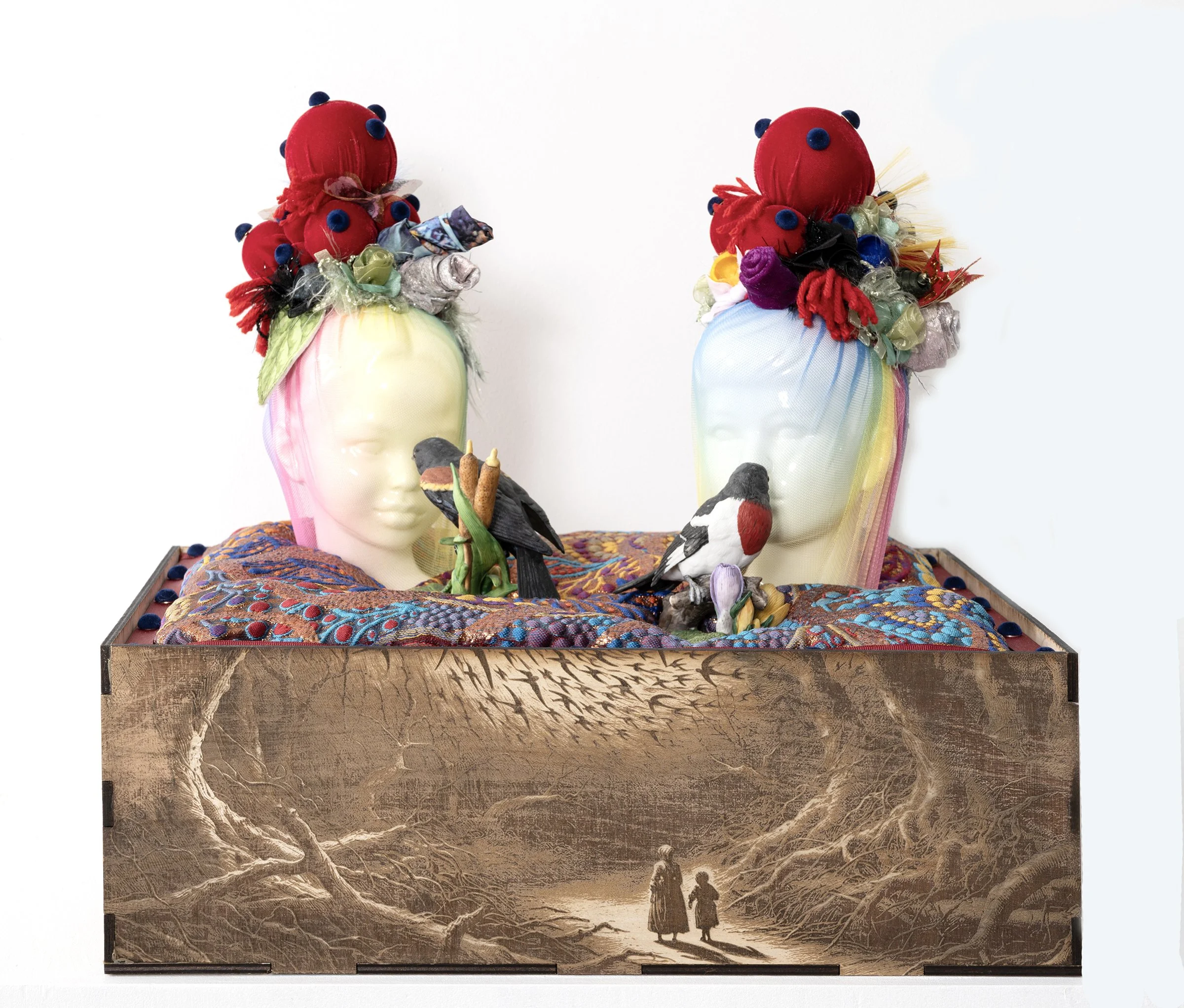
You often work with the question "what will happen if I do this?" How does that experimental approach influence the final outcome?
Being unafraid to fail is necessary to growth. Mistakes are opportunities. I don't feel like I have anything to lose! So what?! You might waste a bit of material, or something might be an abject failure, but these are teachable moments, a time to pivot and take a different path. That excites me.
Many of your works invite touch and public interaction. What role does tactile engagement play in how you want viewers to experience your art?
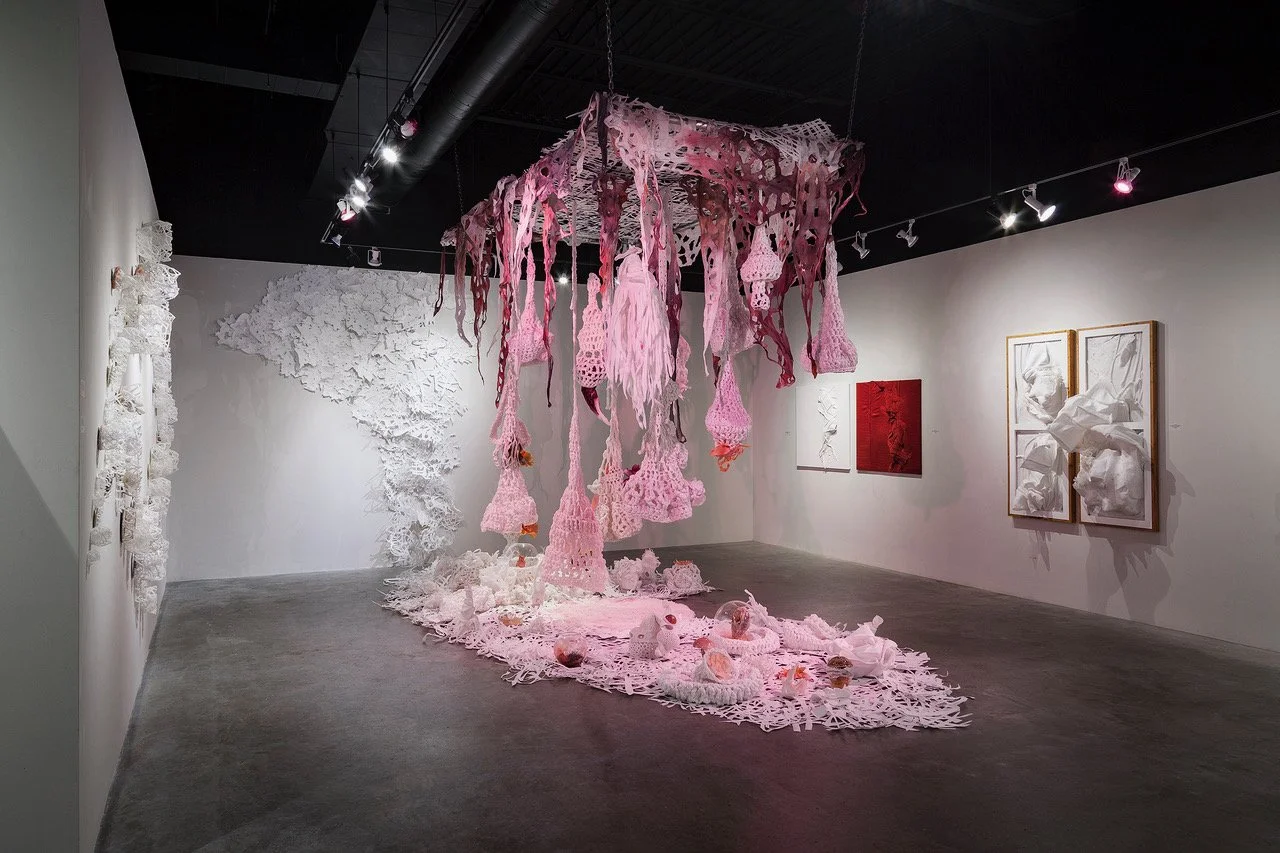
As an art viewer and very tactile "touchy/feely" person, it has always frustrated me to be forbidden from running my hands over a texture or surface. I also noticed early on that viewers' hands and arms would slightly reach toward my pieces, and then they would pull back, schooled to never touch the art. This bothered me enough that I began to facilitate touch through wall-hung panels, sculptural play tables, viewer interactive fabric environments, immersive spaces and more. Covid put a temporary hold on that kind of work, and I drifted away from it, but I am slowly returning to include immersion and touch.
You incorporate recycled and vintage materials with environmental intention. How does your veganism inform your material choices and creative process?
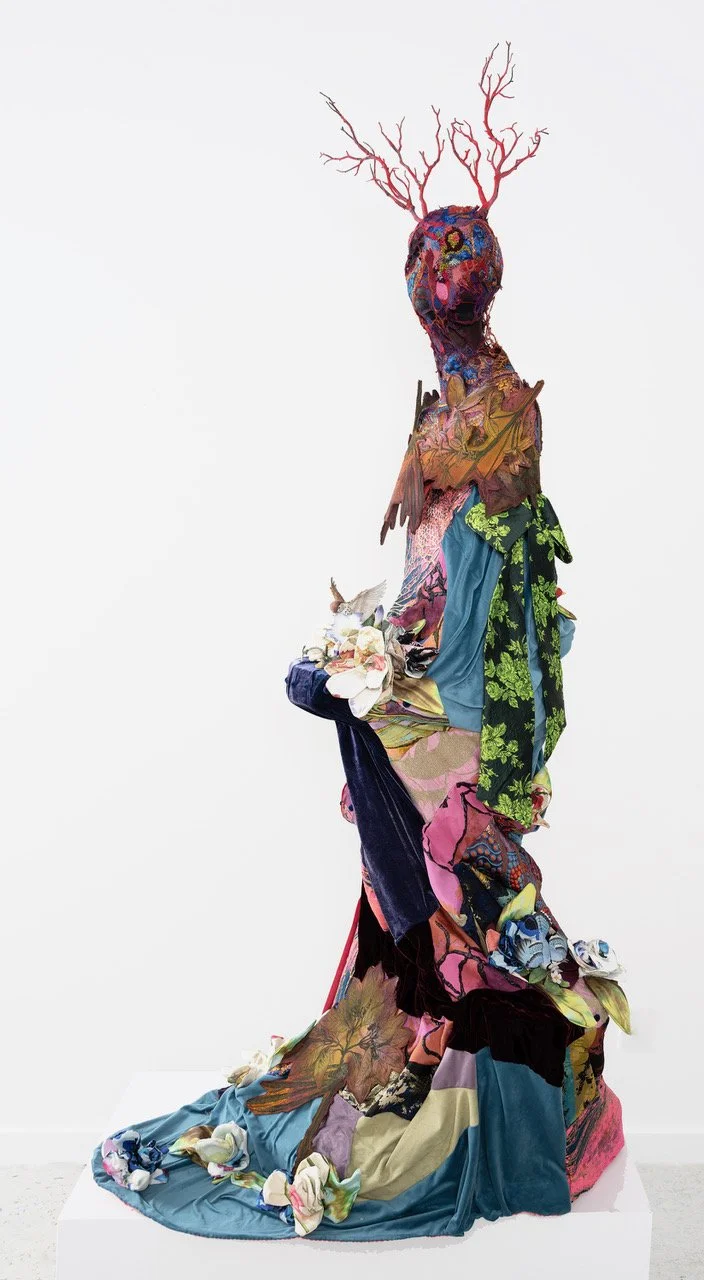
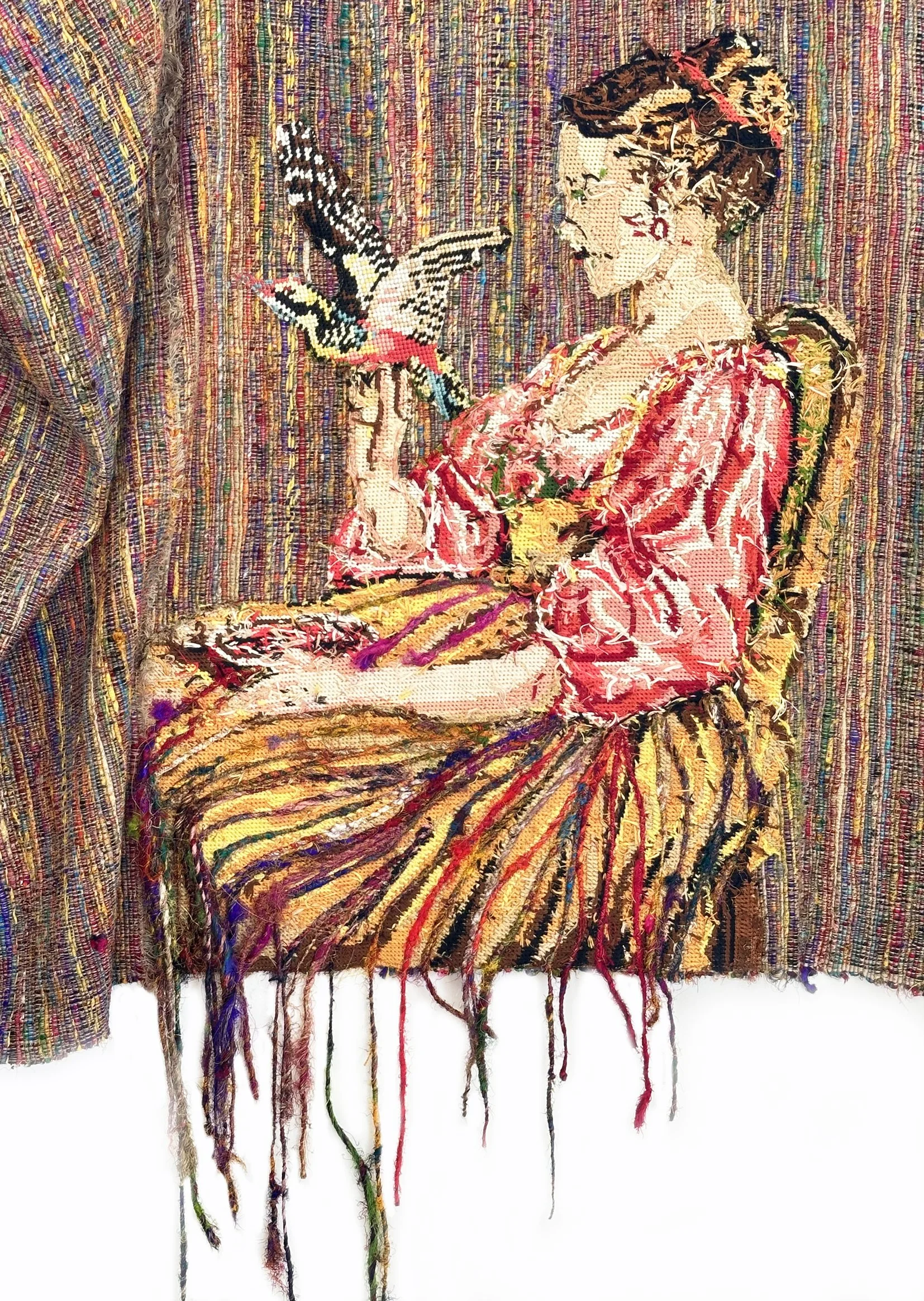
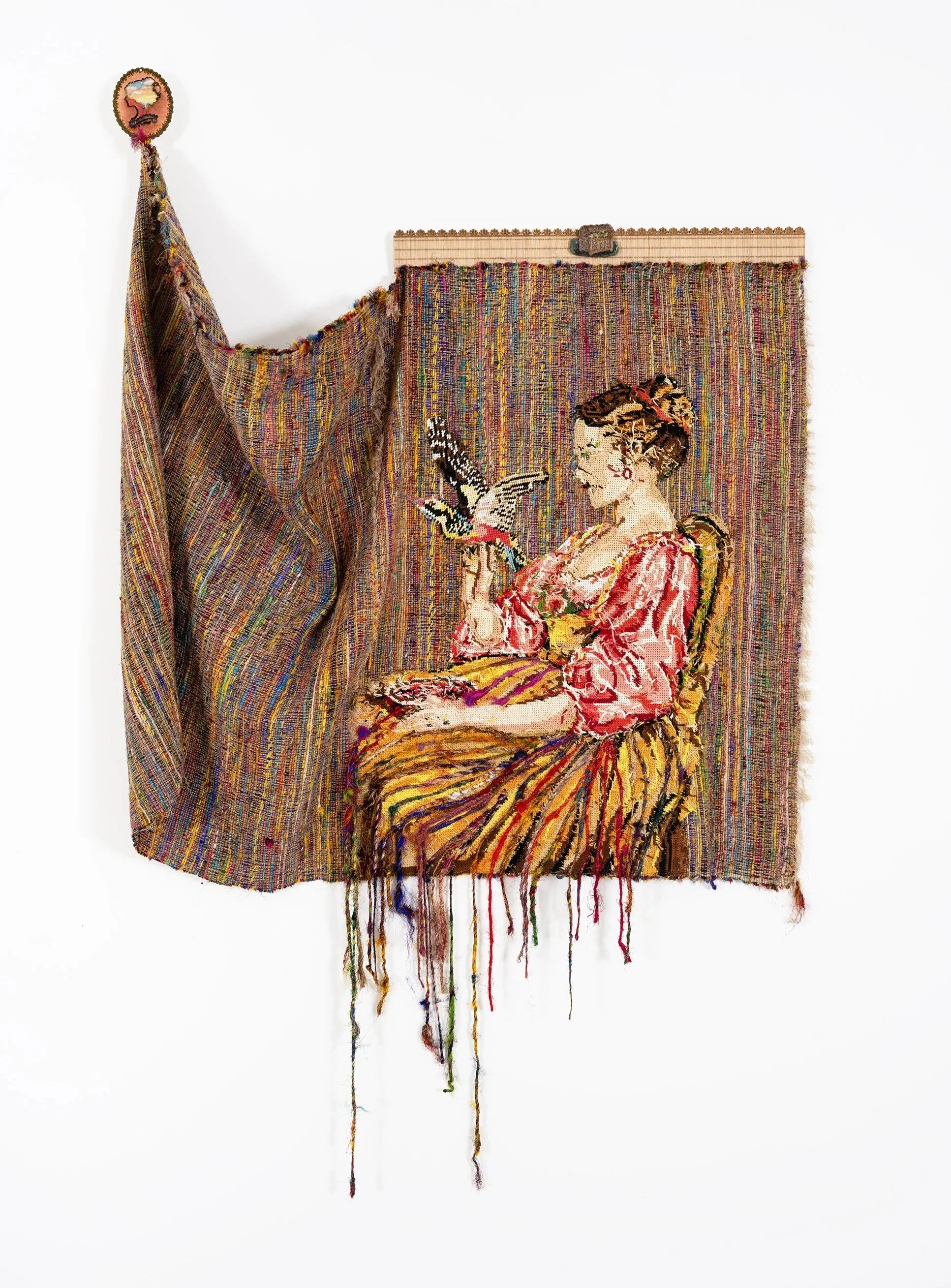
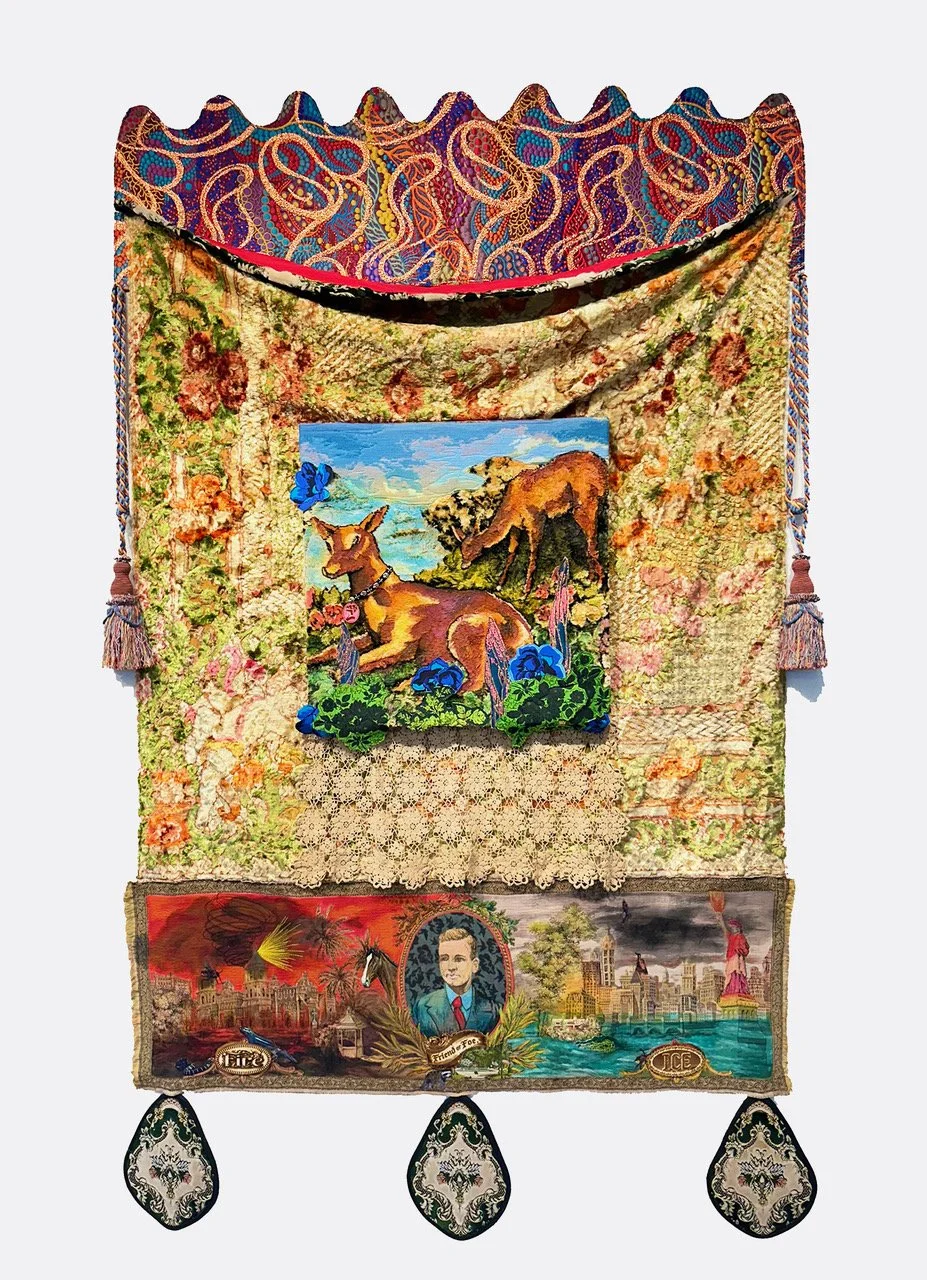
There is enough information about the negative impact of our use of animals for food and clothing on their health and welfare, on our health, and on climate-change, and we are in the position now to cease abusing and using them. I am just finishing a very large body of work titled Safe Zone. In it, I raise animals to equal human status and even exalt them as higher beings. To bring this to fruition, I thought deeply about how I could make a statement influenced by my veganism, without using gore or dark imagery that would drive people away. Instead, I show them with love and concern; I have created bright, colorful creatures and environments in which some of the animals are crowned, some have been outfitted with prosthetic legs, some are sparkled with Barbie pink. These works utilize vintage tapestries and needlepoints, vintage porcelain birds/human busts, 3D printed elements, laser engravings, and AI manipulated in very different ways than most are using AI at this time. By using repurposed elements, I proffer up my Utopian world of animals while also reusing elements created by humans. I'm not perfect, but I have structured my whole life, and the way I live, to reflect my passion for changing this system.
You have resisted being placed in an identifiable box throughout your career. How has that resistance shaped your artistic freedom?
There are pros and cons to following your true, creative, inner self. It feeds your soul to discover who you truly are as an artist. To identify the direction your work must take and stay on that path is so satisfying. When you do so, the work is original, authentic, a true reflection of your inner self, a raw reveal that you share with others. However, only a few will support you doing so. The cons are that galleries do not know what to do with you if you are like me… and therefore, they are not supportive. Everyone (from professors in art school, to those gallerists, to your family and friends) will tell you to do a "body of work" that can be sold. Work that is approachable, that they can fit into a box. I have tried to do this in the past for a time, and was miserable. It was after I gave that up and embraced who I truly was, that people who "got it" started buying my work more. I have never been represented by a gallery. I would like to find those galleries. No matter how old you get, if the obsession is real, you keep going and you keep having hope.
Your work creates pseudo-Utopian environments and sensory refuges. What are you hoping to offer people through these spaces?
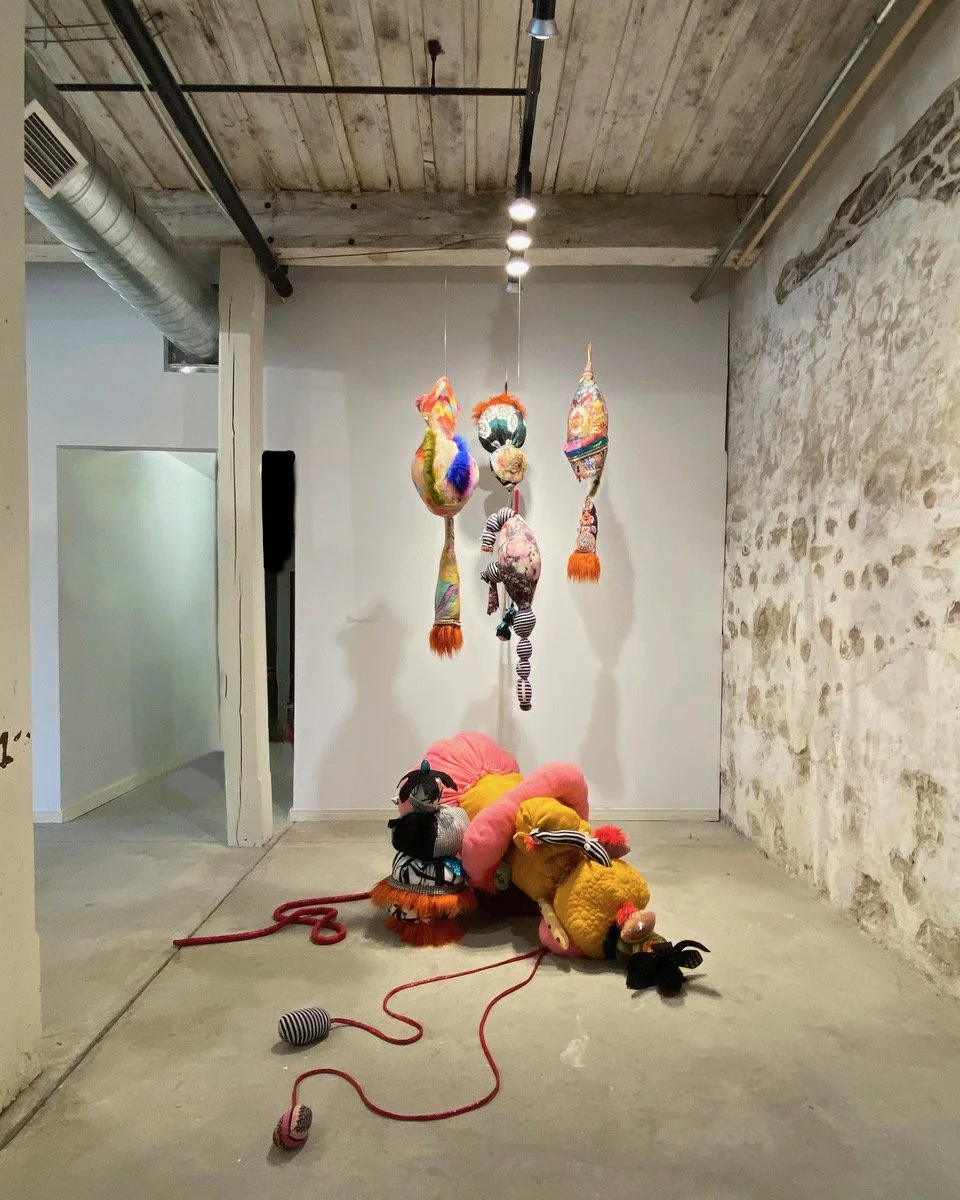
This world is crazy. If I can give just a few minutes of respite to the public, I feel very happy.
What are you most curious to explore next in your practice?
I recently took up tufting, and while I enjoy it and have been creating some cool art with it, it's ultimately not for me. I am presently exploring with 3D printing directly onto fabrics in my 3D printer. The technique is very intriguing, but is definitely a learning curve of trial and error, with a medium failure rate right now!