Letting the Light In: Cecil Ybanez on Art, Identity, and Finding Beauty in the Everyday
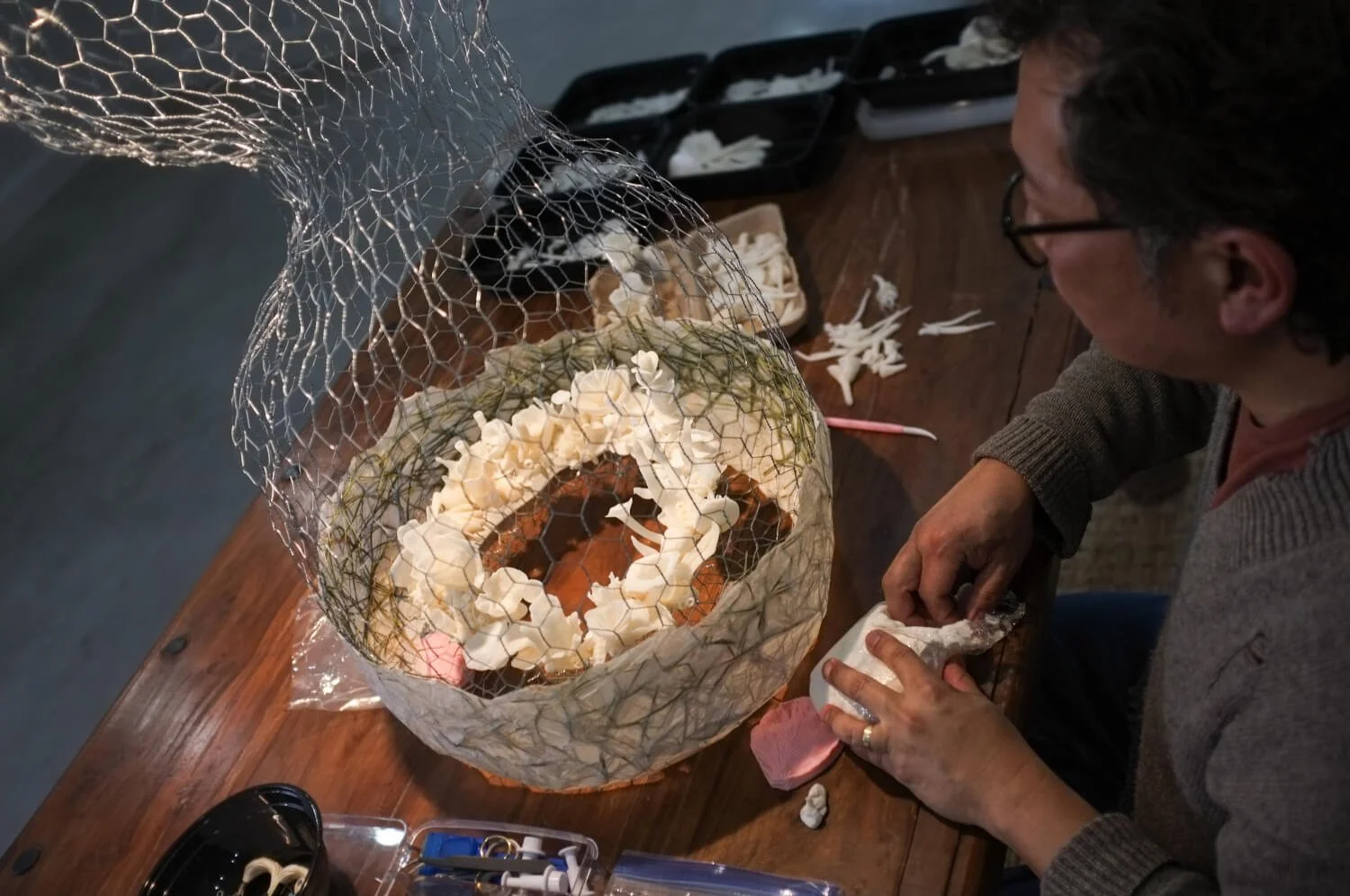
As a Filipino-American, I have lived the two halves of my life on two different continents. I have been a physical therapist, Pilates instructor, interior designer, and now an artist and gallery owner.
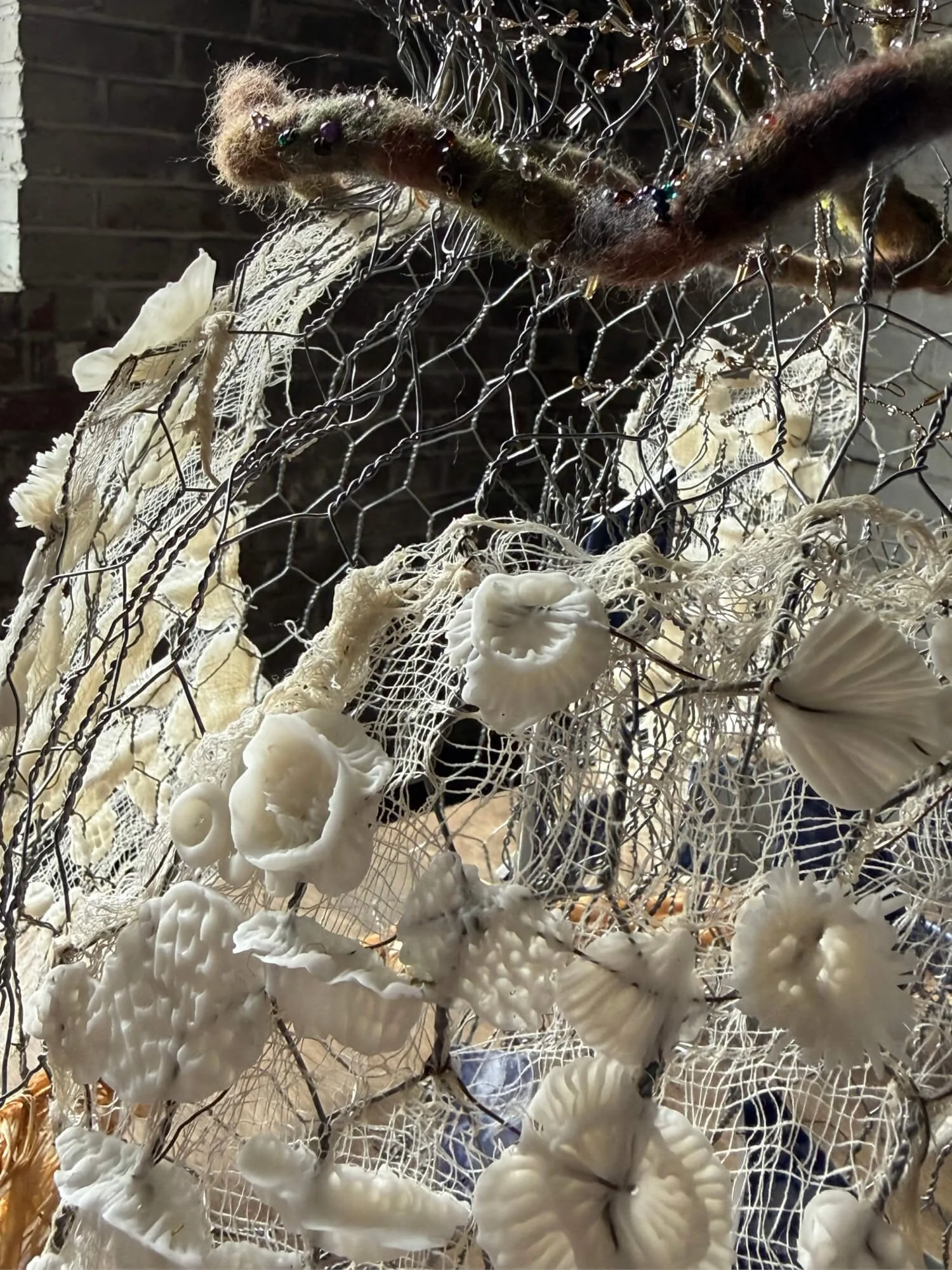
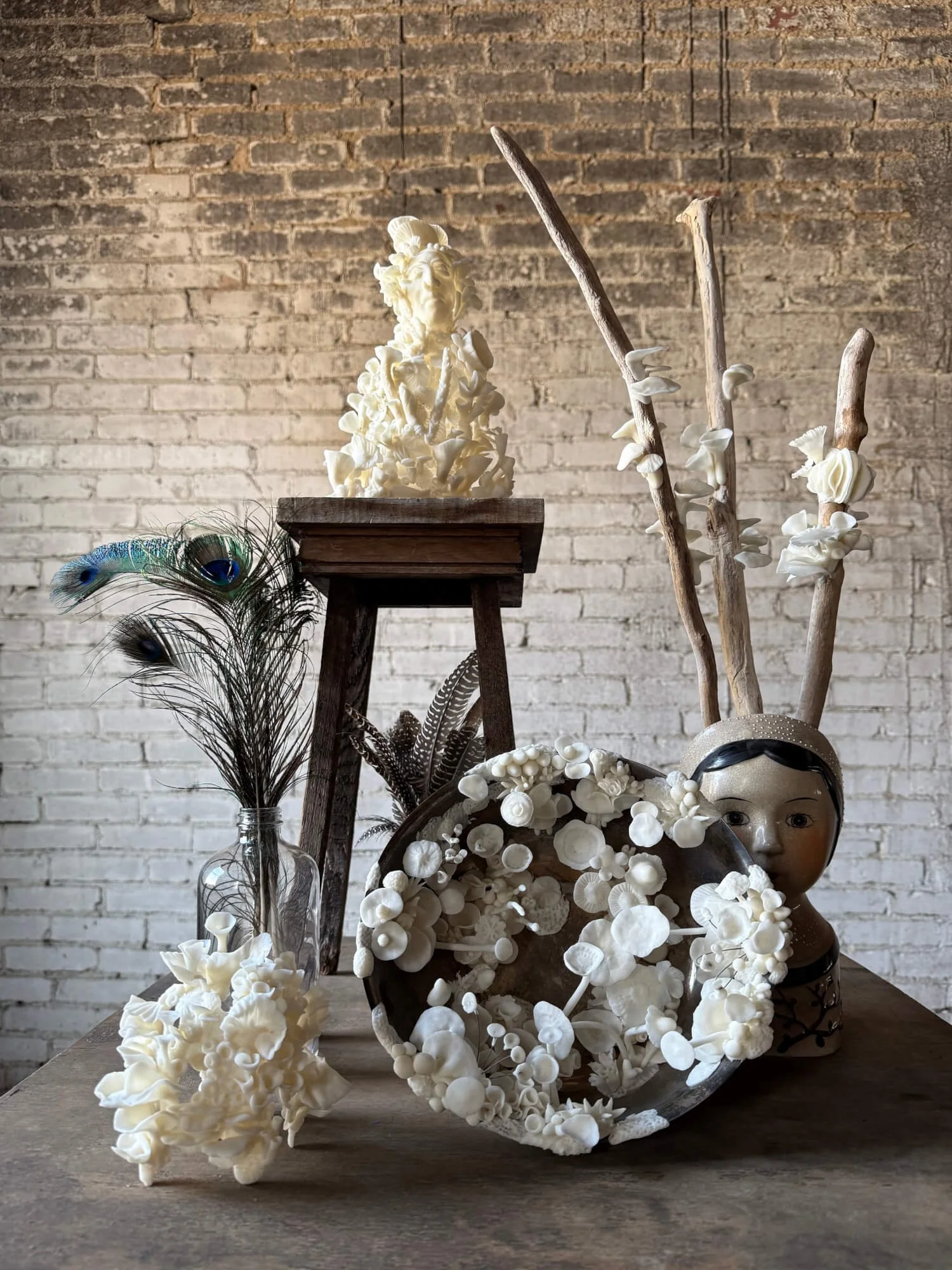
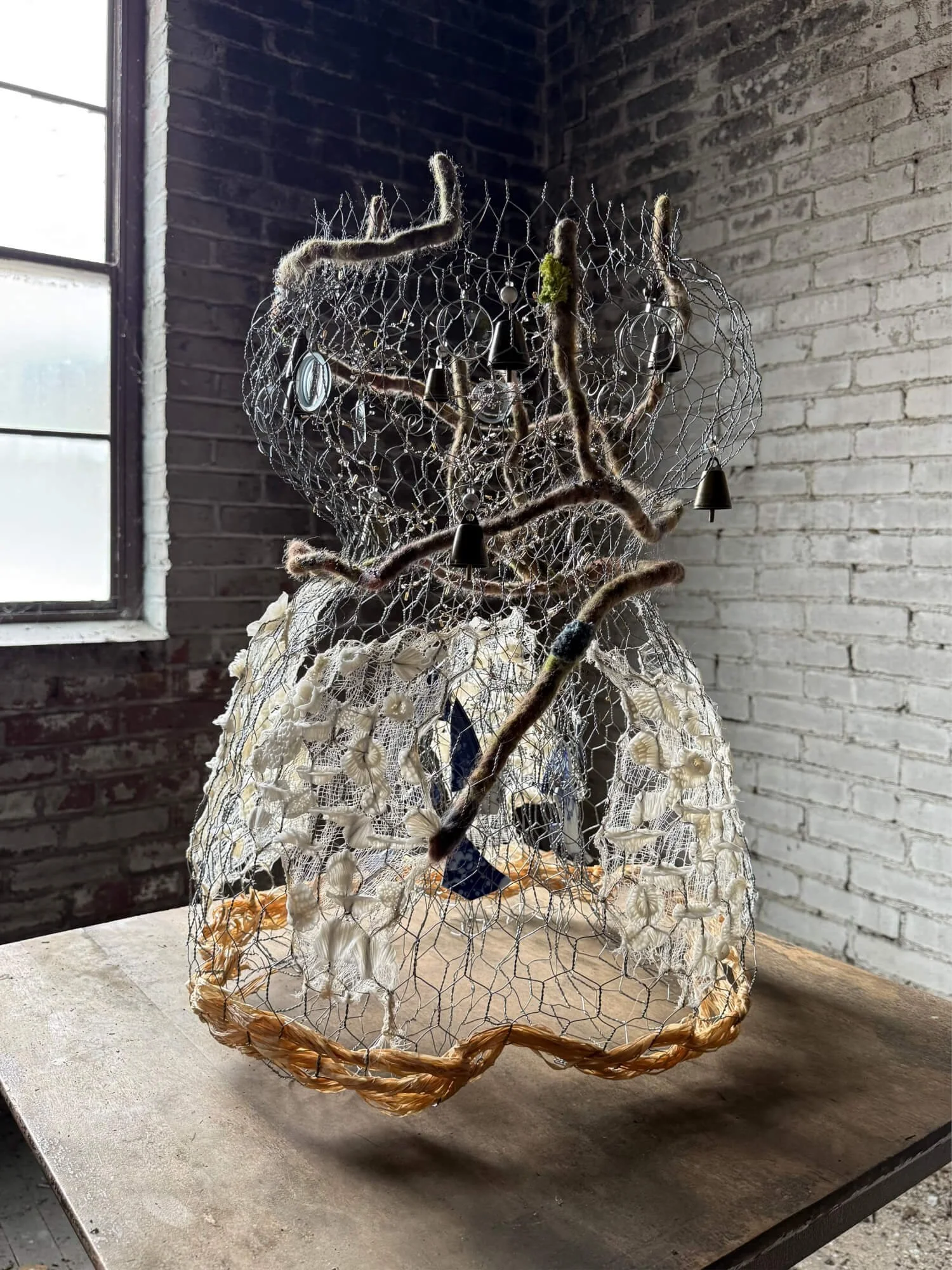
I create art that is influenced by the Eastern and Western worlds. It reflects aspects of my life experiences, memories, thoughts, musings, and imagination. I currently work with mixed media using polymer air-dry clay, found objects, and everyday materials like paper, wire, beads, fabric, paint, string, and wool.
I seek to intrigue, challenge, remind, and inspire my audience to see the world and their own experiences and perspectives through a different prism, even if only briefly.
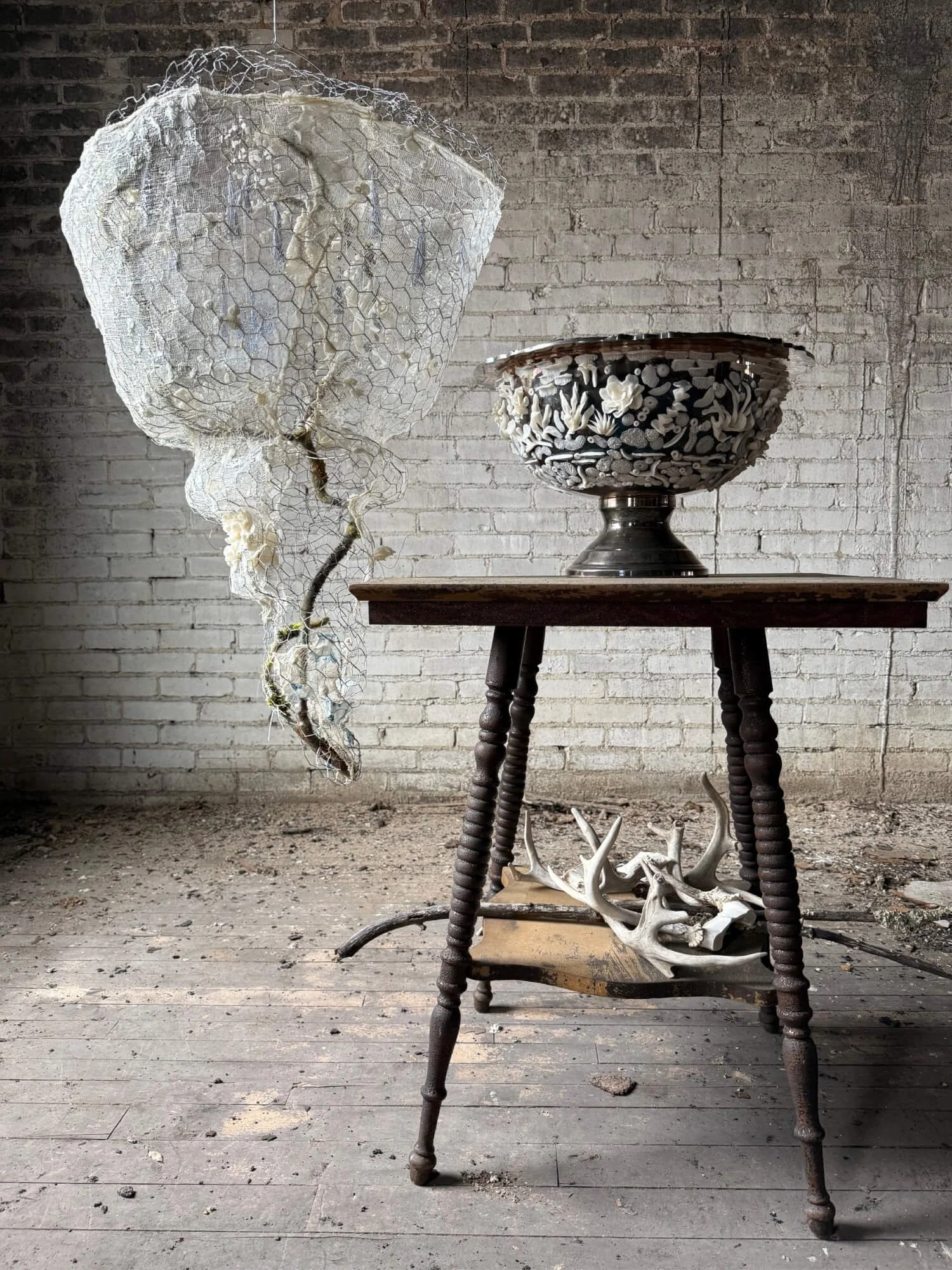
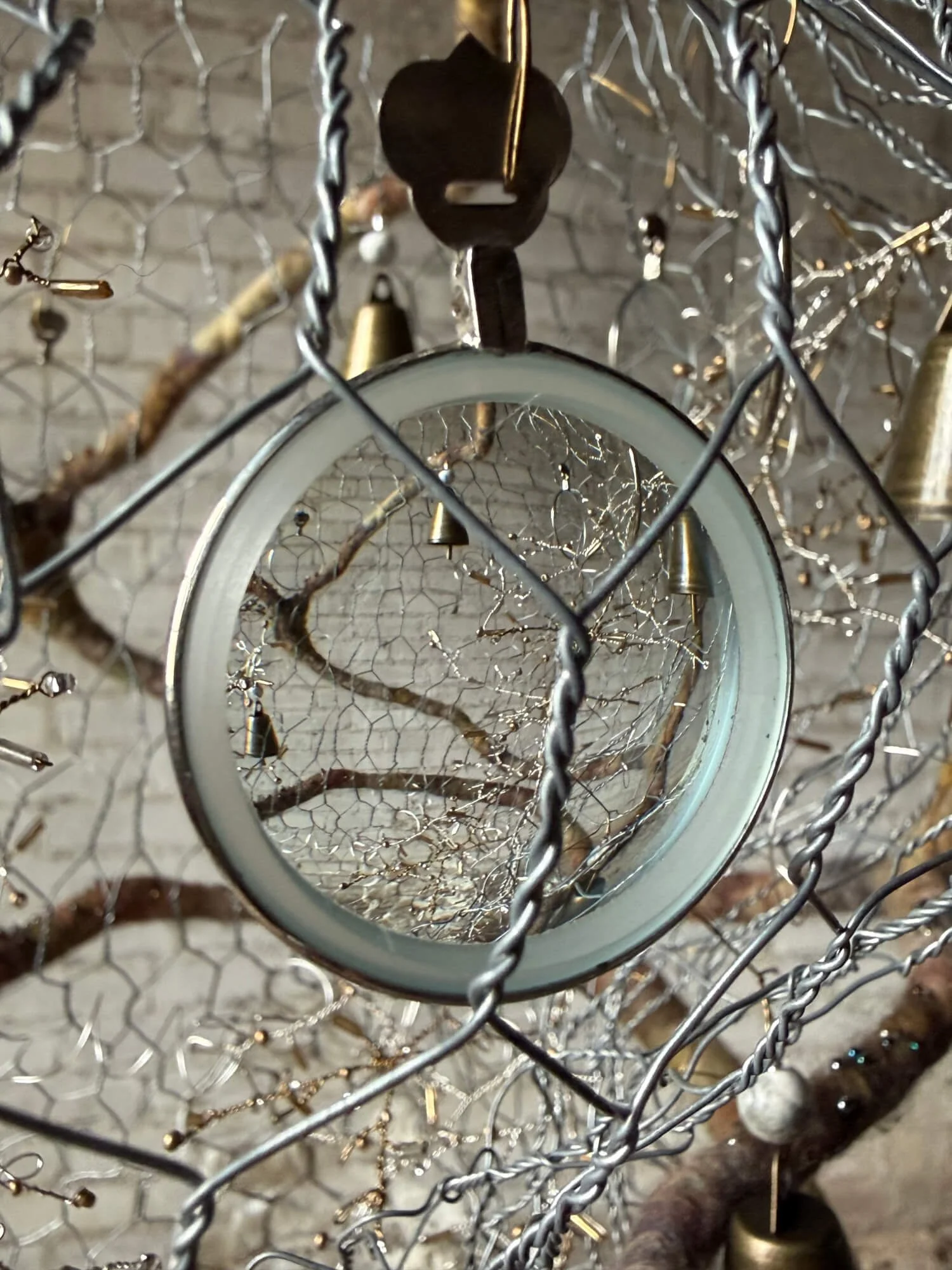
My present body of work exploits the translucent properties of the materials I work with to instill a sense of lightness and transparency in my pieces. My pieces are a commentary on the perplexing issues of our current times. When things get dark, we must find ways to let the light in.
Instagram: @cecilybanez
Interview
You have lived across continents and worked in multiple professions before becoming an artist. How have these experiences shaped your creative voice?
Having lived in different worlds has provided me with a mix of perspectives from living and working in tropical and temperate climates, Eastern and Western cultures, and in the medical, fitness, design, and art fields.
These combined insights have been very useful as I embark on a full-time creative practice. I take a little bit from here and there — these things that are unique to my experience — and they help me speak my art language.
I have sought to speak this language from my earliest years, since my first set of coloring pencils at age four, before life intervened and took me the long way around to a life in art.
Your work merges Eastern and Western influences. How do you translate these cultural intersections into mixed-media pieces?
Like everyone, my perceptions are tinted by my background. I take elements from my Eastern upbringing, flecked as it was with influences from Western colonizers, and layer them with my contemplations from my almost 40 years of life in the Western hemisphere. My thoughts and impressions are a continual back and forth between Asian and Western sensibilities and attitudes. In the same way, the mixed materials and objects I use are in dialogue with each other in my works.
Today's young Filipinos are more cognizant of precolonial Filipino culture and have been generous about sharing it with the rest of the world. From a great distance and in my middle age, I am ironically digesting information that is new to me about my native culture. I am enjoying learning from these young people, and now I am seeking to incorporate these cultural elements that are thousands of years old into my work — partly as self-affirmation and partly as a show of solidarity with these admirably intrepid cultural advocates.
You use translucent materials to evoke lightness and transparency. Can you describe how this choice connects to your conceptual themes?
The use of translucent materials represents my impression of the ephemeral nature of thought and inspiration: light as ghosts, fleeting like spirits, transcendent in capturing light and energy and then diffusing it into the immediate surroundings.
Light naturally attracts the eye. While my work does not generate light, it holds it and sends it back out into the universe around it.
As a self-taught artist, what have been the most meaningful ways you've learned and how do those lessons manifest in your current work?
Being self-taught, I am not always 100% sure of the rules and constraints in the process of making or using materials, so there is some degree of experimentation involved. At the same time, I value aesthetics and respect the importance of using the right materials and proper construction.
I have gained insight and some technical knowledge from the many artists we have featured in our gallery (Bloomfield Richwood), and from the artists and mentors I had the honor of spending time with last year as a cohort in the Creative Entrepreneur Fellowship through the West Virginia Creative Network, and from the feedback I receive from community members in town. I have also participated in several juried exhibitions and competitions and come away inspired from each one.
Like many artists, I have this impulse to want to break the rules and get away with it — to innovate and create something new and different. So I experiment with what might seem to be unlikely materials to create my work. I take the commonly overlooked things as art elements. I love the reaction my work elicits as viewers realize what I use for material in making a piece they are viewing.
Found objects and everyday materials are central to your work. How do you select which materials will become part of a piece?
I read an interview with the artist Jesse Darling in Sculpture Magazine, where he spoke of having a personal relationship with materials or objects that he uses in his work — how he regards the materials he uses as things that come with their own story, and how he can "talk to something that was already telling a whole story quite loudly and all I had to do was listen."
When I read those words, I understood exactly what he meant.
I gather materials and objects that tell me their story, or promise to help me tell my story. As a result, I have amassed a slightly embarrassing hoard of discards, antique and vintage store finds, things I bring back from the garden and the woods, objects that have come my way as gifts from family, friends, and well-meaning neighbors. They sit and wait for their chance to get on my table and to help me tell a story — whether the story is theirs, mine, or ours together.
You aim to challenge and inspire viewers to see their experiences through a different prism. How do you approach audience engagement in your work?
My work is wending its way towards the figurative abstract. I like for my work to have some aesthetic appeal and a somewhat recognizable form, but I also strive for an abstract quality that lets my pieces transmute in the viewer's mind into something that connects with them emotionally, psychologically, or intellectually.
In using old or familiar objects, I hope to jog a memory. In combining materials and objects, I hope to spark a sense of possibility and creativity. In combining Eastern and Western ideas, I hope to encourage a sense of connection — a bridge between cultures.
By adding something from my past, I hope to tell a little bit of my story to people new to me. In adding something from my present life, I hope to share that part of my story with family and friends who still live in my native Philippines.
In using accessible materials, I want to help spread the idea that art mediums are within everyone's reach. Part of the craft of making art is transforming what is at hand into something magical. I would love for anyone viewing my work to come away thinking that they, too, have everything they need to create their own artistic expressions.
Your art often responds to contemporary social issues. How do you balance personal expression with commentary on the broader world?
My personal expression exists in the context of the broader world — of the state of things near and far. It embodies my thoughts, my emotions, and my musings about everything happening around me.
My present body of work is my response to the magnified uncertainties in today's volatile climate. As a queer person and as a first-generation immigrant living in the US, I have chosen to create interior worlds — little pockets of respite and quiet, havens for shelter, rest, and reflection. I hope my work inspires people to slow down and take a little break now and then, to recharge, refocus, and reaffirm who they are.
Looking ahead, what is a dream project you'd love to bring to life in the next few years?
A dream project would be showing a body of work in a museum and expanding my reach to a larger audience. Three-dimensional work makes a better connection when viewed in person. In the same way that other artists have inspired me with their work, I would like to help inspire a new generation of artists and art appreciators, both locally and on a larger scale. Art and creative energy, once sparked, will live forever with a little care and love.
For Richwood, I would love to see it blossom as an arts and culture destination at the edge of the million-acre Monongahela National Forest.
I host open-call group shows at the gallery every year, in addition to having shows featuring different contemporary Appalachian artists every seven weeks. We have been able to feature several local artists since opening in August 2021. My husband David and I bring in live music for each opening reception.
Both of us are part of a committee that in 2021 started an annual Art Walk in town every October. I am on another committee organizing Richwood's very first film festival, happening in November 2026 through a grant received by a recently formed Richwood-based arts-centered nonprofit foundation where David serves on their board. I helped organize Richwood's first plein air contest through another grant a few years ago, which we hope to host again in the near future.
In the end, I would like my message to be able to reach that little kid — that younger version of myself — and let them know that art dreams can come true.