Between the Seen and the Unseen: Andrea Mitchell on Color, Healing, and Art as Activation
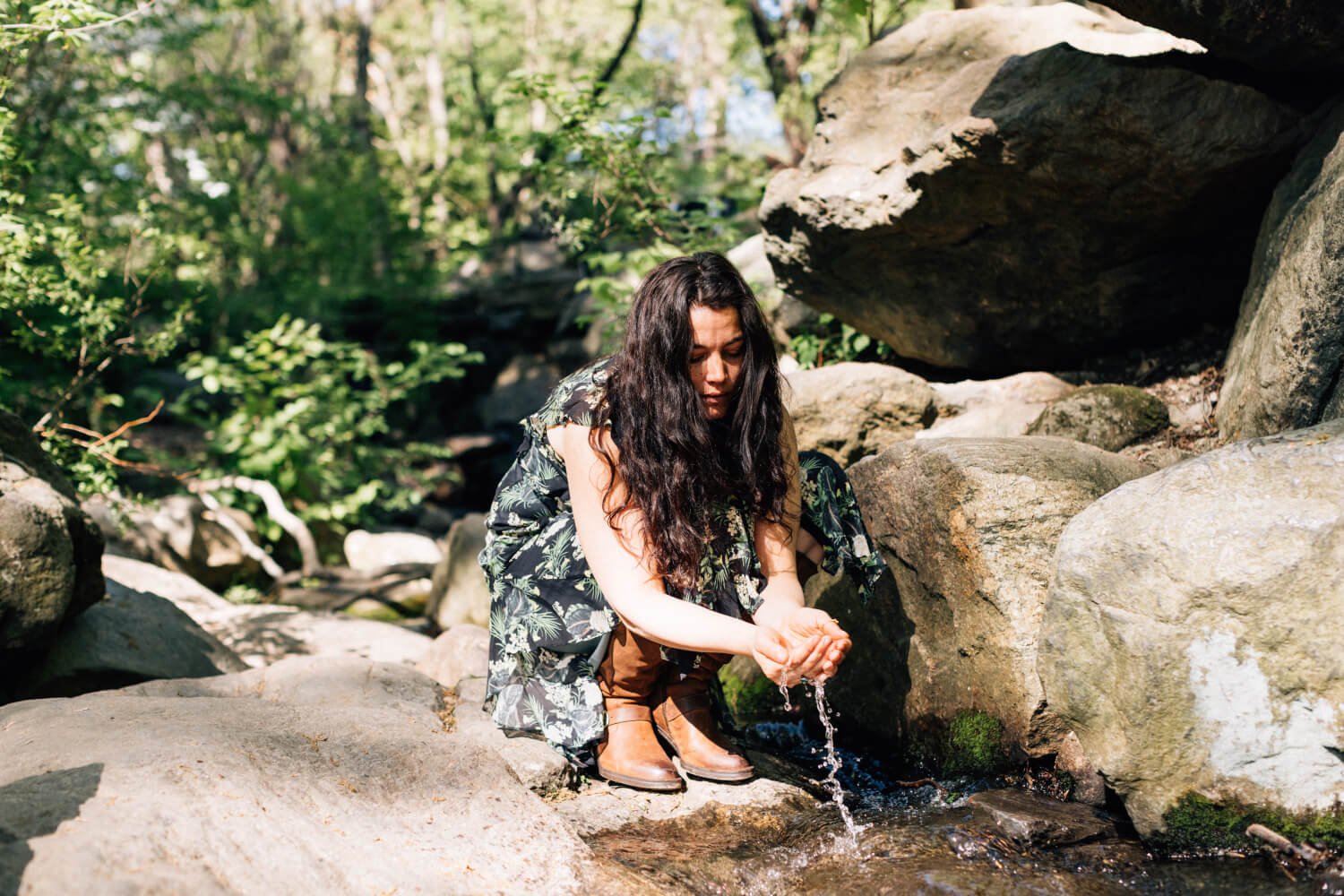
Andrea Mitchell (b. 1973, Massachusetts) is a New York City–based multimedia artist whose practice bridges visual expression, somatic inquiry, and energetic healing. Working in collage, watercolor, stained glass, and mixed media, she explores the threshold between the physical body and the ethereal, where memory, perception, and multidimensional energy intersect. Her visual language is rooted in symbolic layering, intuitive exploration, and an embodied understanding of form, color, and frequency.
Mitchell spent her early years in Massachusetts and upstate New York. These environments, filled with folklore and history, formed the foundation of her enduring fascination with what is felt but unseen. For nearly thirty years, New York City has been her home — a place of density, transformation, and contrast that continues to inform her artistic approach.
Color serves as both medium and medicine within her practice. Integrating sacred geometry, somatic awareness, and frequency-based healing modalities, she explores how color functions as a carrier of information, affecting physiological responses, mood, and states of consciousness. Each work becomes an invitation to sense the unseen and experience art not only visually but energetically.
Mitchell earned her undergraduate degree in visual arts from Hunter College in 2001, focusing on installation and investigations of interior and exterior space. She later received her Master's in Creative Art Therapy from Pratt Institute, with a focus on the healing potential of art and its role in shifting consciousness. Early experience at The Metropolitan Museum of Art and MoMA deepened her exploration of art's relationship to memory, history, and human experience.
As she enters the public art sphere, Mitchell views art as activation — a catalyst for curiosity, healing, and expanded awareness.
Artist Statement
I am a multimedia artist working primarily in collage, watercolor, stained glass, and mixed media. My practice weaves visual expression, somatic awareness, and energetic healing to explore the threshold between the human body and the unseen realms that shape our experience. I create to uncover what lives beneath perception — the psychological, ancestral, and energetic layers that exist within us and the spaces we inhabit.
I am influenced by nature and form, shadow and magic, history and myth, nurture and danger. These polarities inform my visual language and mirror my work as an artist and healer. I am deeply drawn to the unseen — memory, energy, emotional imprint — and use art as a way to invite deeper states of awareness, embodiment, and presence.
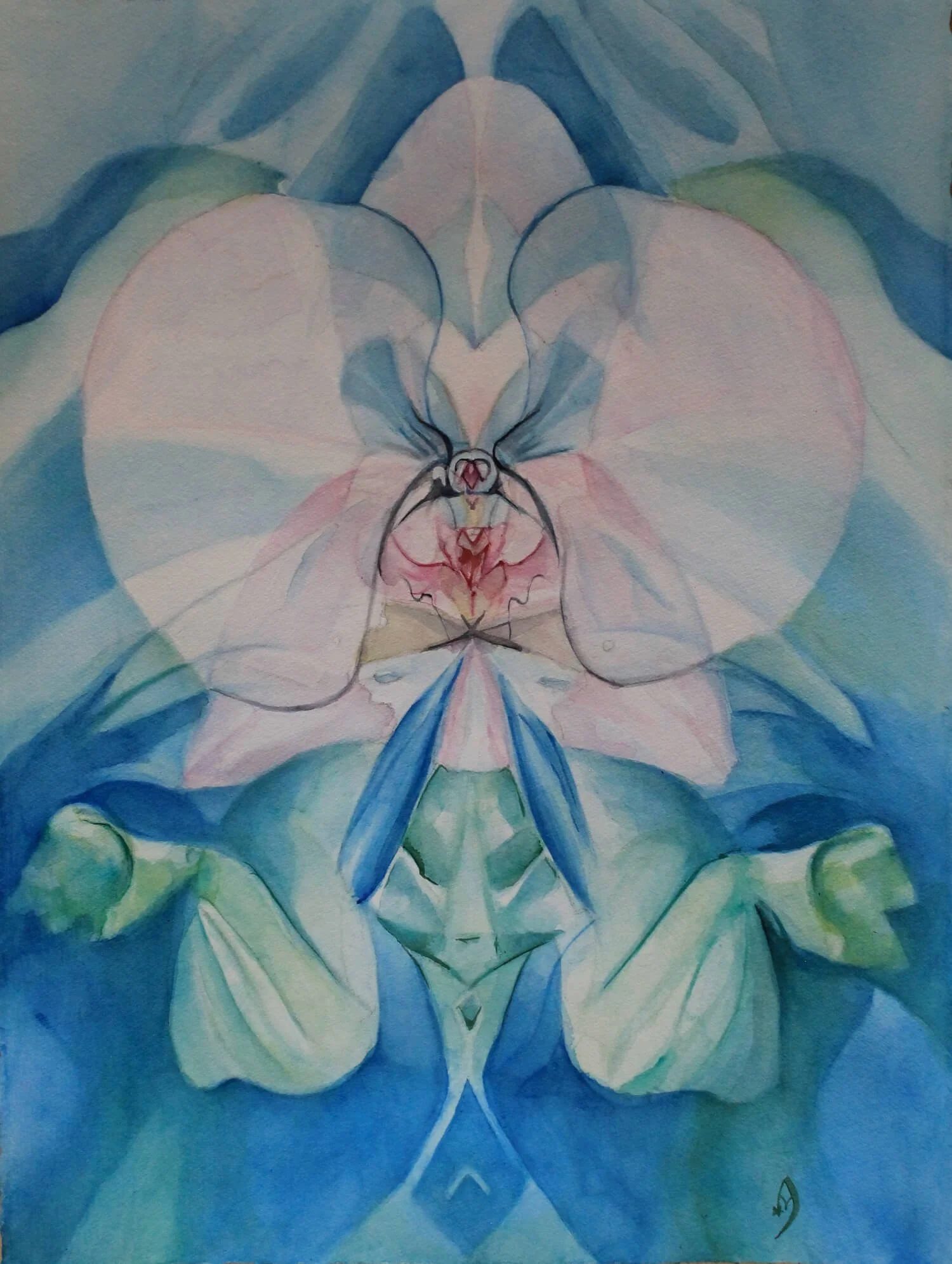
Color functions as both medium and frequency in my process. Through sacred geometry, intuitive mark-making, found imagery, and ritual-based practices, I explore how color carries information, impacts the nervous system, and opens subtle portals of perception. Energetic portals are central to my curiosity; they act as visual channels through which multidimensional information becomes perceptible.
My process is rooted in intuition. Each piece unfolds through intentional layering, observation, and activation. I approach art as a mirror to the collective consciousness.
I create to open doors: spaces where viewers may feel, remember, or recognize something within themselves. My work aims to offer a moment of pause, a chance to access sensation, intuition, or mystery, and step into new possibilities of being.
www.andreamitchellwellness.com
Interview
You began by studying the human form, which led you into creative arts therapy and eventually into metaphysics and energy healing. How did your art practice become a gateway into this expanded understanding of the body–mind–spirit connection?
I was fortunate to grow up in a family of makers — my mother made our clothes, costumes, and cakes, and we were always surrounded by materials to explore. Creativity was encouraged, so art became a natural part of how I understood the world and expressed myself. Before I ever knew what art therapy was, I was already using art as a way to process emotions and give my feelings form.
That relationship continues today, but it has evolved. While art remains a personal tool for reflection and release, I also see it as a way to communicate energy and offer something meaningful to others. Through my studies in energy and color healing, I've become interested in how energy can move through materials and form to create a healing experience.
As my intuitive and healing practices deepened, my art became more intentional. I began exploring elements of earth and alchemy, and I was especially inspired by the immersive healing qualities of cathedrals — the way light, stained glass, sound, and geometry come together to create a transformative space. Wanting to bring that same sense of integration into my own work, I taught myself stained glass and watercolor, combining those techniques with my healing approach.
For me, art and healing are inseparable. My work reflects the energy I cultivate in my practice, and together they create spaces for exploration, connection, and healing.
Your upbringing in Massachusetts and upstate New York exposed you to folklore and history. How do these early experiences continue to shape your art?
My art is deeply rooted in energy and shaped by the land I've lived on. I maintain an ongoing relationship with both the earth's elements and the unseen energies within my environment, and that connection informs my creative process.
I grew up in Massachusetts, surrounded by trees, creeks, and rocky coastline, where I spent much of my time exploring. Later, in rural New York, I was introduced to a different energy — more mountainous, layered, and tied to Native American history and regional folklore. Experiencing these contrasting environments, mostly through play and storytelling, sharpened my sensitivity to the emotional and energetic qualities of a place.
As a child, I was intrigued by local legends, historic sites, and weekend visits to old homes, which sparked my imagination and shaped how I relate to land and memory. Those early experiences shaped my imagination and interests and continue to influence my work today. I love exploring hidden forests and remnants of the past. Every object and place has a layered history and this always inspired me. My artwork plays with this in that what is first visible is just one layer of the image. I play with the layered energy of where dream, story, and reality intersect.
You've mentioned that color acts as both medium and medicine. How do you decide which colors to use, and how do they guide the viewer's experience?
My palette is typically limited, and I often stay true to the colors that emerge in the initial collage. That said, I'm very intentional about color in relation to its healing qualities. When a piece is created with a specific healing intention, I may choose colors that align with that purpose.
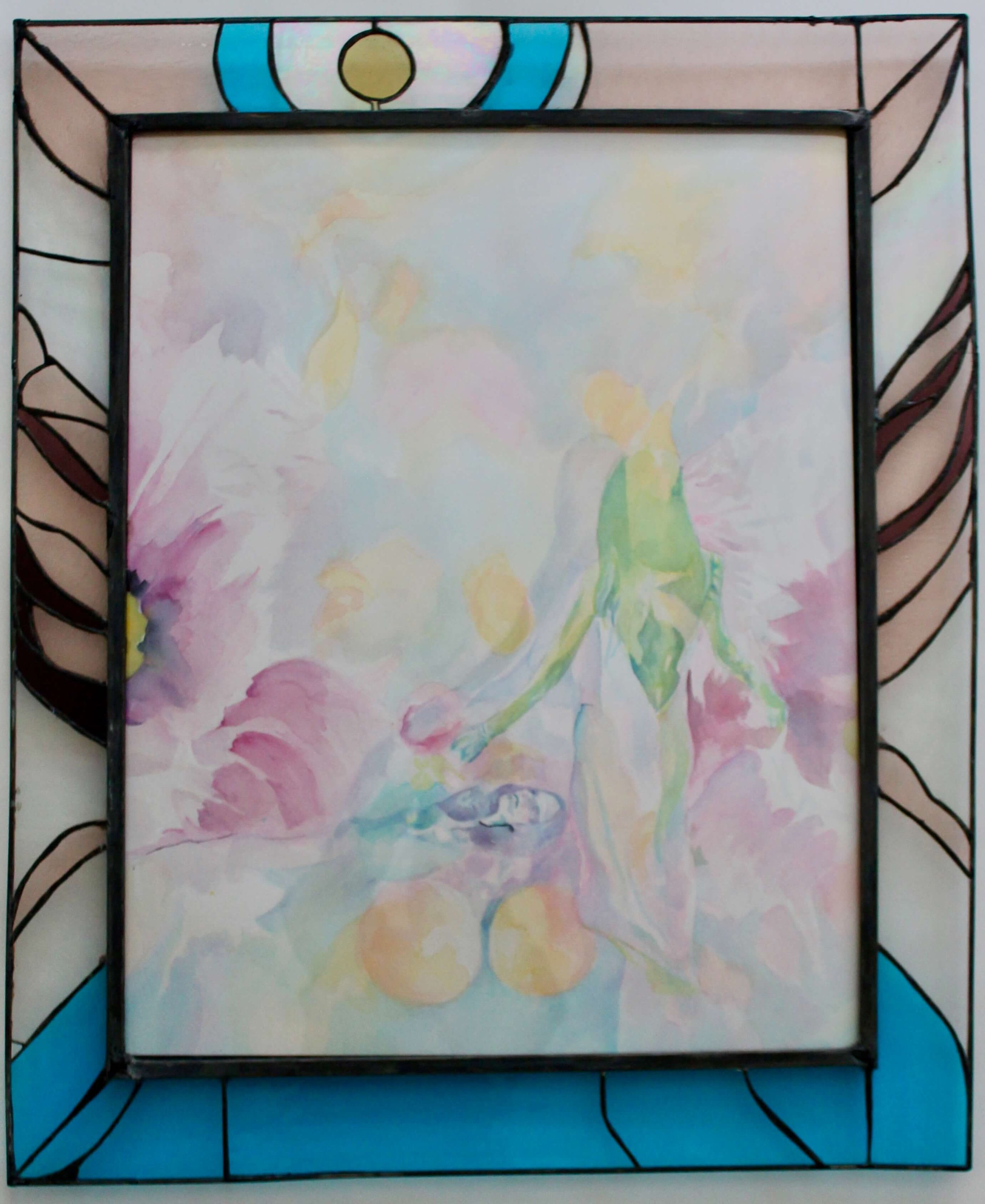
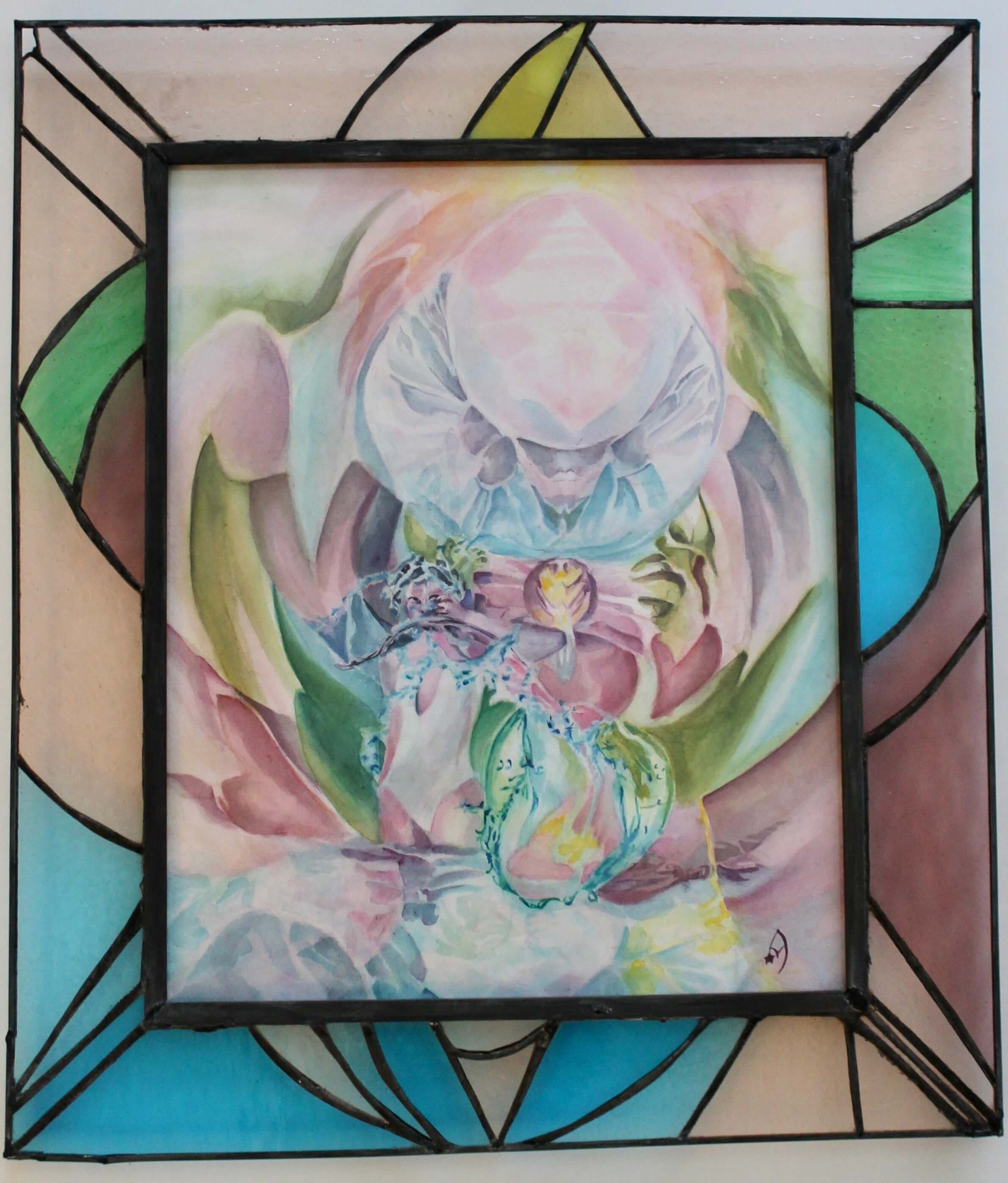
I'm particularly mindful of color in the stained glass frames that accompany many of my watercolors. When light passes through colored glass, it creates frequencies that can be more directly received by the body, similar in concept to light therapy. In contrast, color in painting is processed more cognitively and emotionally, often connecting to specific feelings or energy centers, creating a somatic response rather than a direct frequency-based effect.
Your practice blends visual expression with somatic awareness and energetic healing. How do you translate these invisible forces into visual form?
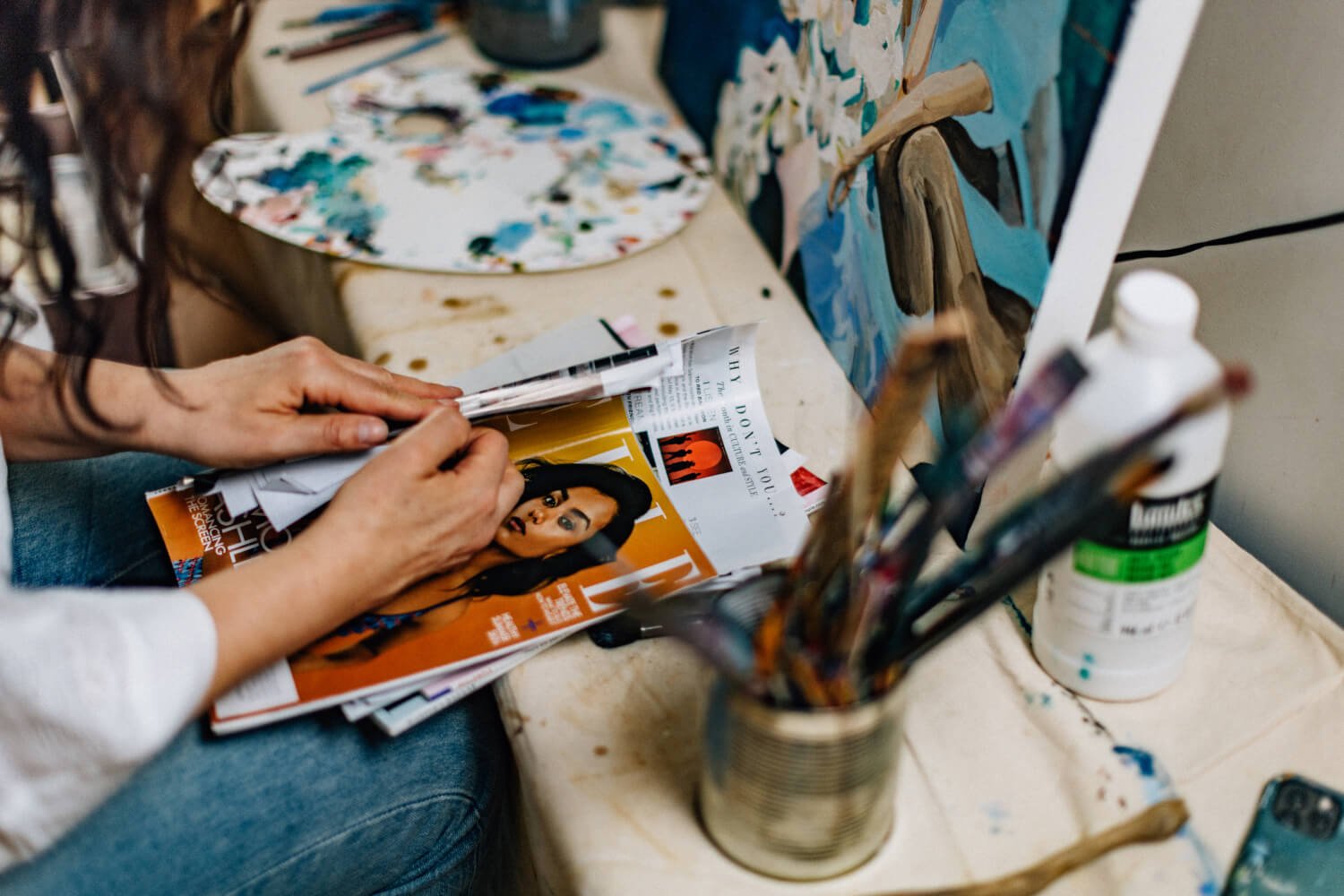
Exploring how energy moves through dimensions and into the body, and how it can be used for healing, is central to my work. I begin with collage, which allows me to access my intuition most directly — similar to automatic writing but through imagery. From there, I translate those forms into layered watercolor paintings.
My watercolor process is slow and intentional. I work with highly diluted pigment, using mostly water, which I energetically infuse as I paint. Water holds and transmits energy exceptionally well, making it an integral part of the work. Color choices are often intuitive, though at times I'll select specific palettes aligned with a healing intention. Each color carries its own energetic quality.
I'm also deeply interested in how people physically and emotionally respond to art. Just as different materials evoke different internal states when creating, viewing art can create a somatic connection. My intention is to create work that unfolds over time, revealing deeper layers of meaning, energy, and emotional complexity the longer someone engages with them.
You have a background in Creative Art Therapy. How does your understanding of healing influence the narrative or emotional tone of your pieces?
When I create work for a public audience, my CAT training doesn't lead the process, but it has definitely shaped it. After the program, I became very aware of the materials I chose to work with, almost to the point of overthinking. Over time, though, it helped me return to a more intuitive and playful way of creating.
In my undergraduate years and throughout my 20s, I was fully immersed in the art world, working for artists and museums in NYC, but I became overwhelmed by competition and the pressure to produce work to sell or be seen. I lost touch with the joy of the process.
My CAT training brought me back to art in a more meaningful way. It helped me reconnect with it as a tool for personal healing, while also expanding my understanding of art as a medium for translating and transforming unseen energy into form.
In your work, the unseen becomes perceptible. How do you balance intuition and technique in translating subtle energies into material form?
I engage with my intuition every day, both in my healing practices — through movement, therapy, and energy work — and especially in my artmaking. I believe this connection exists for all creatives. When we enter a flow state, we access a timeless space where intuition and deeper knowing come forward.
This state is similar to meditation, but through art, I'm able to translate that intuitive information into form. I'm most open to this process when working with materials that allow for less control, creating space for guidance to move through me. At the same time, my technical training supports and shapes what emerges, so it becomes a collaboration between intuition and craft.
I regularly pause and check in with what I'm creating to ensure it feels aligned with the intention or information wanting to come through. Sometimes I make pieces that I don't personally resonate with aesthetically, but I trust they're meant for someone else, and I allow them to exist as they are.
Your approach emphasizes meeting people where they are and moving at the pace they are ready for. How does that philosophy show up in the way you structure both your creative process and your wellness sessions?
I first entered the wellness world through Pilates, where there's a structured system for building strength and alignment. During my Art Therapy training, while still teaching Pilates, I began working with clients who were injured or chronically ill. I quickly realized that pushing them, or trying to force full alignment, could overwhelm their systems. Instead, I focused on gradual, supportive shifts.
As my practice evolved into more intuitive and energy-based work, I fully embraced the idea of holding space for others to heal. My role became that of a guide and witness, creating access without control. This approach is more empowering, as the client is the one actively receiving and integrating the transformation.
My art practice mirrors this. If I try to force an image into existence, the work falls flat. There has to be trust and a balance between intention and allowing. Just as I hold space for clients, I hold space for energy and materials to move through the creative process. It's a partnership.
As you look ahead, what new intersections between art, energy work, and wellness are you most curious to explore in your practice?
I'm currently working on two projects. The first is a continuation of my watercolor practice, but without the figurative element. In this series, I'm exploring sacred geometry, nature, and the idea of portals through a more abstract lens, inspired by fractals and dimensional patterns.
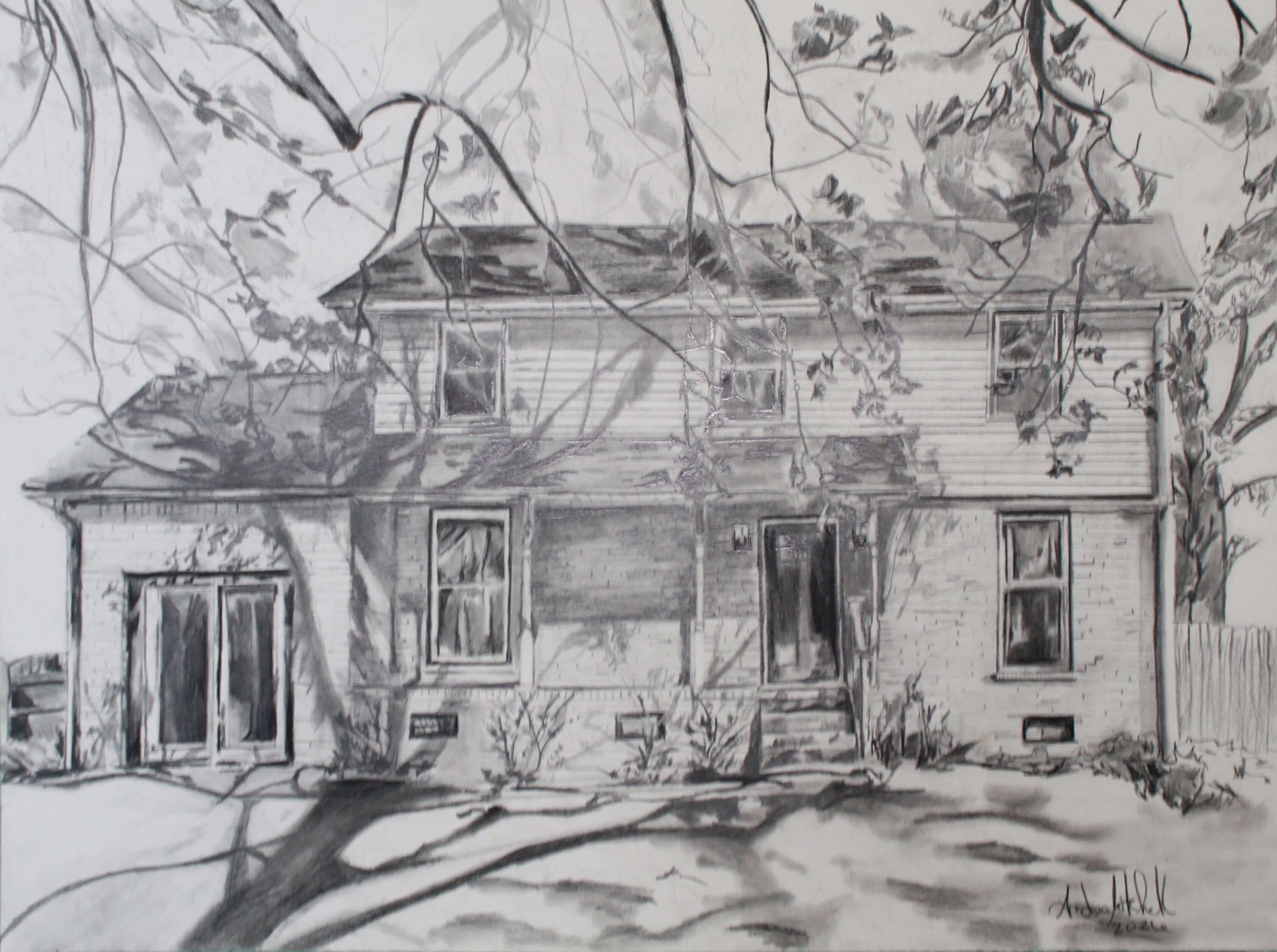
The second project focuses on houses, using pencil. I've always felt deeply connected to the energy of land and the homes I've experienced. I can sense energy shifts and presences within spaces, and I often relate to houses as if they carry their own identities. This connects to both art therapy, where drawing a house can be a diagnostic tool, and the physical body, where we often use the metaphor of the body as a house.
For this project, I visit historic homes, both public and private, and intuitively engage with the space and its history. I then translate that experience into drawings. While they may appear as traditional renderings, each piece reflects how the home feels and appears to me — its energy, memory, and presence.
My process is intuitive but grounded. I begin with reference images and known history, but as I draw, the work evolves through a kind of internal dialogue. The final image becomes a collaboration between observation, intuition, and the energy of the place itself.