[BOUNDLESS] Art Gallery as Artistic Practice: A conversation with Susannah Papish
by Christina Nafziger
Introducing the new interview series BOUNDLESS, where we chat with artists across the US who run their own galleries, recontextualizing these art spaces as key elements of an artist’s creative practice.
Can a gallery be a creative practice? Can an art piece be an exhibition, an art space? Imagine for a moment that art making has no boundaries. Instead, an artist’s practice is boundless, free from constraint of form, medium, or even function.
Now let’s consider the artist-run space, which offers a unique opportunity to get a glimpse of what an art space can accomplish if approached as a piece of art.
Galleries and art spaces founded by artists are experiments that have the capability of showing us in real time what other types of structures and systems are possible within the art world (and possibly the world at large). In the essay Art Administration as Performative Practice / Organizing Art as Institutional Critique by Jennifer J. Snider, she explains that artist-run spaces operate as a movement, one that is “parallel to the development of institutional critique,” allowing for artists to “both reflect upon and act to improve the conditions of their arts communities and meet infrastructural needs within their cultural and social contexts.”
These artists/founders are on the forefront—they see what is possible in their minds eye often before most of us can even imagine it. Then, with or without fear, they pursue it. Like the process of making art, they conceive of an idea, sketch out the plan, and create it. It may not “work” perfectly, it may not last forever, but that is beside the point. Whether or not they stick around (the artist-run space lifespan is often just a couple of years) is irrelevant. These spaces are experimental trial and error, an act of making, a creative intervention that is an art piece in an of itself. They are case studies and examples of what is possible inside and outside the system, and inside and outside an artist’s practice.
For this series, titled BOUNDLESS, I’d like to consider an artist-run space not just as a creative experiment, but also as an act of art-making that is part of the founder’s practice. In each installment, I’ll be chatting with the artist behind the artist-run space, artists who have taken it upon themselves to start building the infrastructure needed for growing and nourishing a thriving art community.
***
For the first installment, I spoke with Susannah Papish, artist and founder of boundary. Founded in 2017 and located in a converted garage in Morgan Park on the south side of Chicago, their mission is “to provide opportunities for Chicago-based, national and international artists to exhibit works in progress as well completed bodies of work.” Papish and I discuss the origin story of the space, her personal drawing and painting practice, and how her approach to art making impacts how she runs boundary.
www.boundarychicago.space | Instagram: @boundarychicagospace
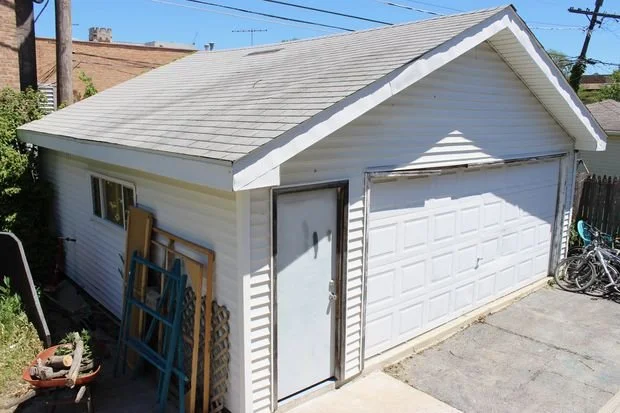
Image: An exterior view of boundary.
The origin story of boundary feels like a natural place to start the conversation. What was the catalyst behind its inception? What was happening in your life leading up to launching the project?
The motivation for starting boundary was based on the DIY galleries I began visiting in the late 90’s, when I started my studio practice. The Uncomfortable Spaces galleries were hugely influential, in my opinion, for so many later spaces like Law Office, Suitable, Dogmatic and other galleries outside the commercial structures. They were all incredible places to see work, and visiting a space in someone’s home, garage, or basement was part of the whole experience. It made art accessible, and often the artists were there so you could talk to them and learn about the work, how they came to show it there, and more. Having the context was important to me. Of course, it was also a social scene, so it allowed me to make friends and connections I might not otherwise have ever met. I still have friends from that time!
Before establishing boundary in 2017, my friend Larry Lee had been curating and talking about opening a gallery and I had curated a couple of shows and written a bit as well, so we felt ready to open a project space. Inspired by all the DIY galleries we had visited, we agreed on my garage because it already had drywall and heat. There was the usual garage stuff in it, but I had room elsewhere to store it. My brother passed away suddenly in March of that year and we were due to open in June, so I must credit Larry with getting it off the ground for the June opening. The name was inspired by being located about a mile from one of the far south side boundaries of the city.
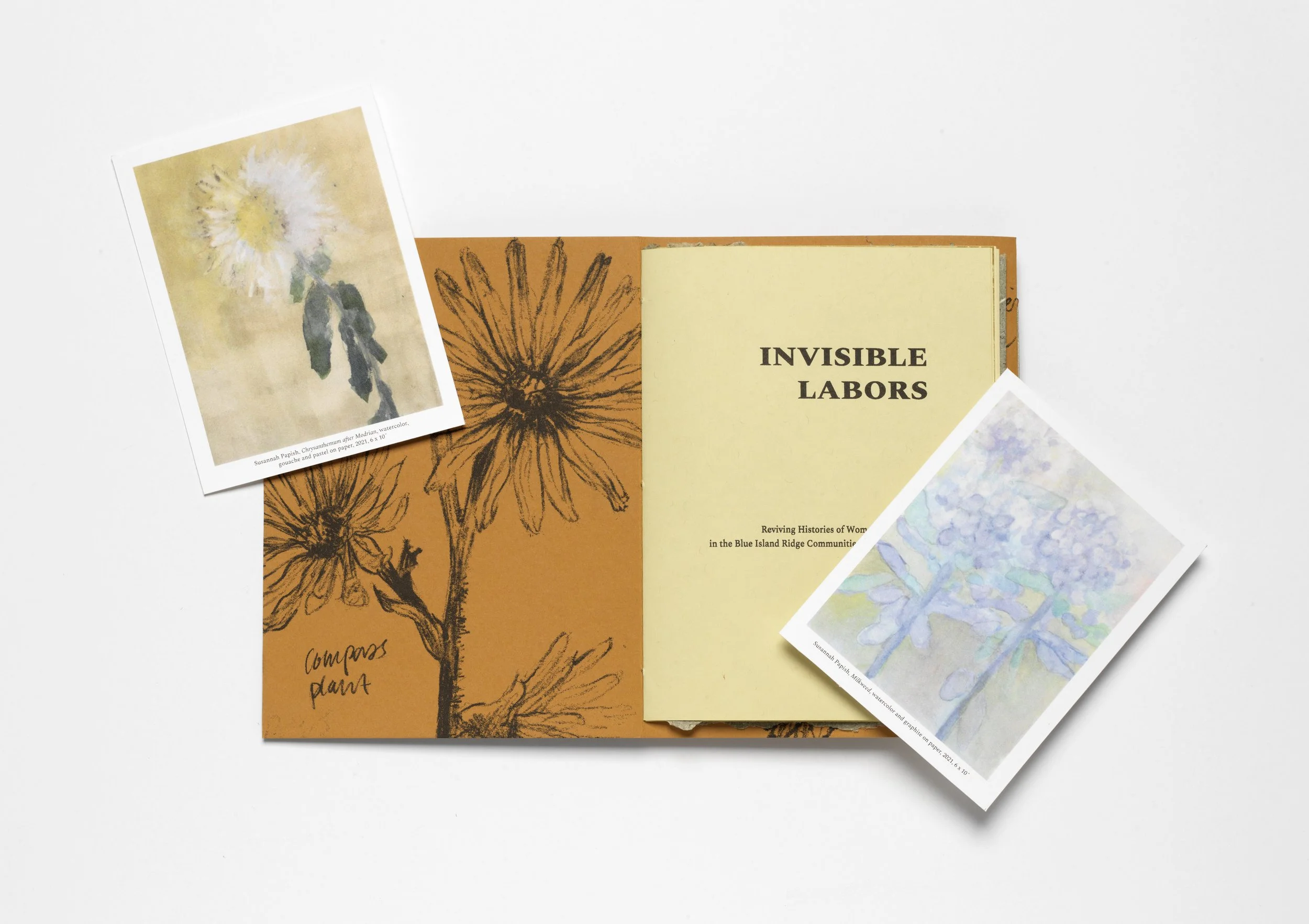
Image: Invisible Labors, inside cover with two postcard reproductions of paintings by Susannah Papish. Image provided by Susannah Papish.
I understand you studied painting and drawing at the School of the Art Institute of Chicago. Can you talk a bit about your current drawing and painting practice?
Lately, my practice is a bit scattered to be honest. My studio situation has been in flux since my basement flooded a couple of years ago and I haven’t had a ton of space to do work. I’ve been working upstairs, but not having a totally dedicated space isn’t conducive to getting much done. I say this and then I look at my work and realize I did a bunch over the last year! It’s just so folded into my domestic space that I’m not conscious that I’m even doing it. I suppose that’s ok too. As far as my actual practice, I am still painting and these days I work mostly with watercolor and walnut ink on handmade paper. I’m obsessed with handmade paper; it’s an amazing surface to work on, and the pigments look incredible. Also, I am supporting artists who make the paper, so that’s cool too. I love oil paint—I call it the cashmere of paint.
Lately, I’ve been drawing with pencil and markers using forms inspired by my garden. These images often become abstracted versions of the actual forms, and don’t end up looking like an identifiable plant or flower. I like working with transparency, both in layering the forms and the way I use the pigments. These days, I think of myself as in it for the long game, meaning I’m not always pursuing shows, but if they are the right fit, I certainly want to participate. I am friends with some artists a generation ahead of me and they really inspire me to keep working.
How does boundary intersect with your art practice? Do you see boundary as a separate curatorial project or an extension of your art practice?
I see boundary as a separate curatorial project. My undergrad degree is in art history and I have always loved doing research. So, because of boundary, I am often researching artists and going on studio visits. I love talking with artists and understanding more about their work through our conversations. One of my goals with boundary is to provide a space for artists to perhaps have their first solo show. Occasionally, I find a couple or a group of artists whose work is connected in some way and I would like to match them up for a show. There have been times when an artist would like to invite other artists whose work complements their own. These small group shows tend to grow organically in contrast to a traditional curatorial process.
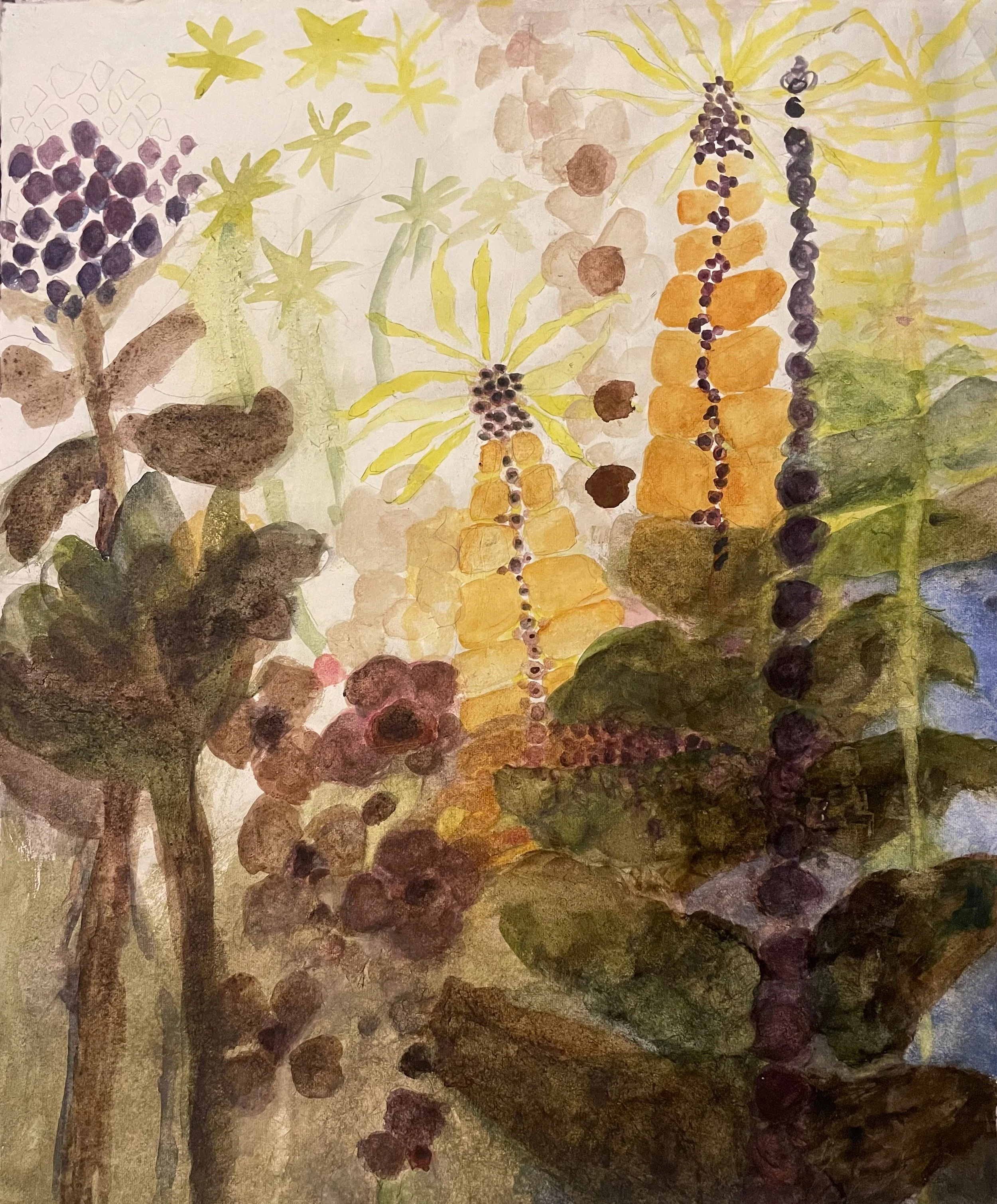
Image: Susannah Papish, Autumn, watercolor and walnut ink on handmade paper, 18x24”, 2025.
How has running boundary impacted the way you approach art making? How has it shaped the way you see being an artist?
The artists I talk to make me more serious about my own work. After I talk to an artist, I feel uplifted by the conversation, and then also grounded in the choices I’ve made to pursue life as an artist and for the past 10 years as a curator and writer! I suppose overall I feel that my work with boundary has an impact in a small way in the world, but in a big way personally.
Having curated and organized gallery exhibitions myself, I feel like a big part of the work is cultivating your audience and creating a space for building community. Does this resonate with you and your work at boundary?
Absolutely! One of my favorite parts about boundary is that each artist brings a new community of folks into my orbit. I meet so many artists and sometimes we stay in touch and a studio visit may result from a connection, or we follow each other on social media and I see their work that way. Also, I get so many people from my neighborhood who come by just to check out what’s going on in my garage, which is very cool. Many times, they are quite surprised that a contemporary art gallery exists in their neighborhood, so I feel good that I can offer that to my community. People get to see art they may have never seen otherwise within a mile or two of where they live. My neighborhood is very community-oriented, so I think people appreciate how unique it is to have something like this, even if they aren’t keyed into the Chicago art scene.
Curating, hosting events, and developing a space is truly creative work. How do you use creativity in your work at boundary? In other words, are there creative skills you have as an artist that applies to running a project space?
I am the most creative when I am doing studio visits and hanging shows. The conversations that take place during a studio visit are so enlightening and provide a time to engage with the work on a deeper level. As an outsider, I feel like I can make connections with the work that perhaps the artist hadn’t considered and then the conversation continues to evolve—like peeling an onion. I also love to offer resources when I can—a book, film, another artist’s work for them to see if they haven’t, and I love to hear their feedback. I usually do a studio visit about a year before the artist is scheduled and then one about a month before their show. It’s interesting to see how the work has unfolded over that time.
When we hang the show, I collaborate with artists unless they have a specific installation plan. We often spend a great deal of time selecting and arranging work and it is so fun! It’s another opportunity to talk about the work, their process, and ultimately the choices of what to display or not. By the time the show opens, I feel like I’ve “read the whole book,” so to speak and can engage with visitors and discuss the artworks.
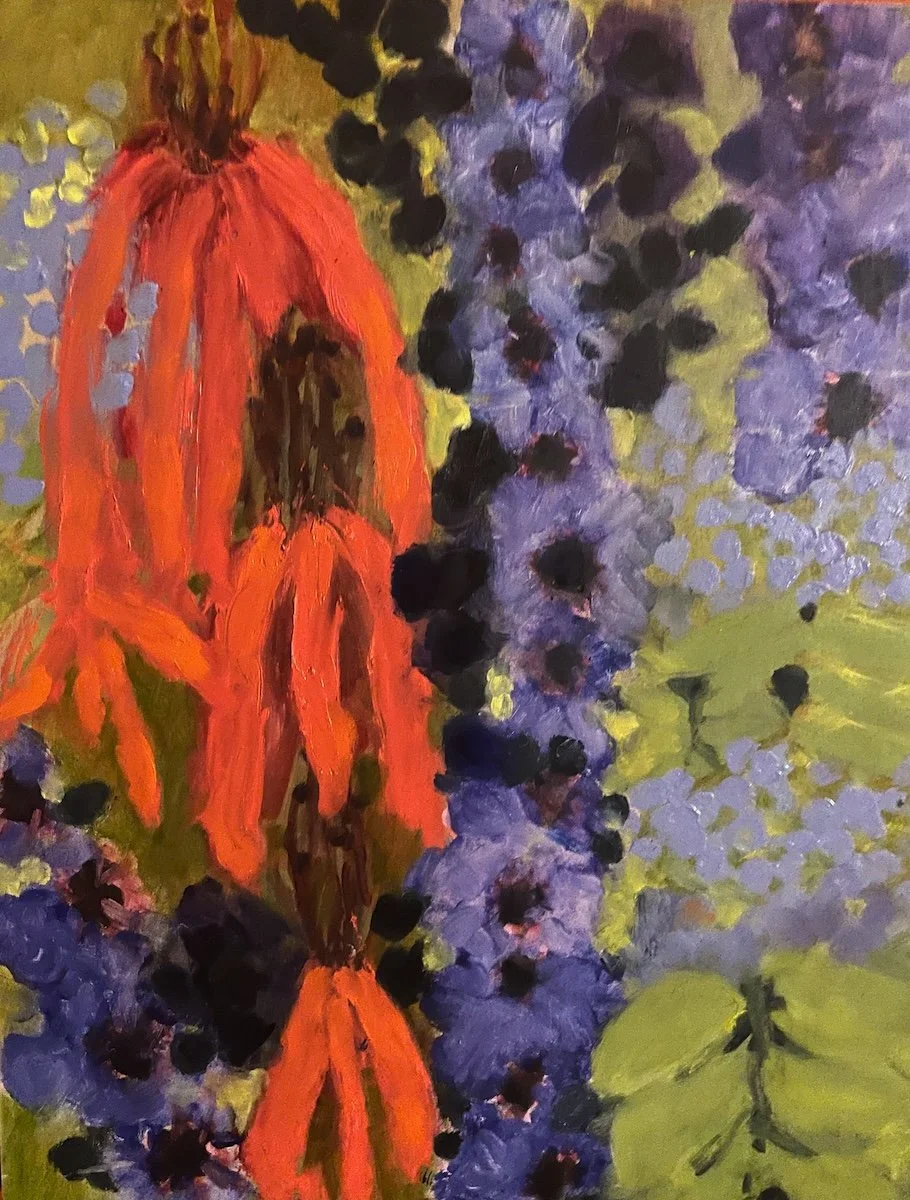
Image: Painting by Susannah Papish, courtesy of the artist.
What originally brought you to Chicago and what keeps you here?
I’ve lived here all of my life. My parents were from here as well, my mom grew up about five miles from where I live now. I grew up on the south side and returned to live in Morgan Park, which became my home when I was in my late 20’s. Our house was cheap and I could have a studio, and that’s still the case today! I also have two college-age kids living with me and our lives are pretty much settled here. Other than that, I have a great group of friends, colleagues, and community.
Chicago has a long-standing history of artist-run spaces, DIY exhibitions, and apartment galleries. Are there other artist-run spaces in Chicago you look to for motivation and/or inspiration?
I have known Dan from Devening Projects and Bill Gross from 65Grand for many years. They have moved a bit beyond the DIY space scene, but are still people I look to for motivation, and I respect their programming a great deal. 4th Ward Project Space has excellent programming and James Kao has been a great friend and colleague for many years, and also had a show at boundary. I was always excited to see what Eric Ruschman (RUSCHMAN and RUSCHWOMAN) was showing and I was sad when he closed those spaces. Other spaces I look to are Soccer Club Club—they are run by Drag City Records (I believe), but they still seem sort of more independent from the commercial galleries. I usually check out Tiger Strikes Asteroid, Chicago Art Department, and other non-profit spaces. I have other galleries on my radar to visit—Prairie, Soft Systems, Parlour and Ramp. I am planning to visit Junior, which I believe is an artist-run or DIY space.
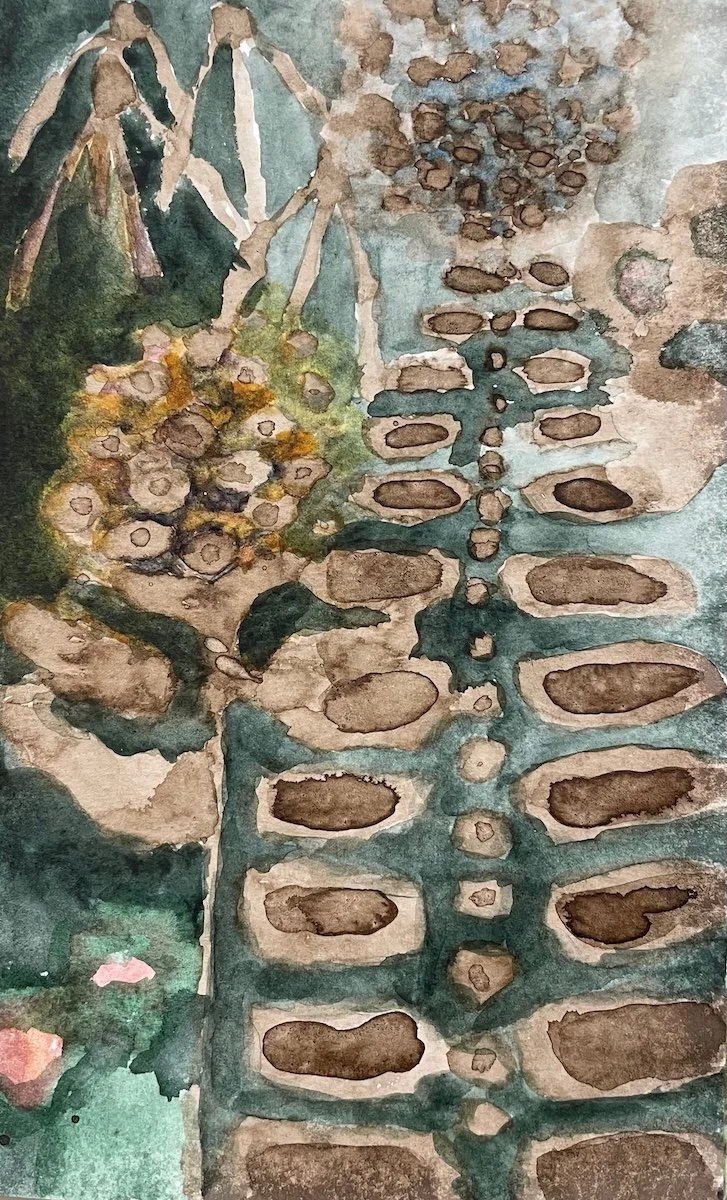
Image: Painting by Susannah Papish, courtesy of the artist.