

From Day Jobs to Patrons: How History's Greatest Artists Funded Their Creative Lives, with Mason Currey
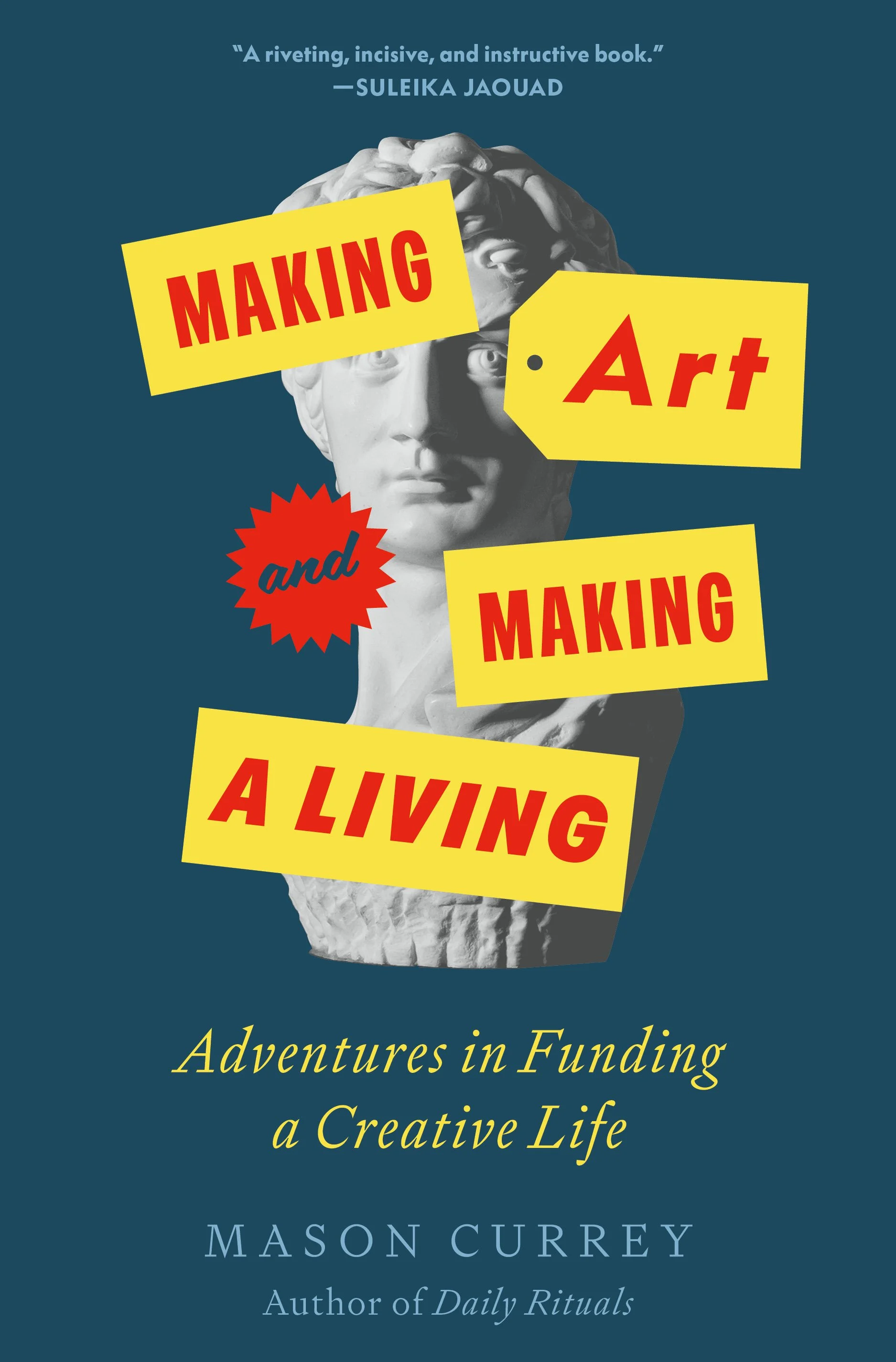
What does it actually take to make art and make a living at the same time? If you have ever asked yourself this question, you are not alone, and as it turns out, you are not even close to the first. Artists have been wrestling with this exact tension for centuries, and the ways they found to fund their creative lives range from deeply relatable to genuinely shocking.
This week on the Create! Podcast, Ekaterina Popova sits down with Mason Currey, author of the beloved Daily Rituals series and his brand new book, Making Art and Making a Living (Celadon Books). Mason has spent years researching the day-to-day habits and financial realities of history's most brilliant creative minds, and this conversation is full of the kind of honest, grounding perspective that art school never quite gives you.
About Mason Currey

Mason Currey is the author of Daily Rituals: How Artists Work and Daily Rituals: Women at Work, which profile the working habits of more than three hundred brilliant minds. His new book, Making Art and Making a Living, goes even deeper, exploring how artists across history have funded their creative practices through day jobs, patrons, inheritances, government grants, and a few methods that fall into considerably grayer territory.
He has served as managing editor of Metropolis, executive editor of Print, and senior editor at Core77. His writing has appeared in The New Yorker, The New York Times, The Atlantic, and Slate. He lives in Los Angeles and writes Subtle Maneuvers, a twice-monthly newsletter on the creative process.
What We Talk About in This Episode
You can't do it alone. Mason's biggest realization as a young writer was that his image of the solitary genius creating in isolation was not just romanticized, it was actively getting in his way. The most generative periods for artists throughout history have almost always involved community, scenes, and collaborators. Whether it was young artists in Paris staging their own shows or writers trading drafts in cramped apartments, the social infrastructure around the work matters as much as the work itself.
Constraints are an artist's secret weapon. One of the most surprising threads in Mason's research is how often artists did their best work under financial pressure, not in spite of it. When Mason finally had the freedom to write full time after his first book's success, he froze. The absence of constraints, deadlines, and necessity left him blocked. The poet Baudelaire, whose family cut off his inheritance and put him on a strict allowance, produced some of his most vital work from exactly that place of exasperated, comic desperation.
Reverse engineer the career you want. Mason shares a piece of advice from novelist Alexander Chee that applies far beyond writing: study the careers of people ten or twenty years ahead of you. Where did they show? What grants and fellowships did they receive? What publications accepted their work? The path is not mysterious; it is usually traceable. You can unpack it and find your entry points.
Follow your energy, not your strategy. Mason's most career-defining moments came when he stopped trying to be strategic and started following genuine curiosity. His entire writing career grew from a blog he started while procrastinating at his desk job, because he wanted to know how writers he admired actually organized their time. That blog, started for himself, with about twelve readers, eventually led to his books and everything that followed.
The shame around day jobs is a lie. For so many working artists, especially those who graduated with art degrees and expected their careers to look a certain way, there is a persistent low-level shame around having a day job, a side hustle, or a career path that does not look linear. Mason's research makes clear that this shame has no historical basis. Most artists whose work we now consider canonical were doing exactly the same thing.
A Highlight from the Conversation
On what he wishes he had known as a young writer:
"The feeling that I don't know if I'm doing this right is not a sign that you're not doing it right. That's how everyone has felt. You just have to keep chipping away at it. You probably can't afford your dream artist lifestyle, but you probably can afford to do something, even if it's thirty minutes before work. That is actually how most really cool stuff and most great careers happen."
Listen to the Full Episode
Search Create! Podcastwherever you listen, or find the episode linked in our Substack.
Get Involved with Create! Magazine
Create! Magazine celebrates working artists through features, interviews, and juried open calls connecting contemporary artists with curators, galleries, and a global audience. Explore print and digital issues, open calls for submission, and free resources for artists at createmagazine.co.
Ready to grow your art career with step-by-step guidance? Find micro courses on marketing, sales, visibility, and building your practice at createu.co.
Further Reading
Making Art and Making a Living by Mason Currey is available now from Celadon Books. You can also find Mason's newsletter, Subtle Maneuvers, and links to all his books at masonwcurrey.com.
Tags: artist podcast, making art and making a living, Mason Currey, daily rituals, creative career, art business, how artists make money, sustainable creative practice, working artist, artist day job, creative entrepreneurship, art funding, Ekaterina Popova, Create Magazine podcast