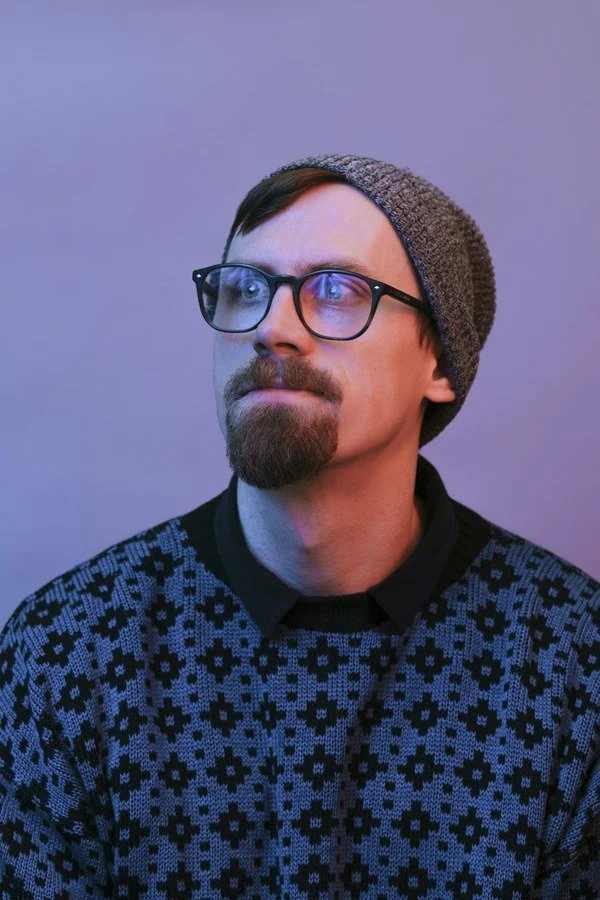
Frank Geiser is an artist, arts writer, and art educator based in the Chicago South Suburbs. He was born in Milwaukee and grew up in rural Southeast Wisconsin five miles off the coast of Lake Michigan. Geiser started painting at the age of 13, which he continued all throughout his teenage years. After completing high school, Geiser received a scholarship to study art at Xavier University in Cincinnati, Ohio. In 2017 Geiser was awarded a Winter-Cohen Family Brueggeman Fellowship, which provided initial funding for a long-term photo documentary photography project studying monks and ascetics around the world. Geiser completed his BFA degree at Xavier in 2018, receiving Xavier University’s annual Art Award in the process.
After completing his undergraduate studies, Geiser was awarded a fully funded graduate TA position at the University of Kentucky, where he taught classes in digital art and photography until he completed his MFA studies in 2021. Since completing his MFA, Geiser has held solo shows at Artlink Gallery in Fort Wayne, Georgetown College, and The People’s Church of East Lansing, his art has been included in group exhibitions at South Shore Arts in Munster, IN, the Hammond Public Library in Hammond, IN, ARC Gallery, Agitator Gallery, and Pilsen Arts and Community House in Chicago, IL, the Praxis Photo Art Center in Minneapolis, MN, and PH21 Gallery in Budapest. His artworks are a part of 21c museum’s collection as well as several private collections across the United States.
Geiser is currently an assistant professor of practice in Visual Communication and Design at Purdue University Northwest. In addition to his practice as an artist and a teacher, his writing has been published by Newcity magazine and Sixty Inches from Center.
Artist Statement
My art practice balances competing interests in monumentality and impermanence.
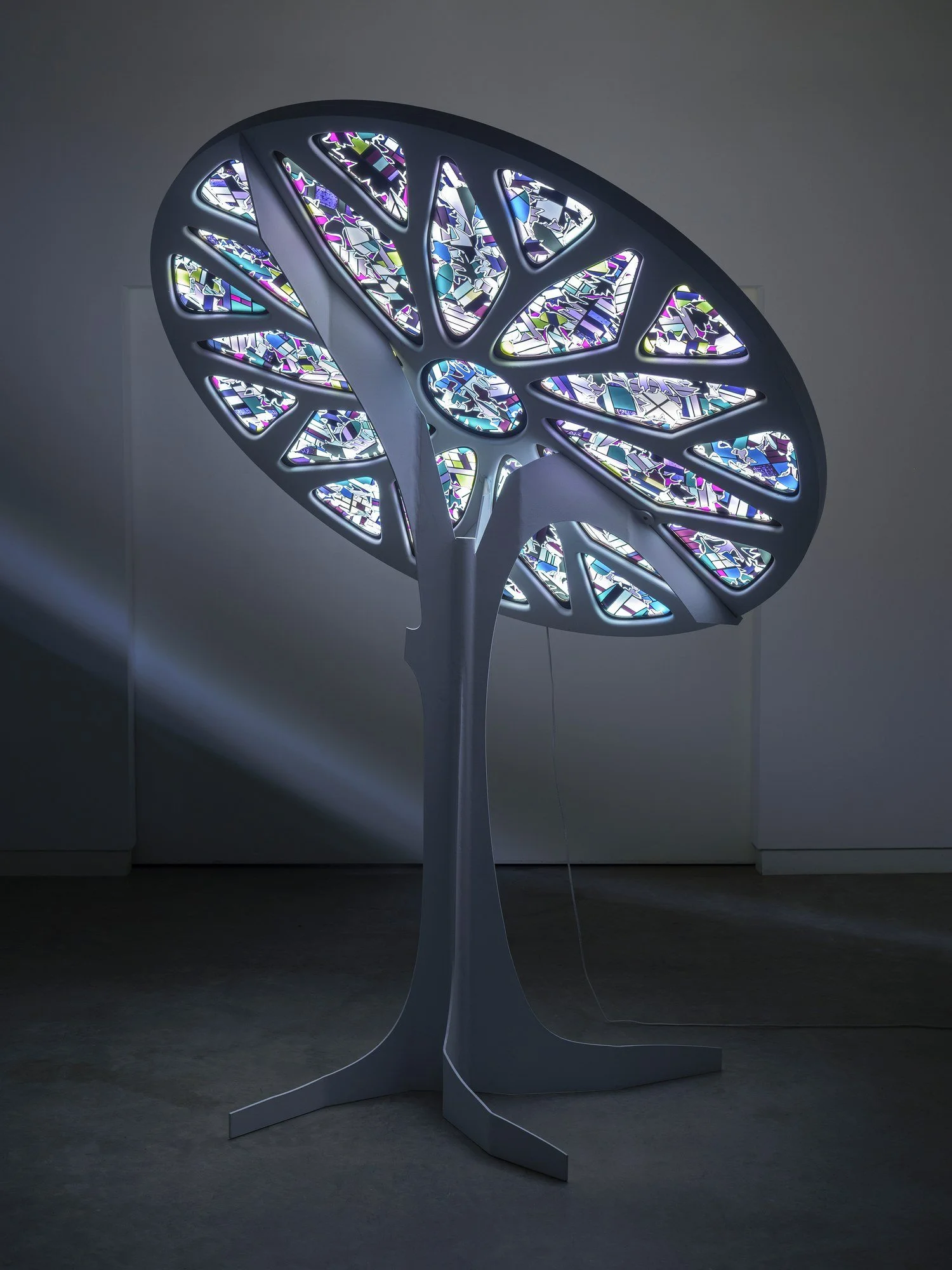
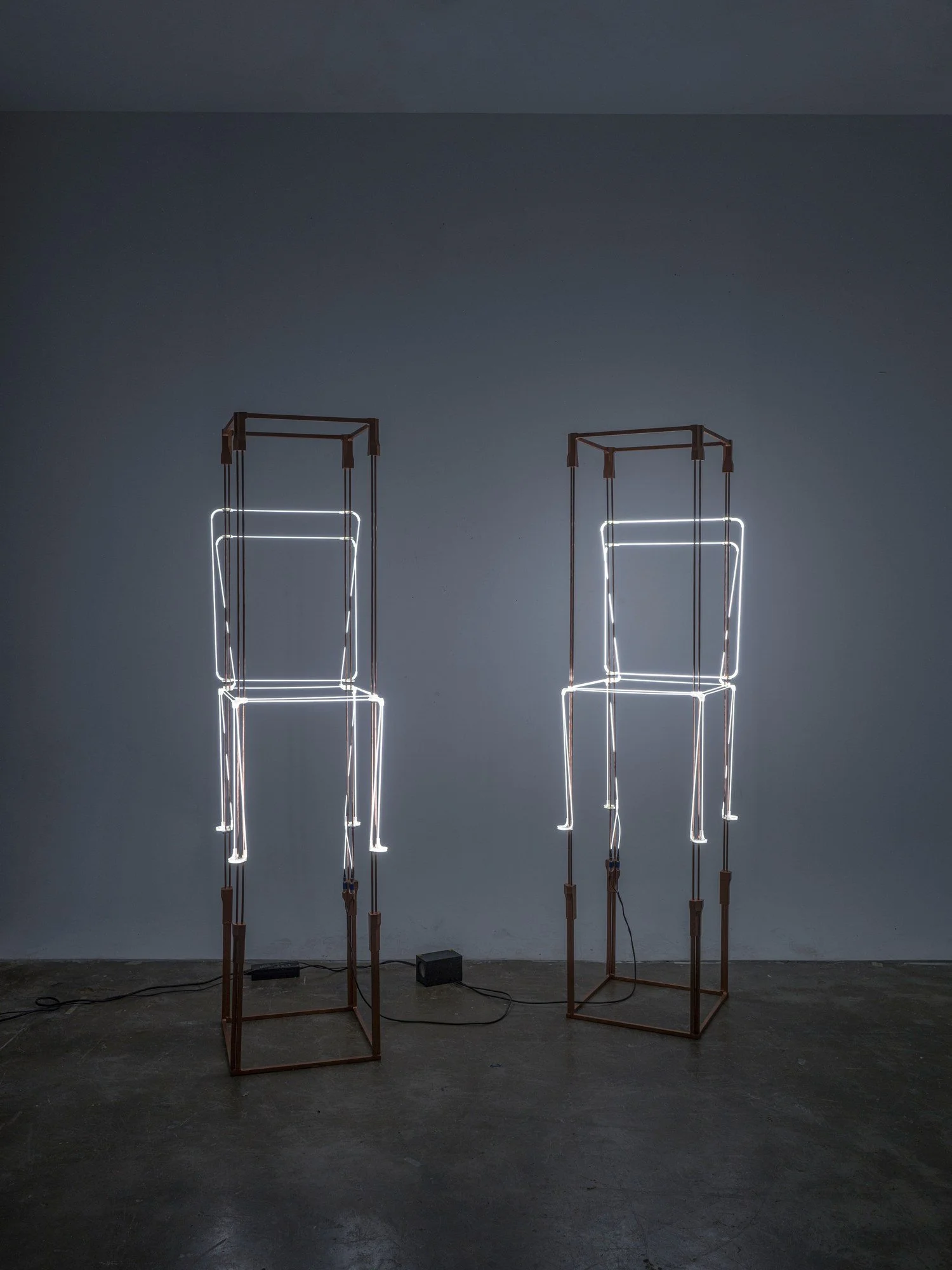
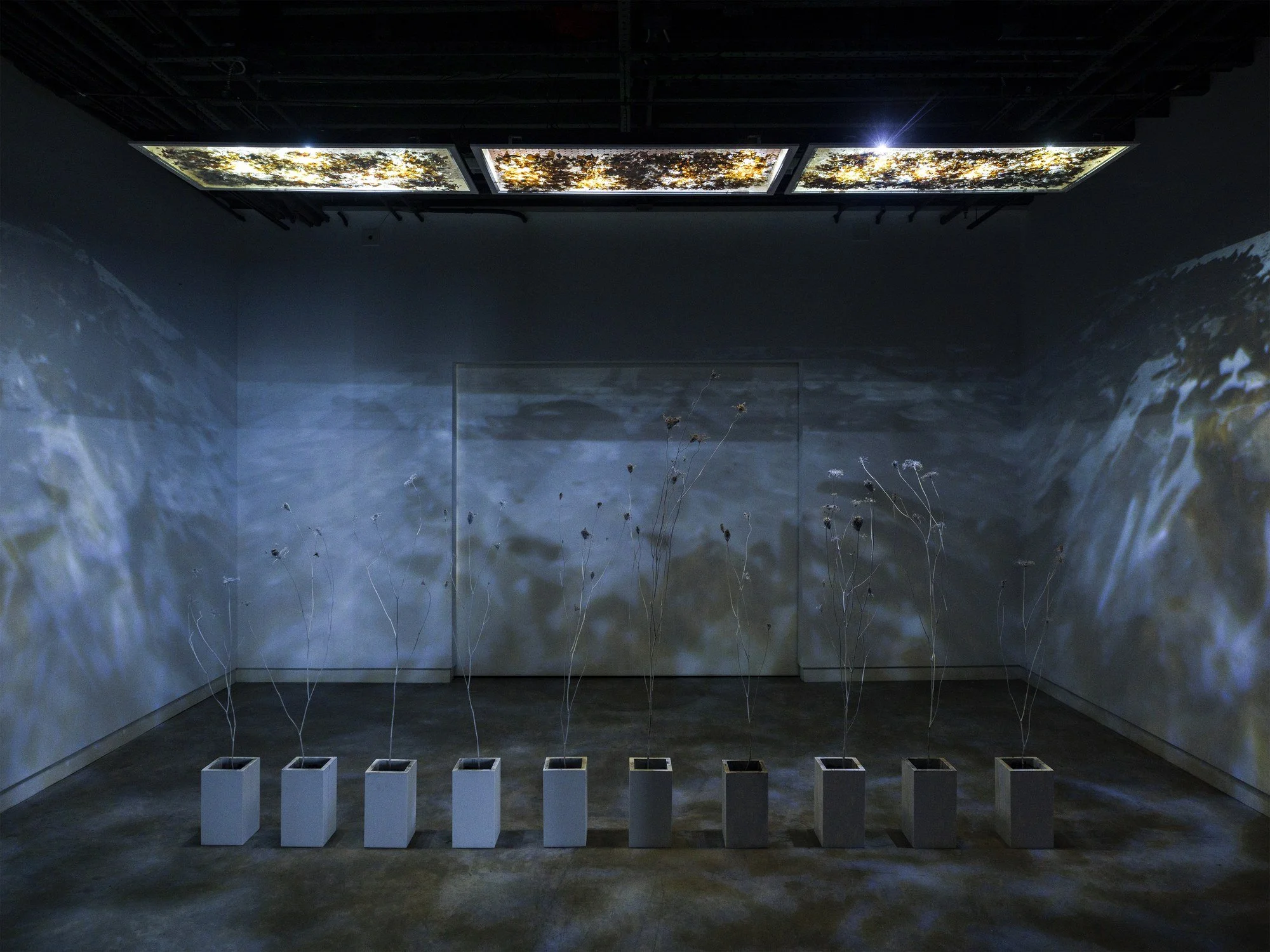
I am equally drawn to creating images and objects. My work is an interdisciplinary blend of industrial design, photography, installation, painting, and video. I think of creating photographs and video clips as a way of preserving delicate or transient moments, and I think of assembling physical materials as a process of clarifying my understanding of their embedded history. My artworks are linked by a technical use of light as a mediator between memories and materials.
I am drawn to things that retain some tangible aspect of forces that have shaped them over time. Many of the materials I use are blank, empty, broken, or faded in some way, alluding to sentimental and individual histories these states embody.
Attention is an increasingly radical act. I hope my artworks function as gentle reminders to be fully present in idle moments—prioritizing mindfulness without specific expectations.
Mini Interview
What is the central theme or concept behind your current body of work?
I work in a lot of different ways, so the concepts that inform my work are necessarily broad. I think a lot about impermanence and fleeting moments, and so most of my works can be understood as a way of processing change. We humans are really limited in our understanding of time: On one hand, cosmic time is so vast that we can’t fully comprehend it, but also computers and digital instruments increasingly operate in units of time that are unfathomably quick. We can’t really engage with time outside of this little window that I think of as human scaled time, and I want my artworks to really push against that barrier.
How do you hope your work resonates with or impacts your viewers?
My practice is deeply connected to an assumption that the things around us, including things so ordinary we don’t pay attention to them, are far more complicated and interesting than they appear at a quick glance. Everything exists as a fragile moment, and I think my work is at its best when it allows someone to pause and appreciate that moment.
Can you share a pivotal moment that has shaped your artistic journey?
When I was an undergrad art student at Xavier University, I was awarded a research fellowship that funded travel for a photo project that documented monasteries, ashrams, gonpas, and other contemplative spaces around the world. I think of this as the origin story for my current work. At the beginning of this project, which is now an ongoing photo series titled “Lots of time to read,” I was set on discovering some sort of universal truth that these spaces all shared. What I found instead was vastly different understandings of things like prayer, routine, and wisdom within different cultures, but it wasn’t a disappointing discovery at all. It really contextualized a lot of the ideas I took for granted as a younger artist.
What advice would you offer to emerging artists navigating today’s art world?
The art world isn’t a singular thing, or a singular group. The only sustainable way to keep working as an artist in the long term is to find your people, and it’s a marathon, not a sprint. If you can find people that inspire you, push you, and support you, I suspect you’ll find yourself where you want to be.
Are there any upcoming projects or exhibitions you would like to share with our readers?
In the past, I’ve treated my photography, drawing, and installation work as separate practices, and recently I’ve been really pushing myself to consider them as one, cohesive way of thinking about the world. I’m really excited about how this mindset change has affected the way I’m looking at my older work, and I hope to put together some larger-scale exhibitions that help bridge everything together.