Temporary Cosmologies: Jana Astanov on Ritual, Astrofeminism, and the Art of Transmission
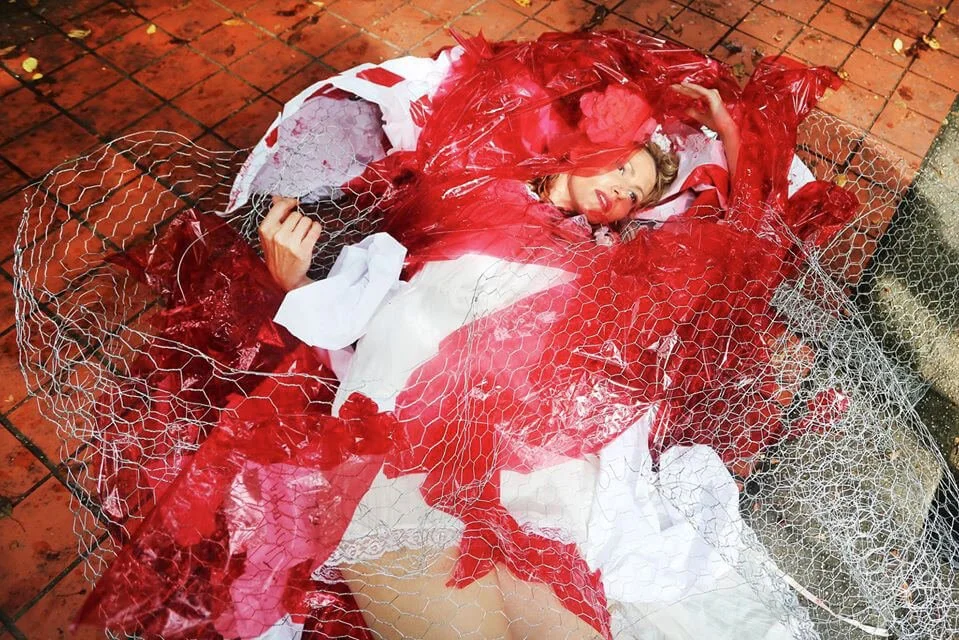
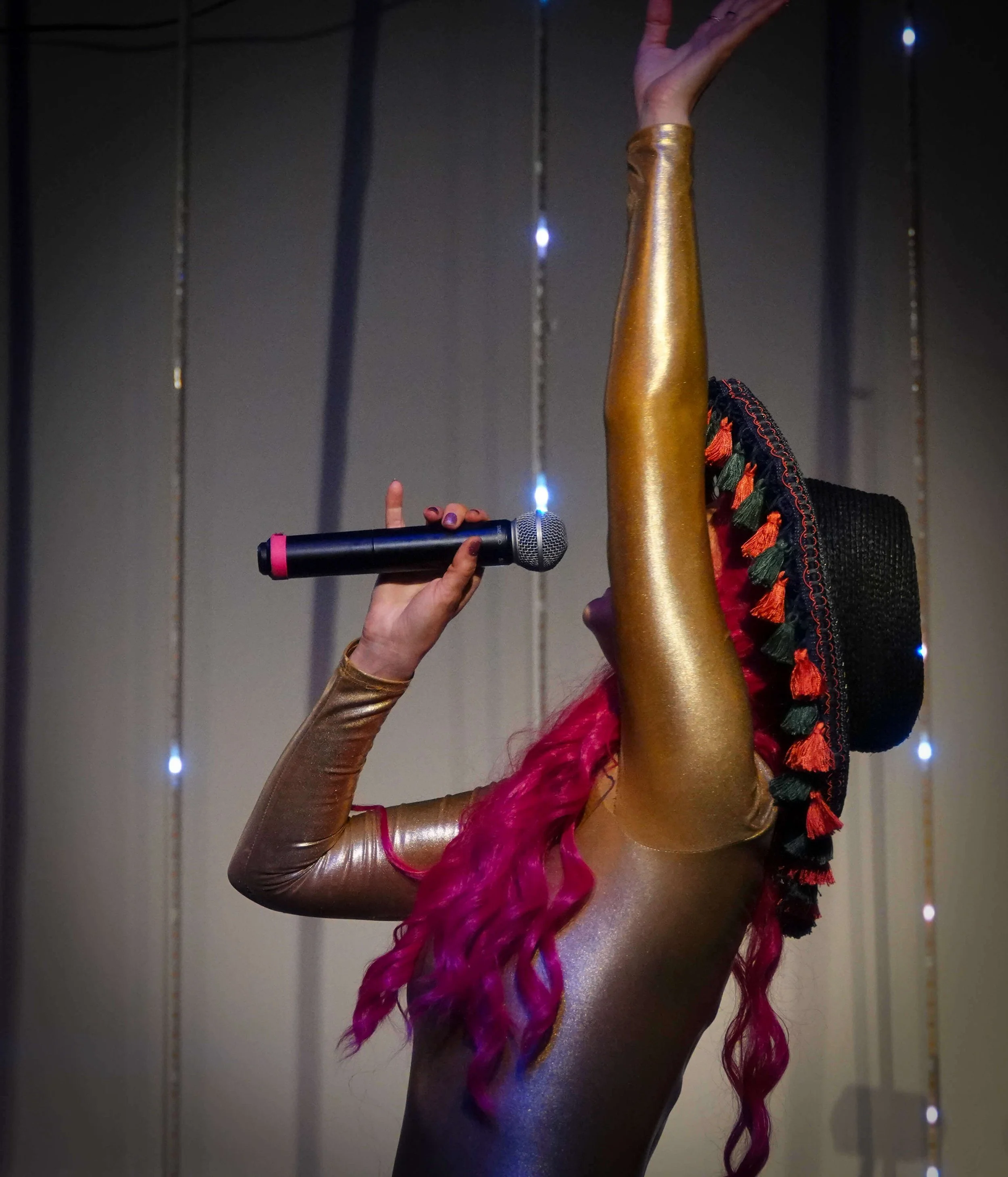
Jana Astanov is an interdisciplinary artist, writer, and independent curator originally from the Mazuria (Mazury) Lake District in Poland, now based in the Shawangunk Mountains in the United States. She is the founder of CREATRIX Magazine (www.creatrixmag.com), a platform that merges art, activism, and spirituality. Her body of work spans performance art, writing, photography, sound art, and installation. Astanov draws upon spiritual traditions, ritual theater, hypnotic trance, sound art, and astrofeminism, a concept she developed through her ongoing durational performance persona, Agni Jnana Yannanda: The One Who Speaks With The Stars. This performance embodies the essence of the Artist as Medium, through which she channels energies, memories, and ideas into artistic expression.
She is the author of six poetry collections: Antidivine, Northern Grimoire, Sublunar, The Pillow Book of Burg, and Birds of Equinox. In 2017, she founded Red Temple Press, an imprint of CREATRIX Magazine. Astanov has presented her work internationally, performing at Tate Modern, Smack Mellon Gallery, Grace Exhibition Space, the Venice Biennale, Documenta 2017, and numerous galleries, festivals, and independent venues worldwide.
Artist Statement
Jana Astanov is an interdisciplinary artist whose work spans performance, installation, photography, sound, and writing. Her practice draws on trance, movement, and site-specific ceremony to create immersive environments in which the audience becomes part of a living cosmological field. She approaches the body as a ritual instrument, linking land, stars, and collective presence through participatory actions that open spaces of heightened perception and shared experience.
Astanov's work integrates mythic knowledge with contemporary technology, shaping a form of ritual futurism that sees human, earthly, and cosmic intelligence as deeply intertwined. Drawing from her upbringing in the Mazuria Lake District of Poland and her engagement with Slavic and Baltic folk traditions, she merges ancestral memory with experimental media and intuitive practices. Astrology, sound, divination, and altered states of awareness often serve as guiding structures, allowing her performances to function as sites of transformation, spiritual inquiry, and relational healing.
Her installations and live works invite audiences into ceremonial space, where movement, breath, and symbolic gesture become methods of attunement. The work reflects on embodiment, sovereignty, and collective becoming, offering an expanded understanding of performance as both artistic and cosmological practice.
Across all media, Astanov explores art as a conduit between visible and invisible worlds and as a practice capable of reshaping our relationship to the cosmos, to each other, and to the living Earth
Web: www.janaastanov.com / www.creatrixmag.com IG: @Jana_Astanov & @CREATRIXmag
Interview
Your work spans performance, installation, photography, sound, and writing. How do you determine which medium best conveys a specific concept or ritual?
My work centers on embodiment and activation, reaching toward experiential states. Within the framework of Western art, performance is my primary medium, and other forms emerge around it as extensions or traces. Even my first book of poetry lives on SoundCloud, because it is meant to be felt through my voice like the whisper of wind, rather than simply read.
Each of my works emerges first as a kind of energetic architecture. Many begin through an encounter with a place, landscape, or environmental condition. The medium then reveals itself as the most appropriate vessel for that frequency. Some ideas require embodiment and duration, so they become performance. Others crystallize into image, object, or installation, where the viewer can enter at their own pace.
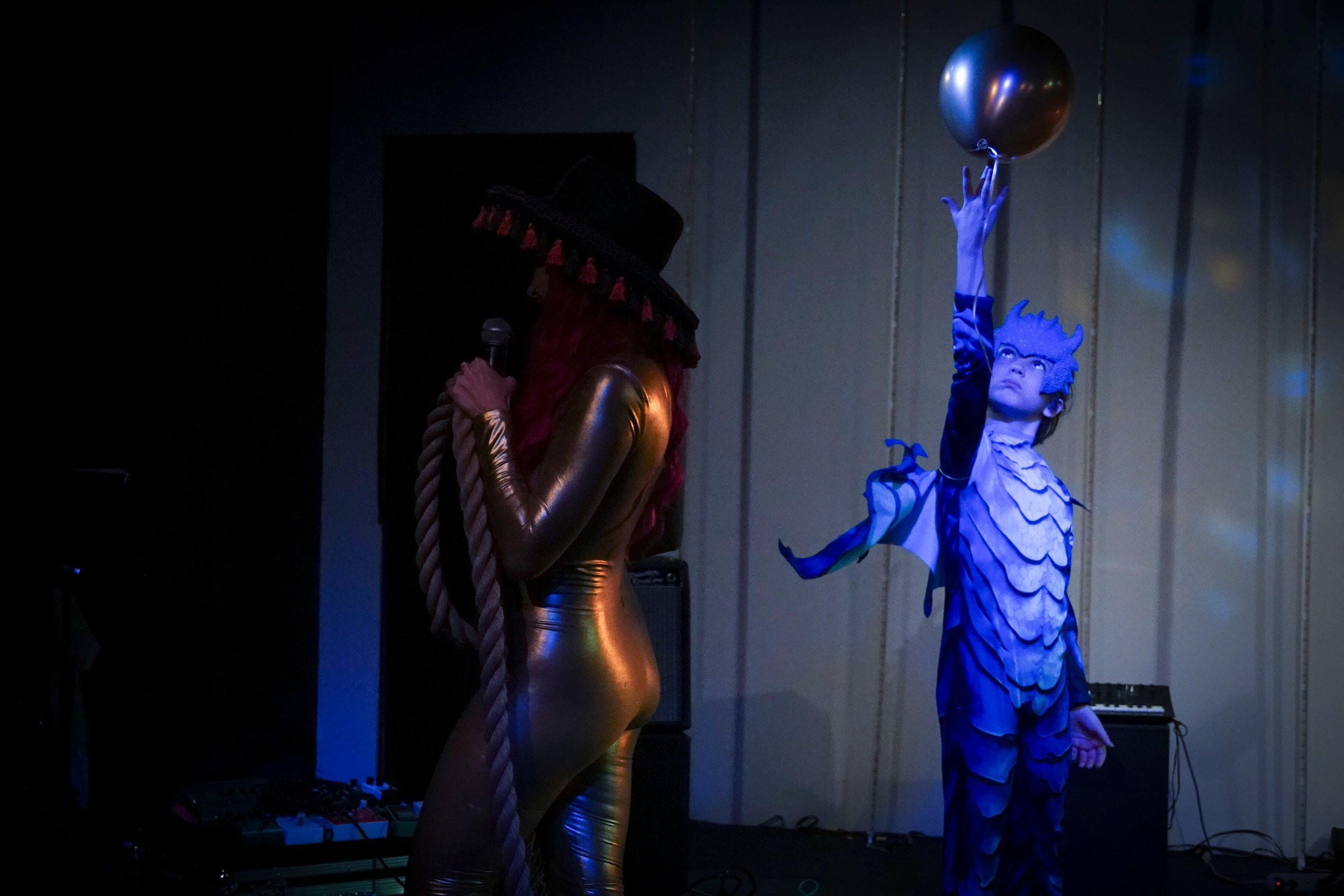
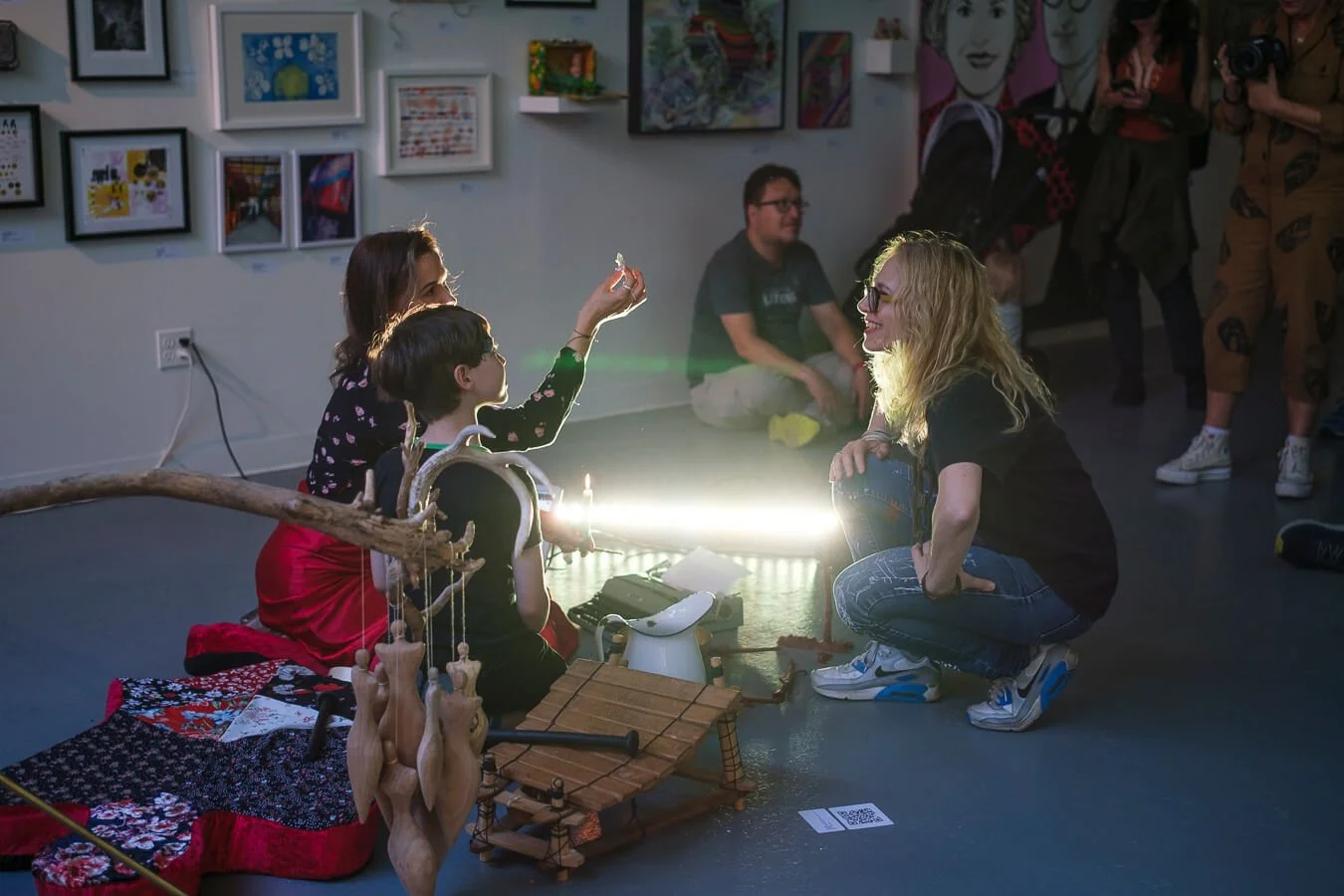
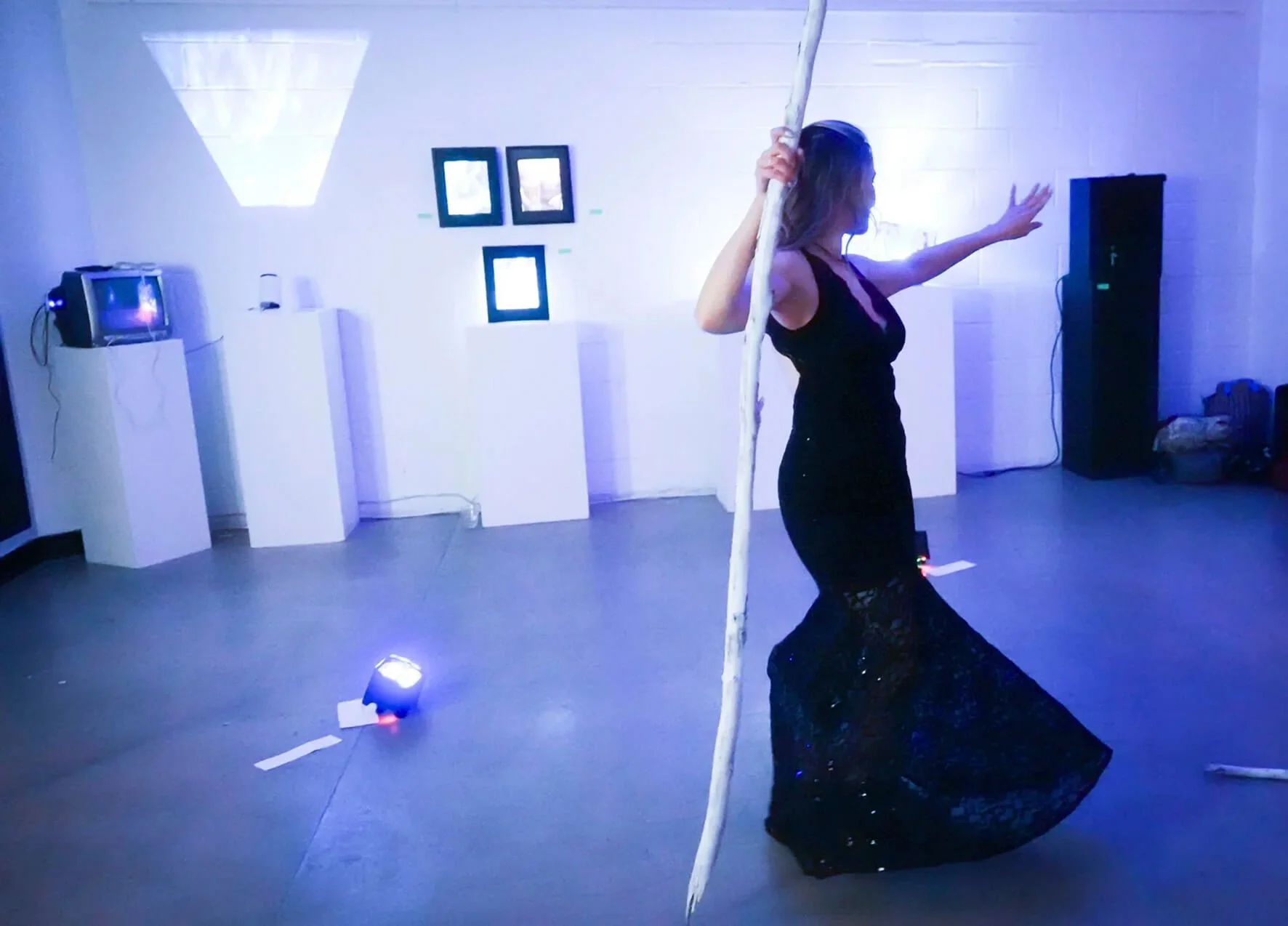
These environments often incorporate projections, ritual objects, textiles, neon language, sound frequencies, and costumes made from reclaimed materials. I think of them as temporary cosmologies: spaces where performance, sculpture, sound, moving image, and collective attention converge into a shared perceptual field. This hybridity is central to my practice.
Because my practice is rooted in ritual, the question is not "what form should this take?" but "what form can hold this experience without collapsing it?" The medium is chosen based on its capacity to transmit, not represent.
Astrofeminism is a concept you developed through your performance persona Agni Jnana Yannanda. How does this practice inform your broader artistic inquiry?
Astrofeminism began as a way to articulate a feminine intelligence that is not confined to the body, but operates across cosmic, technological, and mythic dimensions.
I'm also interested in how feminine archetypes have shifted across mythological systems and histories, often moving from sovereign cosmic forces into more secondary symbolic roles. That symbolic transformation continues to shape how power, knowledge, and intuition are culturally perceived today.
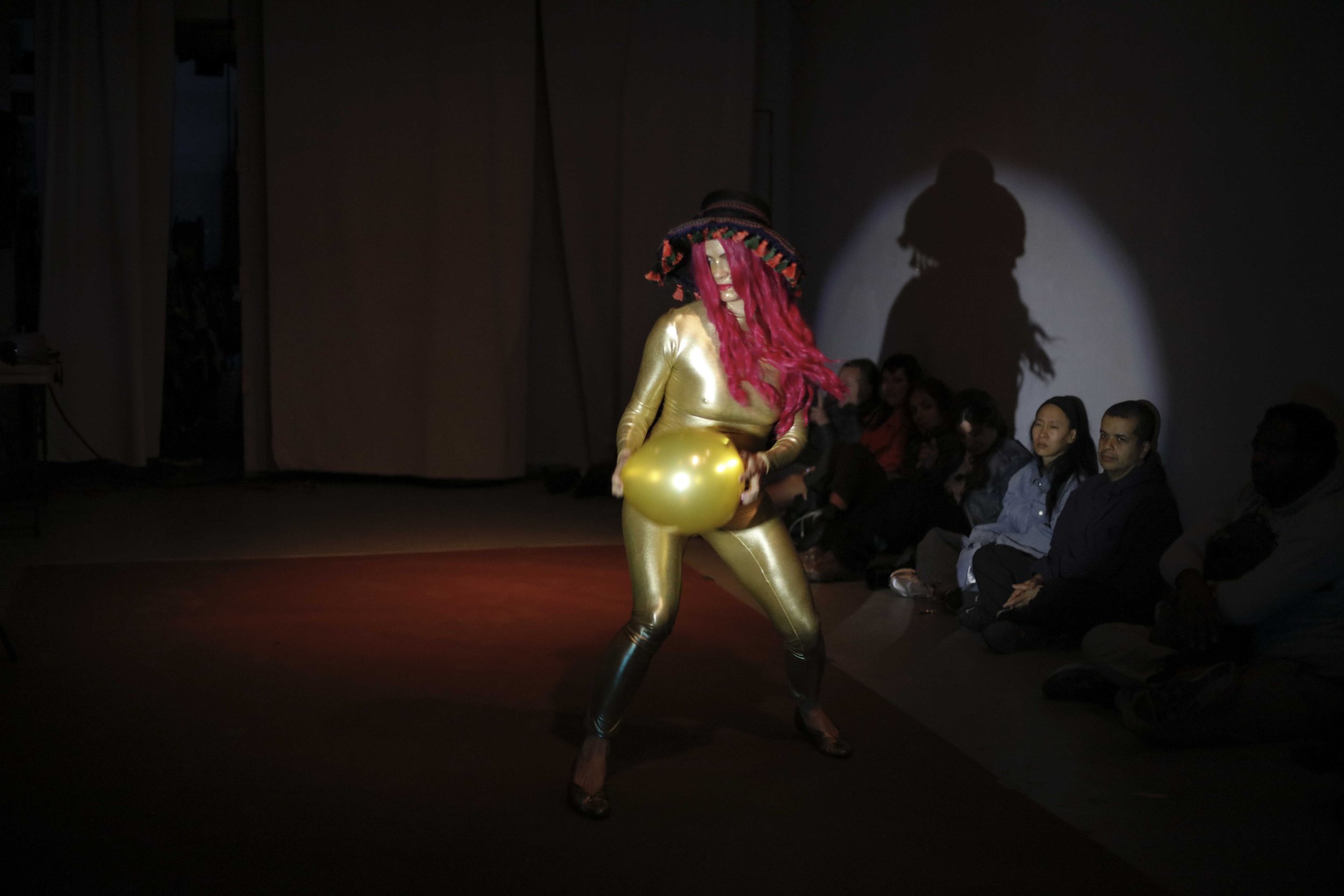
Through Agni Jnana Yannanda, I explore the figure of the oracle not simply as a symbol, but as an active interface: a body that receives, translates, and redistributes information across multiple layers of reality. This has shaped my broader practice into something that moves between embodiment and transmission.
Agni Jnana is part of my ongoing series Artist as a Medium, in which I investigate different oracular modalities including astrology, divination, hypnosis, past-life regression, meditative and trance states, and more recently, Reiki projections. Through these practices, I examine how consciousness, ritual, and perception can function as technologies of transformation.
Astrofeminism also informs how I think about power. Not as domination or visibility, but as attunement: the ability to perceive patterns, remain porous without dissolving, and generate meaning within complex systems.
As humans, we live on this planet for only a brief cycle around the Sun. Each year offers new lessons as we spiral toward a deeper understanding of ourselves and our role within our communities. Much of my life has been devoted to learning through spiritual, artistic, and embodied practices, and through Agni Jnana I seek to share some of this knowledge with others. One of her recurring phrases is: "Be your own High Priestess," meaning that intuition, perception, and inner knowledge are capacities available to all of us. Intuition, like any muscle, can be consciously trained.
You draw on Slavic and Baltic folk traditions alongside contemporary technology. How do you weave ancestral knowledge into modern expression?
For me, ancestral knowledge is not something behind us. It is something we are still inside of.
Growing up in the Mazury Lake District of Poland, where Baltic and Slavic traditions intertwine, these ways of knowing were never theoretical. Many pre-Christian traditions survived by weaving themselves into Christian calendars and liturgy. They continue to live through gestures, seasonal rituals, and relationships to land and spirit.
The land itself is also a collaborator in my work. I think of ecology as a living system of relationships that shapes perception, ritual, collective experience, and planetary consciousness. Within this context, I use the phrase "planetization of consciousness" to describe the realization that we are all traveling together on Earth, our living vessel, through the vastness of the cosmos.
When I work with technology, I don't see it as separate from that lineage. I see it as a continuation of tool-making and world-making. I'm not interested in illustrating folklore, but in activating similar perceptual states and relationships to the unseen through contemporary means.
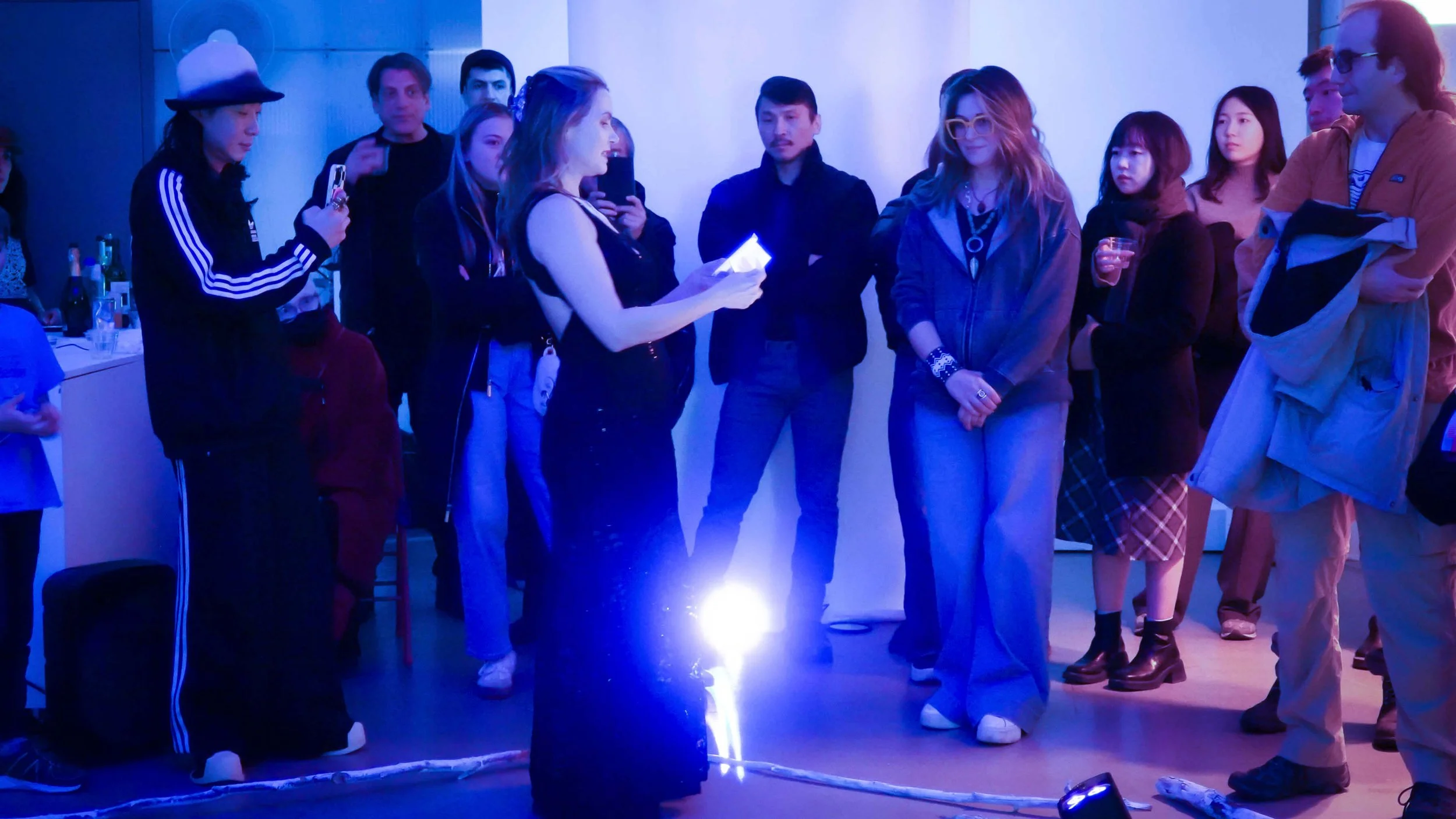
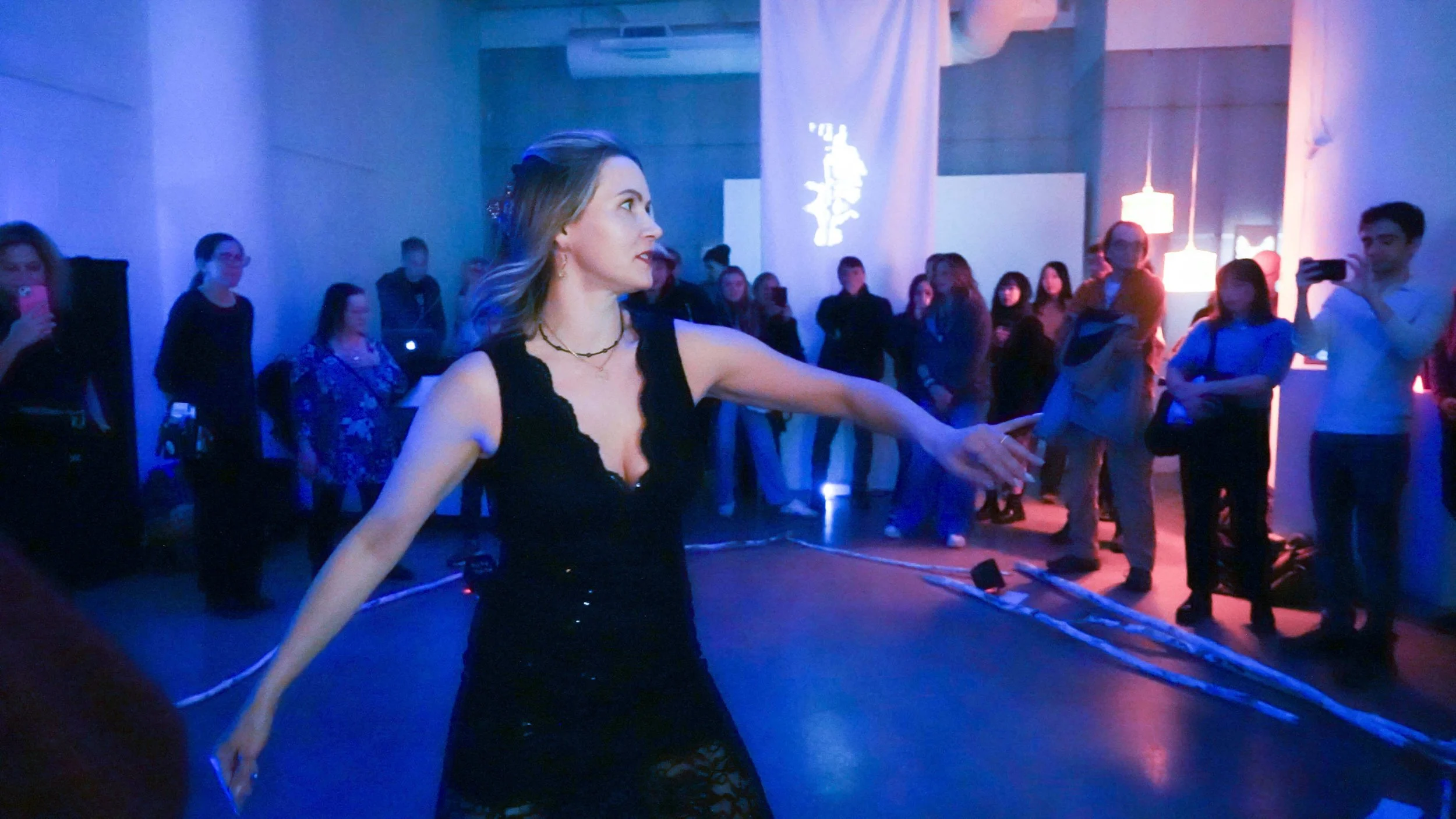
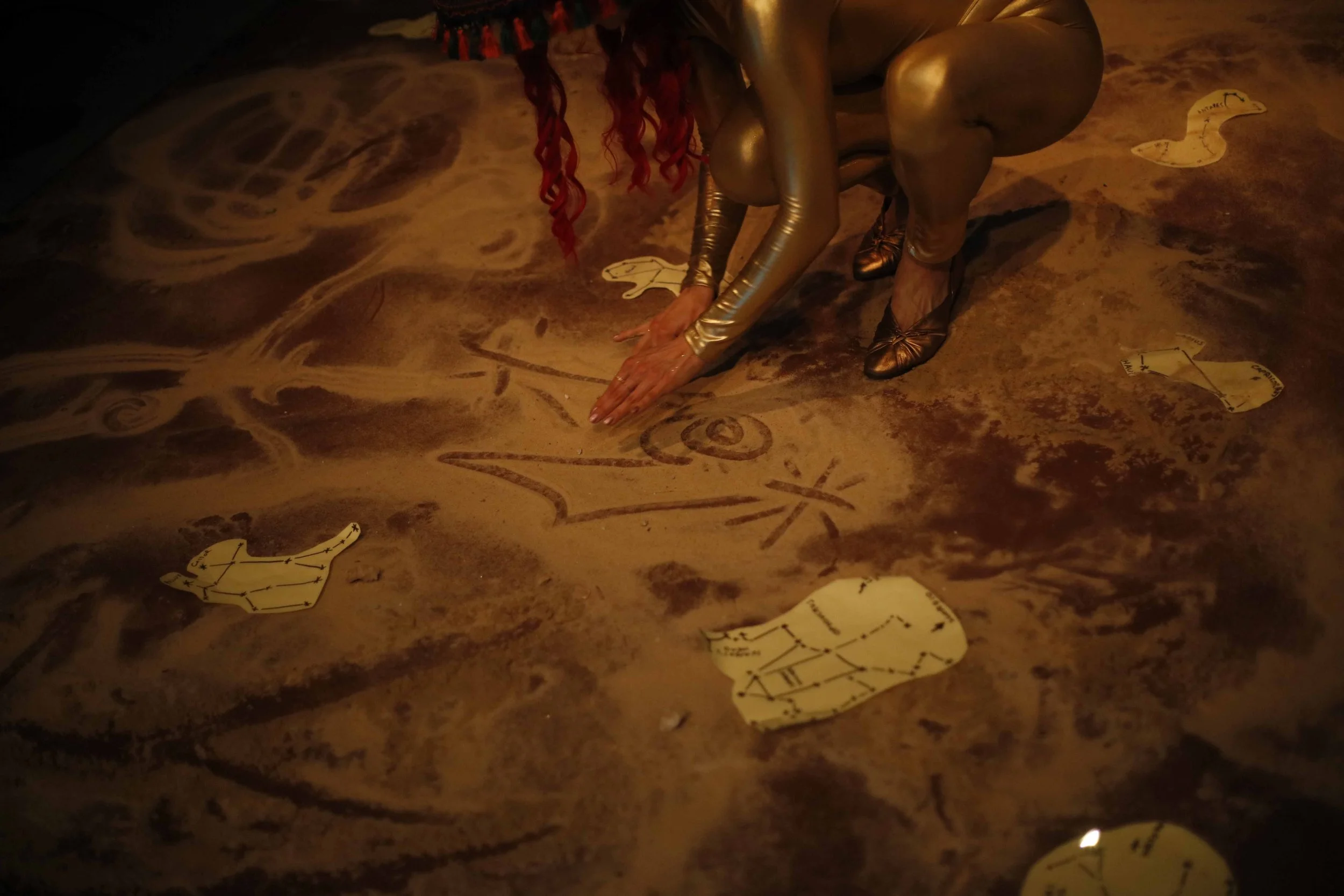
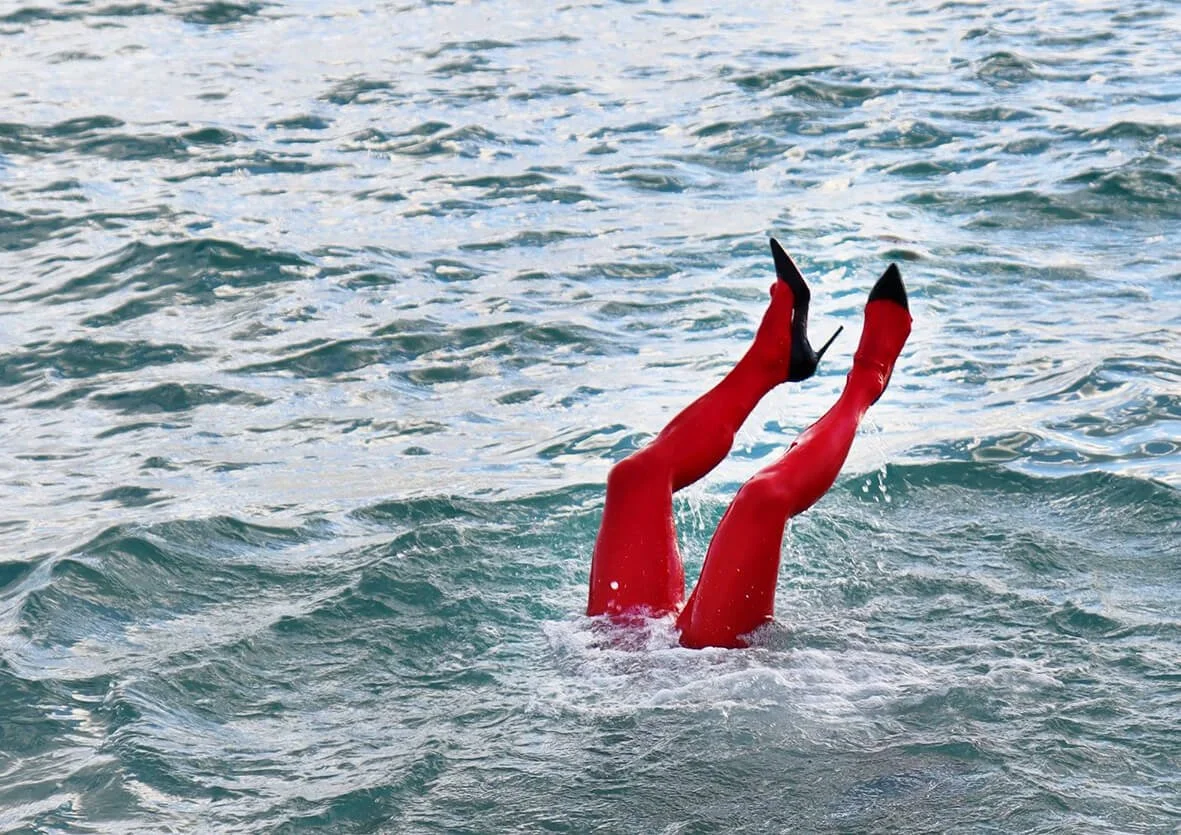
In a recent performance at Grace Exhibition Space, Cosmic TimeKeepers, the audience collectively poured sand, drawing from an old Slavic folk tradition, to create a constellation map while real-time sky projections transformed the space into a kind of astronomical observatory. With the technologies available to us today, we are, in some ways, more powerful than ancient Sumerian priestesses. We simply need to learn how to activate these tools consciously.
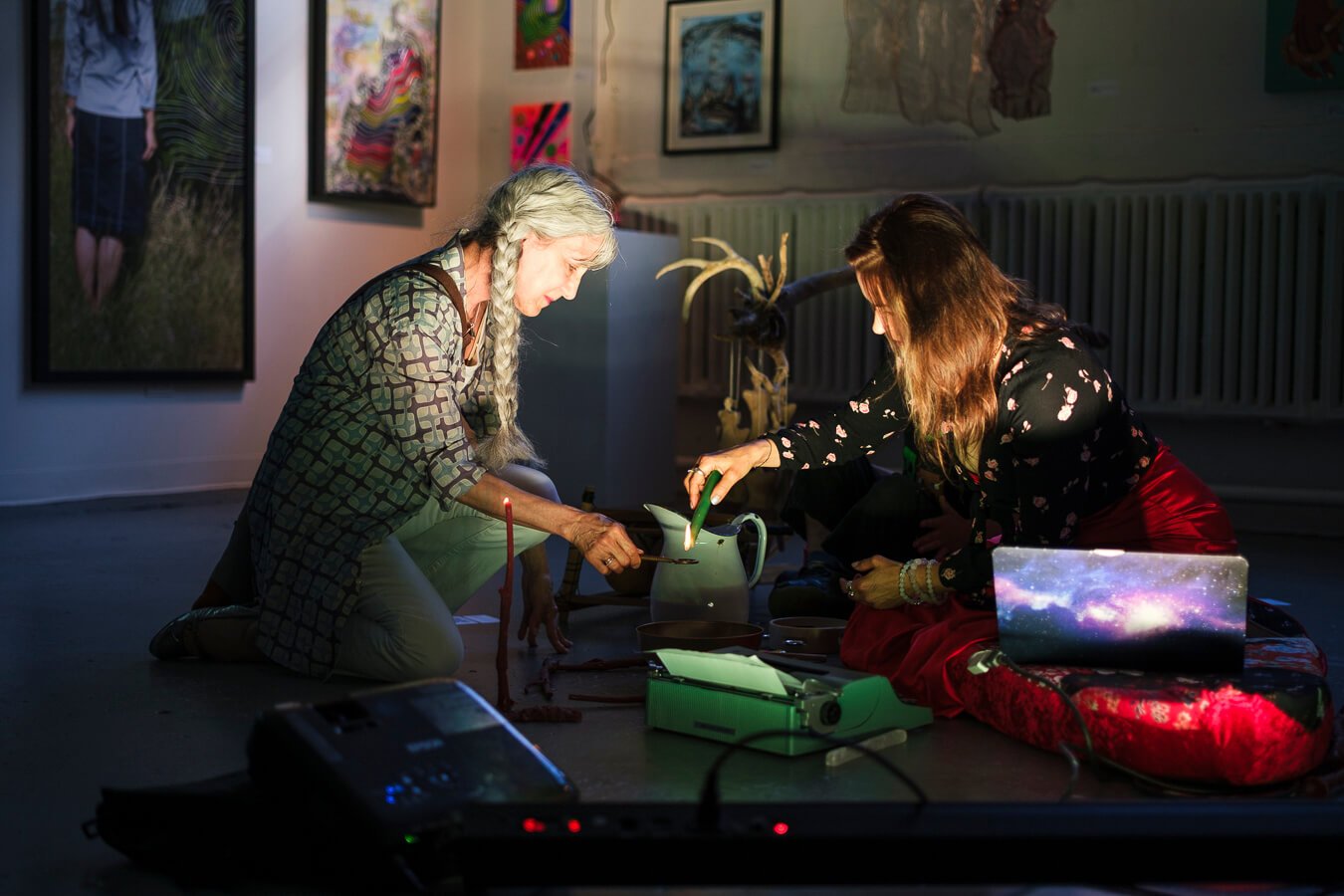
In that sense, a sensor, a camera, a sky app, or even an AI system can function much like an altar or ritual object.
Ritual, trance, and altered states are central to your work. How do you maintain artistic control while allowing for spontaneity and intuition?
I think of it less as control and more as containment.
Each work has a structure, a score, sometimes a very precise one. That structure creates a boundary within which something unpredictable can safely emerge. Because much of my work is participatory, there is always an element of improvisation and spontaneity. In that sense, it is similar to a musical composition that allows for improvisation without losing coherence.
The trance itself is not accidental. Since moving to the Shawangunk Mountains, a region rich in clear quartz and mountain streams, I have become increasingly sensitive to shifts in perception. For each performance, the trance state is entered through preparation, repetition, and an understanding of how my body and focus operate. The concentrated attention of participants also amplifies the energetic atmosphere, allowing me to enter states that would be difficult to reach alone.
Once inside that shared field, something collective begins to emerge. Each performance becomes an activation of a space I have not fully explored before. I rarely repeat works exactly. They may exist in series, but each iteration changes because the participants, energies, and levels of openness are always different.
For me, ritual is not about losing control, but about creating structures capable of holding transformation. Through works such as StarGate Oracle, I hope participants can integrate the mythology of the constellations into their own psyche. Many younger generations are turning toward astrology and symbolic systems as alternatives to traditional religious structures, and my work expands on that shift. I believe we are entering a period in which spirituality is being reimagined beyond rigid inherited systems, toward more participatory, relational, and cosmological ways of understanding consciousness and our place within the universe.
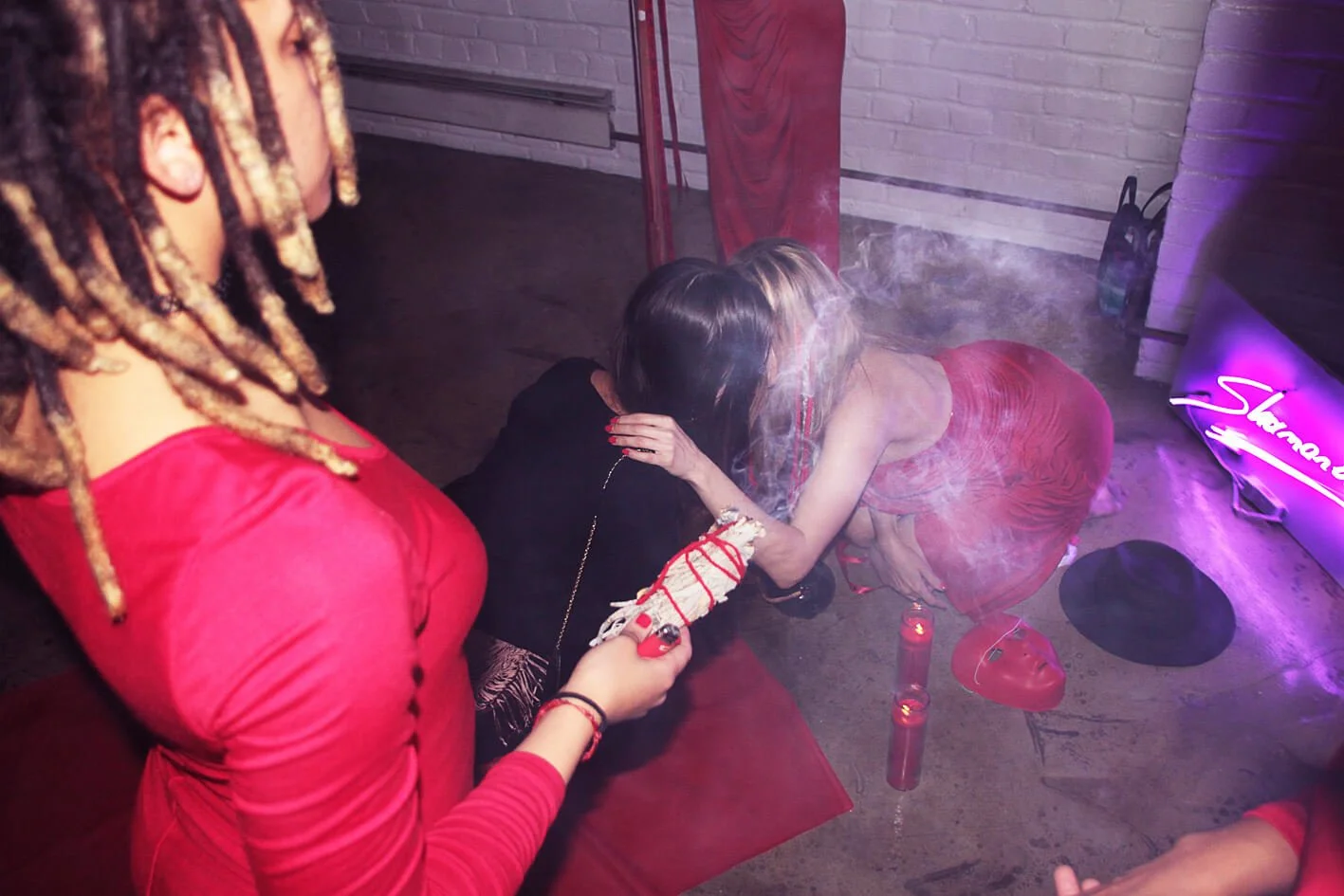
Language, poetry, and myth also run through your practice, with words like "Shamaness" and "Antidivine" becoming neon light and performance scores. How does writing function in your process: as script, spell, or something in between?
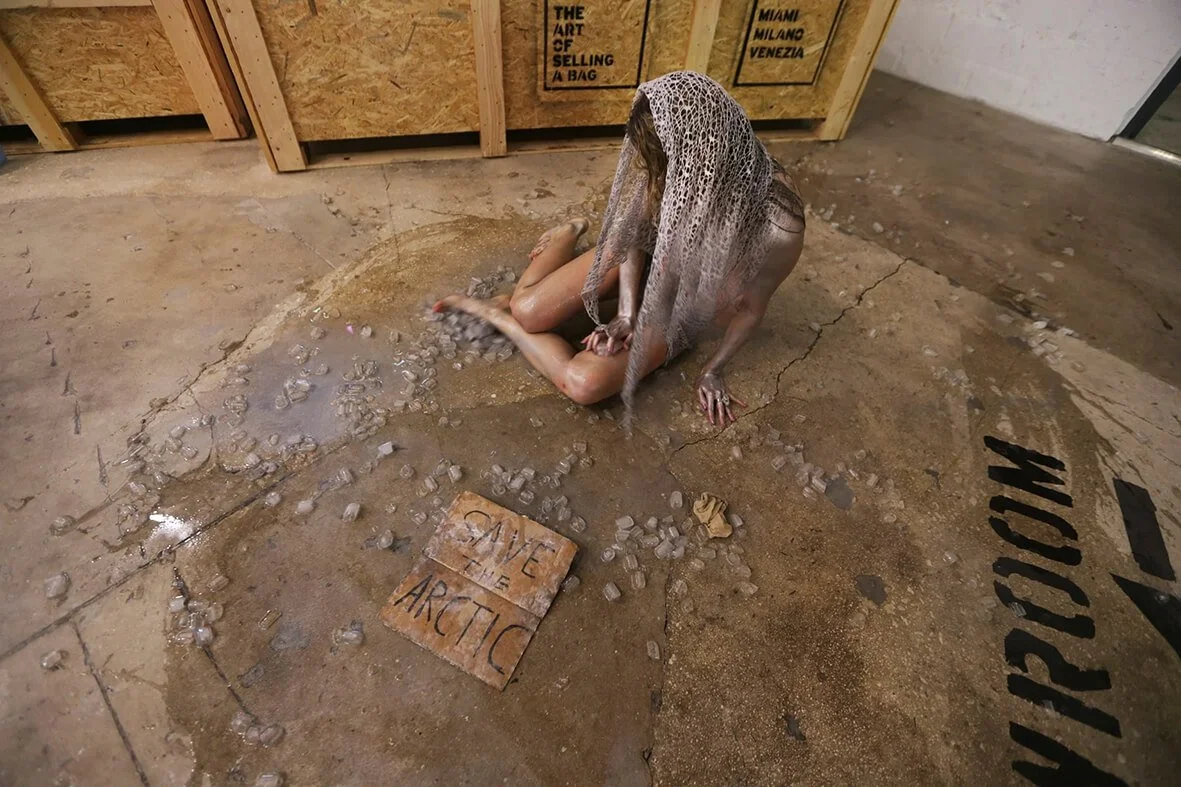
Sometimes writing functions as a score, something that structures a performance. I often impose limitations within performances, for example deciding not to use any spoken words at all. Other times, language behaves more like a spell, where the act of naming produces a shift in perception. Most often, it exists somewhere in between.
For a recent performance by ASTRAL00P at The Secret Theatre, I wrote three poems to perform on stage. Yet in the middle of the first poem, I abandoned the text entirely and entered a state of improvisation and channeling that felt far more theatrical and alive in the moment.
I'm drawn to words that resist complete resolution, words that hold tension or contradiction. "Antidivine," for example, is not a rejection of the sacred, but a reorientation of it. In my poem, the phrase is "antidivine female human body," which reflects my experience of being both biological and cosmic: an assemblage of cells, blood, hormones, and stardust.
Writing allows me to test ideas before they become embodied, but it also remains active within the work itself as voice, text, inscription, sound, or performance. When I adapt poetry into music, the text transforms again because music has its own logic of repetition, cadence, and emotional rhythm. Mother Island, for example, began as a long poem and later became a song distilled into three verses.
Many of your works are participatory and communal. What do you hope audiences carry with them after being part of these rituals, and how do you design experiences that can hold both vulnerability and strength?
I hope audiences carry with them a shift in perception. Not necessarily a fixed understanding of the work, but a subtle reconfiguration of how they relate to themselves, to others, and to the space around them.
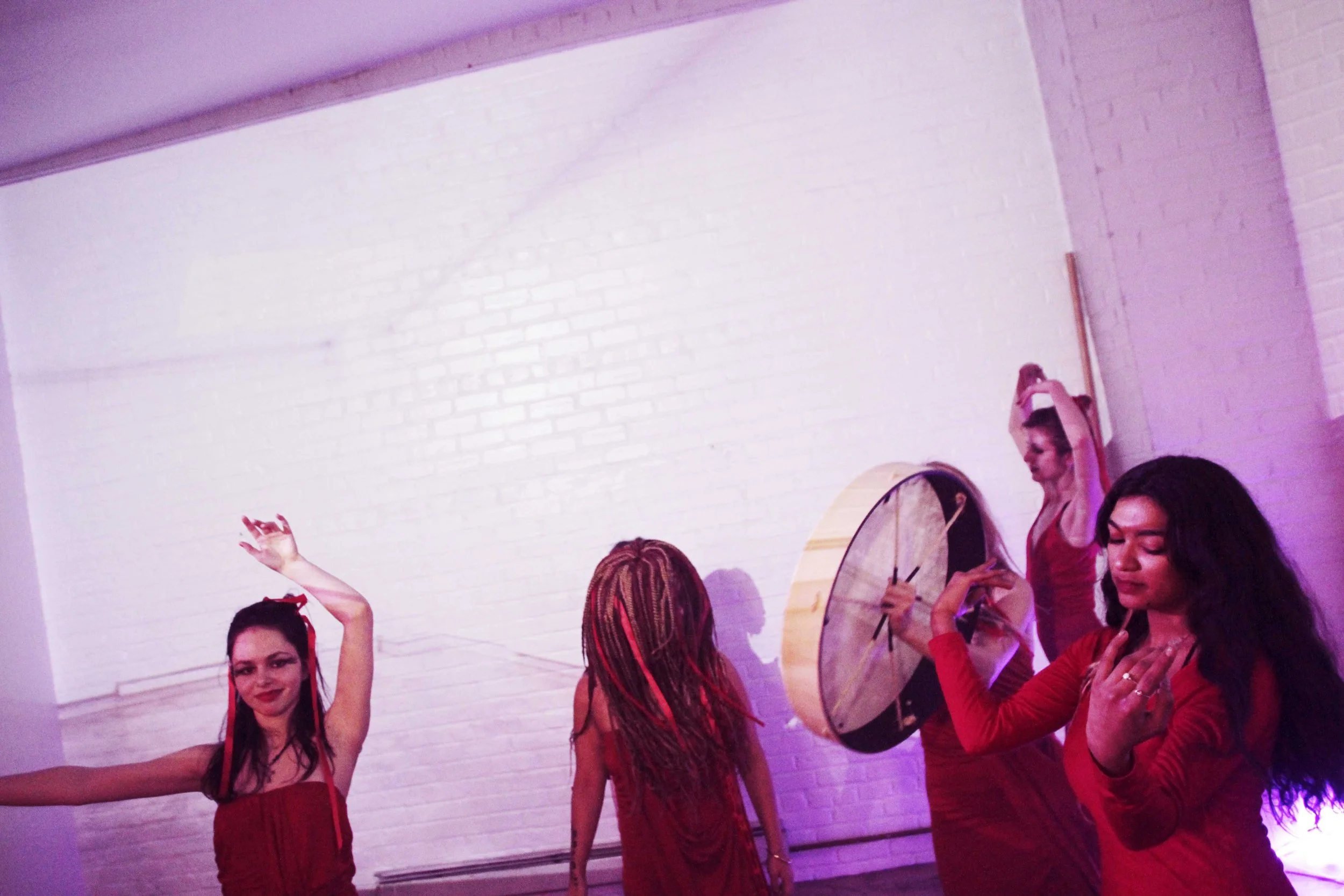
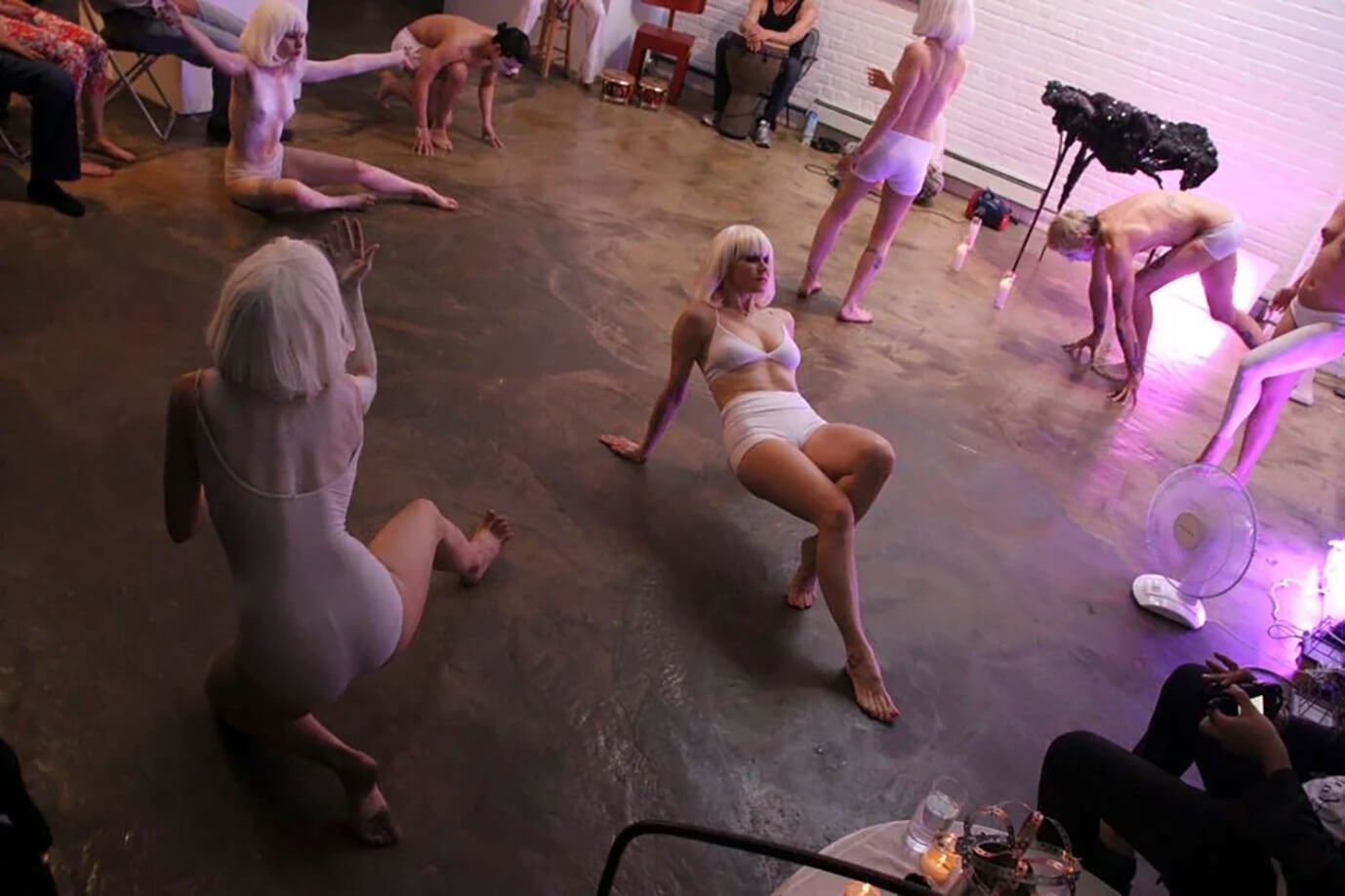
Designing for vulnerability requires precision. The environment, pacing, sound, lighting, and invitation all have to signal that this is a space where something real can happen, but also that it is held safely. Lighting, sound, projections, costumes, and sculptural elements all function as part of the emotional architecture of the experience. Strength, in that sense, comes from structure and clarity of intention.
I never force participation. I create conditions where people can choose their level of involvement. That choice is essential because it preserves agency, and without agency there is no meaningful transformation.
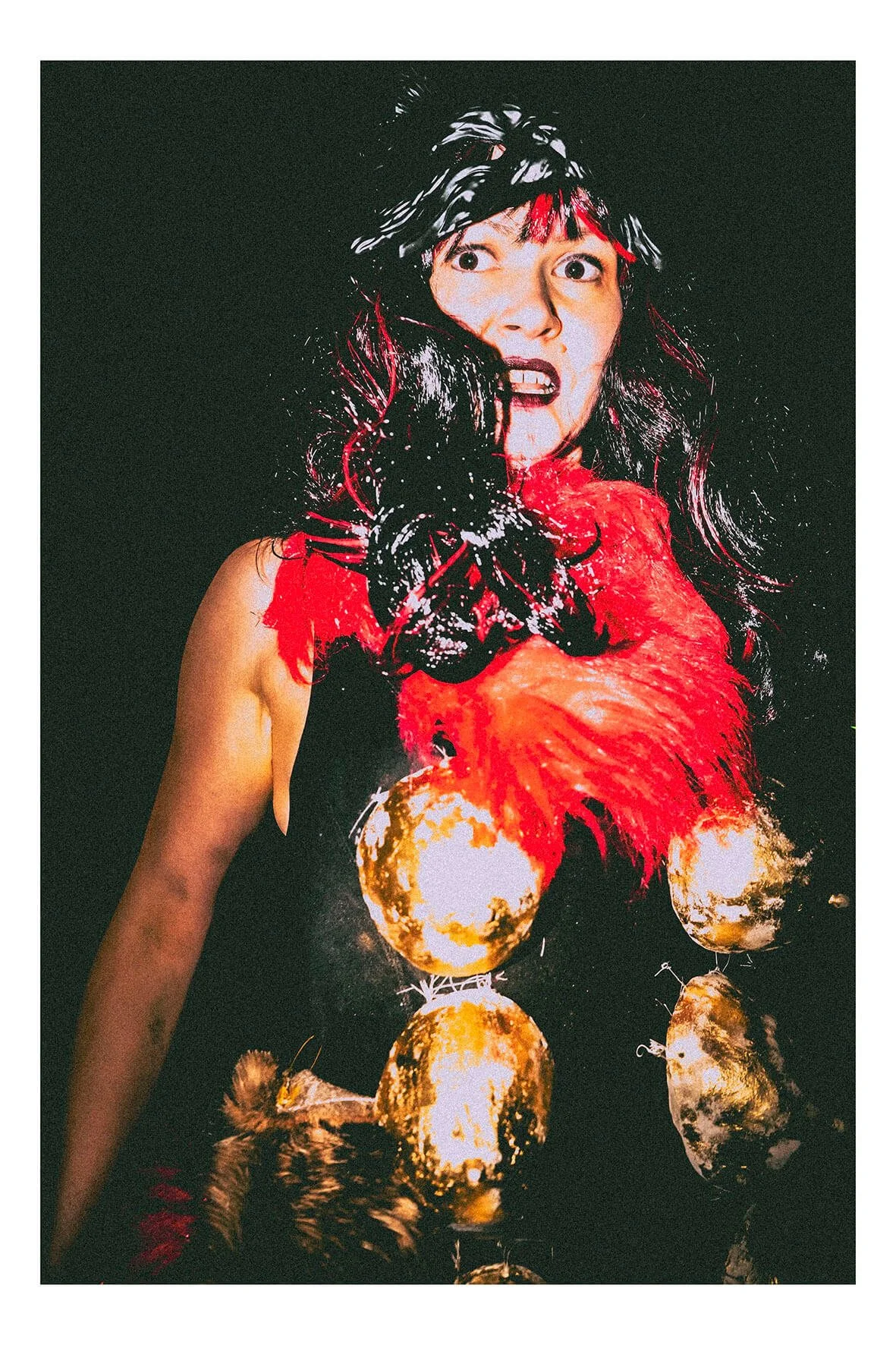
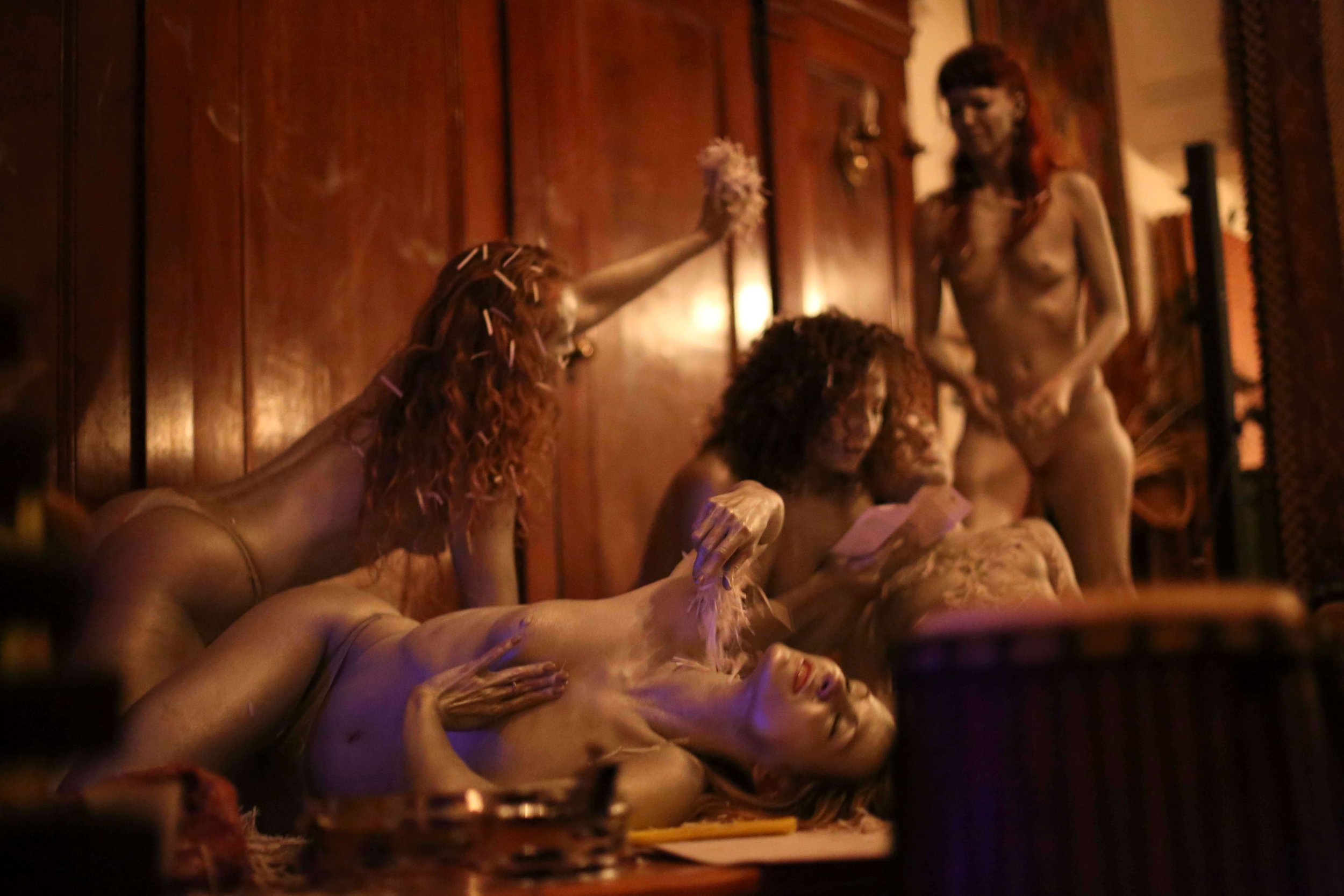
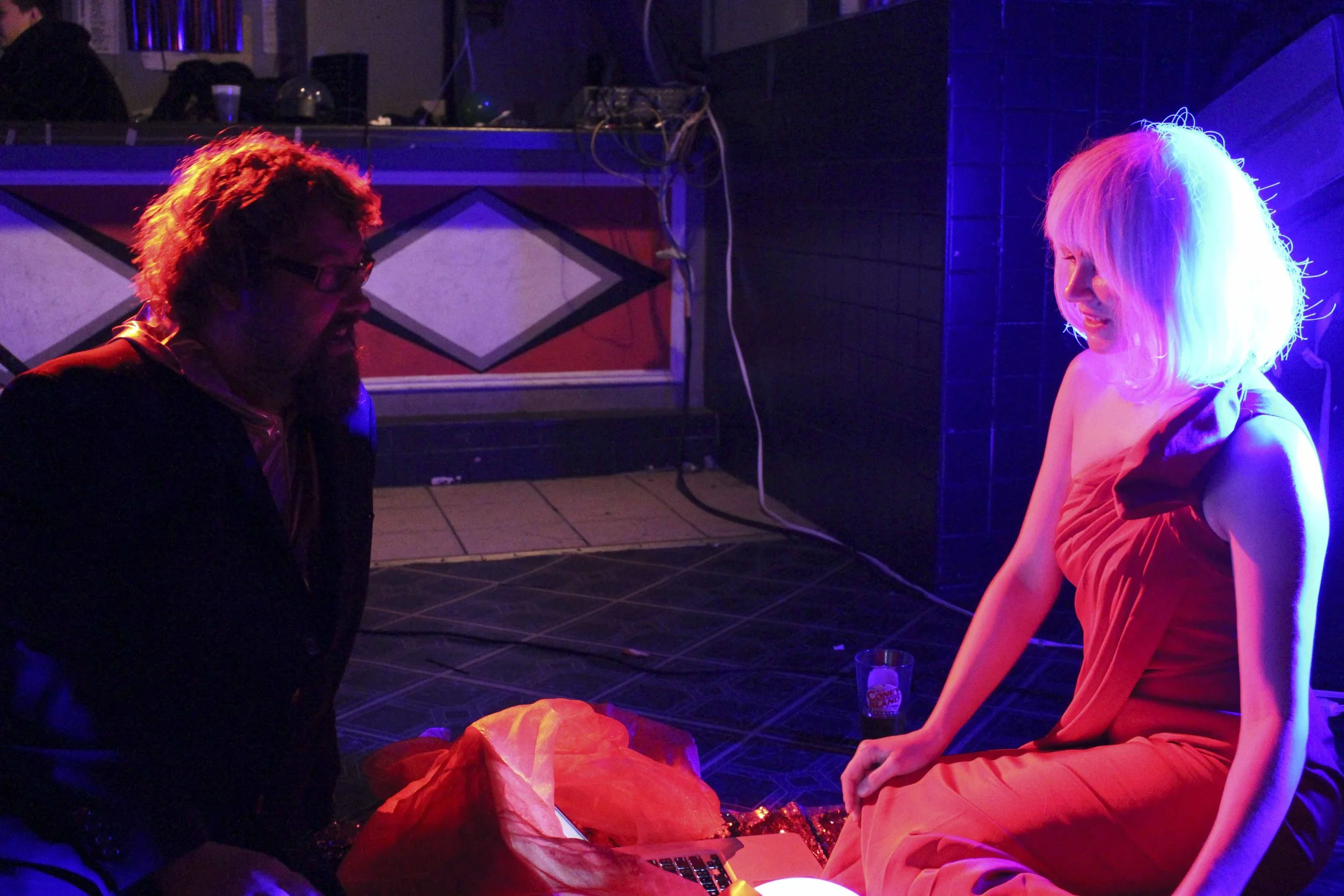
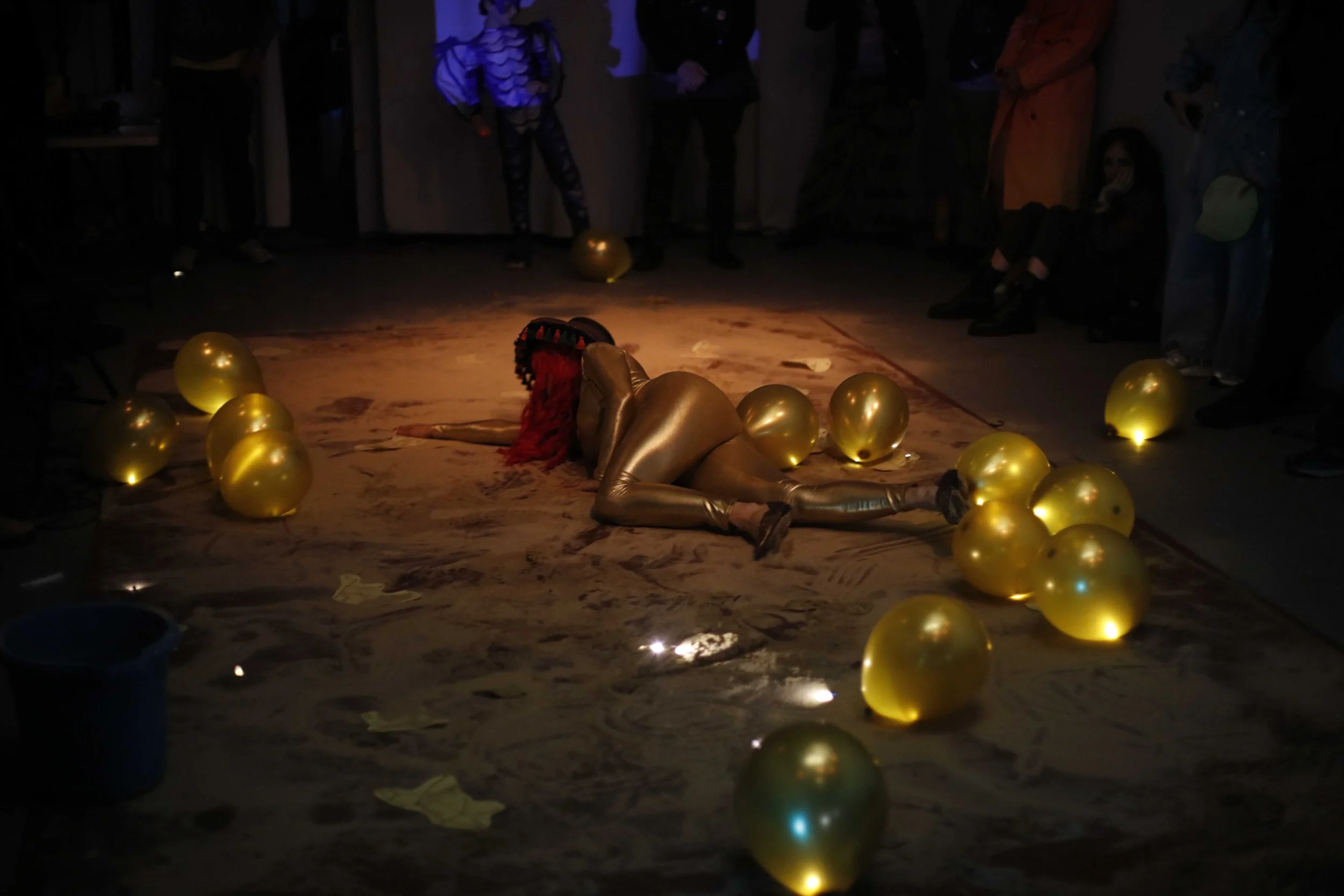
Play is also very important to me. Humor, improvisation, and a certain deliberate absurdity can soften social defenses. I may appear as a medium dressed in costumes made from discarded objects, playful and misleadingly unserious, yet that ambiguity is intentional. It destabilizes expectations and opens space for intuition and collective imagination.
As an artist, curator, and founder of platforms for others, how do you navigate the tension between holding space for community and protecting your own creative time and energy?
I would add another role to that list: being a mother. It is an ongoing negotiation. I deeply value the community of writers and artists around CREATRIX Magazine, and I strongly believe in the cultural importance of building communities. At the same time, I protect my creative time and focus by moving in cycles between visibility and retreat, collaboration and solitude, transmission and incubation.
I also see publishing as part of my artistic practice. Through CREATRIX Magazine, I am building a space where conversations around performance, ritual, feminism, technology, ecology, and experimental art can intersect. In that sense, editing becomes another form of world-building and cultural choreography.
There are periods when I am more outward-facing: covering art fairs, supporting other artists, editing, curating, and shaping contexts for dialogue. And there are periods when I withdraw and focus more intensely on my own work. The same is true for the other editors at the magazine. Each of us maintains an independent artistic practice, and we contribute when there is a genuine convergence with our interests or a sense of urgency around a project or idea.
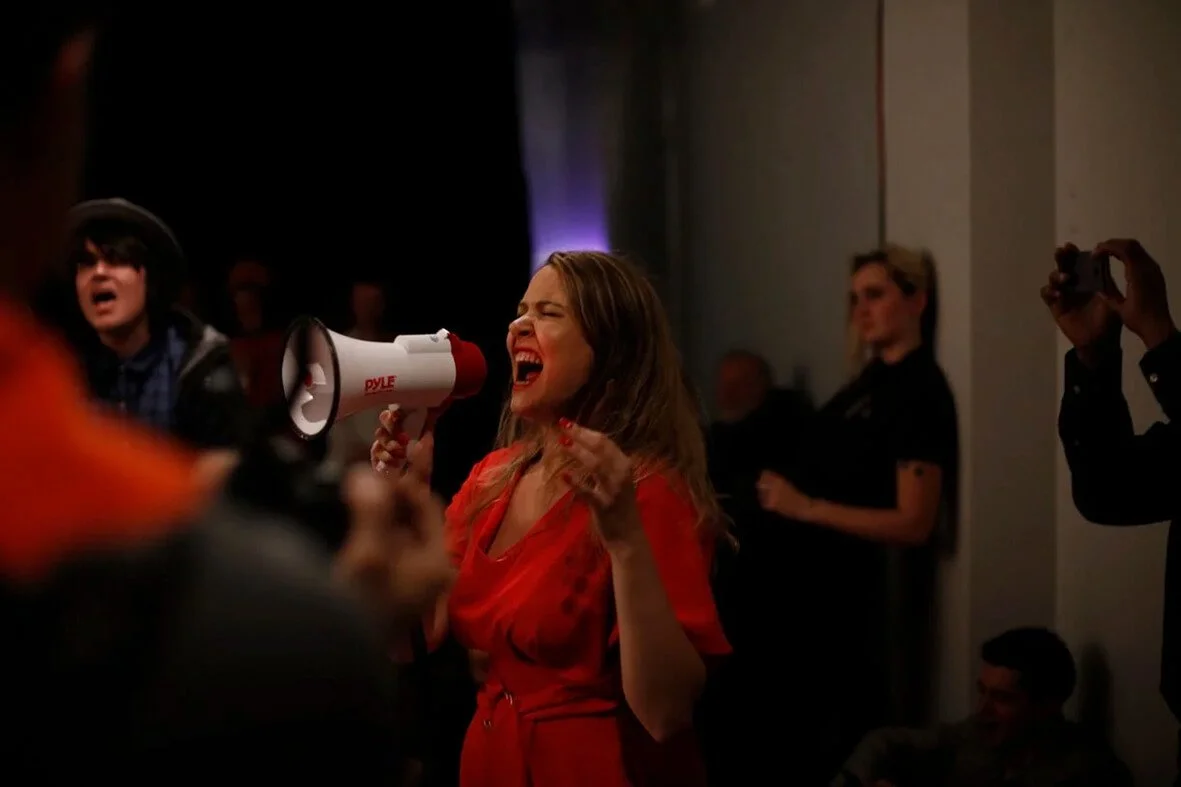
What new mythologies or embodied practices are you most eager to explore next as you continue to respond to both personal and planetary transformation?
I am increasingly interested in the relationship between ritual and technology as a shared language. Projects like Teaching AI How to Be Me open questions around authorship, identity, memory, and transmission that feel both deeply personal and planetary. What does it mean to externalize aspects of consciousness into systems? What is gained, and what is lost in that process?
I have been exploring the possibility of approaching AI as a repository for occult and astrological knowledge. Despite years of study across multiple systems and lineages, I remain human. Memory is partial, omission is inevitable. The idea of extending that knowledge into a system capable of holding, reflecting, and reorganizing it feels both compelling and unsettling.
At the same time, my experience with current AI systems has revealed their limitations. They often make fundamental errors in chart analysis and lack access to the depth of astrological lineages transmitted through teachers, intuition, and lived practice. There remains a significant gap between accumulated data and embodied knowing.
Alongside this inquiry, I feel an equally strong pull toward grounding practices: working with land, seasonal cycles, ritual, and forms of knowledge that unfold slowly through embodiment. These practices are not opposed to technology, but they resist acceleration and abstraction.
I am continuing my ongoing series Artist as a Medium, while further exploring the performative and symbolic potential of the fixed stars. I am also currently developing The StarGate Oracle, a deck of cards and companion book centered around stellar mythology, astrology, and ritual consciousness.
The mythology emerging for me is therefore not one of escape into technology, but of integration. How do we remain human, and perhaps become more-than-human through community, ritual, and collaboration, while moving through increasingly complex technological systems.