What Survives the Fire: Larry Ossei-Mensah on Clay, Curating, and Creative Excellence
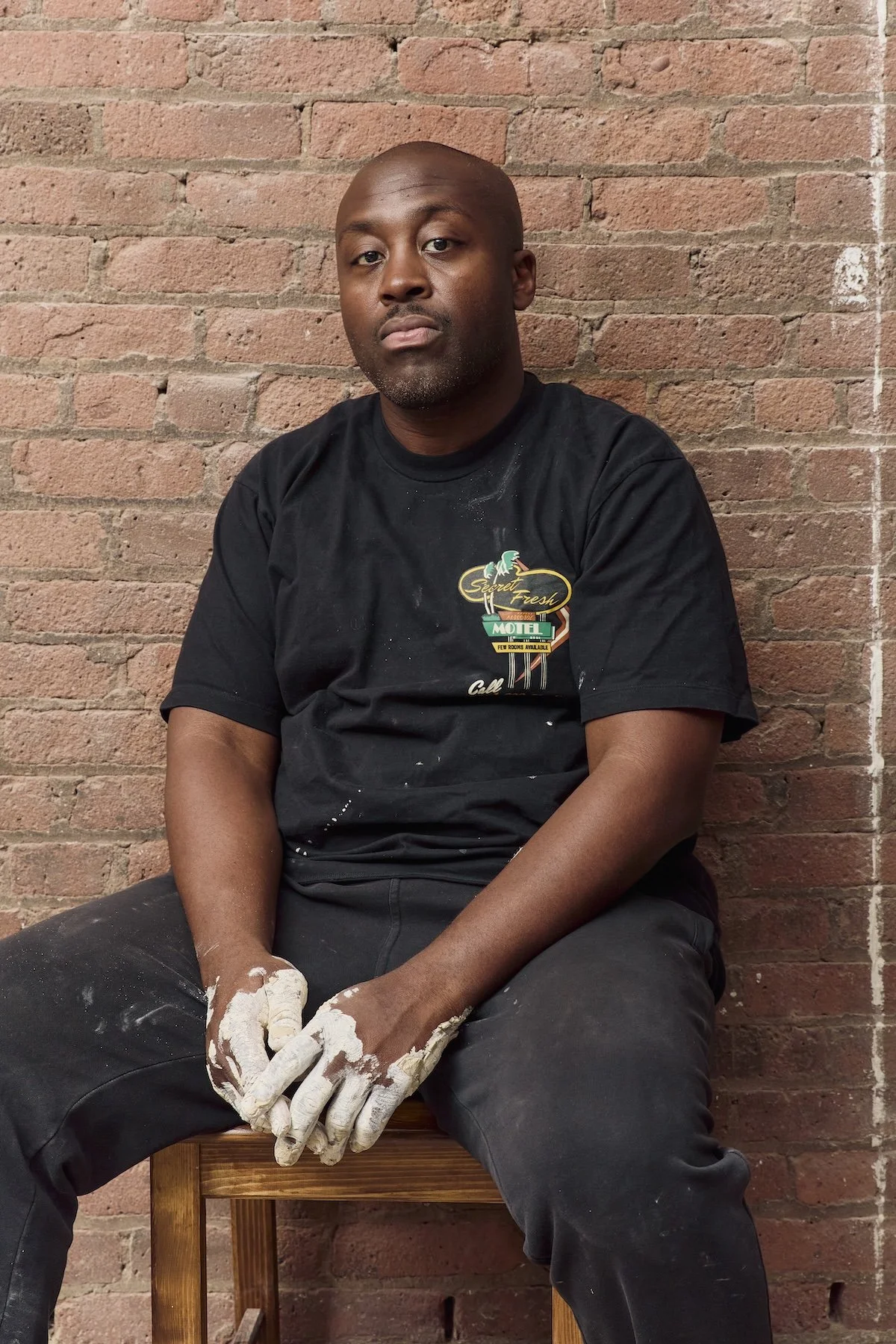
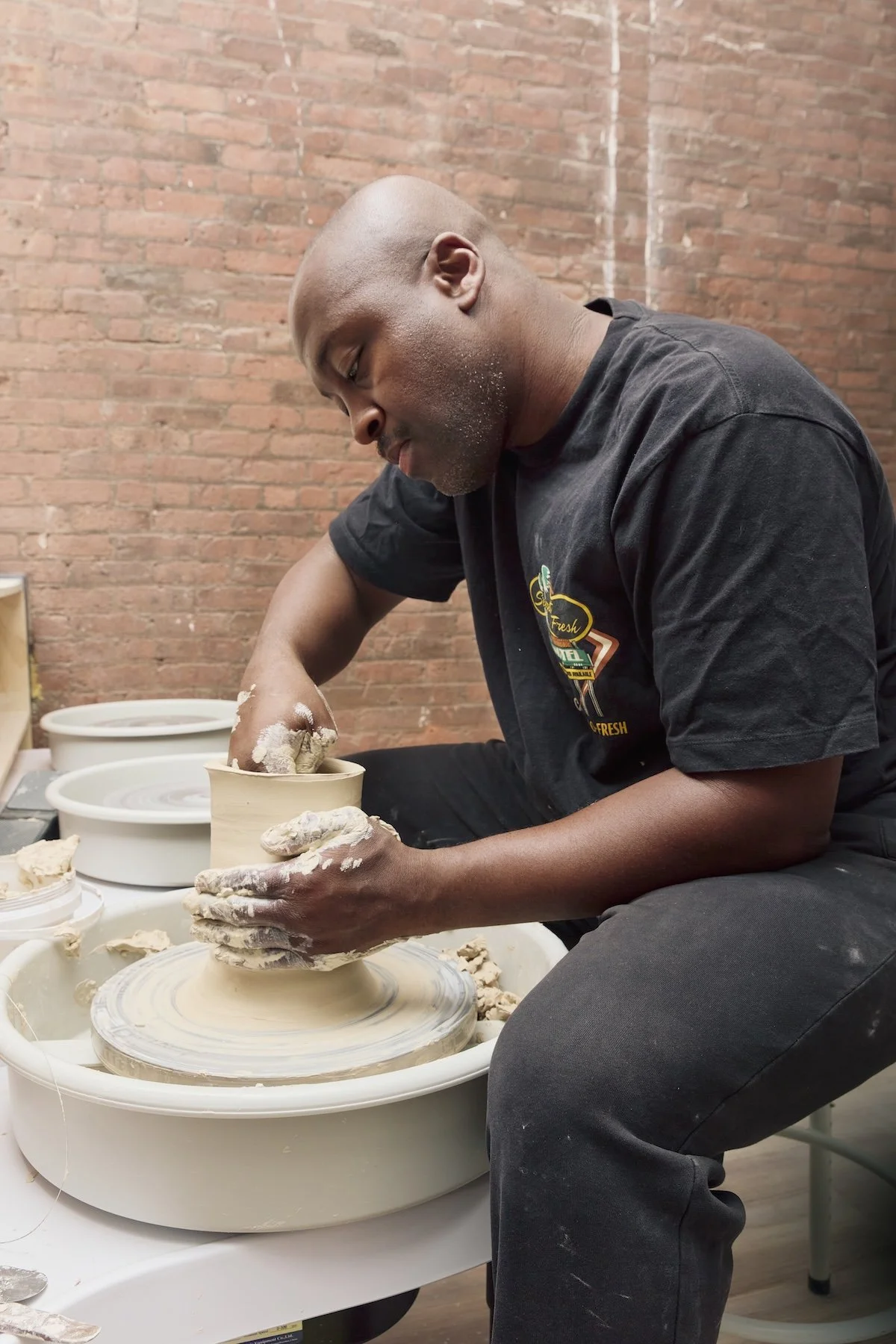
There are few people in the contemporary art world who approach the field with as much intention as Larry Ossei-Mensah. As the co-founder of ARTNOIR, a globally active independent curator, and a cultural critic whose work has spanned New York, Rome, Manila, Detroit, and beyond, Larry has spent decades championing artists and building the kinds of conversations that matter. But in this episode of the Create! Podcast, we got to meet another side of him entirely: the artist and maker.
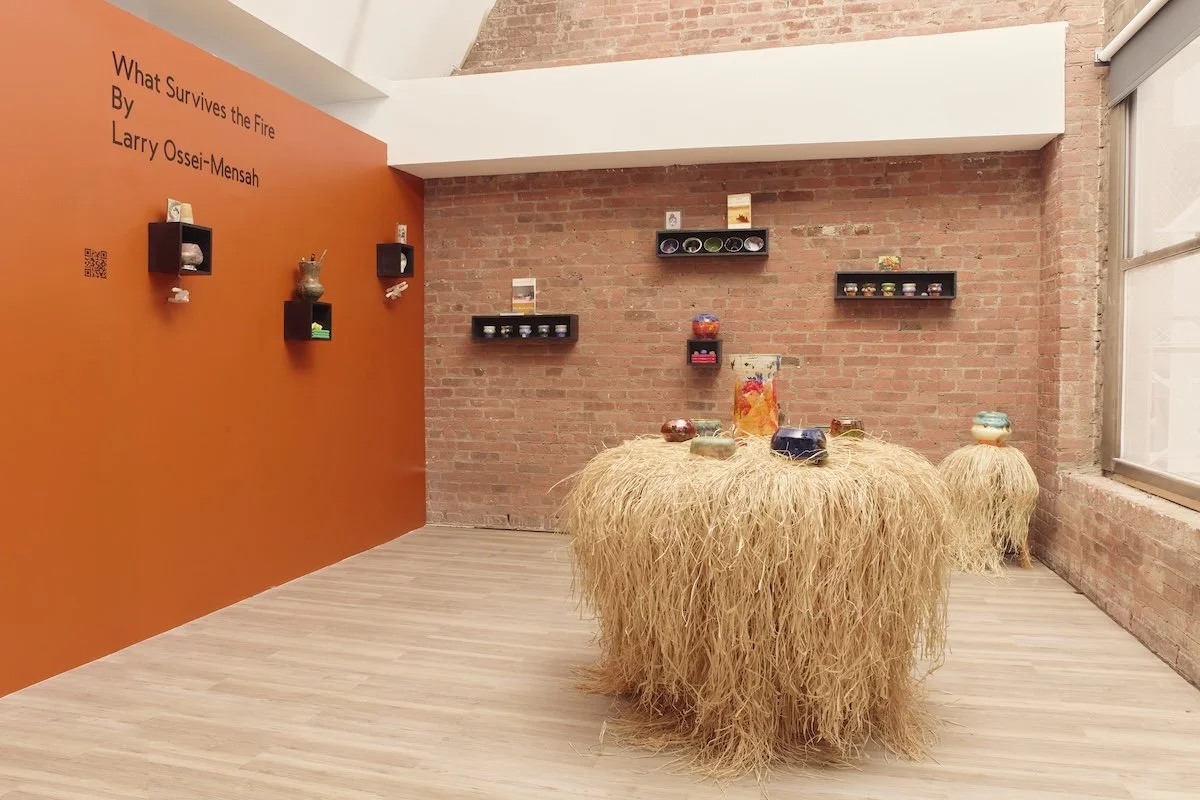
Larry joins Kat for a deeply personal and wide-ranging dialogue centered on his debut ceramic solo exhibition, What Survives the Fire, currently on view at All About Clay, a community ceramic studio in Midtown New York. The conversation moves fluidly between the meditative pull of working with clay, the discipline of protecting your creative practice, and the hard-earned wisdom that comes from building a career on your own terms for over two decades.
From Photography to Curating to Clay
Larry's journey into art-making began with photography. In his late twenties he was actively shooting while working a day job, then shifted into writing, then curating. But the impulse to create was always present. What ceramics gave him that nothing else had was a material that continually humbled him.
"Regardless of whether you've been working with clay for a year, ten years, twenty years, fifty years, there's something that it can always teach you," he says. "And I think that's just a beautiful metaphor for life."
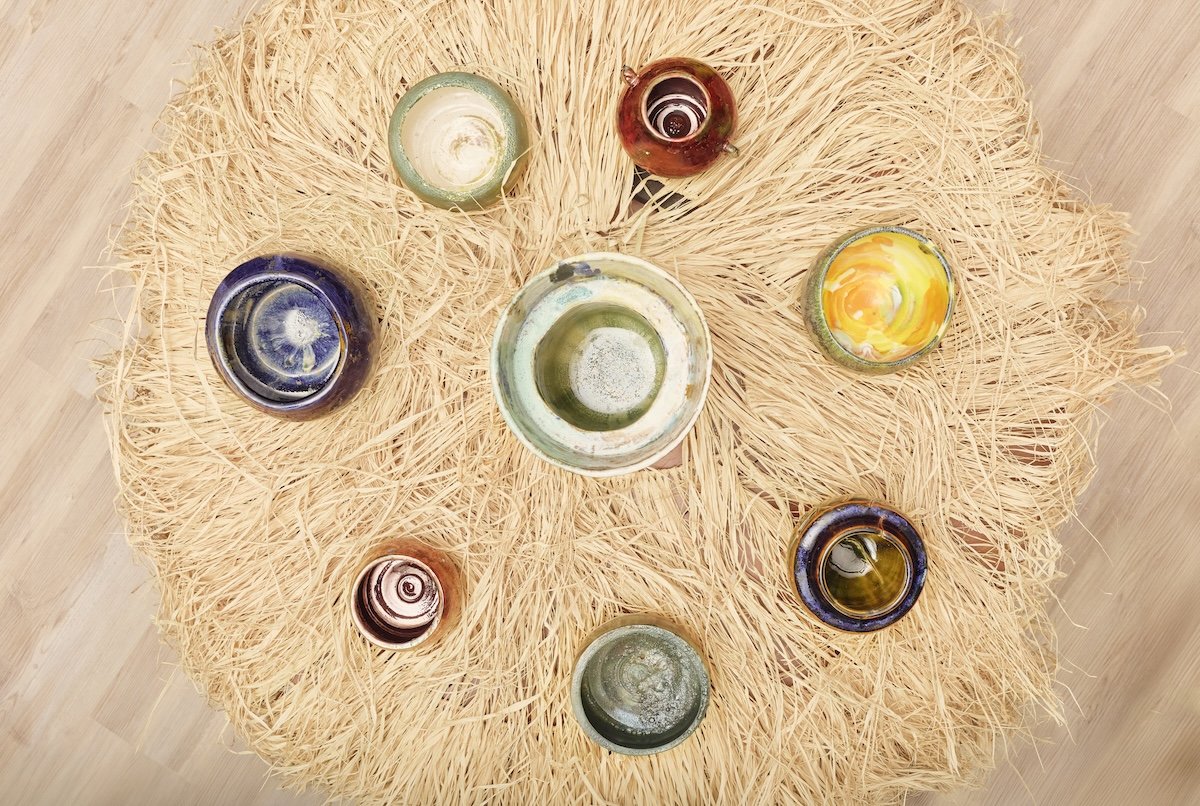
His exhibition title, What Survives the Fire, operates on multiple levels. On a technical level it refers to the bisque and glaze firings every piece must endure. On a deeper level it is a meditation on resilience, ritual, and what remains when the heat is turned up. The works include ceramic objects Larry made himself, pieces from his personal archive, and photographs taken during a recent trip to Ghana. Together they form what he describes as an ensemble rather than a collection of individual objects.
Protecting Studio Time and Developing Discernment
For independent creatives, the question of how to guard your practice while still showing up for the world is one of the most persistent challenges. Larry's answer is rooted in discernment. He starts with his gut. Then he considers the location of the project, the quality of the collaborators, the exchange on offer, and yes, the financial reality. But the through line is always the same: is this additive? Will it grow his toolbox, deepen a relationship, or generate something meaningful?
He is equally direct about knowing when to say no. "Building the courage to say no, but then knowing that you now have to double down in another area to maintain that financial equilibrium." That balance, he says, requires treating even travel as intentional investment. Every trip should generate at least a few relationships worth cultivating. If it is not fortifying, it was a waste.
What Makes a Career Last
When Kat asks what separates artists who endure from those who peak and fade, Larry's answer is clear: commitment to practice, a willingness to innovate, and the courage to stress-test your ideas across different cultural contexts.
He also makes a strong case for writing. Not for publication necessarily, but as a tool for interrogating your own questions. He points to the writings of Li Yuan-chia from the late 1960s as an example of an artist whose foundational ideas remained consistent even as the work shifted and evolved over decades. Writing, he argues, is how you understand what you are actually trying to say.
"The artists that have really resonated with me, you see them in their work. You see their ideas in their work. And whether their work was selling for a dollar or a million dollars, it's still gonna work."
Practical Advice for Emerging Artists
For artists earlier in their careers, Larry offers a framework that is generous, grounded, and refreshingly unsentimental. Residencies are valuable, and formal ones are not the only option. He encourages artists to self-organize, to go somewhere with a couple of trusted peers, critique each other's work, and treat it as real time dedicated to the practice.
He also pushes strongly for building relationships with curators, arguing that galleries often go to curators first when looking for emerging talent. Knowing which curators align with your work, and making sure you are genuinely on their radar, is more strategic than chasing gallery representation alone.
And perhaps most importantly: keep looking at art. Not just the big international fairs. The show in your city. The one you keep meaning to get to. "I can't count the amount of times I've talked to artists who live in New York and haven't seen the Raphael show at the Met. You don't have to be a Raphael fan. But this is not something that occurs every year."
Maker Culture in a World That Wants Shortcuts
The conversation closes on something both timely and essential. As AI reshapes creative industries and the world accelerates toward efficiency above all else, Larry makes a case for the handmade, the devotional, and the slow. He recalls a quote from a venture executive that stopped him: AI works off past information. The job of the creator is to dream a future that doesn't exist.
Ceramics, for Larry, is where that dreaming happens. It is where the subconscious gets to act, where problems work themselves out, where an hour at the wheel can quiet enough noise to make the next decision clearer. It is not a hobby. It is a practice. And it is making him a better curator, a more grounded human being, and an artist whose work, in his own words, makes him feel alive.
Listen to the full episode now and follow Larry's work via the links below.
Connect with Larry Ossei-Mensah Instagram: @larryosseimensah ARTNOIR: @artnoir.co | artnoir.co All About Clay: @allaboutclayny
What Survives the Fire is on view at All About Clay in Midtown New York through July 20.