

Creative Wayfinding: Nicole Shannon on Belief, Perception, and the Art of Navigating Uncertainty
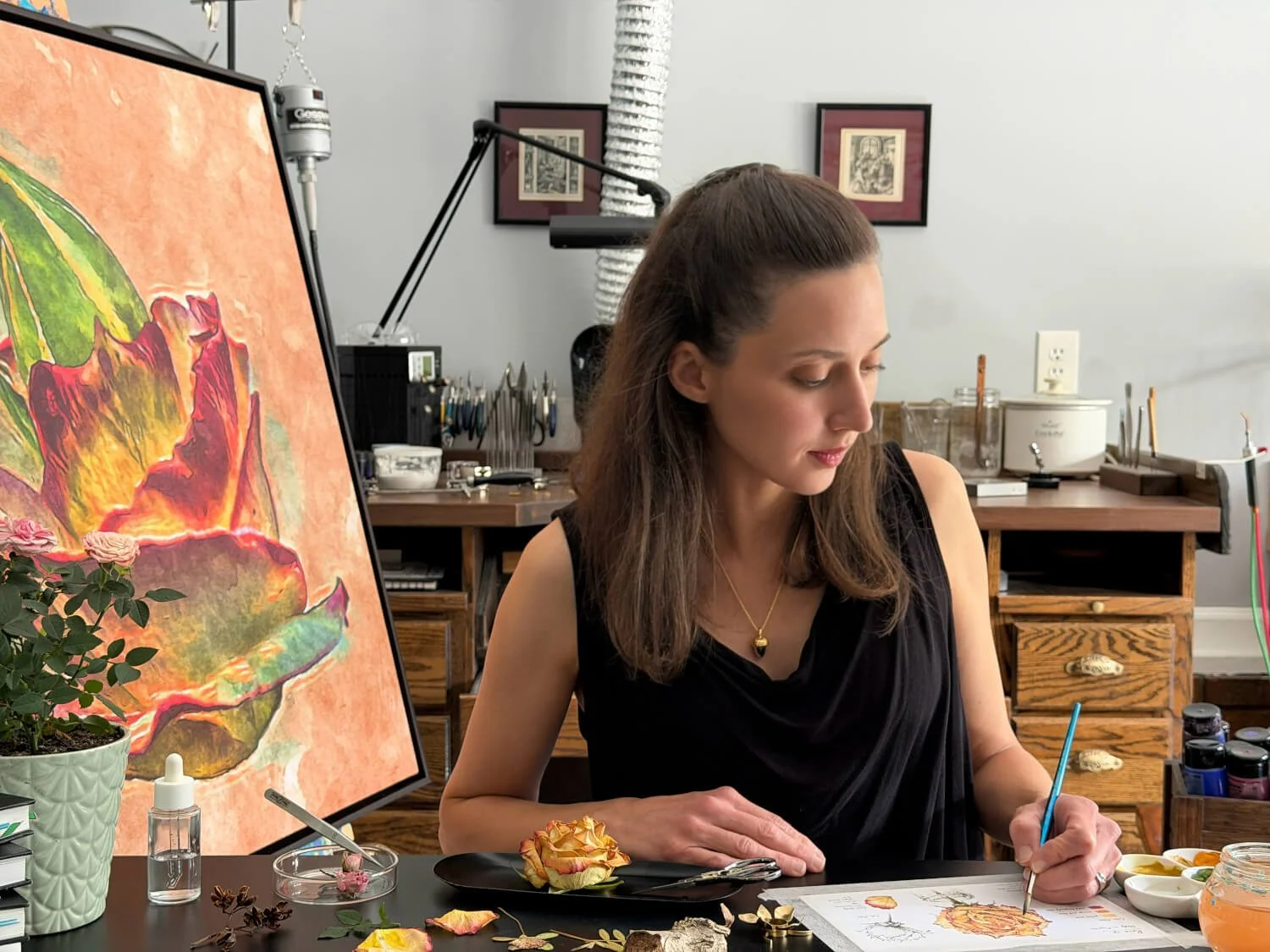
Nicole Shannon is an artist whose practice examines how perception and belief shape inner experience and shared cultural frameworks. Working across multiple mediums, she creates metaphor-driven work that operates through inquiry rather than fixed narrative.
She began her career as a bench jeweler, developing objects embedded with intention and symbolic meaning, an approach that continues to inform her practice. Her work has since evolved into distinct bodies of work, including sculptural investigations of post-traumatic growth that address healing and human potential; The Worlds We Create, a series exploring inner landscapes shaped by belief; and paintings of symbolic forms that interrogate how value, identity, and difference are constructed.
Situated at the intersection of art and philosophy, Shannon's practice approaches meaning as something actively formed, emphasizing interpretation as an open and participatory process.
An internationally exhibited and award-winning artist, her work has been featured in major publications and institutions and is held in permanent collections at medical, academic, and genetic research centers. She studied art and design at SUNY New Paltz and the Savannah College of Art and Design.
Artist Statement
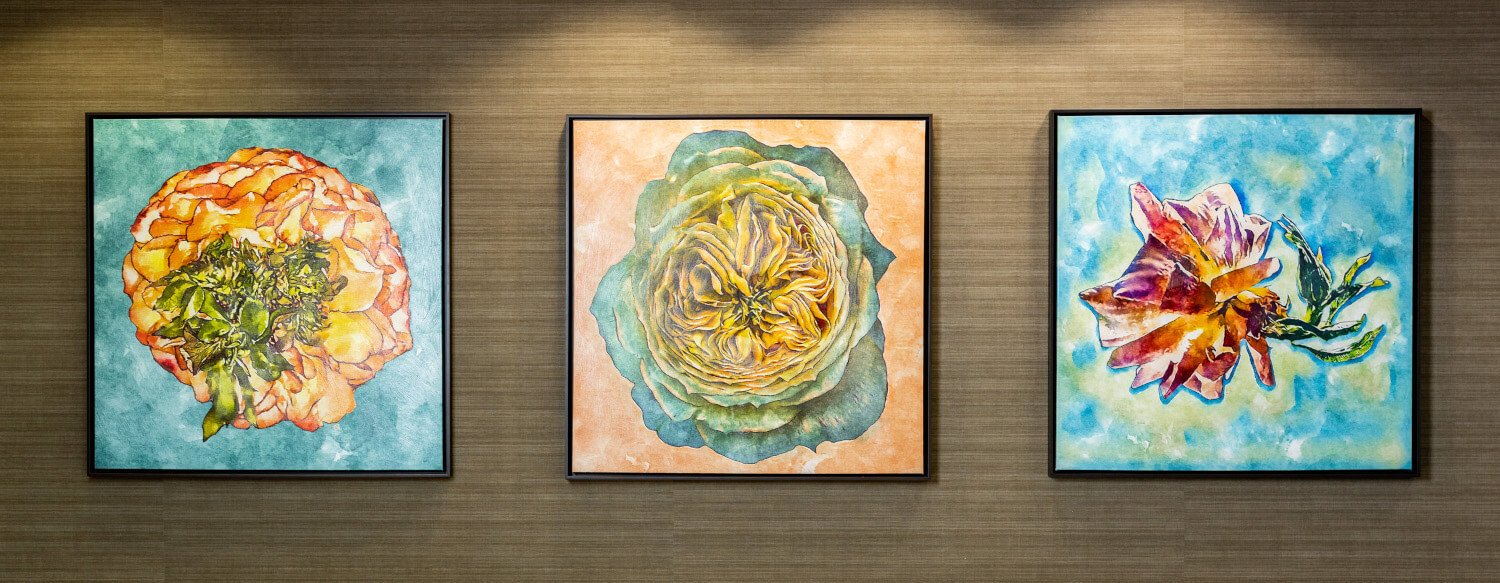
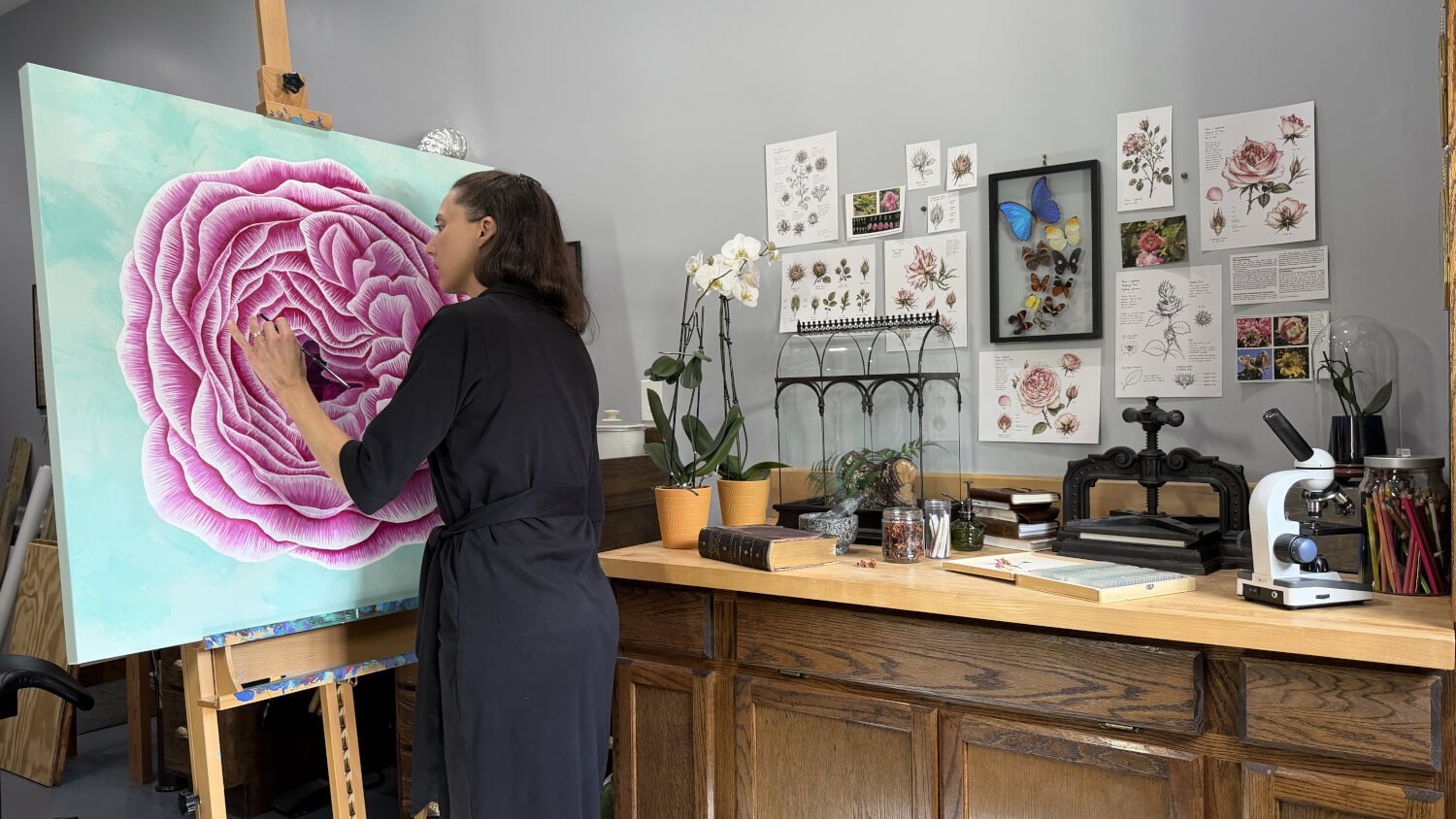
Rare Roses is a painting series based on real roses with rare genetic abnormalities. The work originated in my experience as a mother raising a child with a rare genetic condition and developed into an inquiry into how difference is perceived, how value is assigned, and how cultural systems translate variation into hierarchy.
Genetic difference is often interpreted as deficiency. Deviations from biological norms become markers of diminished worth, not only medically but socially and psychologically. I witnessed how quickly difference is rendered hierarchical, how value becomes conditional and measured against standards of sameness rather than inherent dignity. This series began as a refusal of that logic.
I turned to the natural world to locate a parallel: an organism that carries genetic abnormalities without being culturally devalued. Roses offered that structure. Across time and geography, roses have been revered as symbols of beauty and worth, yet they too can exhibit rare genetic variations. In these instances, difference is not rejected but, at times, prized. Deviation does not diminish their value; it intensifies their significance.
By painting genetically unique roses, I am not employing metaphor for sentiment, but constructing a visual argument. The rose functions as a symbolic framework through which assumptions about normalcy, difference, and value can be examined. Each work asserts variation not as deficit, but as a fundamental condition of life.
The twelve paintings extend beyond the personal to address broader belief systems that equate sameness with worth and difference with diminished value. Rare Roses proposes an alternative ontology of value, one in which dignity, beauty, and human worth are intrinsic, irreducible, and unconditional.
www.nicoleshannon.com
Interview
Your work spans visual art, storytelling, and community engagement. What threads connect these different facets for you?
At the core of all of them is a shared interest in meaning-making and human possibility.
Whether I'm painting, sculpting, writing, or engaging with others through conversation and community, I'm interested in how people interpret their experiences and construct inner and collective realities. I think of these facets less as separate disciplines and more as interconnected ways of exploring similar questions from different angles.
Storytelling allows ideas to become emotionally resonant. Visual art allows ambiguity, symbolism, and metaphor to hold complexity that language sometimes cannot fully contain. Community engagement creates spaces where reflection and exchange can happen collectively rather than in isolation.
For me, they are all extensions of the same inquiry.
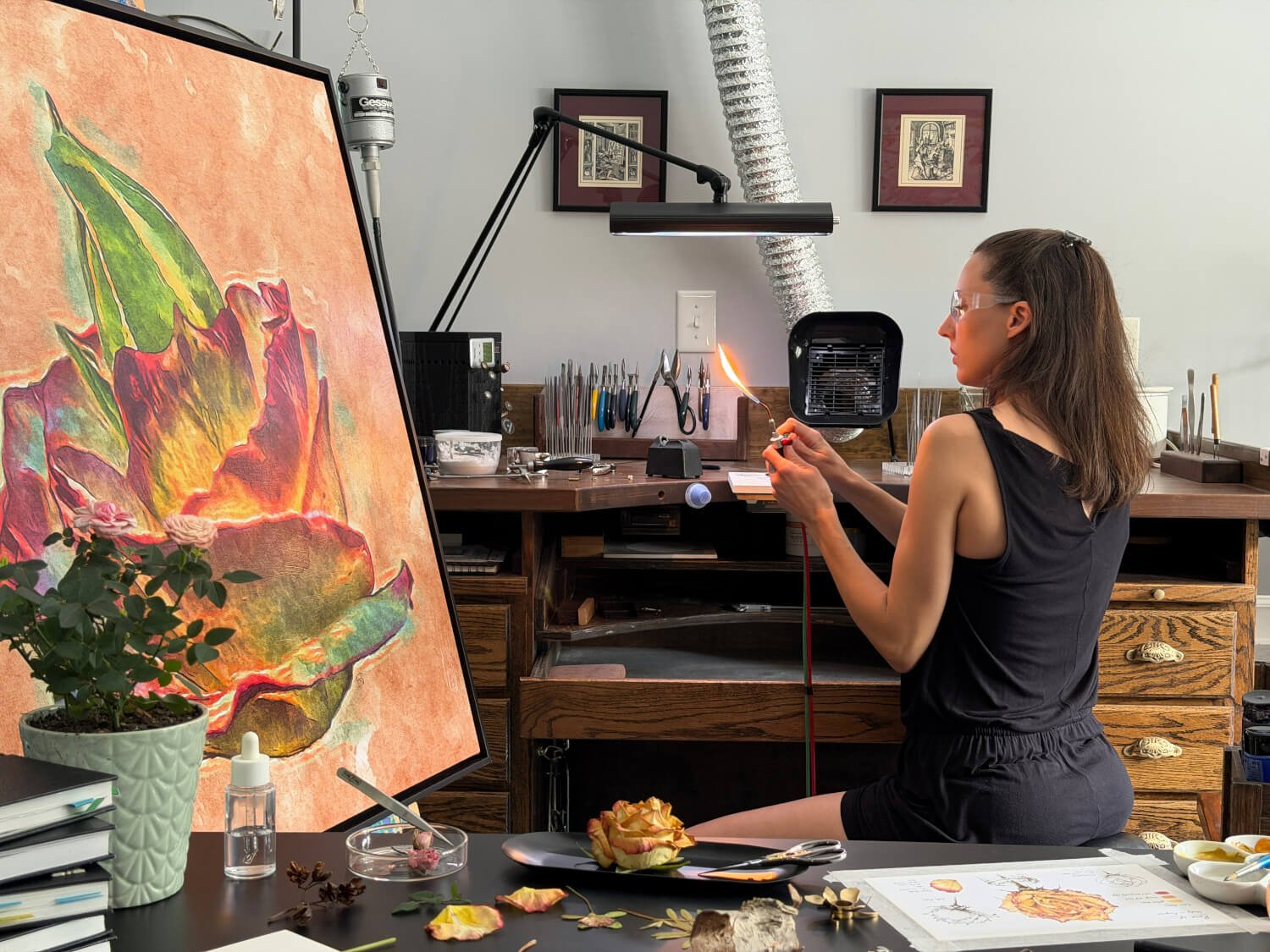
At my core, I will always be a visual artist first because I primarily think through imagery and intuition, and I remain deeply connected to the physical process of making. Coming from a craft background as a goldsmith, I developed an early sensitivity to materiality, symbolism, form, and transformation through process. Even as my practice has expanded conceptually and across disciplines, making by hand remains central to how I interact with and understand the world. It is often through the act of making itself that I arrive at the deepest clarity and understanding of the questions I am circling.
You describe yourself as a "creative wayfinder." How did that identity emerge, and how does it shape the way you approach both your art and your broader practice?
The idea of Creative Wayfinding emerged through my personal experience long before I had language for it.
For much of my life, I understood creativity primarily through the lens of making, as self-expression or invention. However, after my son was born with a rare genetic condition involving the deletion of 263 genes, my understanding of creativity began to change.
Navigating the uncertainty surrounding his medical journey required a very different relationship to creativity. I found myself using creativity less as a means of expression and more as a form of adaptive intelligence, one that required shifting perspectives, questioning assumptions, tolerating ambiguity, adapting in real time, and creating direction where no clear path existed.
At some point, I realized I wasn't just using creativity to make art anymore. I was using creativity to navigate my life.
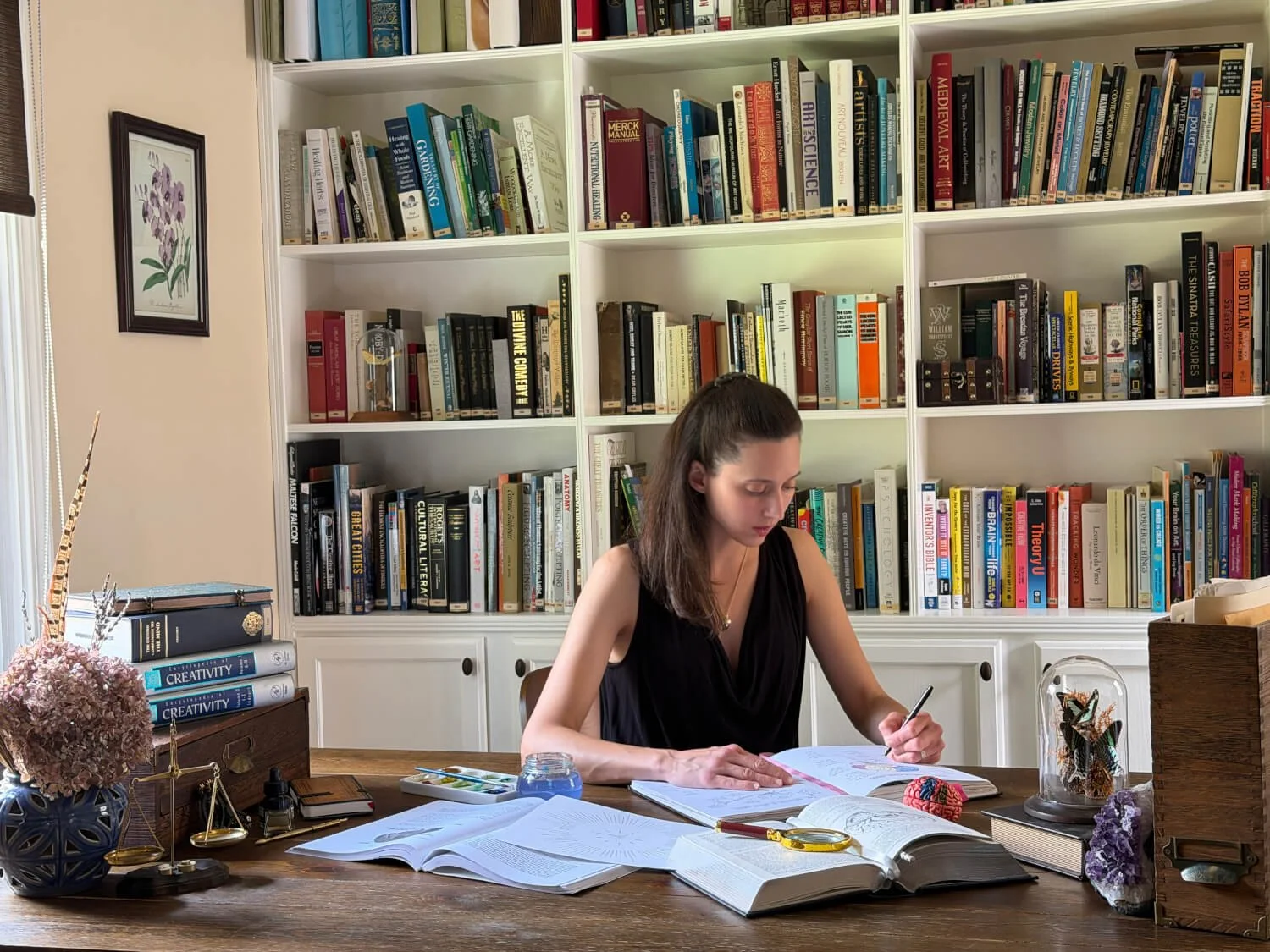
That realization eventually led me into years of research across psychology, cognitive science, neuroscience, and human development. Over time, I began to understand creativity not simply as self-expression or invention, but as a fundamental human capability, an adaptive intelligence we can use for navigating uncertainty, adapting to change, and creating direction in life and work. Creative Wayfinding is an intentional practice for using creativity in this way.
Today, Creative Wayfinding shapes everything I do. It continues to evolve through my art, writing, research, and lived experience as an ongoing exploration of how creativity helps us navigate our lives.
Are there particular themes, such as resilience, transition, or connection, that you find yourself returning to again and again? What draws you back to them?
Yes, absolutely. Belief, perception, transformation, resilience, and human potential are recurring themes throughout my work.
I return to them because they sit at the center of the human experience. We are constantly navigating change, uncertainty, loss, growth, identity, and the search for meaning. I'm interested in how people psychologically and emotionally move through those experiences, and in the ways our interpretations shape the realities we inhabit.
Much of my work examines the tension between fragility and possibility. I'm drawn to moments where something begins to shift, where suffering becomes transformation, where limitation becomes expansion, or where inherited narratives begin to dissolve and make space for something new.
When you begin a new piece or project, where do you usually start: with an image, a phrase, a feeling, or something else?
Usually, it begins with a question or an unresolved sense of curiosity.
Sometimes that arrives through research, observation, or an emotional or psychological experience that I can't yet fully articulate. I often spend a long time thinking before making. During that process, images, symbols, materials, and metaphors begin to emerge naturally around the core inquiry.
I'm less interested in illustrating predetermined ideas and more interested in allowing the work itself to become a form of investigation. Often I don't fully understand what a piece is trying to say until I'm deep into the process of making it.
Can you share a recent artwork, collaboration, or experience that shifted your perspective on what your practice can be?
Recently, I've been expanding beyond traditional studio boundaries through writing, research-based projects, and conversations that connect creativity with psychology, cognitive science, and human development. That shift has broadened my understanding of what an artistic practice can hold.
For a long time, I thought of art primarily through the framework of objects and exhibitions. Increasingly, I see practice itself as something more interdisciplinary and relational, something capable of generating dialogue, reflection, and shared ways of understanding experience.
That expansion has been especially meaningful because it has allowed me to more fully integrate the different dimensions of who I am and what I care about.
You work across multiple bodies of work simultaneously. How do you hold the threads of each together, and do they speak to one another in your studio?
They absolutely speak to one another. Even though the visual languages may differ, the underlying inquiries are deeply connected.
One body of work may approach perception through symbolic painting, while another explores post-traumatic growth through sculpture, but both are ultimately examining how humans construct meaning and navigate experience. I often think of the different bodies of work as parallel investigations orbiting similar philosophical and psychological questions.
Working across multiple series also allows ideas to evolve more organically. Sometimes an insight that emerges in one body of work unexpectedly unlocks something in another. The studio becomes less about maintaining rigid separation and more about allowing conversations to unfold between materials, concepts, and forms over time.
What are you most curious to explore next in your practice?
Right now, I'm especially interested in exploring the relationship between creativity, perception, and human flourishing more deeply.
I'm curious about how our creative capacities shape identity, resilience, possibility, and our ability to navigate uncertainty. I'm also increasingly interested in developing projects that span multiple disciplines.
More than anything, I want to continue creating work and conversations that invite reflection, expand perception, and help myself and others engage more consciously with the realities we are shaping and inhabiting.