Sara Mingote Mañes is a Catalan artist living in Raleigh, North Carolina. She was born and grew up in Barcelona. She studied journalism there and worked for the local newspaper and Openhouse magazine. After that, she found a marketing job that drained her soul for a bit, and shortly after, she met her husband and decided to move to the USA. There, they work together in architectural photography, and she currently focuses on managing post-production and editing. Most of their jobs are in the Southeast, but they’ve been lucky enough to travel around the world for work (and pleasure!). She enjoys writing poetry, creating collages (digital and manual), and writing essays. Navigating homesickness as an immigrant/alien is a focal point in her art process.
Artist Statement
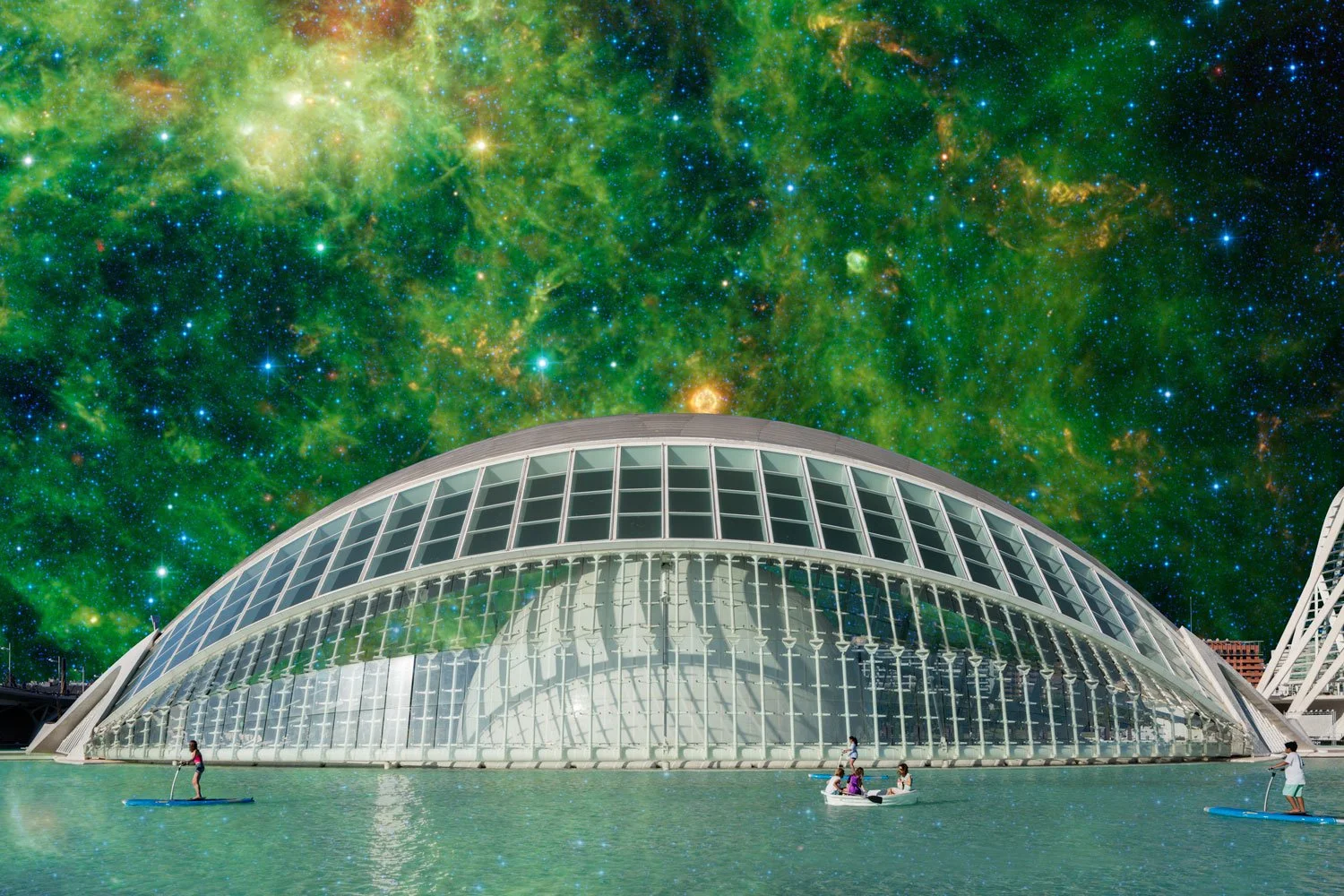
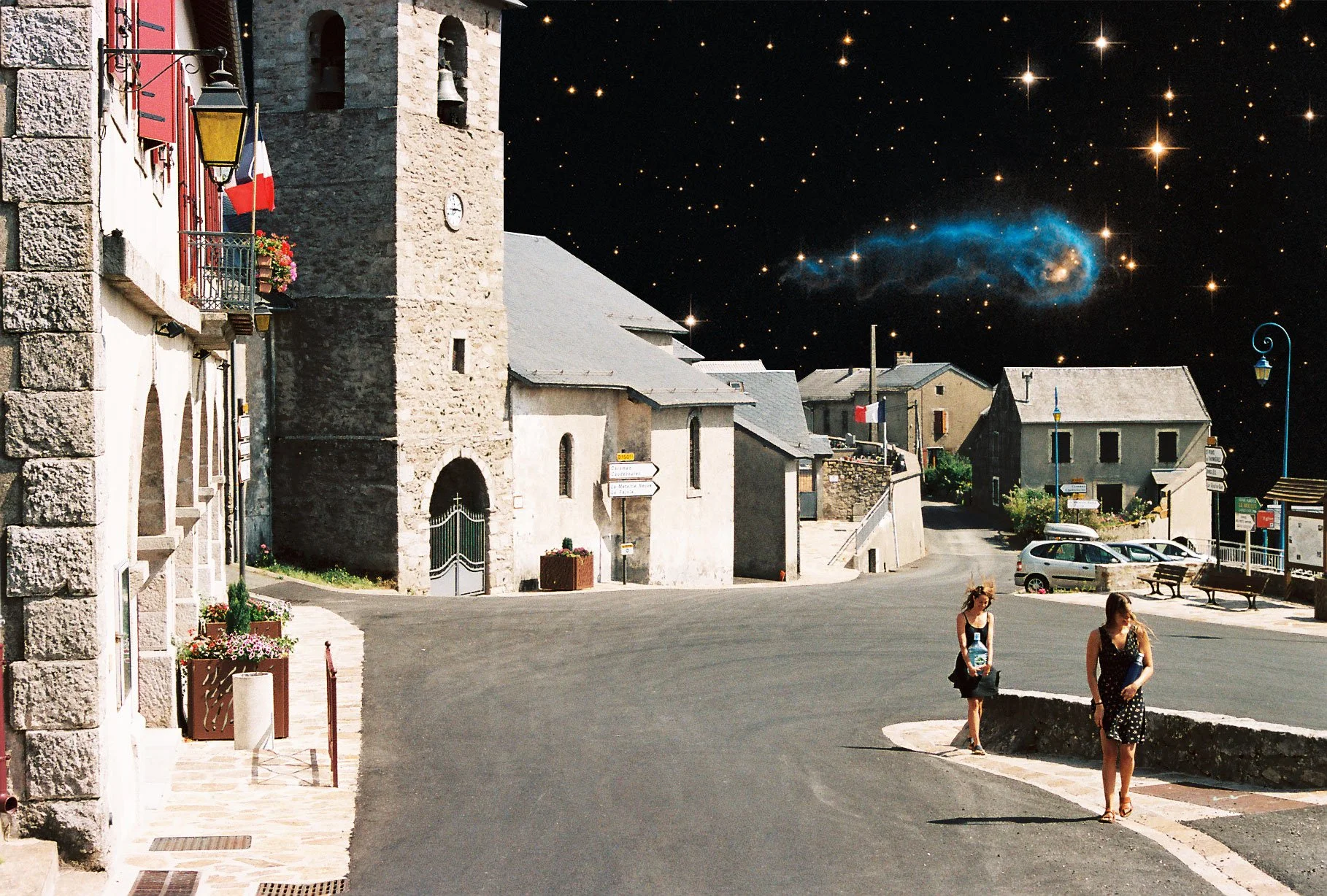
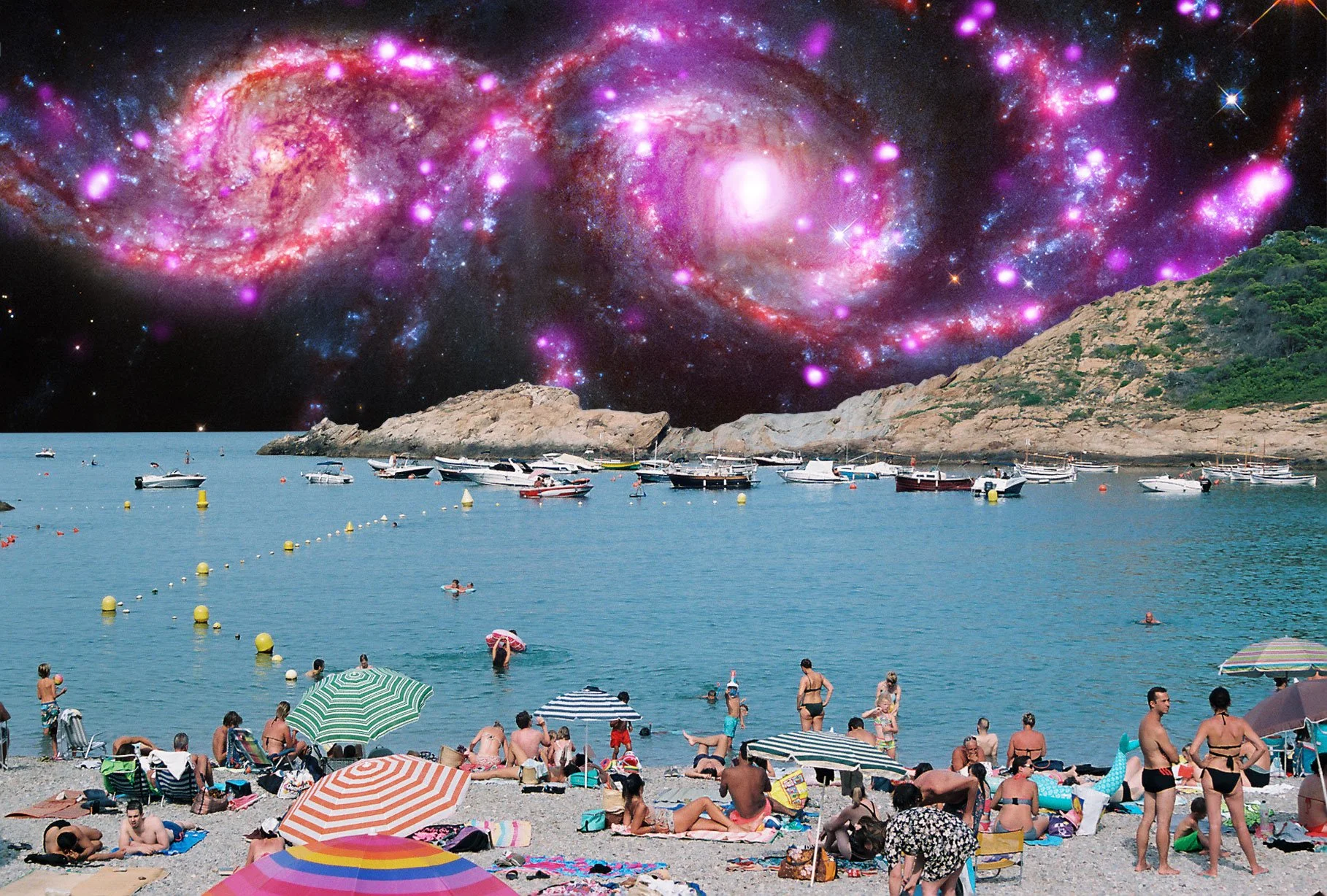
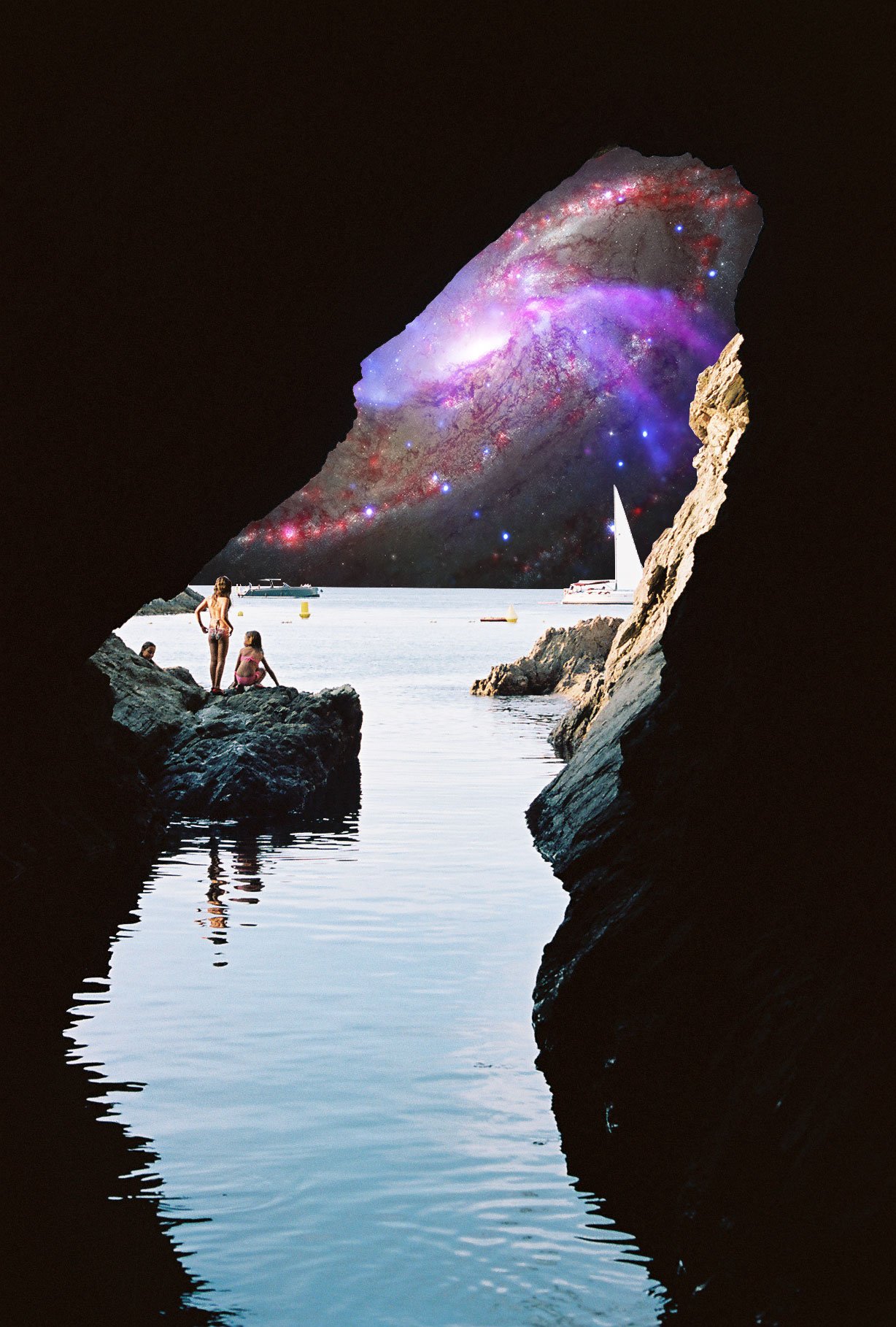
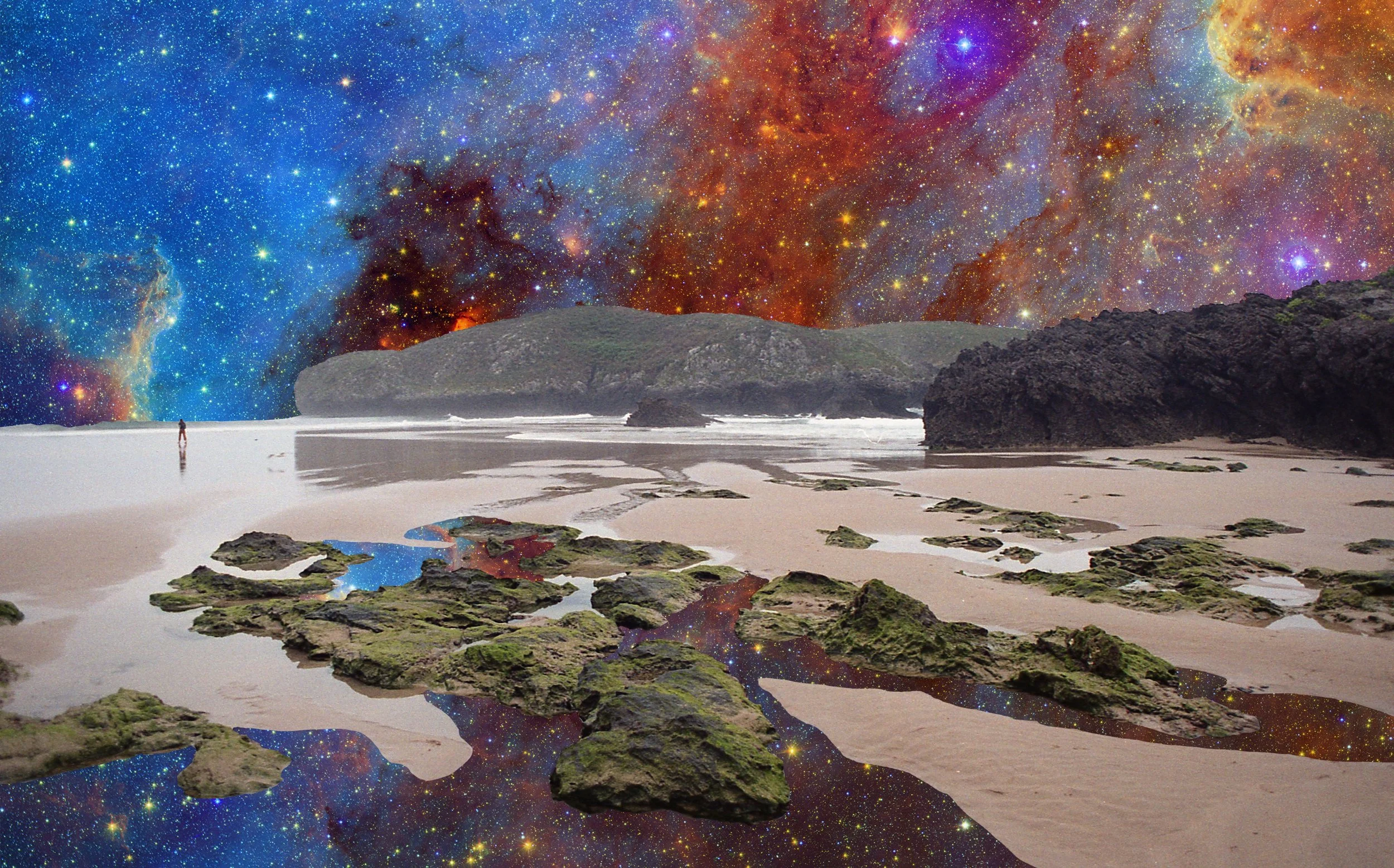
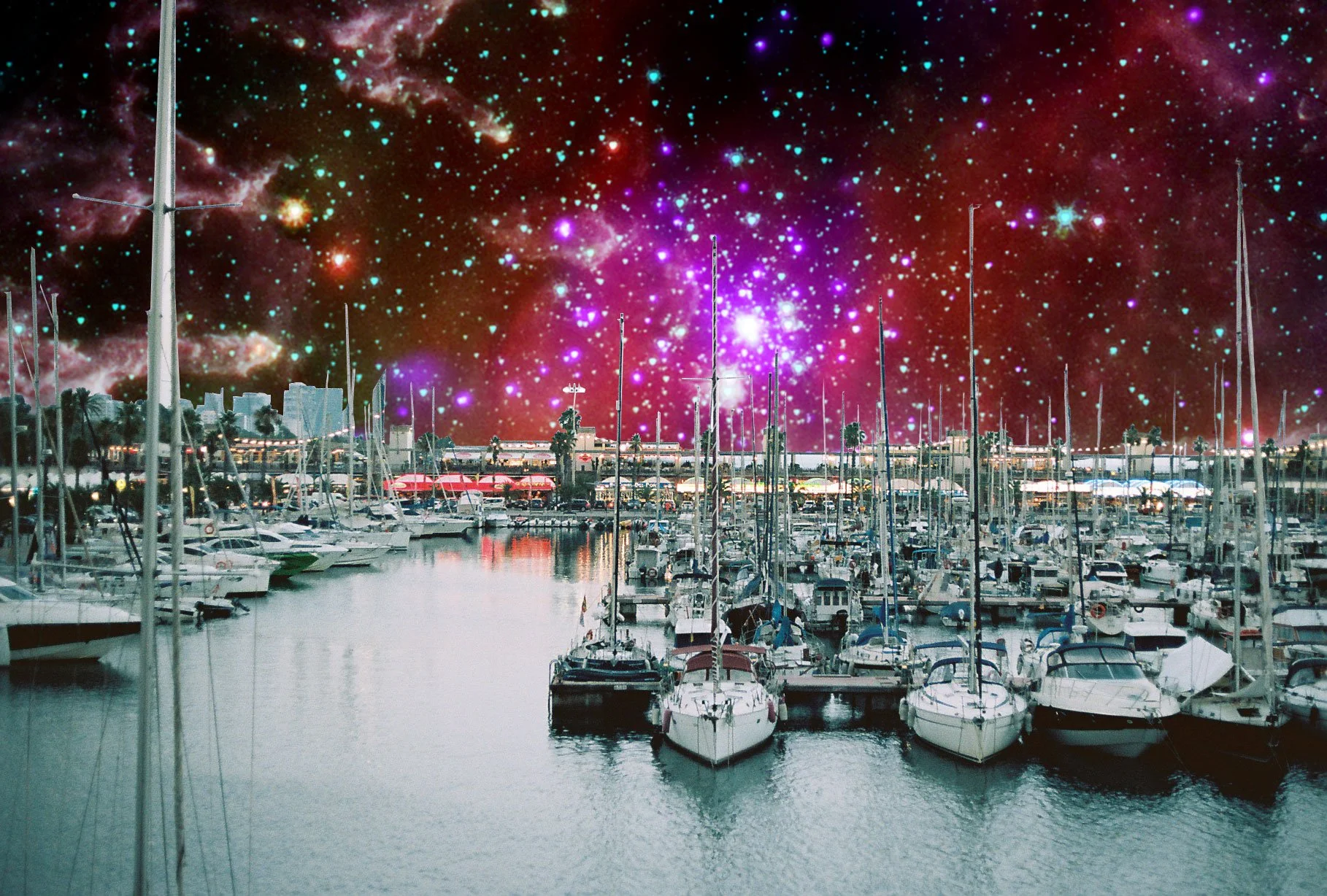
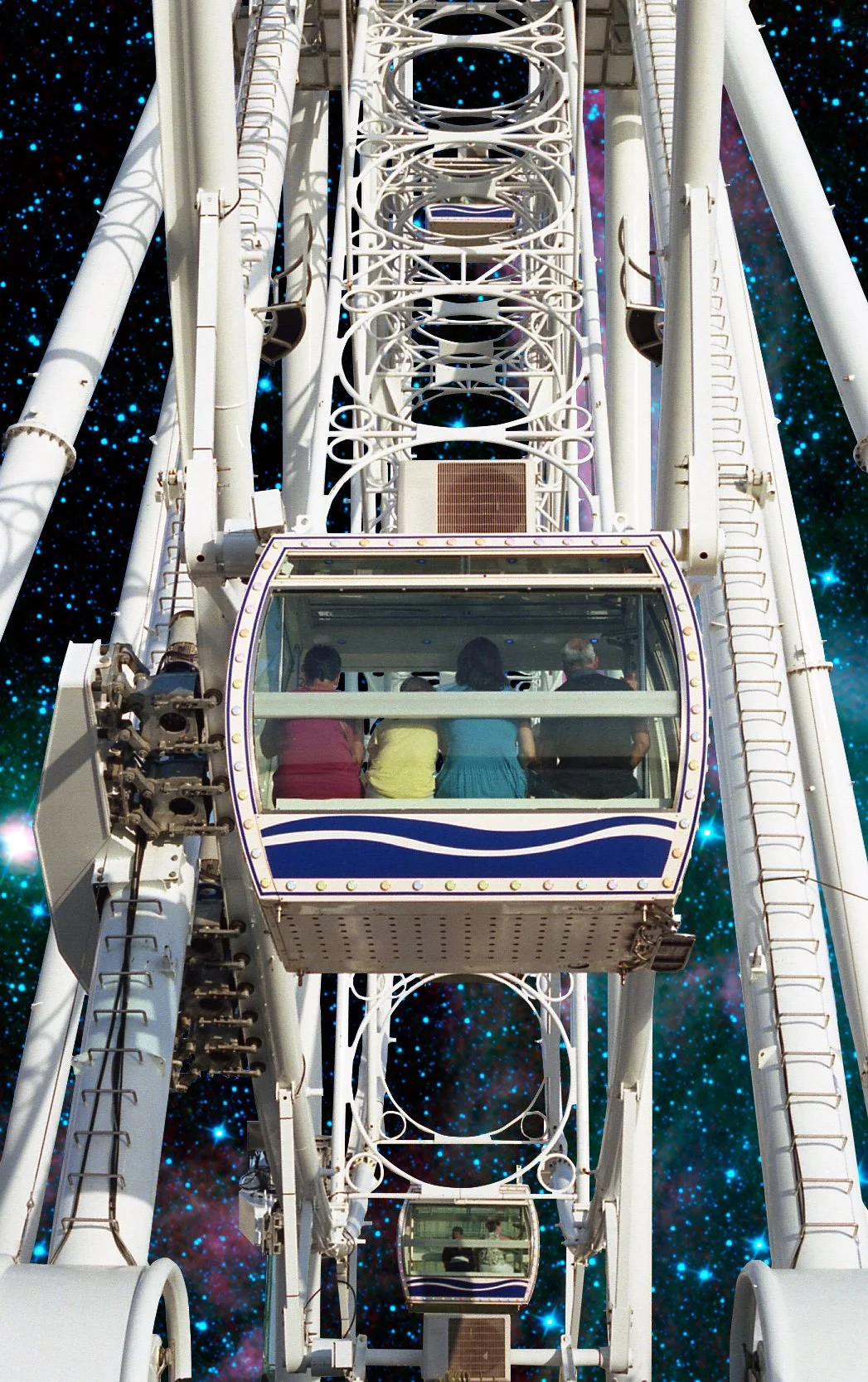
This collection is called (m)otherlands. When navigating feelings of isolation and homesickness, I go back to my vacation film pictures of Spanish summers and I see a land that feels so far away and remote that I’m not so sure it belongs on earth. Then, NASA provides pictures of galaxies and nebulae, and those pieces fit in perfectly. These lands come to life. A new life. They are clearly a depiction of my motherland, but I revisit them, twisting them in the way sometimes we do when we romanticize things of the past.
To start, tell us a little about yourself and your work. How did you first come to photography and collage?
I’ve always enjoyed drawing and writing. Even as a kid, I submitted poems and short stories to contests and won a couple. Later, I decided to study journalism, and I interned in a couple of different newspapers in Barcelona. After that, I found a communications and marketing job, and I soon learned that I did not enjoy the lack of creativity in that field. I worked for Openhouse magazine for a short period of time, and it was so fun. I met my now-husband at that time, and he worked in a coffee truck and started to work for some local architects as a freelance photographer. We thought that it would be fun to work together, but we would probably have more opportunities in the United States. So we decided to move to North Carolina, where he decided to specialize in architectural photography. I helped him here and there at the beginning, but a few years later, as things got busier, I became a full-time postproduction manager and assisted in photoshoots. We started traveling a lot together for work, and we still do! I started to enjoy collage when I learned photography editing, because to me they are very similar, and they can enrich each other.
You grew up in Barcelona and studied journalism before moving to North Carolina. How has that path shaped the way you tell stories through images?
When I worked at the newspapers and later in a magazine, I felt like it opened up new ways for me to understand the city. Now we still get to spend big chunks of time out of the year in Barcelona thanks to our flexible schedules. And every time I return, I am filled with inspiration, starting from the Mediterranean landscapes, from family memorabilia, the city’s architecture, and the tiles and intricate details that one can find in the city facades. There’s so much beauty and history everywhere. The seeds for the stories that I tell in poems, collages, and pictures are planted in those trips.
You work in architecture photography and focus on postproduction. How does that editing eye show up in your personal work?
The focus on postproduction has given me a toolset to be able to play with any image and create something new, to be able to see that any image can become a new story with new layers. I also gained attention to detail through the editing process and a lot of confidence in that field.
Your collection (m)otherlands brings together your own film photographs of Spanish summers with images of galaxies and nebulae. How did those two worlds first meet?
The photographs that were used in (m)otherlands were taken by my husband in Asturias and the Basque Country (north of Spain) in the context of a family trip in 2019 with a Canon AE-1, a film camera. When we got back to the States, we developed them and they gave us digital scans, which were perfect for collage. Later, the pandemic started to shape life, work, and everything in between, and I thought about the uncertainty of future travel, and those scanned pictures made me reminisce. I’ve always been fascinated by the incredible and vast pictures that NASA provides, and thought that blending those two worlds would give an escape, an artistic one but also a metaphorical one, by creating new lands to navigate in those confusing times. They were depicting my motherland, but with a layer that gave them a new life, like we sometimes do when we romanticize things in our memory and we distort them. Those new motherlands provided comfort when isolation and homesickness were part of life.
Walk us through your process, from choosing a photograph to building the final image, whether digital or by hand.
I am drawn to architecture and the private spaces, but also to nature. The process is hard to explain because it depends on my mood and what I’ve been absorbing lately in terms of art, landscapes, movies, what I’ve read, etc. When it comes to digital collages, it is fun to have control over tools that give you precision in editing, but I also enjoy the manual collages blended with poetry, where everything is more intuitive.
You also write poetry and essays. How do words and images work together for you?
I feel like poetry is born out of trying to make sense of feelings and thoughts. They don’t have to be big ones; they can be minutia. But those blossom, and I just put them on paper and I play with the words. Some elements in nature inspire me to write poetry or essays, and I’ve been considering including pictures I take in the moments before or after those poems are born, because they are part of the process. Like the poem “Reverie,” it references a pink magnolia seed cone that stopped me in my tracks; the poem becomes stronger—in my opinion—with the magnolia seed cone picture I took right when I was writing the poem.
What do you hope someone feels when they spend time with (m)otherlands?
You know, everyone is going through different things, and art is so subjective. I don’t hope for anything in particular. Maybe it would be interesting if we all asked ourselves where our motherlands are and we explore that on a deeper level. But it is a suggestion.