

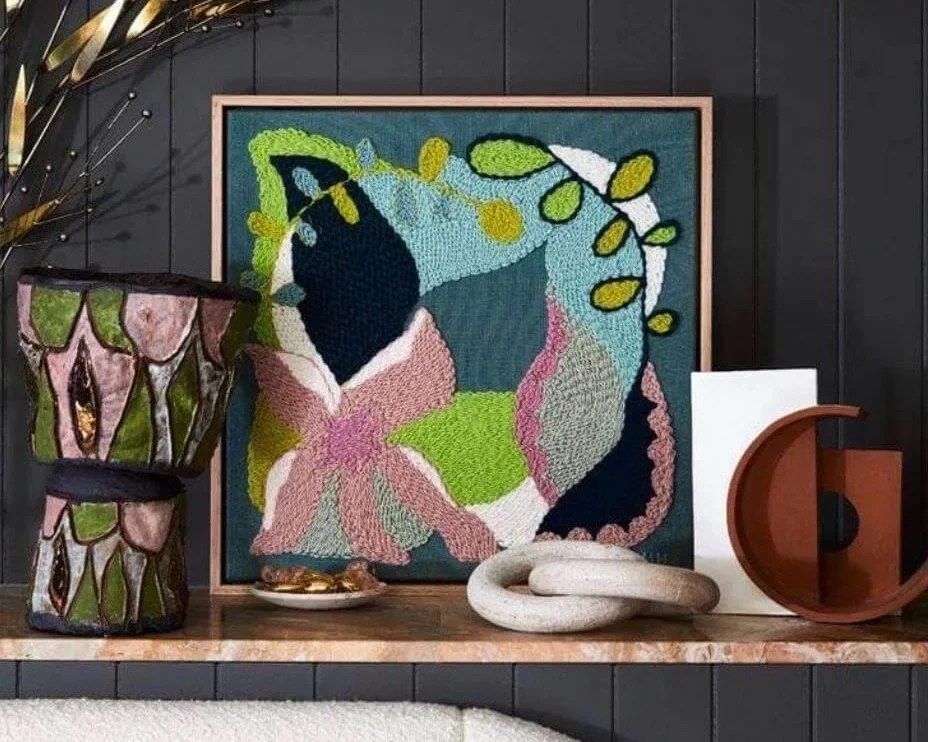
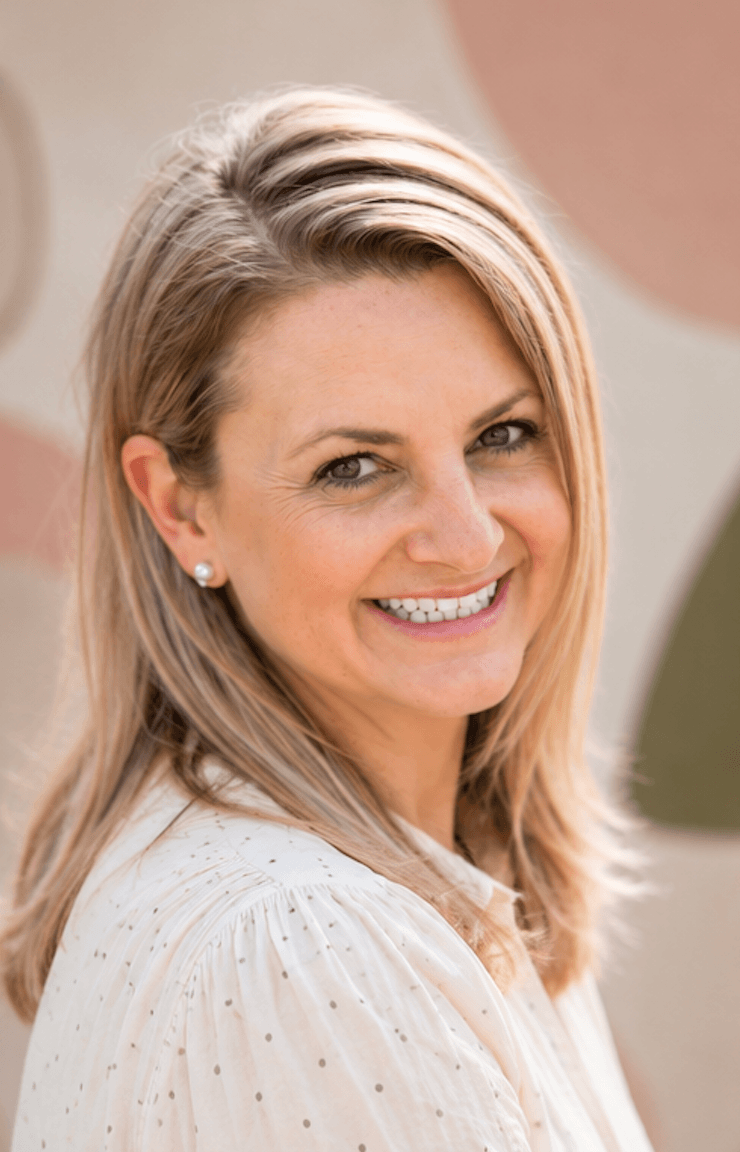
Monica Henry is a contemporary Australian artist based in Geelong, Victoria, whose richly textured textile works explore the expressive and emotional potential of colour through material. Working primarily with punch needle and wool, her practice is grounded in a deep connection to craft, place, and the tactile language of fibre.
She holds an Advanced Diploma of Visual Arts and has undertaken further study at the Geelong Fine Art School and Bloom College, developing a multidisciplinary foundation across fabric design, photography, life drawing, screen-printing, and painting. These diverse disciplines inform her distinctive textile practice, where traditional techniques are reinterpreted through a contemporary lens.
Henry’s work is shaped by her family’s generational ties to the wool industry in Geelong, historically a major centre of Australia’s textile production, as well as her time living abroad, particularly in Japan, where an appreciation for materiality, restraint, and considered composition continues to influence her approach.
She has exhibited widely and held gallery representation in Australia and internationally, including Vernissage Art Gallery (Melbourne), Adaro Art Gallery (USA), and Verandah Gallery (Geelong). Her work has been included in exhibitions such as the Toowoomba Art Show and LIFE Online Exhibition, and she was a finalist in the Petite Collections Small Works Art Prize, selected by Ken Done. In 2024, she was awarded People’s Choice at Arts to Hearts and, most recently, in 2025, won First Prize in the Talburac Art Award. She is a current finalist in the Facets of Fairholme Art Prize.
Her work has been featured in publications including Geelong Advertiser GT Magazine, My Coastal Home, Surfcoast Times, and the Arts to Hearts Floral Edition Artbook. Monica’s work is held in private collections across Australia, the United States, Japan, Europe, and New Zealand.
Artist Statement
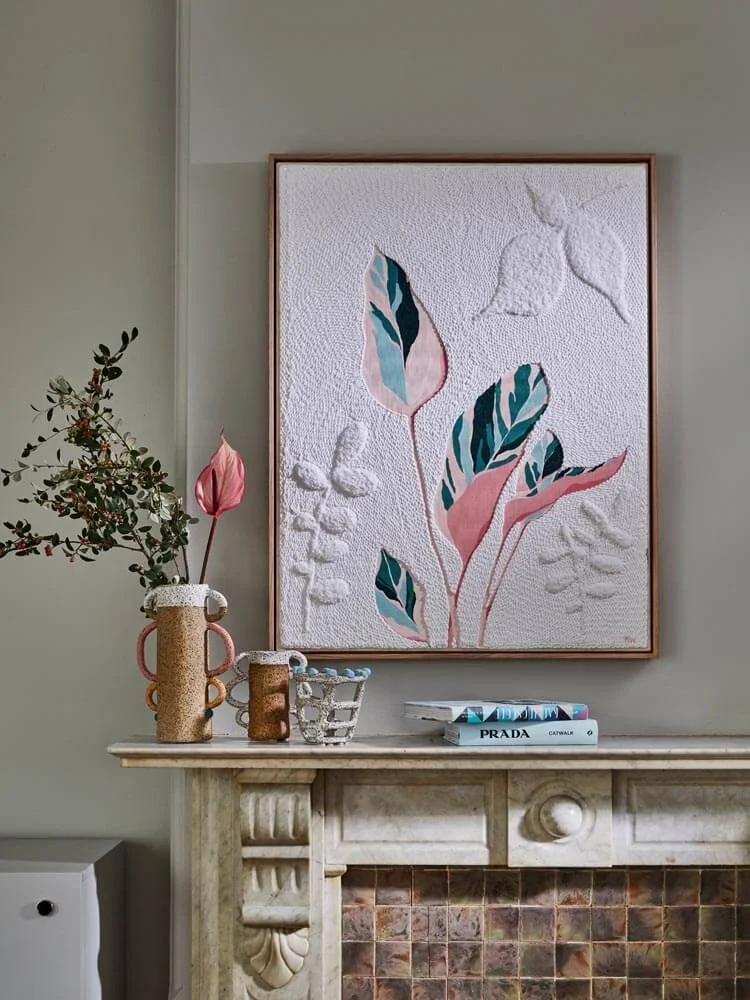
My practice explores colour as both a visual and tactile experience. Working with punch needle and wool, I use stitch, texture, and repetition to build layered surfaces where colour is not only seen, but felt.
Colour in my work is intuitive and responsive. I begin without a fixed composition, allowing tones and hues to emerge through process. As layers develop, colours shift in intensity and relationship—softening, contrasting, and expanding across the surface. This creates a sense of movement and rhythm, where the work feels immersive and continuously unfolding.
The use of wool is central to this exploration. As a material, it carries both physical softness and historical significance, particularly within the context of Geelong’s wool industry. By working with wool in a painterly and contemporary way, I aim to extend traditional textile practices into a more expressive, colour-driven language.
My forms often draw from botanical references, but remain open and abstracted, allowing the viewer to move through the work without a fixed narrative. Colour becomes atmospheric rather than descriptive—something to experience rather than interpret.
The process itself is slow and meditative. The repetitive act of stitching allows me to respond to subtle shifts in colour and composition over time. This rhythm is embedded within the finished work, inviting a moment of pause and immersion.
Ultimately, my work invites a sensory engagement with colour—one that is grounded in material, memory, and the quiet intensity of making.
Instagram: @monicahenryart
Interview
You describe colour as something to be felt as well as seen. How does punch needle and wool help you translate that idea into a physical experience for the viewer?
For me, colour is just as much about the feeling it creates as how it looks. Working with wool allows me to build up layers of colour and texture, so the work has a painterly quality but also invites you to look closer and experience it in a more tactile way.
You begin without a fixed composition and let tones and hues emerge through the process. What does that first stage look like, and how do you know when a piece is finished?
I usually start with a feeling for the colours I want to work with rather than a set plan, and I let the composition evolve as I go. I love seeing unexpected colours and shapes emerge through the process, and I know a piece is finished when the colours feel balanced and everything seems to sit together naturally.
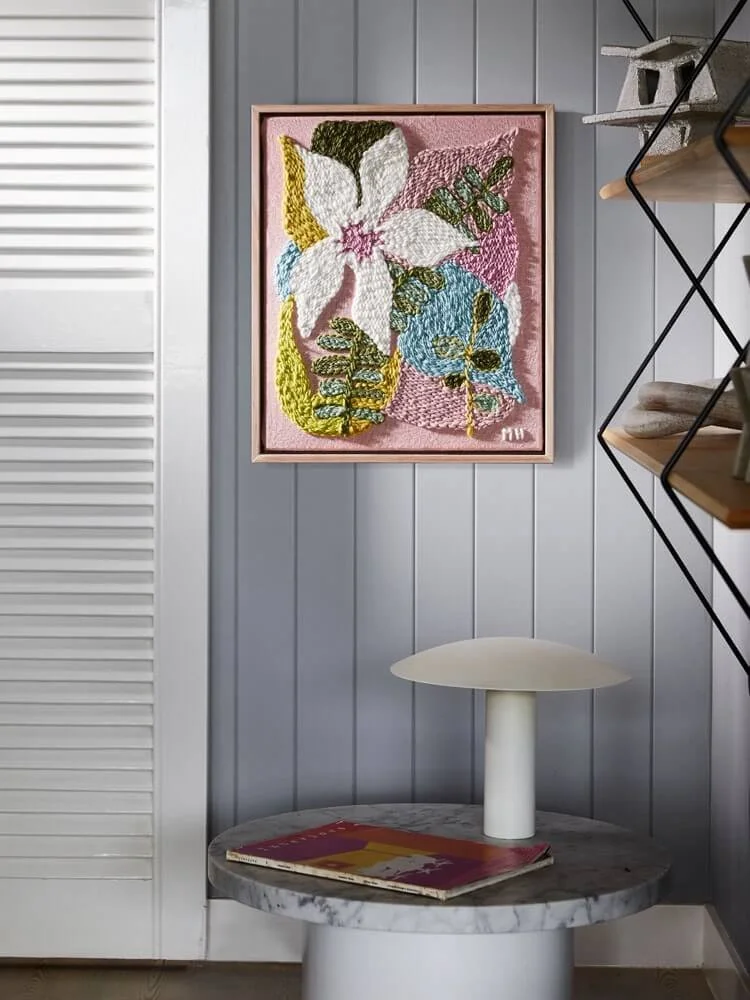
Your family has generational ties to the wool industry in Geelong. How has that history shaped your relationship to the material?
Having family ties to Geelong’s wool industry gives my work a personal connection to the material, and I love that I’m continuing a relationship with wool in my own way. I’ve always been drawn to its natural qualities, versatility, and warmth, and it feels special to create contemporary work with a material that has such a strong history in my hometown.
Your time living in Japan influenced your appreciation for materiality, restraint, and considered composition. Where do you see that influence most clearly in your work today?
Living in Japan really influenced how I look at materials, colour, and composition, and made me appreciate the beauty in simplicity and the little details. I think that shows in the way I build up my work, allowing the texture, colour, and shapes to speak for themselves without needing to overwork them.
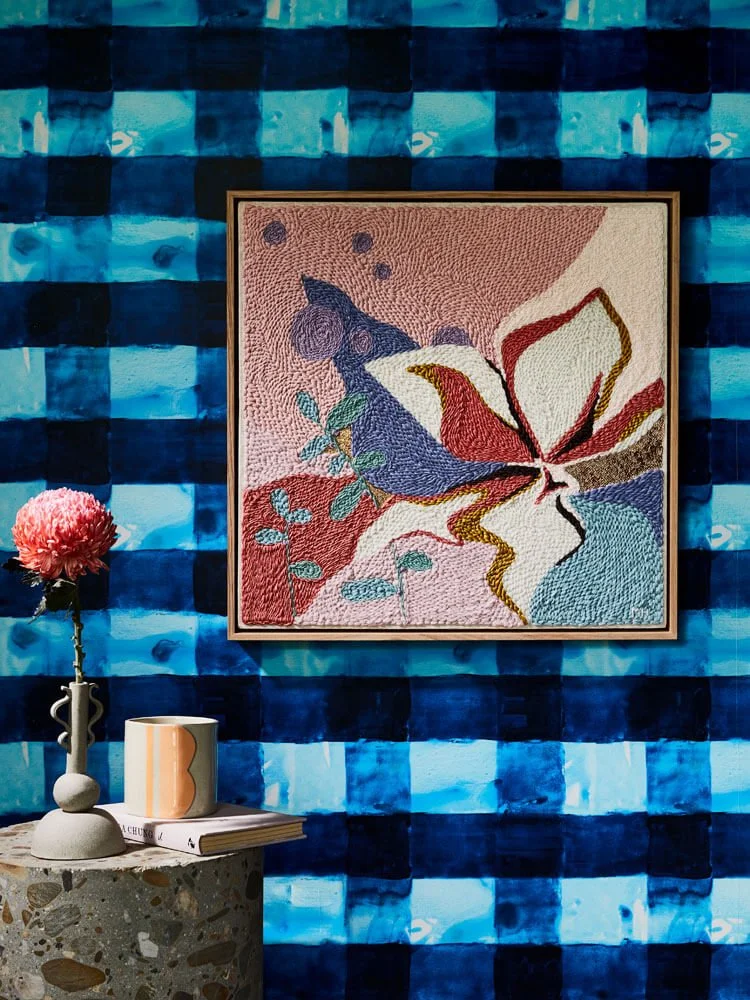
Your forms draw from botanical references but stay open and abstracted. Why is it important to you that viewers move through the work without a fixed narrative?
I’m inspired by florals, plants, and the shapes and colours found in nature, but I don’t necessarily want to recreate them literally. I love the idea that people can see different things in my work and connect with it in their own way, bringing their own memories, feelings, and interpretations to the piece.
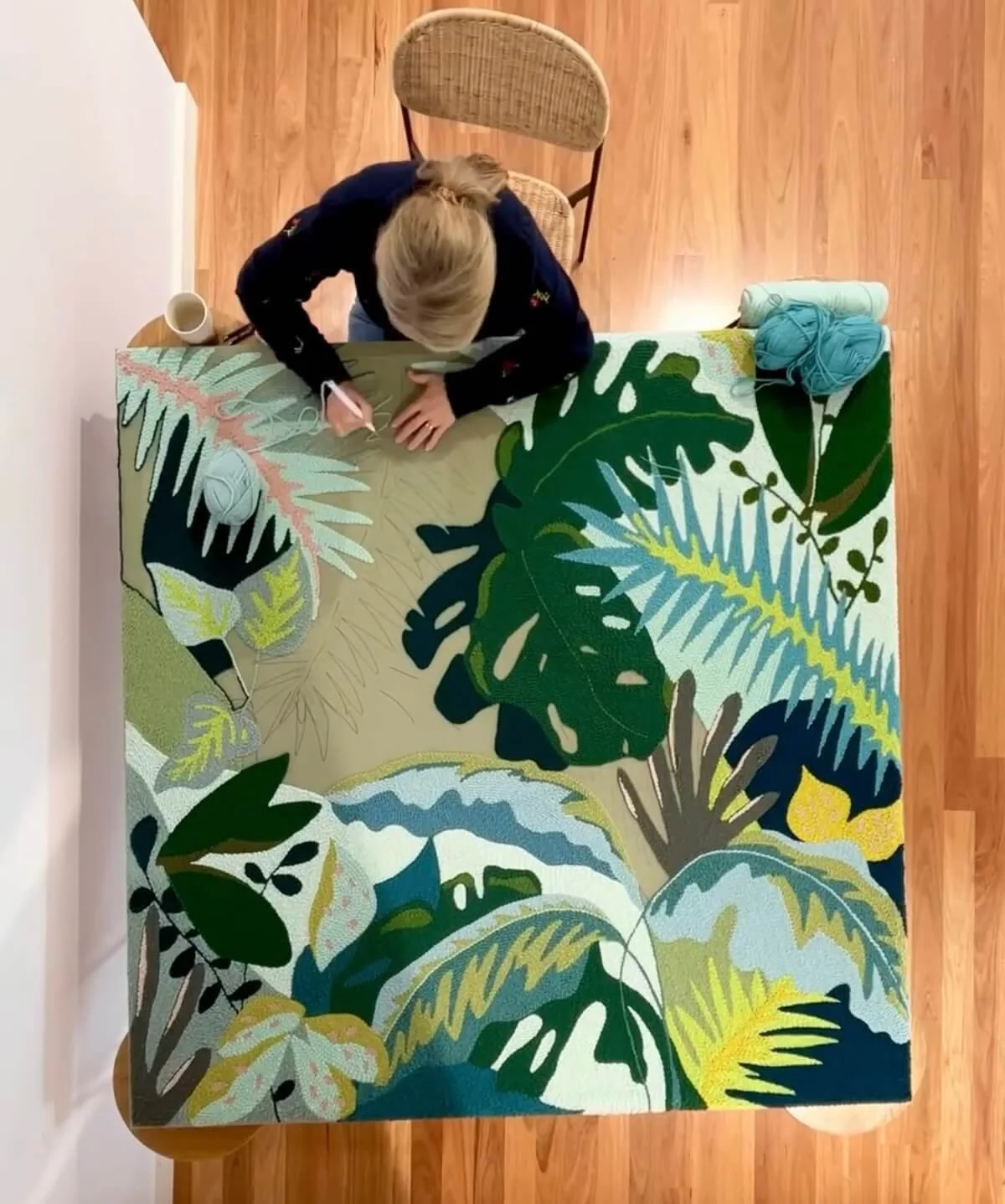
You describe the process as slow and meditative. How does the repetition of stitching shape the rhythm and mood of a finished piece?
Punch needle is a very repetitive process, and I find there’s something really calming about building a piece stitch by stitch and watching it slowly come together. That rhythm also carries through into the finished work, with the repeated marks, layered textures, and flowing shapes creating a sense of movement.
Your background spans fabric design, photography, life drawing, screen-printing, and painting. How do those disciplines show up in your textile work?
All of those disciplines have influenced the way I approach colour, composition, and mark-making. I think of my textile work as sitting somewhere between painting and textiles, where I can bring together a painterly use of colour with the texture and spontaneity of stitching.
What are you most curious to explore next in your practice?
I’m really enjoying exploring florals and tropical plants, particularly after being inspired by the colours and forms I saw in Queensland. I’m excited to keep pushing my use of colour and texture, experimenting with new combinations and seeing how far I can take these ideas in larger textile works. I would love to start incorporating some more forms in the way of native birds within my botanicals too, so I think that's next on the drawing board.