

Light on the Horizon: Chelsea Tikotsky on Palette Knife Painting, Botanical Beauty, and the Art of Noticing
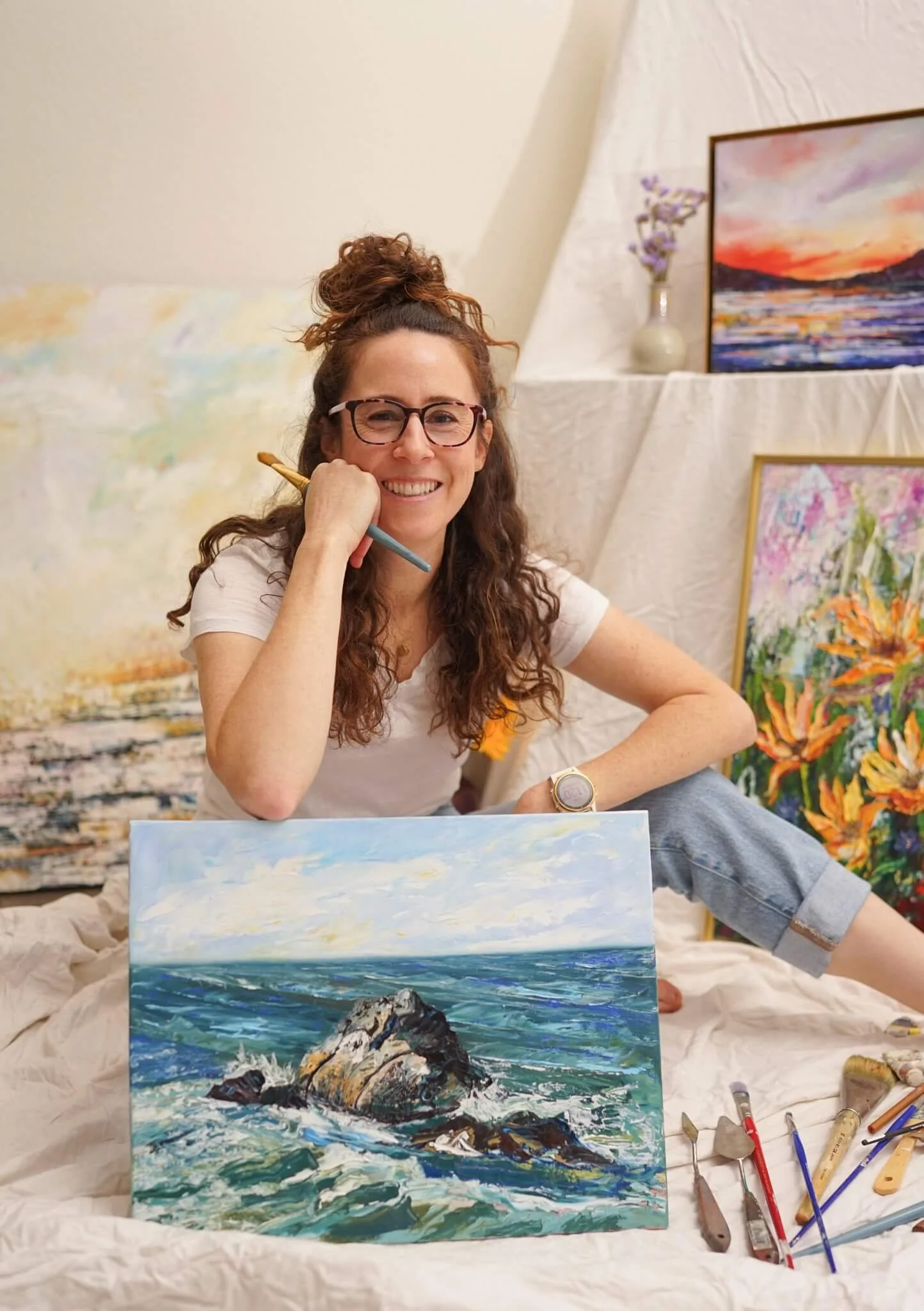
Chelsea Tikotsky is captivated by those fleeting, magical moments in life and nature, the kind we often overlook because we're too caught up in the rush of everyday life. One day while running along the bay, Tikotsky found herself immersed in golden light, soft waves, and a sense of pure serenity.
It struck her how perfect and ethereal that moment was, so easy to miss, yet so full of wonder. That feeling is what Tikotsky strives to capture in her paintings: a reminder to slow down, take notice, and bring more of that quiet magic into our lives. At its core, Tikotsky's art serves as a reminder to pause and notice the beauty around us. In a world that moves too quickly, her paintings offer peace, nostalgia, and the hope that something beautiful always lies ahead.
Tikotsky is a San Francisco Bay Area-based contemporary artist who holds a B.A. in Studio Art from San Francisco State University and refined her artistic perspective at the Accademia di Belle Arti in Florence, Italy. Her work has been showcased in exhibitions across the United States, including the 2024 PBS KVIE Art Auction, where she received the Juror's Award. Tikotsky's work was also featured in Visionary Art Collective (VAC) and the Apricity Magazine Volume 9 Print Edition (2025), published at the University of Texas at Austin, where she was later invited to participate in an artist talk during the magazine's showcase. Her paintings have also been placed in private collections in the United States and abroad.
Artist Statement
I am drawn to the fleeting, magical moments in nature that are often overlooked in the rush of daily life. One evening after work, I went for a run along the bay as the sun was setting. Through my sunglasses, the colors around me suddenly deepened, filling me with a sense of joy that lifted the weight of the day. That experience reminded me how easy it is to miss these moments of beauty, yet how powerful they can be when we notice them. My paintings are a way to hold onto those sparks of light and emotion, so they can continue to carry us forward.
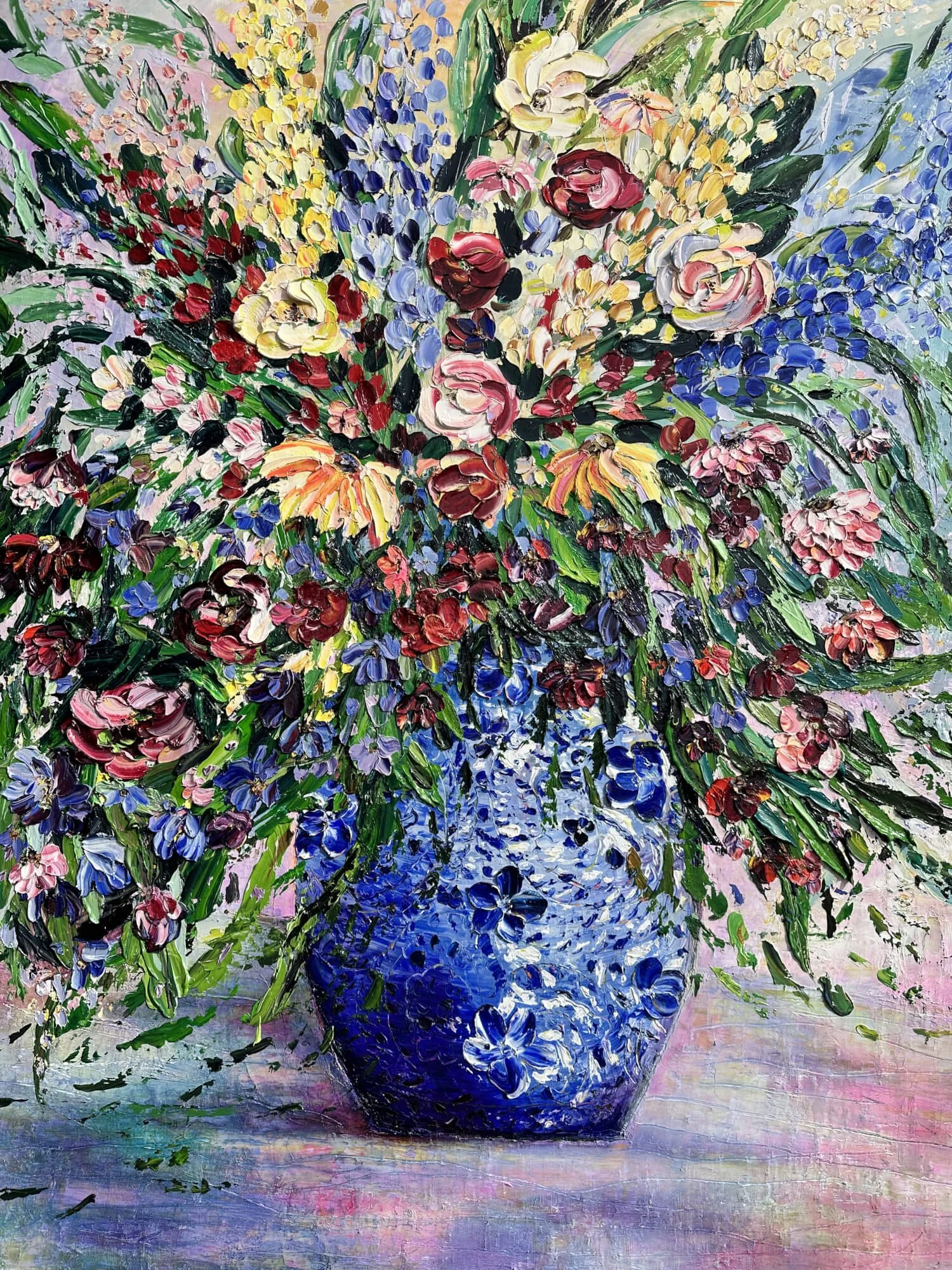
My landscapes reflect the serenity and resilience of nature, reminding us that even in difficulty, there is always light on the horizon. My botanical paintings, meanwhile, are rooted in joy, femininity, and imagination, inspired by the romanticism of Bridgerton, Emma, and Pride and Prejudice. Like the women in those stories, resilient, passionate, and optimistic, my botanicals embody strength alongside beauty.
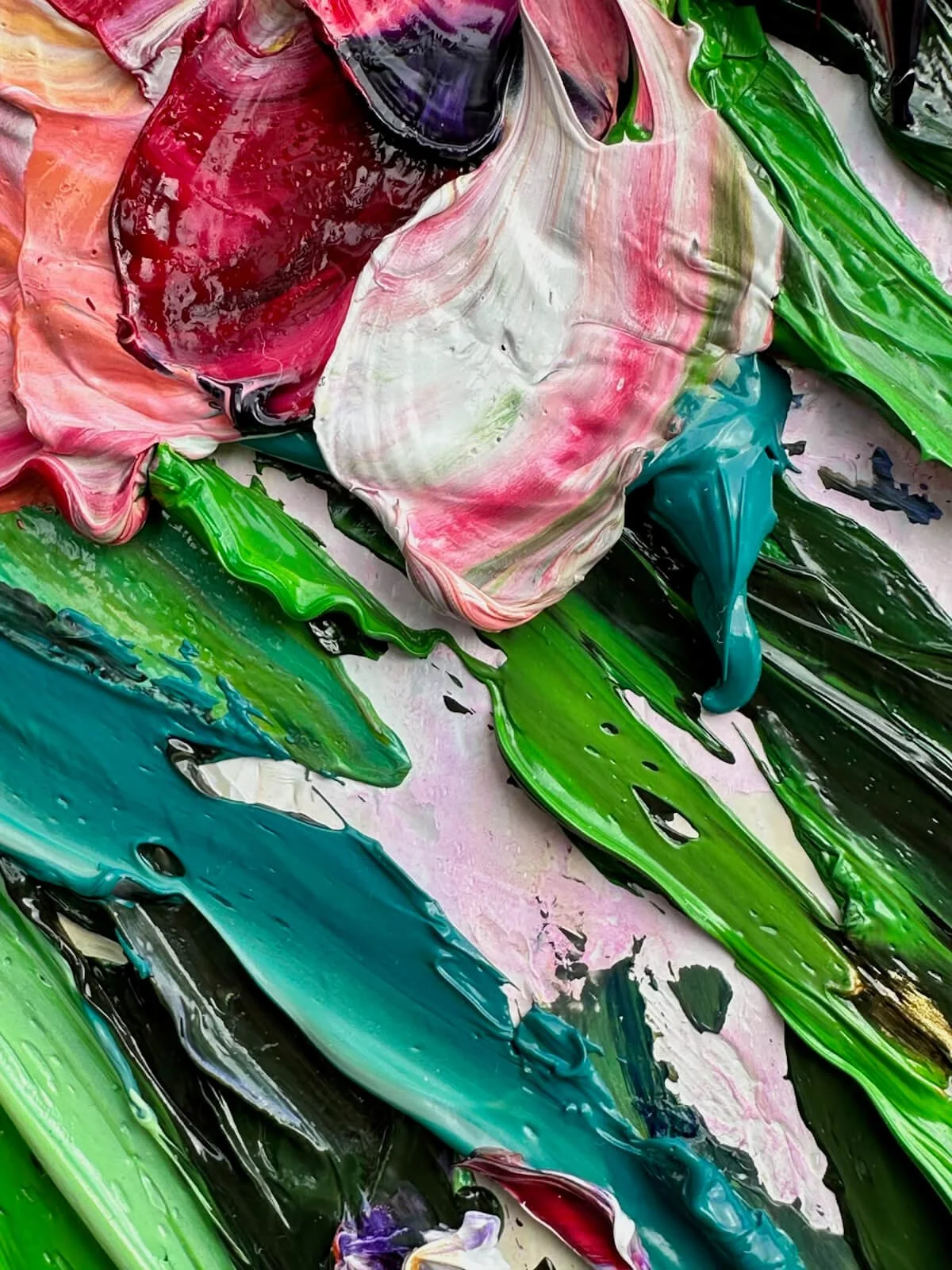
I work primarily with a palette knife, sculpting oil paint into textured layers that create both energy and softness. These paintings are not just images of nature, but vessels of memory and emotion, reminders that even in life's storms, there are still moments of light, joy, and hope waiting to be seen.
https://chelseatikotsky.com/
Interview
You often describe your work as capturing moments that are easy to overlook. What helps you recognize those moments when they appear?
I often say my work captures moments that are easy to overlook, and I think my ability to recognize those moments has developed over time.
I would often go for runs out along the bay after a frustrating day, whether from work or personal life, and that's when things would start to shift for me. I'd be wearing different pairs of Goodr sunglasses, and each lens has a slightly different tint, which changes how you perceive light and color. I started catching myself wondering, "Is that actually the color of the water?" I would take the sunglasses off and on, comparing what I was seeing, and realized those subtle shifts in light and color were actually real.
That experience made me slow down and pay closer attention. Then COVID happened, and it deepened that shift even further, reinforcing what I had already started practicing, being more present, observant, and intentional in how I move through the world.
I began to feel more connected and present, like I was really seeing the world again. It made me feel alive and lifted the heaviness of whatever I was carrying that day, reminding me there is still possibility, life, and so much ahead.
I started noticing small but extraordinary details, how clouds are constantly shifting in shape and form, and how sunsets can feel almost neon, full of intensity and vibrancy in ways that don't feel exaggerated at all.
On days that felt especially heavy or frustrating, this wayof noticing also became a way to reset myself. It reminded me it was just one moment in time, and that there is always more beauty and good ahead than whatever I was carrying in that instant. That shift in perspective helped me stay grounded, and it became something I could return to whenever I needed to step out of my own head.
That practice of slowing down, noticing, and really seeing continues to influence how I experience the world, and ultimately how I paint it.
A run along the bay became a pivotal source of inspiration for your practice. Why do you think that experience stayed with you so strongly?
I think that experience stayed with me so strongly because I was in a real transition period in my life. I was still carrying the weight of negative feedback from an art professor in college, and I was also dealing with imposter syndrome around my practice, especially because I didn't go to a traditional art school. At the time, I didn't fully recognize it as that, but looking back, that's what it was.
At the same time, I had this strong desire to paint, to prove to myself that these colors, ideas, and ways of seeing were valid and worth pursuing.
Running was a huge part of my identity then. I had already achieved things through running that I never thought I could do, so it became a safe and grounding space for me, a reminder of what I was capable of, and a way to think beyond what I thought my limits were.
Those long runs along the bay also became a space where I could process things and feel creative at the same time.
The Goodr sunglasses added something unexpected to that experience. The shifting lenses and colors made everything feel heightened, almost like a constant prompt pulling me back into the present moment, saying, "Look at this." It took me out of my head and into direct experience.
Over time, it became a push and pull between external expectations and my own intuition. I started stepping away from what I had been told I "should" do, whether from professors or broader expectations, and instead trusting what I was actually seeing and feeling. It became less about proving something to others and more about allowing myself to explore what was already there.
Your landscape and botanical series carry different emotional registers, serenity and resilience in one, joy and femininity in the other. How do you move between those two energies in the studio?
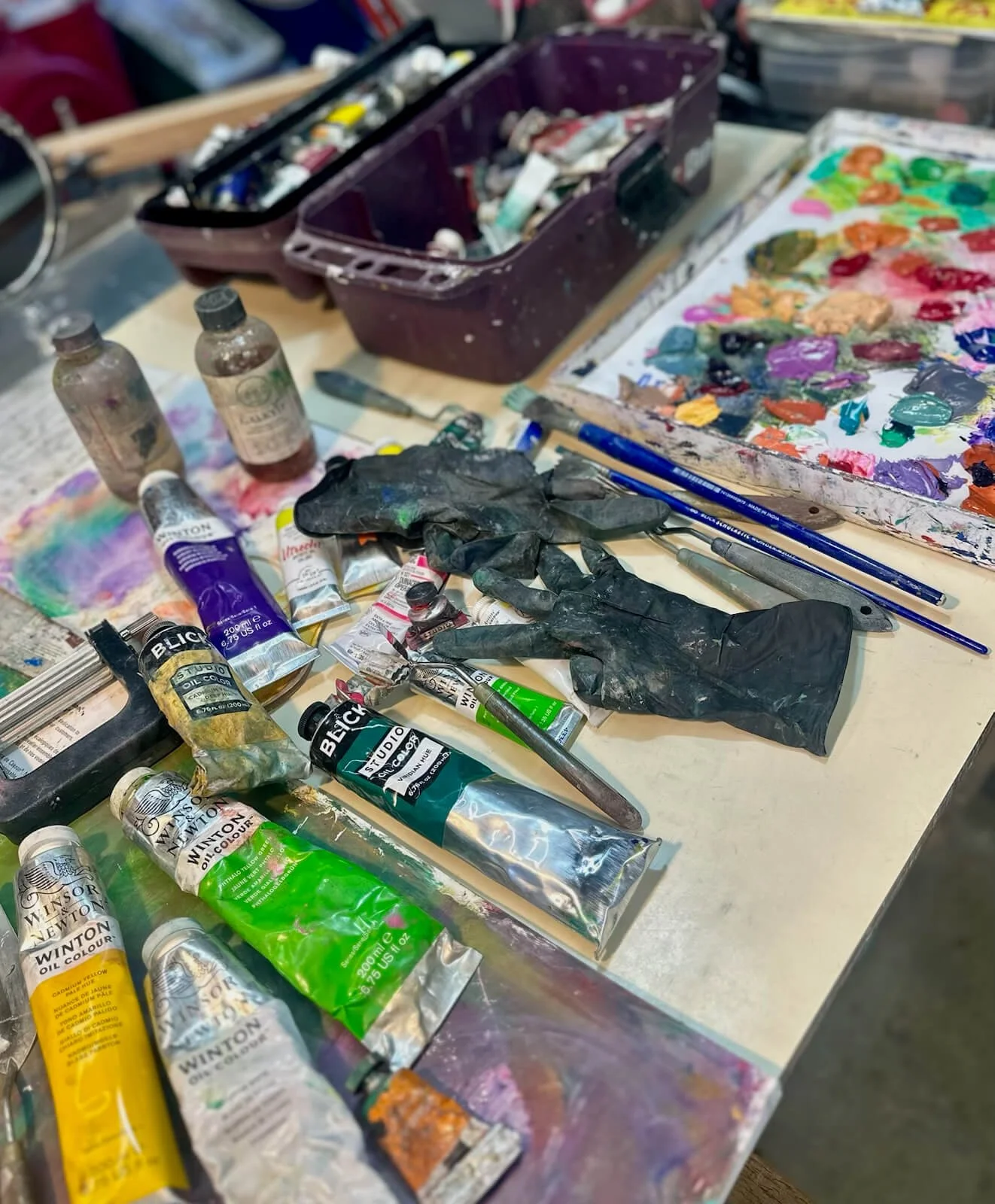
For me, moving between those two energies is very intuitive. It's not something I plan in a fixed way, and it's not always the same, but I pay attention to what feels natural in the moment.
I might go into the studio with an intention, like painting a landscape or a botanical piece, but once I start working, I can usually tell pretty quickly if it's flowing or if I'm forcing it. If there's resistance, I don't push through it. I'll shift into whatever feels more aligned at that time.
Sometimes the shift is emotional, and sometimes it's something I've just experienced visually in nature, like a sunset, the sky, clouds, or a shift in light, and it just pulls me in a different direction. I've learned to follow that instead of trying to force it.
So it's really about responding to what feels most alive in that moment. I've stopped trying to control it so tightly and instead let the work move with me.
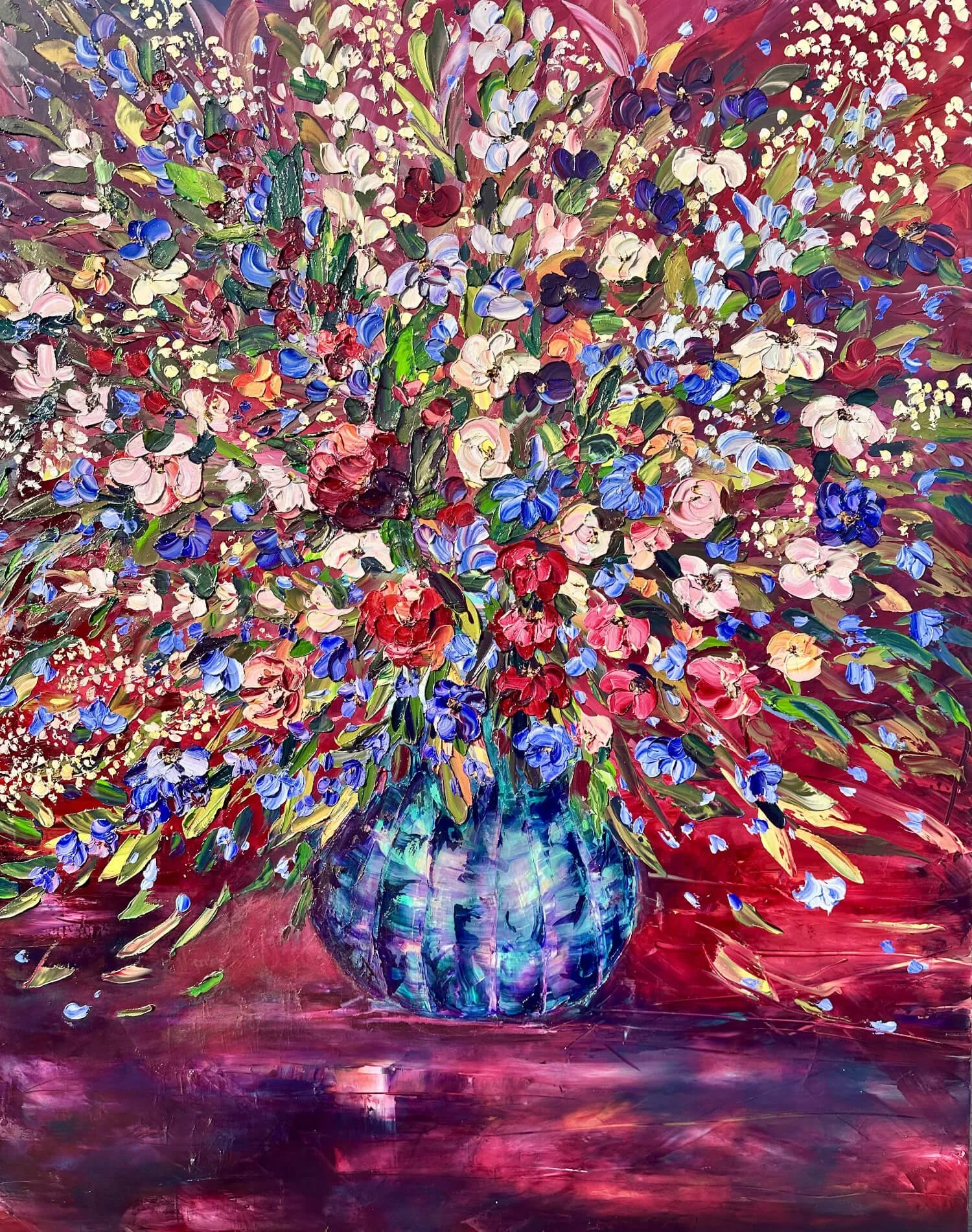
Your botanical paintings draw inspiration from romantic literature and period dramas. What connections do you see between those narratives and your work?
My botanical paintings draw inspiration from romantic literature and period dramas through the way they build emotional worlds through beauty, atmosphere, detail, and strong female characters.
I'm really drawn to narratives of women who are strong and complex in those spaces, women who were often independent, emotionally rich, and in their own ways pushing against the limits of their time. There's something inspiring about that, especially the idea that strength and femininity can exist together.
In my own work, I think about that same idea through texture, layering, and vibrant color. At first glance, the paintings might feel soft or decorative, but I'm interested in what happens when you spend more time with them, when you slow down and realize there's depth underneath the surface.
That connects back to those narratives for me: the idea that what appears beautiful or "pretty" isn't shallow, but often holds complexity, resilience, and lived experience beneath it.
Ultimately, my work is a reconsideration of how we look at beauty, reminding viewers that what is visually pleasing can also be profound, thoughtful, and full of life.
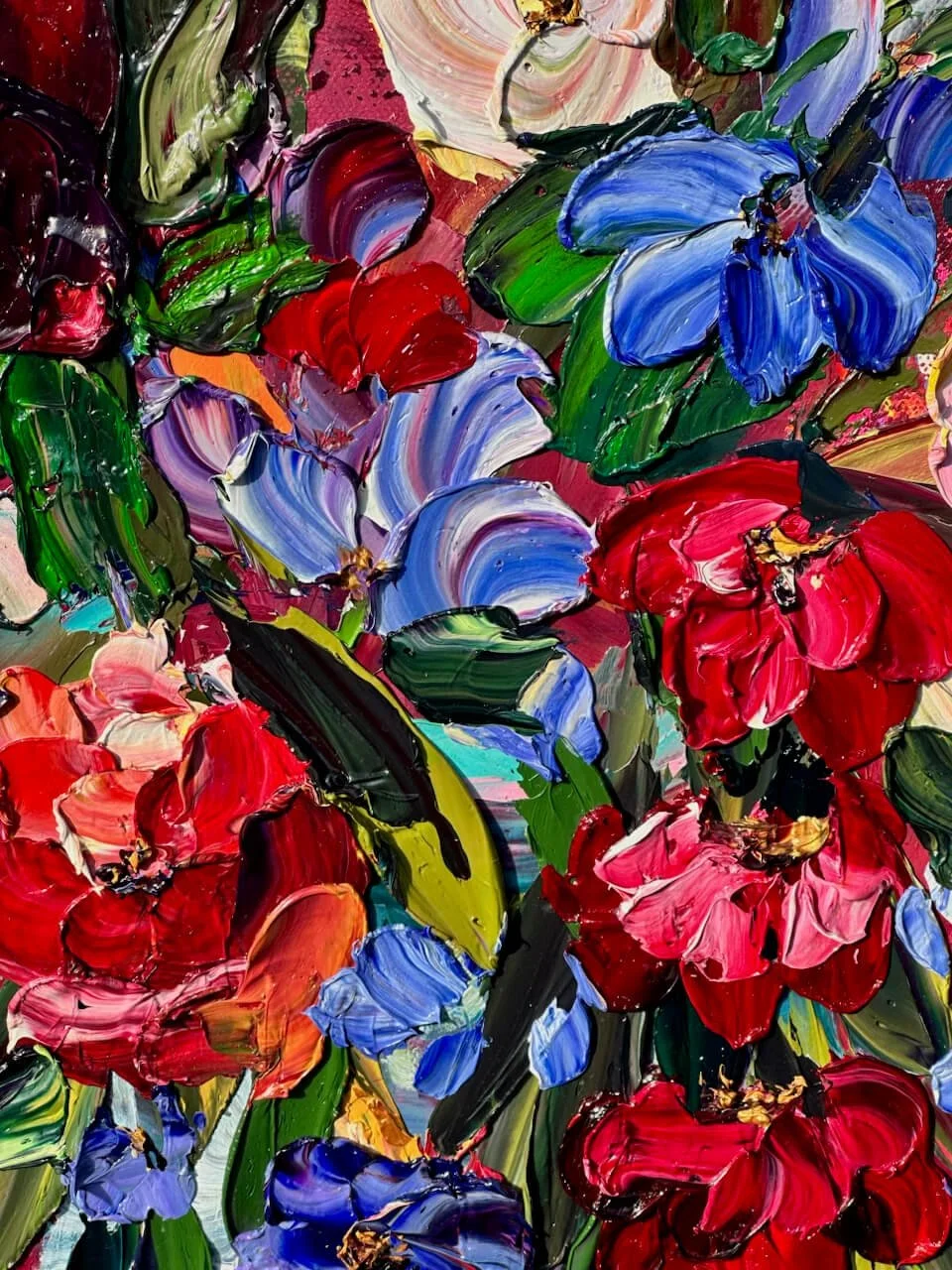
Palette knife painting plays a central role in your process. What does that approach allow you to express physically and emotionally?
Honestly, it gives me freedom. I do paint with a brush, but I often feel more confined with it, like I'm trying to control things too much.
With a palette knife, there's more momentum and unpredictability in the marks, and that feels really freeing for me. I never fully know exactly what's going to happen, and that openness becomes part of the process.
It also feels more physical and direct, almost meditative in a different way. It allows me to move more instinctively, and I think that's where my work becomes more emotionally honest, less controlled, more responsive, and closer to what I'm actually feeling in the moment.
Nostalgia is present throughout your work, yet the paintings feel contemporary. How do you balance memory with the present moment?
For me, nostalgia isn't about recreating a specific moment from the past exactly as it was. It's more about the feeling of memory rather than the details of it.
I might be inspired by something I've experienced or remembered, but once I'm in the studio, it becomes something I'm building in real time through paint, texture, and process. So it's not about going back to that moment, but reinterpreting it as I work.
Color is a big part of how I keep it grounded in the present. I'm really drawn to vibrant, rich colors, and I often bring in unexpected pops of brighter, almost neon tones because it keeps the work feeling alive and current. I don't want it to feel stiff or like it's sitting in the past or collecting dust somewhere.
So even if there's nostalgia in the feeling, the way I build the work keeps it active, immediate, and very much in the now.
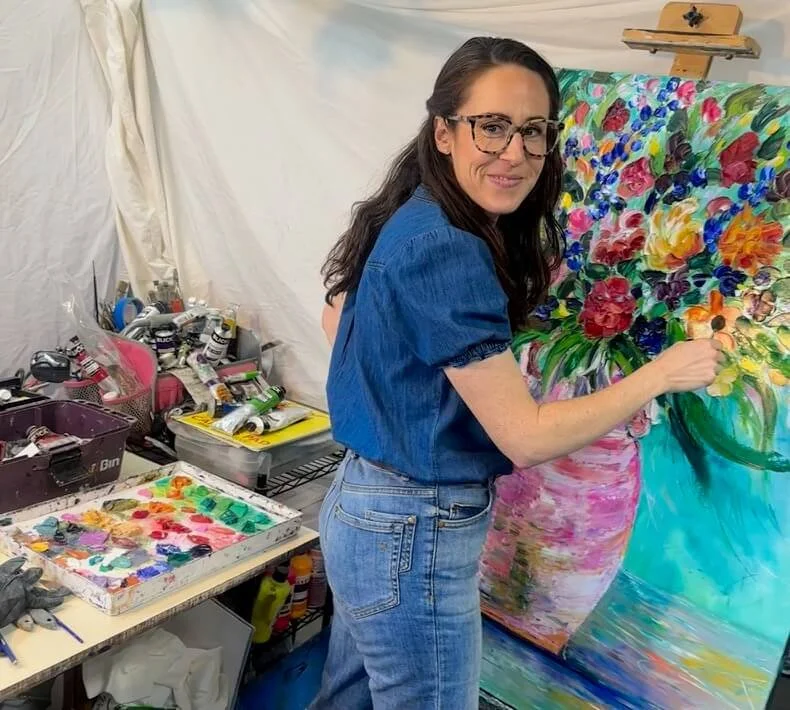
How has living and working in the Bay Area shaped your artistic perspective?
It feels like there's a little bit of everything here, but in a really balanced way. It's laid back, but still alive. You can go from the ocean and mountains to open water, forests, and urban spaces all in a short amount of time.
That constant access to so many different landscapes really influences how I see color, light, and space in my work. It keeps my eye very aware and responsive to shifts in atmosphere.
I also think the energy of the Bay Area itself is important. It feels diverse, open, and creative, but not overwhelming. There's a real sense of ease to it that gives me space to slow down and actually notice things, which is a big part of my practice.
The people here too are incredibly diverse and open, and I think that openness also feeds into perspective and creativity.
What are you most curious to explore next in your practice?
I've always dreamed about painting larger, and I've been slowly building toward that over time.
With both my botanicals and landscapes, I think scale changes everything, it changes the physicality of the work, how I move, and how immersive the painting feels while I'm making it. So I'm really curious about what opens up emotionally and visually when I push that further, especially as I continue exploring more texture and working with larger palette knives.
It feels like a natural next step in expanding both my process and the experience of the work itself, and I'm excited to see how much more freedom and expression comes from working at that scale.