Indira Cesarine on Building a Creative Career and Community on Her Own Terms
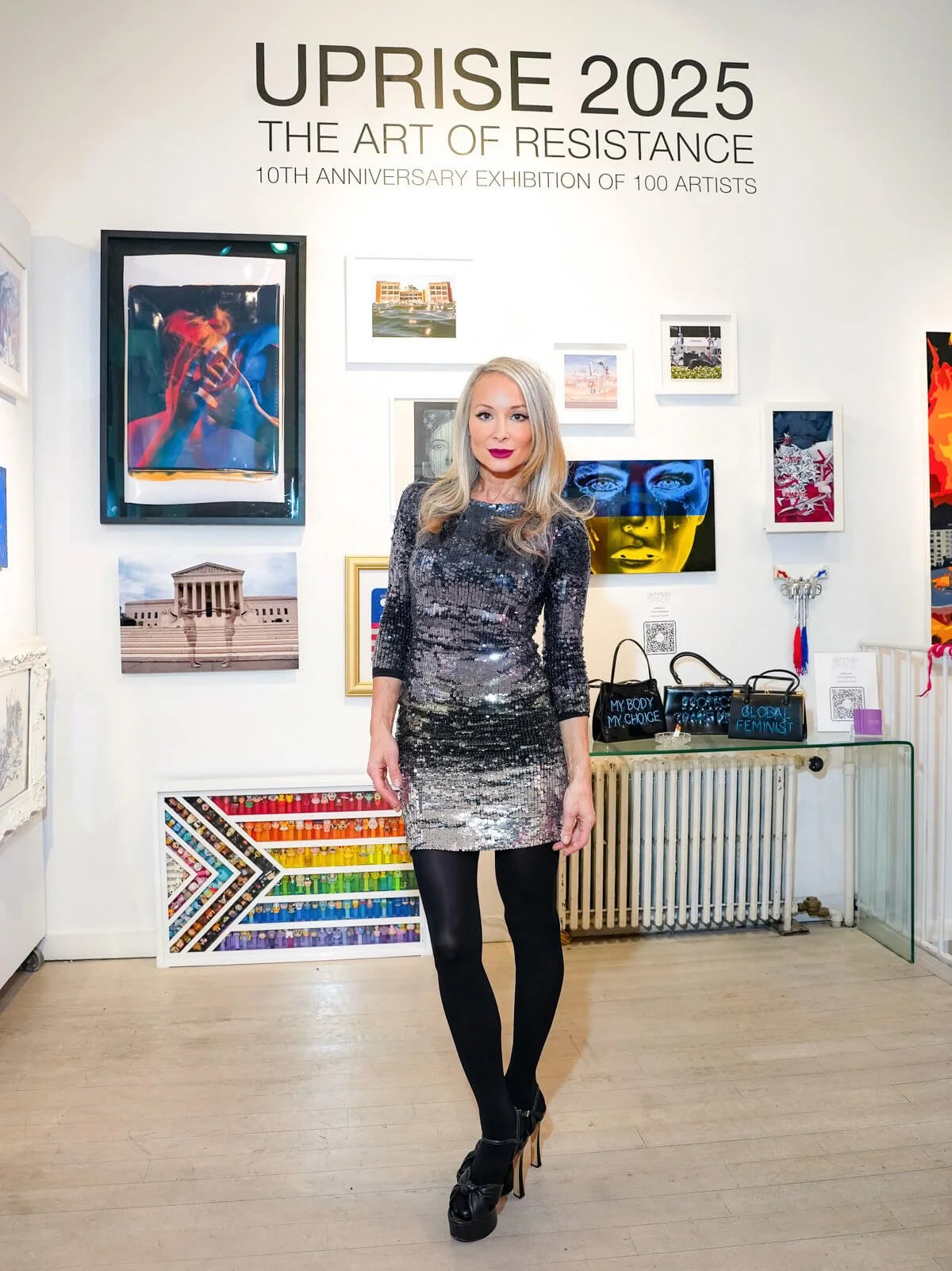
The founder of The Untitled Space, NYC reflects on eleven years of exhibitions, championing women in art, and returning to painting.
There are artists who wait for the art world to make room for them. And then there are artists like Indira Cesarine, who simply build the room themselves.
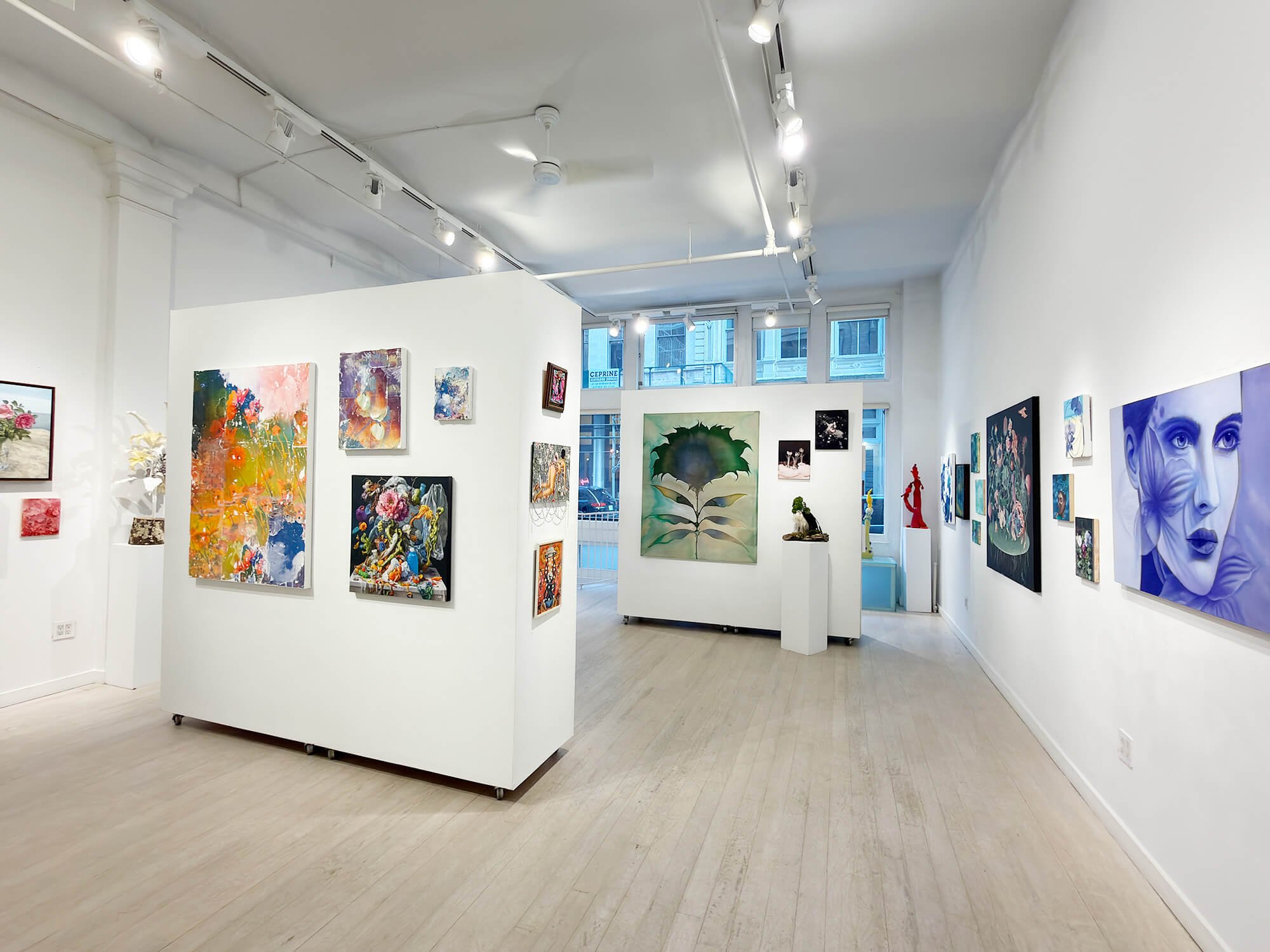
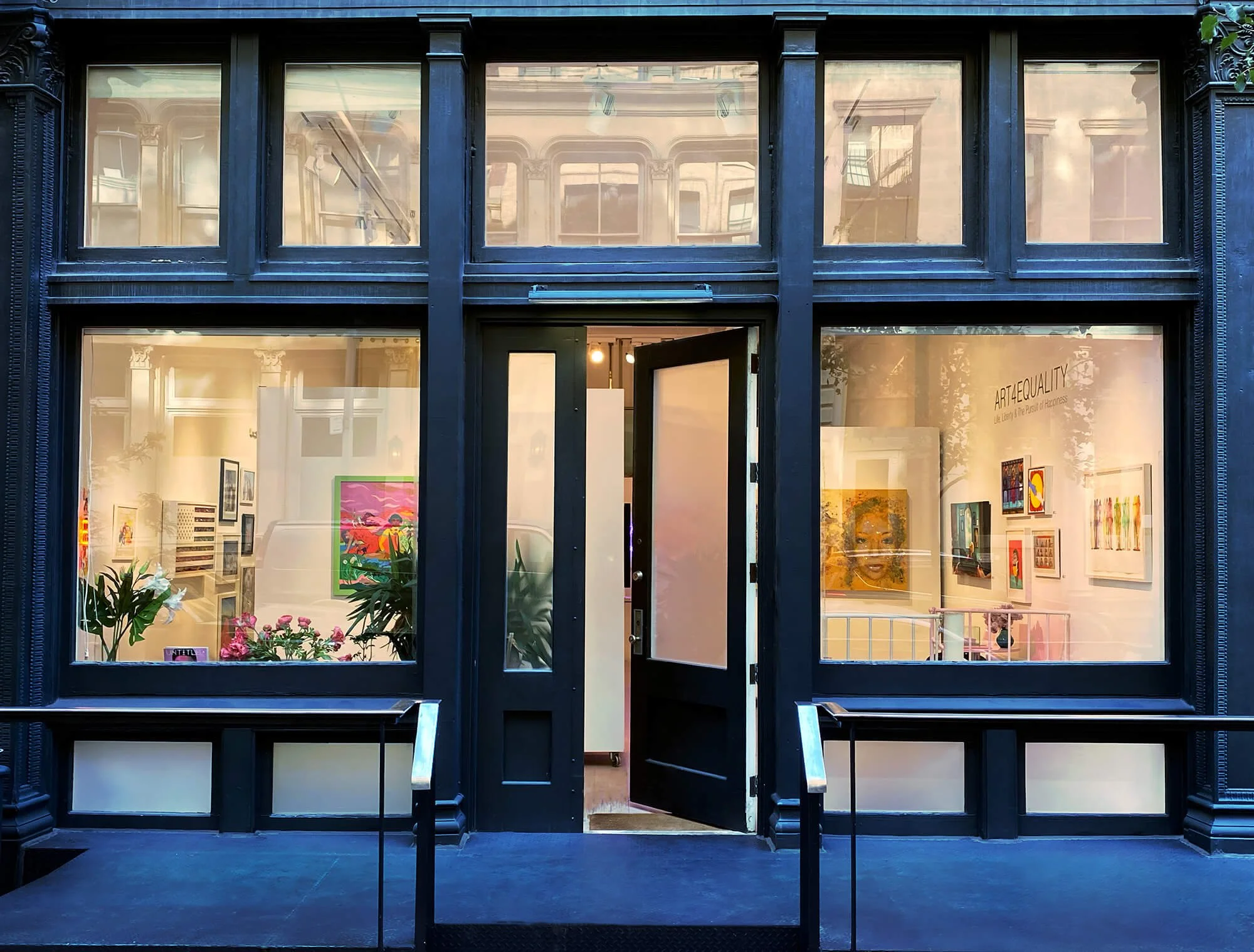
Indira is a multidisciplinary artist, photographer, curator, and the founder of The Untitled Space, a gallery in Tribeca, New York that has presented over fifty-five exhibitions and championed the work of more than five hundred artists since its founding in 2015. She is also the founder of The Untitled Magazine, launched in 2009, and Art4Equality, a nonprofit supporting equality-themed exhibitions and public art initiatives. Her work has been exhibited at The Metropolitan Museum of Art, Art Basel Miami Beach, the French Embassy Cultural Center with American Friends of The Louvre, and the Every Woman Biennial, among many others. Her exhibitions have been covered by Vogue, Forbes, Harper's Bazaar, W Magazine, and The New York Times.
On a recent episode of the Create Podcast, Cesarine spoke candidly about sustaining a multidisciplinary practice, the financial realities of an art career, and what it means to build community without losing your own creative voice.
A Foundation Built Early
Cesarine began studying art at fourteen, drawn first to art history before immersing herself in painting and photography. A formative summer abroad in France sharpened her direction. She went on to attend Choate Rosemary Hall, a boarding school in Connecticut whose arts program is housed in a building designed by I.M. Pei and funded by the Mellon family endowment. She spent her summers studying painting at Parsons School of Design and by sixteen had mounted her first solo photography exhibition at the Paul Mellon Arts Center. She later earned a triple major in Art History, French Literature, and Women's Studies from Columbia University.
What followed was fifteen years working as a photographer for some of the most recognized publications in fashion, including Vogue, British Vogue, and French Vogue, living between New York, London, and Paris, shooting on film, working on commission from modeling agencies from the age of seventeen.
"As much as I was passionate about painting," she reflected, "the photography was already generating commissions. When you are eighteen and getting paid for your work, you do not look back."

On Money and the Creative Life
Indira speaks about financial sustainability with a directness that is refreshing in art world conversations. She is clear that sustaining a creative career requires strategy alongside passion, and that diversifying income is not a compromise of artistic integrity but a precondition for longevity.
"One minute you can be doing well, selling, getting commissions. The next you might have a dry spell for six months where nothing is moving. You have to think about how to maintain some level of financial stability, whether that is teaching, consulting, or building other avenues of income."
It is a perspective she has lived, not theorized.

The Gallery That Happened by Accident
Cesarine did not set out to open a gallery. The Untitled Magazine came first, launched in 2009 as a digital publication before a distribution offer from a company in England brought it to print globally. In 2015, to celebrate the magazine's all-women issue, she curated a companion exhibition in New York called “The F Word: Feminism in Art.” The response was immediate and overwhelming. Something clarified.
"I felt like all those years of studying art history and women's studies at Columbia, and fifteen years working as a photographer, all came together. I knew I had to keep going."
The gallery became the vessel for a curatorial vision she had been accumulating for years without fully naming it. Over eleven years, The Untitled Space has grown into one of New York's most consistent platforms for women artists and feminist discourse in contemporary art, while expanding its program to include a broader range of voices and perspectives.
On the Open Call and How Artists Get Discovered
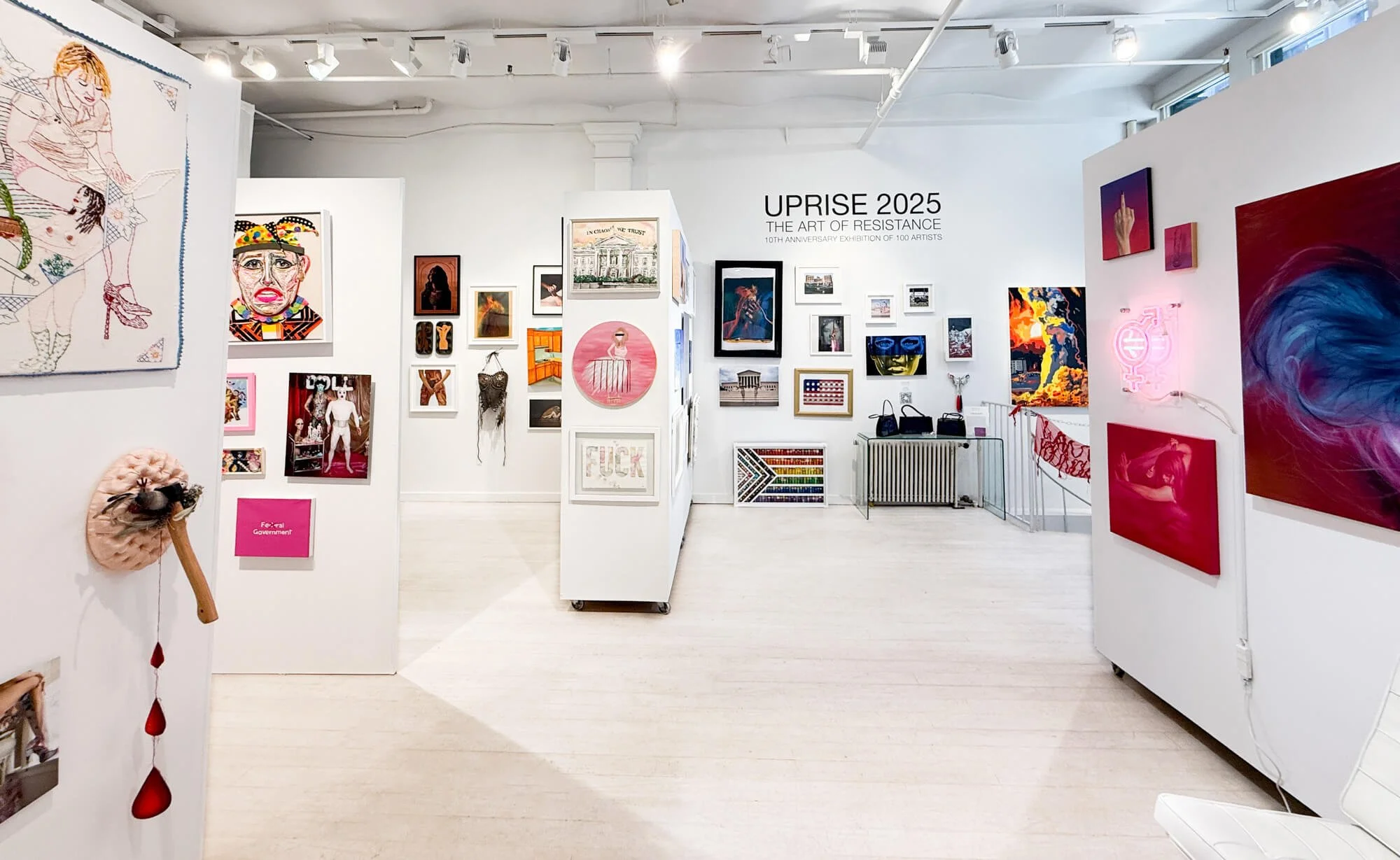
For artists wondering how gallery relationships begin, the artist is practical. Early in The Untitled Space's programming, exhibitions were built entirely by invitation. That changed in 2016 or 2017 when she launched her first open call, "Uprise: Angry Women," a response to the political climate of the moment. Nearly 1,800 artists submitted. It reoriented her entire approach to discovering new work.
"I had no idea there were so many artists out there," she said. "It was incredible."
Today, Cesarine discovers artists through open calls, studio visits, MFA open studios, and organic relationships built over years of showing up in the community. She recommends artists attend open studio events, apply to juried opportunities, and maintain a consistent, professional presence. Relationships in the art world, she notes, are cumulative. They build over time and often in ways that are not immediately visible.
Balancing the Collective and the Personal
One of the most honest threads in the conversation is Cesarine's admission that championing other artists can quietly crowd out one's own practice. After years of centering her energy on curating, exhibitions, and her community, she found herself hesitating to promote her own work.
"It is easier to talk about other people than to talk about yourself. I had to do real work on that attitude."
She is now returning to painting with renewed commitment, developing a new body of work on canvas that she describes as more vulnerable and more personal than her other mediums. Two new paintings are included in the current IN FULL BLOOM Group Exhibition at The Untitled Space, opening May 7 in Tribeca.
What She Sees Working in 2026
The art market has been volatile. Indira does not minimize that. What she emphasizes instead is the importance of maintaining perspective, continuing to make work regardless of sales cycles, and finding innovative ways to share and monetize a practice beyond the gallery system alone.
"The important thing is to just keep making art. If you are not seeing sales right now, just keep going."
It is advice she applies to herself as much as to the artists she works with. In a market that rewards consistency and longevity, showing up is not a passive act. It is the work.
Find Indira Cesarine
Indira Cesarine's work can be found at indiracesarine.com and on Instagram at @indiracesarine and @indiraartist. The Untitled Space is located at 45 Lispenard Street in Tribeca, New York, and online at untitled-space.com.
The Infobloom Group Exhibition opens May 7, 2026. Visit the gallery or go to untitled-space.com to learn more.
Listen to the full conversation with Indira Cesarine on the Create Podcast, available now on Apple Podcasts, Spotify, and wherever you listen.
Create! Magazine's current open call for art is accepting submissions now. Visit createmag.co/call-for-art to submit your work.