

Foxes, Feeling, and Familiarity: Interview with Painter M. Hyatt
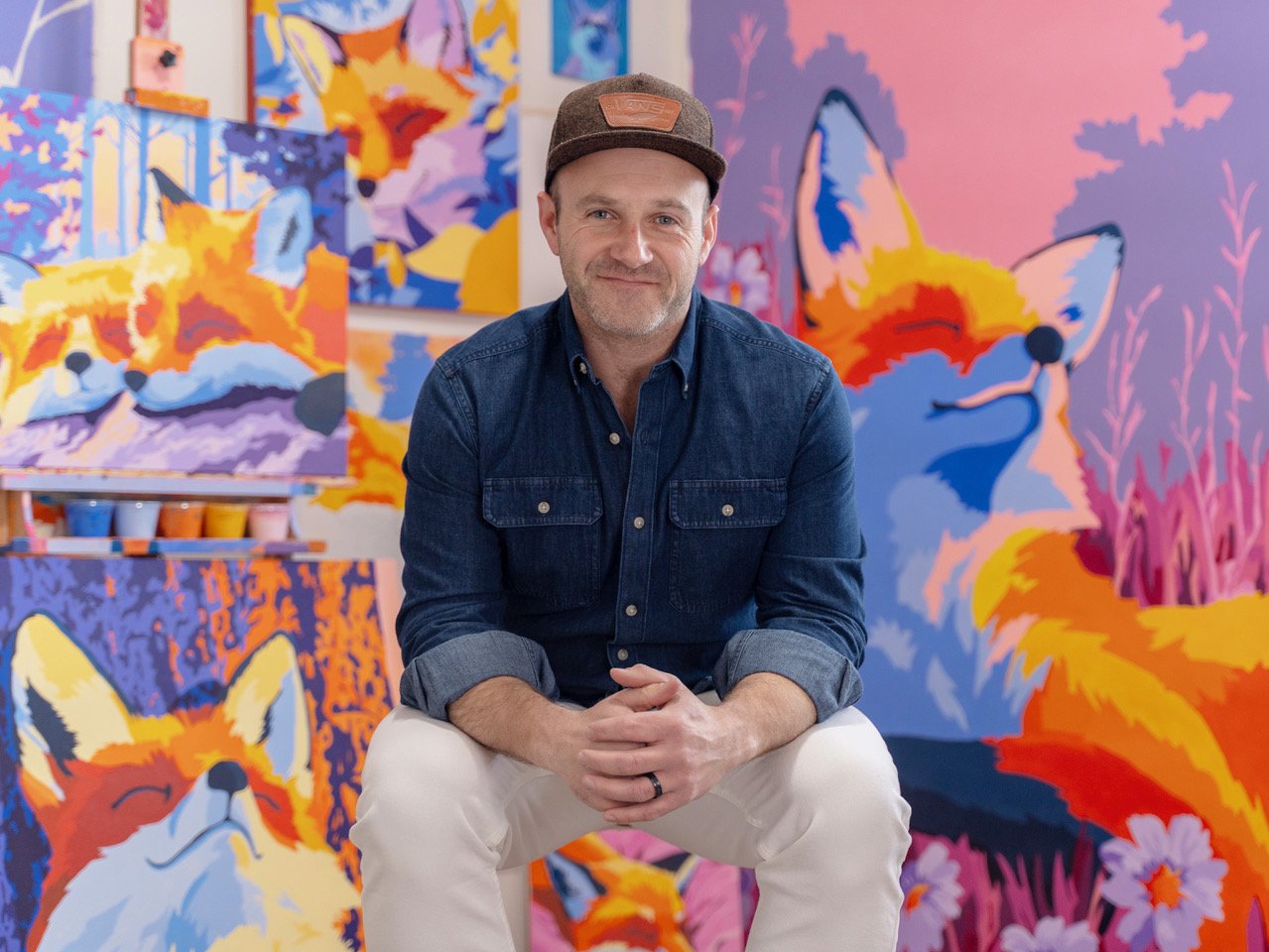
M. Hyatt is a painter from rural Kentucky whose sleepy fox paintings explore childhood wonder and the liminal hours of dawn and dusk. His work draws on memories of watching foxes move through farmland in ethereal light, moments that became the foundation for what he calls "the quiet hours."
Working primarily in acrylic on canvas and found fabrics, Hyatt employs a visual language inspired by vintage children's books and coloring books. His simplified forms and bold color choices create paintings that function as doorways, offering viewers access to states of perception and peace they thought they'd lost. The work has been described as carrying an inexplicable familiarity that bypasses conscious recognition.
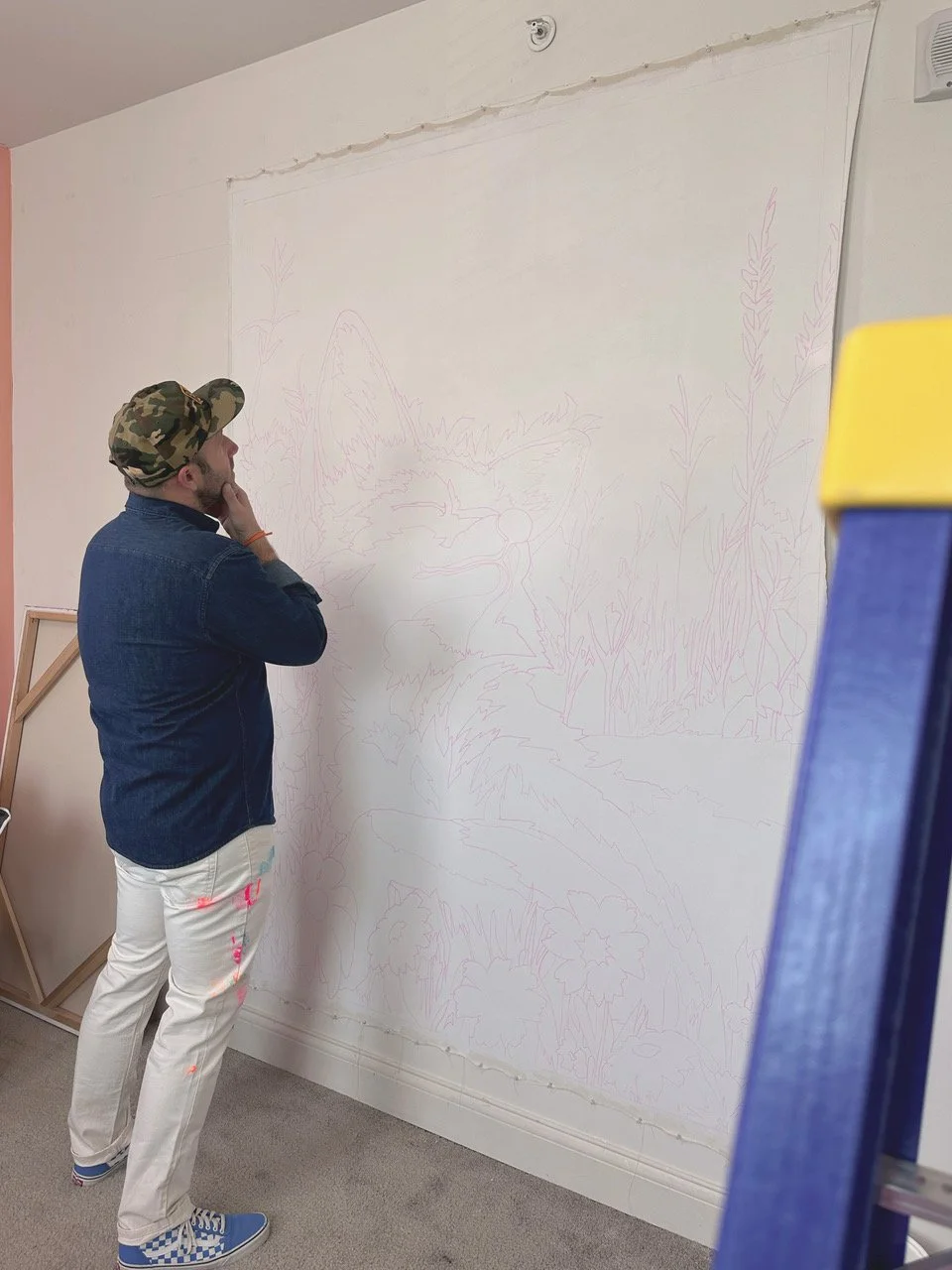
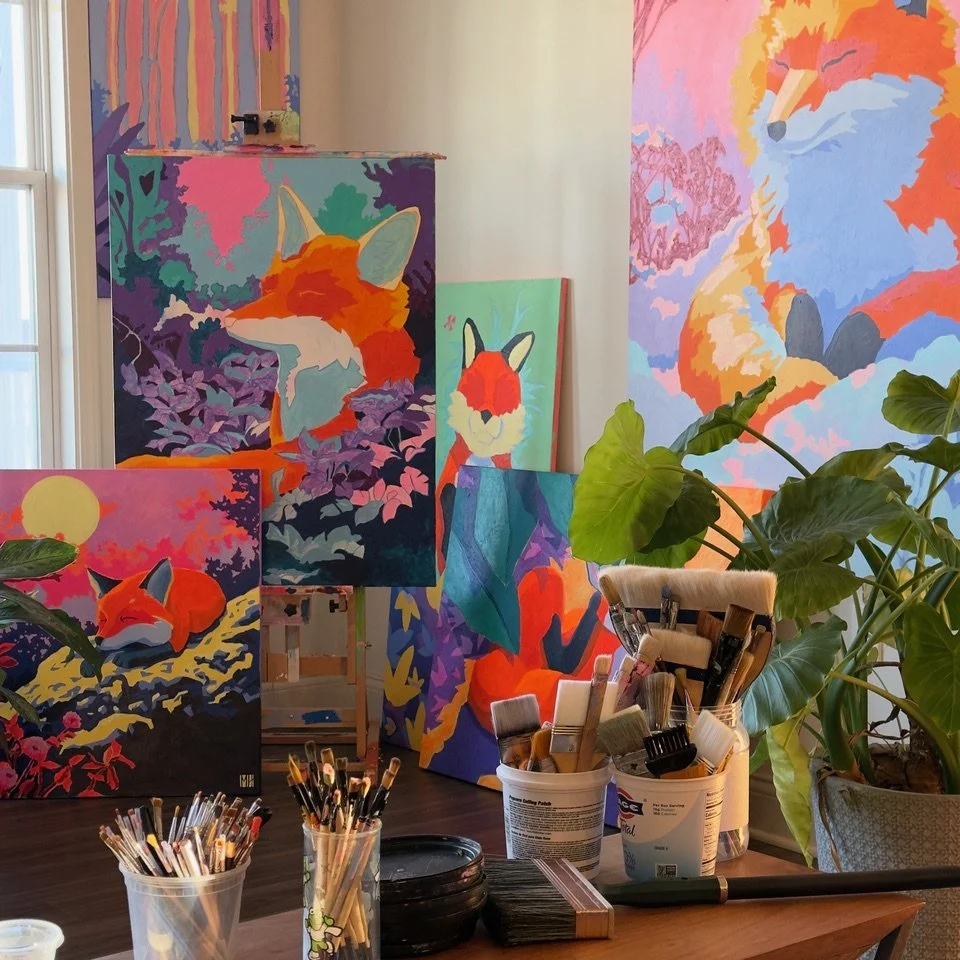
In your artist statement you talk about how children's books and coloring books are often the first art we encounter. Can you talk about how this inspired your visual language as a painter?
Children's books and coloring books were my first teachers in how images could contain entire worlds. Before we learn to analyze art, we just feel it, and those early books operated in that space of imaginative visual communication. What still strikes me is how much they can evoke with so little: simplified forms, bold color, essential shapes. That economy of creation became the foundation of my work. By painting in this vocabulary, I'm not being nostalgic. Nostalgia can be faked. I'm activating a kind of visual memory that lives below conscious thought. People respond to my foxes before they understand why, and that's the point. I'm trying to bypass the analytical mind and speak directly to that part of us that still remembers what it felt like to open a storybook and step completely into another world.
Your signature subjects are foxes. Besides being tied to personal memories, do they have other significance in your work?
Beyond the personal memories, the fox functions as a liminal creature. Not quite wild, not quite domestic. They appear at threshold moments, at dawn and dusk, moving between worlds. That sense of being in between mirrors what I'm after in the work itself. The fox becomes a vehicle, a carrier of something larger than itself. What surprises me is how universal this seems to be. People who've never seen a fox in real life still recognize something in these paintings, some quality they can't name. The fox isn't really about foxes. It's about access to a state of perception, that childhood sense of the world as infinite and charged with possibility. When I think back to how I saw them as a child, it’s stronger than any nostalgia…it’s potent, loaded with feeling, colors, light, sounds, smells of rural Kentucky. The foxes conjure up peace, ultimately, and heaven knows we certainly need that in this day and age.
How do you define success as an artist?
Success for me is when someone stands in front of one of my paintings and feels something they can't explain. When peace or wonder arrives without them understanding why. If the work functions as a doorway, if it returns them to a way of seeing they thought they'd lost, then it's succeeded. The commercial side matters because it allows me to keep working, but the real measure is that moment of recognition, that inexplicable familiarity people describe. When someone tells me a painting made them feel safe, or took them somewhere they hadn't been since childhood, that's when I know the work is doing what it's meant to do. When you see it on their face, even for a brief moment, that an experience is taking place, I am contented.
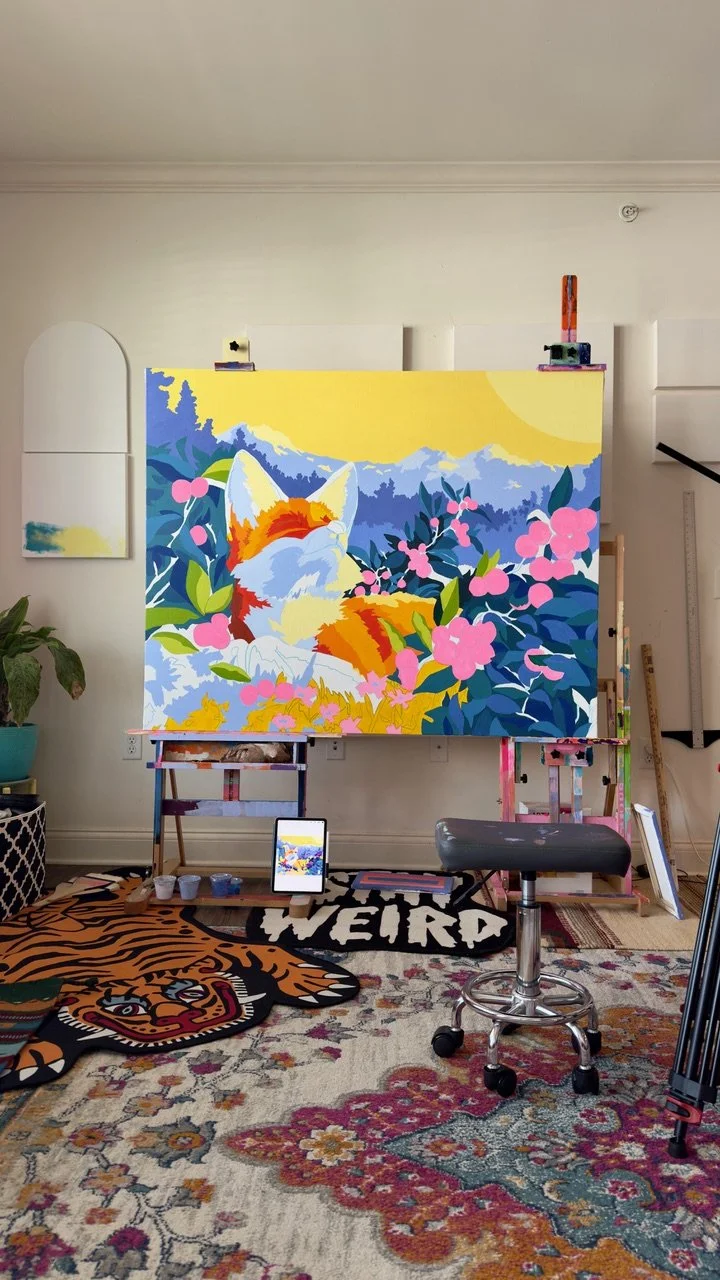
You've taken what some might consider an unconventional approach to art sales in using Facebook Marketplace. How did you realize this could be a channel for reaching collectors and what advice do you have for other artists who may want to explore this option?
It happened almost by accident. I needed to sell work and Facebook Marketplace was accessible and immediate. No gatekeepers, no waiting. What I discovered was that I could reach people directly, people who might never walk into a gallery but who respond deeply to the work. There's something clean and fair about it. Everyone has an opportunity. My advice: be conscious of reaching outside the “art market”, the “art jargon”, the “collector’s descriptions” and write descriptions that feel like a conversation. Be genuine in how you present the work, and don't undervalue what you're making. The platform matters less than the connection. People can sense authenticity, and they can sense when work is priced honestly. It's not conventional, but it's allowed me to build relationships with collectors who actually live with the paintings, which is exactly where this work belongs.
Reflecting on this year, what is your biggest takeaway? What are you most looking forward to in 2026?
This year taught me to trust what the work is doing, even when I can't articulate it. The biggest takeaway is that consistency matters more than perfection. Showing up to paint, over and over, is how the language develops. Looking toward 2026, I'm excited to go deeper. I want to explore larger scales and see how the work changes when it becomes more physically immersive. And I want to keep having conversations like this one, where I'm pushed to understand what I'm actually doing. The work teaches me as much as I teach it and I need that. We all need that.