

Finding Your North Star: For Artists Who Refuse to Compromise Their Vision with Jessica Libor
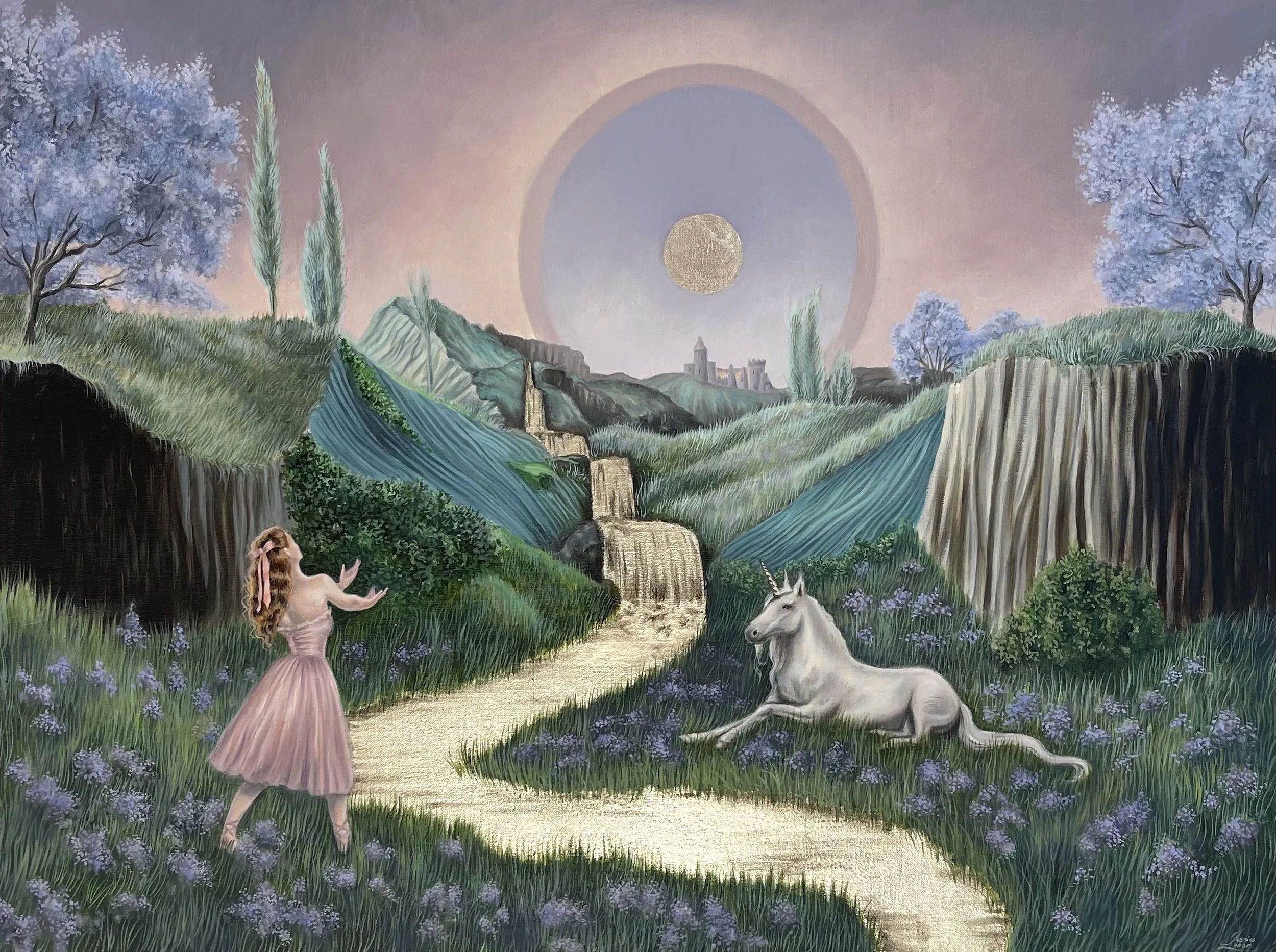
What does it really mean to stay true to your creative vision when the world around you keeps telling you to make something different? In this episode of the Create! Podcast, I sat down with Philadelphia-based artist and curator Jessica Libor for one of the most honest and resonant conversations we've had on the show. If you've ever felt pressure to make work that doesn't feel like you, this one is for you.
She Always Knew She Was an Artist
Jessica traces her calling back to a childhood moment sitting with her dad, making a list of everything she might want to be when she grew up - actress, ballet dancer, or artist. At just six years old, she chose artist. Not because it was the easiest path, but because she was simply always drawing. Most artists will relate to that feeling of being a little different, of being the kid who was always in their own world with a pencil in hand.
The Pressure to Make Work That Wasn't Hers
When Jessica applied to the Pennsylvania Academy of the Fine Arts, she had a clear sense of what she loved - beautiful fabrics, romantic landscapes, fairy tale narratives. But the program at the time was heavily influenced by postmodern aesthetics, which felt like a shock to someone who had gone there expecting a more classical experience. To fit in, she started making dark, disturbing paintings of men in despair against black backgrounds - work that was completely at odds with her natural sensibility. She got in. But she wasn't happy.

"I really want to get my MFA, but I feel like they just don't like who I am," she recalls thinking during that period.
It wasn't until a one-on-one critique with professor Scott Noel that things shifted. He looked at her work and asked a question that stopped her in her tracks: "When are you actually going to do what you want to do?" He told her that leaning fully into romantic, beautiful, emotionally rich paintings wasn't a weakness - it was its own kind of edge. That conversation became the turning point.
Finding Her North Star
After that critique, Jessica started doing meditations and visualization exercises to reconnect with her inner voice. She began sketching after meditation practices, tuning out the noise of professors, peers, and the broader art world. Her MFA thesis, Picturing Love and Beauty, was inspired by the Rococo and featured friends and family posed in beautiful, intimate settings. It became the most cohesive body of work she had made to that point.
The second leap came years later during an artist residency in Scotland, where she met a professor whose entire career was built around the study of lace. "She made an entire career around lace," Jessica says, "and it was such a niche, such a feminine topic - and she was so passionate about it." That encounter gave Jessica permission to ask herself the same question: if I could build a career around anything, what would I paint? The answer was fairy tales. And she's never looked back.

Creating Your Own Opportunities: Era Contemporary
One of the most practical and inspiring parts of our conversation was about how Jessica built Era Contemporary, her own gallery and curatorial project. It started simply - she was working at a department store after graduating and pitched the manager on hosting an art show to bring in the community. That idea grew into a full gallery operation, with pop-up shows at country clubs, alternative spaces, and eventually major art fairs like the Hamptons Fine Art Show and SPRING/BREAK Art Show in New York.
Jessica points to the Pre-Raphaelites and the Impressionists as historical proof that artist-run spaces aren't a compromise - they're a power move. Both movements started because those artists weren't being invited into the mainstream. They created their own exhibitions, and those shows became some of the most celebrated moments in art history.
Her strategy for approaching venues is worth remembering: attend networking events, introduce yourself as a fine artist who also hosts gallery experiences, and frame it as a win for them. "You're providing an amazing experience," she says. "And if you work with a financial firm or a country club, they're going to bring people who can spend. It's a win win."
Mindset, Manifestation, and Staying Connected to Your Vision
Jessica is deeply committed to her inner practice as a tool for creative clarity. When it comes to imposter syndrome - something she says she still navigates - her go-to strategy is attending high-end exhibitions and imagining herself as one of the exhibiting artists. Rather than standing in the room feeling like an outsider, she steps into the energy of what it would feel like to be there. It shifts the experience from longing to possibility.
She also keeps notebooks full of scripting - writing out her ideal day and reading it aloud to herself regularly. "Sometimes it'll change every couple of months," she says, "but it helps me stay on track with where I want to go."
Her most meaningful manifestation so far? Getting into SPRING/BREAK Art Show in New York. She had spent months attending high-end exhibitions, studying the New York art scene, and making new work that felt aligned with that world. When the acceptance came, it felt like confirmation. "It felt like the energy path I was on was opening up for me."
Style as an Extension of Your Art
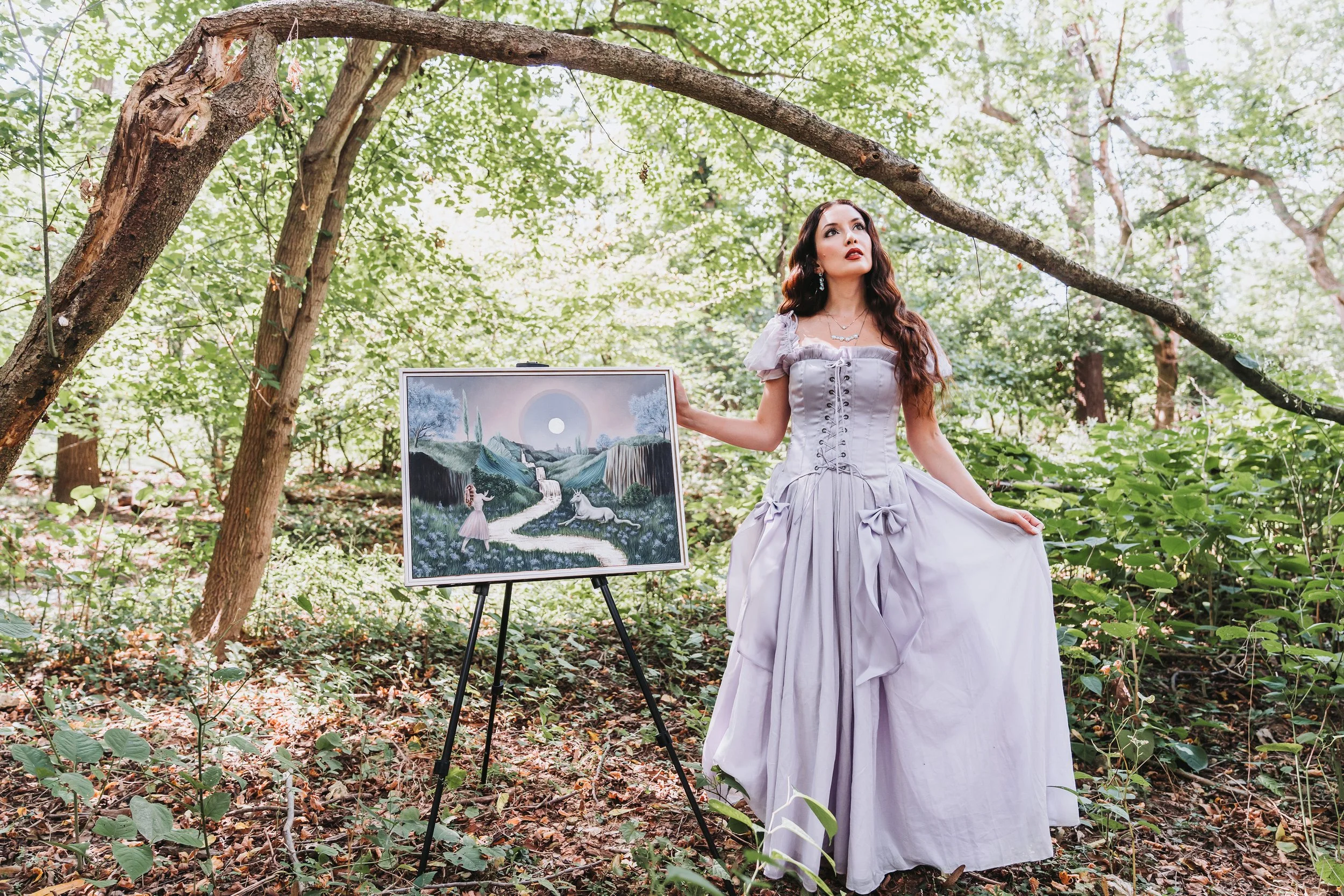
One of my favorite tangents in this conversation was about fashion. Jessica's personal style - think historical gowns, parasols, photoshoots that blur the line between artist and artwork - isn't separate from her practice. It's part of it. Her grandmother, a seamstress and US champion roller skater who sewed her own costumes, taught Jessica to sew and instilled in her a love of wearing something that feels like it couldn't come from a mall.
Her advice for artists who want to discover their own personal style: look at the heroines you're drawn to in films and books, and look at your own paintings. What colors, textures, and moods show up in your work? Let those be your guide.
About Jessica Libor
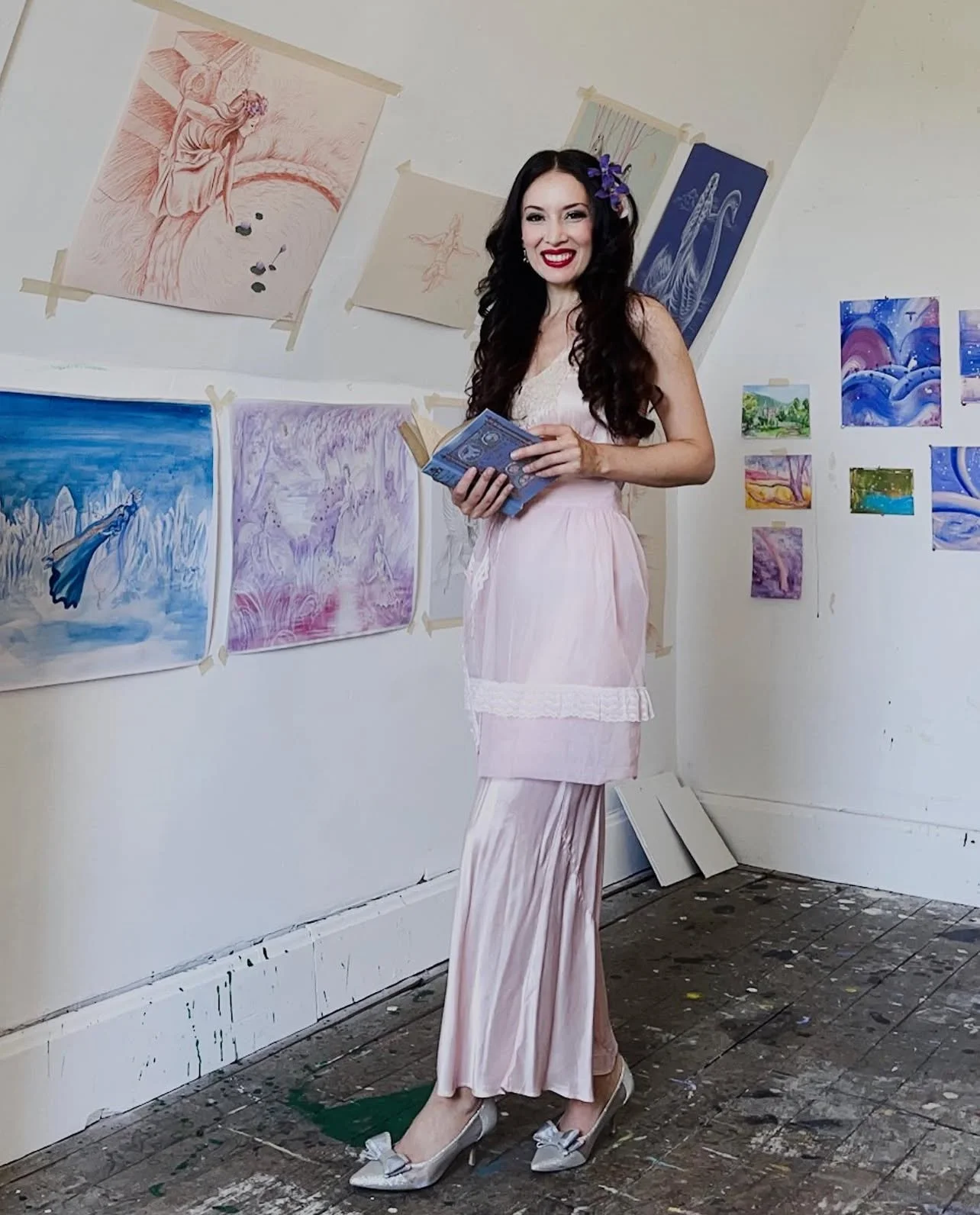
Jessica Libor is a Philadelphia-based artist whose work explores feminine identity, storytelling, and personal mythology through a lens rooted in global fairy tales and folklore. She holds an MFA from the Pennsylvania Academy of the Fine Arts and has pursued classical training at the Grand Central Atelier and the Florence Academy of Art. Her work has been exhibited internationally, including solo shows in Paris and Philadelphia, and she was selected for the prestigious SPRING/BREAK Art Show in New York in 2025. Her paintings are held in private collections worldwide and have been featured in American Art Collector, Beautiful Bizarre Magazine, and on WHYY/PBS. She is also the host of The Creative Heroine Podcast. Follow her work at jessicalibor.com and on Instagram at @jessicaliborstudio.
Listen to the full episode on the Create Podcast wherever you stream. Leave a review on iTunes, share with a fellow artist, and visit createmagazine.com to submit your work to our latest open call in partnership with Square One Gallery. Join our weekly newsletter: https://createmagazine.myflodesk.com/newsletter
Here's the updated closing section:
Connect with Jessica Libor
You can find Jessica's paintings and follow her latest work at jessicalibor.com. Explore Era Contemporary, her gallery and curatorial project, at eracontemporary.com. If you're interested in working with her through courses or one-on-one coaching, visit thecreativeheroines.com. And follow along with her daily studio life and new fairy tale body of work on Instagram at @jessicaliborstudio.