

Farnaz Nylander on Sand, Stillness, and Trusting the Process
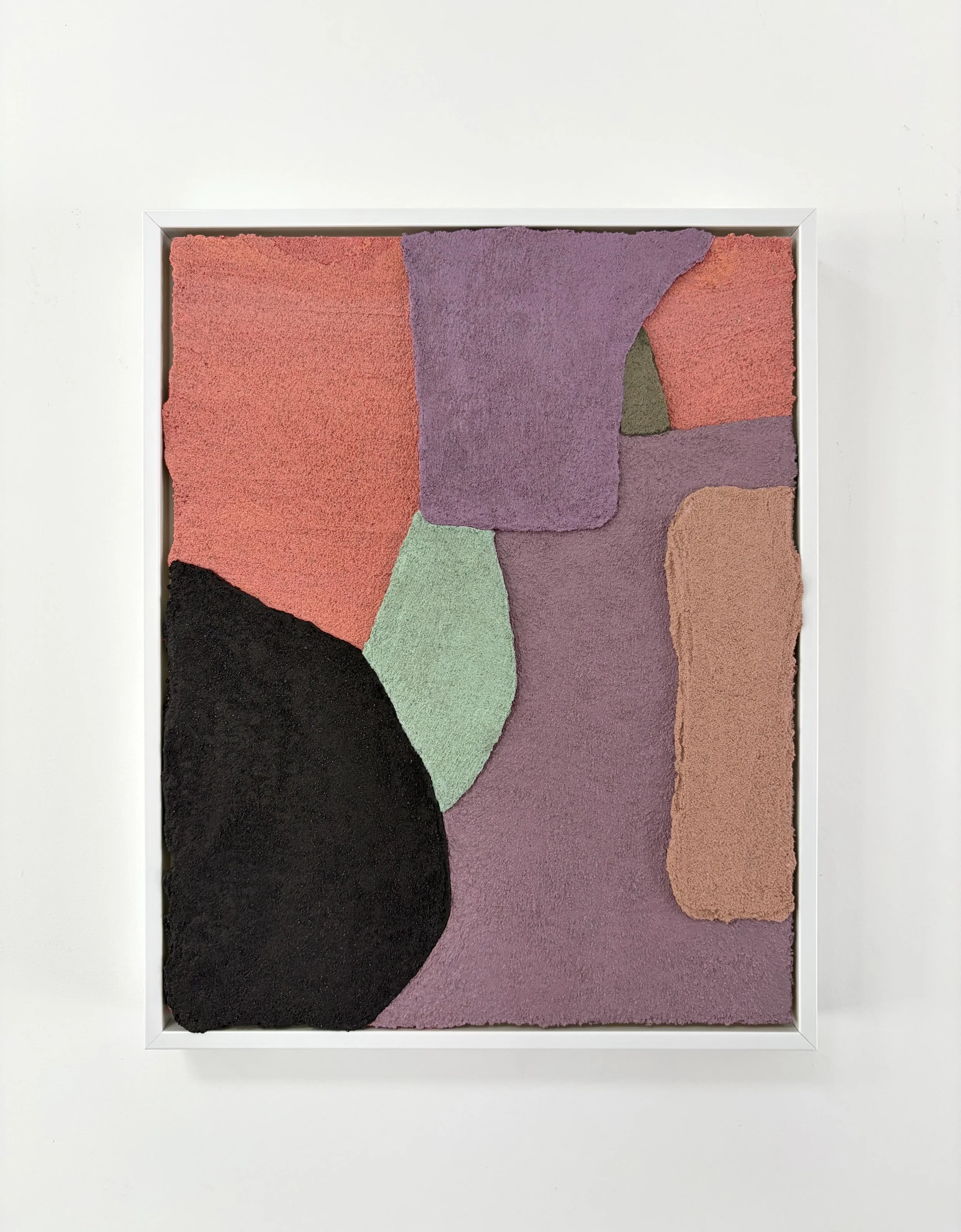
Farnaz Nylander is a Southern California painter who pushes paint to its physical extremes, building thick impasto surfaces that invite viewers to come closer. Her painting Echoes of the Earth, made with layered sunset color and sand gathered from local beaches, is now on view in Changing Terrain: Regional Artists Interpret Our Landscape at Oceanside Museum of Art through January 17, 2027. The exhibition brings together contemporary artists from Southern California and Baja to explore a region in constant transformation. In this interview, Farnaz shares the story behind the painting, how the coastline shapes her practice, and what sand has taught her about resilience.
Tell us about your work. What excites you as an artist right now?
My work is rooted in my connection to nature, especially the Southern California coastline. I’m interested in the tension between control and surrender—how we can begin with an intention, but ultimately have to respond to what the materials are asking us to do. Right now, I’m especially excited by texture, heavy impasto layering, and the unexpected moments that happen when color and natural materials come together.
What is the story behind Echoes of the Earth?
Echoes of the Earth is inspired by quiet, meditative moments I spend at the beach. I incorporate sand collected from local beaches into the work, alongside layered colors inspired by the changing light of the sunset. The sand becomes more than a material—it’s a reminder that nature is constantly shifting and transforming. I wanted the piece to capture that feeling of being still while everything around you continues to change.
What do you hope viewers notice when they get up close to your paintings?
I hope viewers notice the details that aren’t necessarily visible from a distance—the texture of the sand, the layers of color, and the imperfections. I love when a painting reveals something new the closer you get to it. The surface becomes almost like a landscape of its own. One of the most common questions I get asked is, “Can I touch it?” I love that instinctive, tactile response—that something in the work draws people closer, invites them to look more closely, and makes them feel connected to the piece in a very physical way.
How does the Southern California coastline show up in your practice?
The coastline is both a visual and emotional influence for me. I spend a lot of time near the ocean, especially around sunset, and those moments of stillness have become part of how I approach painting. I’m drawn to the colors, textures, and rhythm of the shoreline, but also to what the ocean represents: constant movement, change, and renewal.
How does your work connect to the show’s theme of change and resilience?
For me, resilience is not always about being strong or holding everything together. Sometimes it’s about learning to adapt and allowing change to happen. Sand is a perfect example—it is shaped by waves and time, constantly shifting, yet it remains part of the landscape. My process reflects that idea. I have to let go of trying to control every outcome and trust the transformation that happens along the way.
What do you hope someone feels standing in front of Echoes of the Earth at OMA?
I hope it creates a moment of stillness—a chance to breathe, to pause, and to connect with something felt rather than understood. Sometimes the most meaningful things are the ones we cannot put into words.
What is the best piece of advice you have received as an artist?
My college art professor once told me to work on several pieces at once—that when one painting stopped speaking to me, I could step away and give my attention to another. Over time, I’ve realized that sometimes a painting needs space as much as I do. It doesn’t always reveal itself all at once. It unfolds slowly, through layers, pauses, and moments of uncertainty.