Emily Jeffords on Commissions, Burnout & Selling Art
By Ekaterina Popova · Create! Magazine
Emily Jeffords is back on the Create! Podcast. Abstract impressionist painter, educator, and writer, Emily has spent years building a creative career entirely on her own terms. In this conversation she shares what that looks like now: a deliberately scaled six-figure studio, a commission process she loves, and a hard-won perspective on what sustainable success actually feels like.
This episode is for the artist who has been in it for a while and is ready to ask deeper questions about what they are building and why.
“You might find that you have more pleasure, more freedom, more joy, and more capacity when your business isn’t running your life.””
The Incubation Year: Greenhouse Energy and a Book in Progress
Emily describes this past year as a greenhouse phase, full of ideas quietly developing roots in the background. She has been writing a visual book currently in the pitching process, experimenting freely in her studio, and giving herself permission to try things that may never be seen by anyone.
For artists who have built real mastery in their work, returning to beginner mode takes courage. Being willing to create work that is not yet good because you are learning something new is deeply vulnerable. Emily calls it being willing to begin again, and she considers it one of the bravest things a working artist can do.
How She Structures Commission Launches and Why She Only Opens Three Spots
Emily approaches commission launches the same way she approaches artwork launches: with intention, a thoughtful build-up, and a beautiful sales page that invites collectors into the experience. She now opens just three spots each spring, large paintings only, and describes it as one of the most satisfying parts of her year.
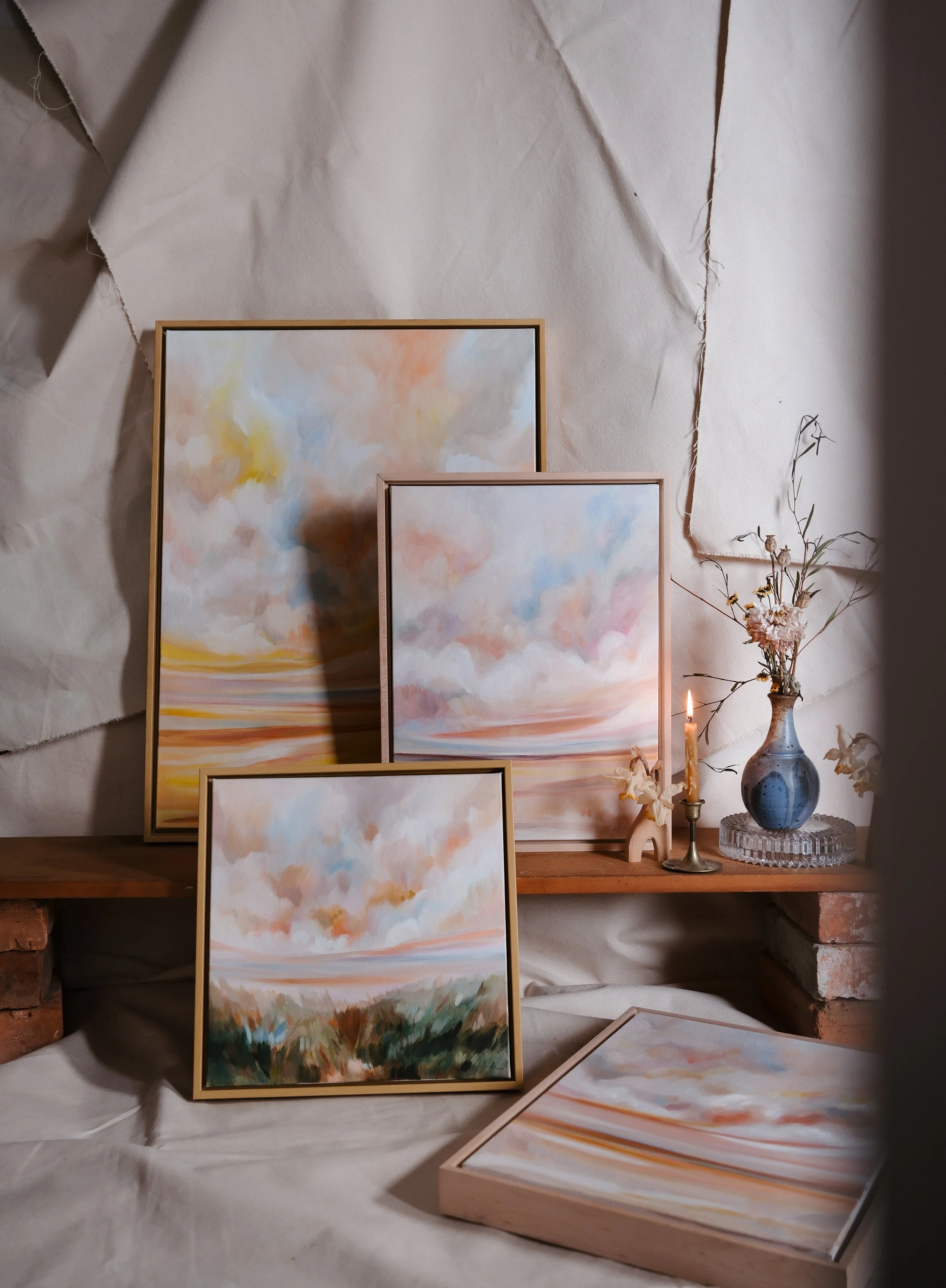
The foundation is clear parameters. Emily sets the creative terms upfront. The work will be a landscape, abstract, sky-focused, and in her voice. The collector chooses size and color palette within that framework. She remains in charge of the creative direction throughout.
Her first commissions came organically from collectors who loved her work and wanted something larger. She said yes, figured it out, and learned along the way. The takeaway she shares: charge what your work and your life are worth. Pricing is something most artists learn through experience.
How to Fall Back in Love with Older Work So You Can Sell It
Emily shares a three-step framework for revisiting older inventory. The starting point is reconnecting with the piece yourself. That might mean re-photographing it, styling it differently, or simply looking at it with fresh attention.
From there she looks at three ways collectors make purchasing decisions. Emotionally: does your listing communicate why this piece matters? Aesthetically: are the colors and mood translating clearly? Practically: is all the information there, including size, texture, framing, and shipping details? For online sales, those practical details help collectors feel confident.
Her reminder is a good one. The buyer is encountering this piece for the very first time. For them it is a fresh experience. Art does not expire.
What Sustainable Success Looks Like for Emily
Emily is thoughtful and specific about burnout. She is clear that it is not a rite of passage and not a mark of dedication. It is a signal that something needs to change.
She shares three anchors that keep her grounded.
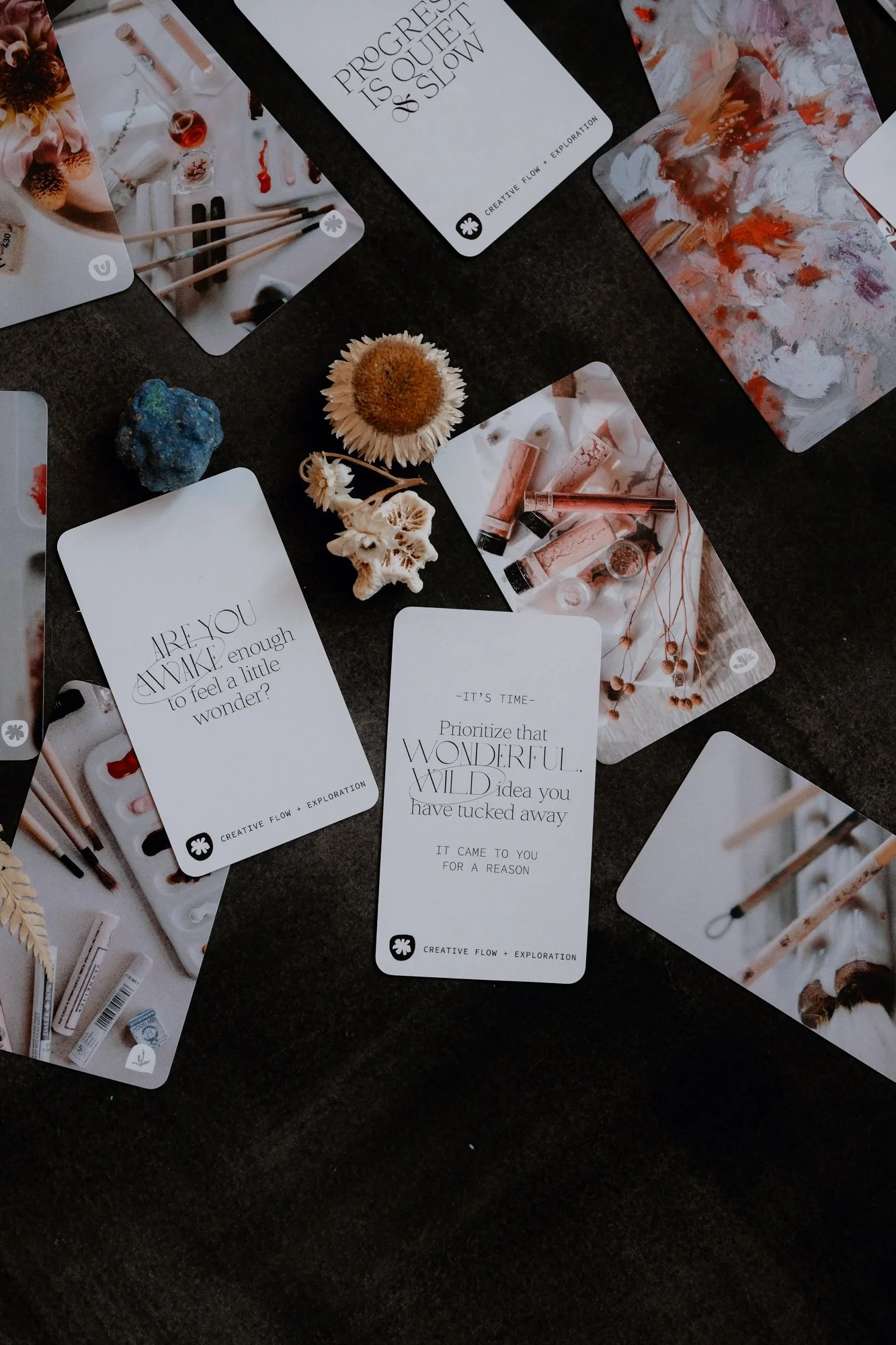
Progress is quiet and slow. The core mantra inside her Making Art Work masterclass is 1% a day. Small, consistent movement compounds into something significant over a full year.
Keep your creative self protected. Creativity and commerce operate on different frequencies. You can run a profitable business and still treat your creative life as something sacred.
Give yourself real space to play. Not strategic play. Not documented play. Actual unstructured time with no output or goal attached. It is where creative energy gets replenished.
"The starving artist is not an idea we adhere to." — Emily Jeffords
The Decision to Scale Down on Purpose
Emily made a deliberate choice to build a smaller business. She ran a seven-figure studio, found it unsustainable for her, and redesigned things from the ground up. Today she works about 20 hours a week, employs three people, and describes her current chapter as her most content.
She helps artists think beyond the idea that a creative career means only making and selling work. Licensing, commissions, wholesaling, brand partnerships, community building: there are many ways to build a profitable practice. The goal is figuring out what you actually want and what you have capacity for.
Building an Audience That Truly Connects With Your Work
The kind of audience that sticks with you through real, imperfect moments is built through consistency and genuine presence over time, not through a content strategy. Emily has cultivated that kind of community and speaks to what it feels like to show up as yourself online and have it land.
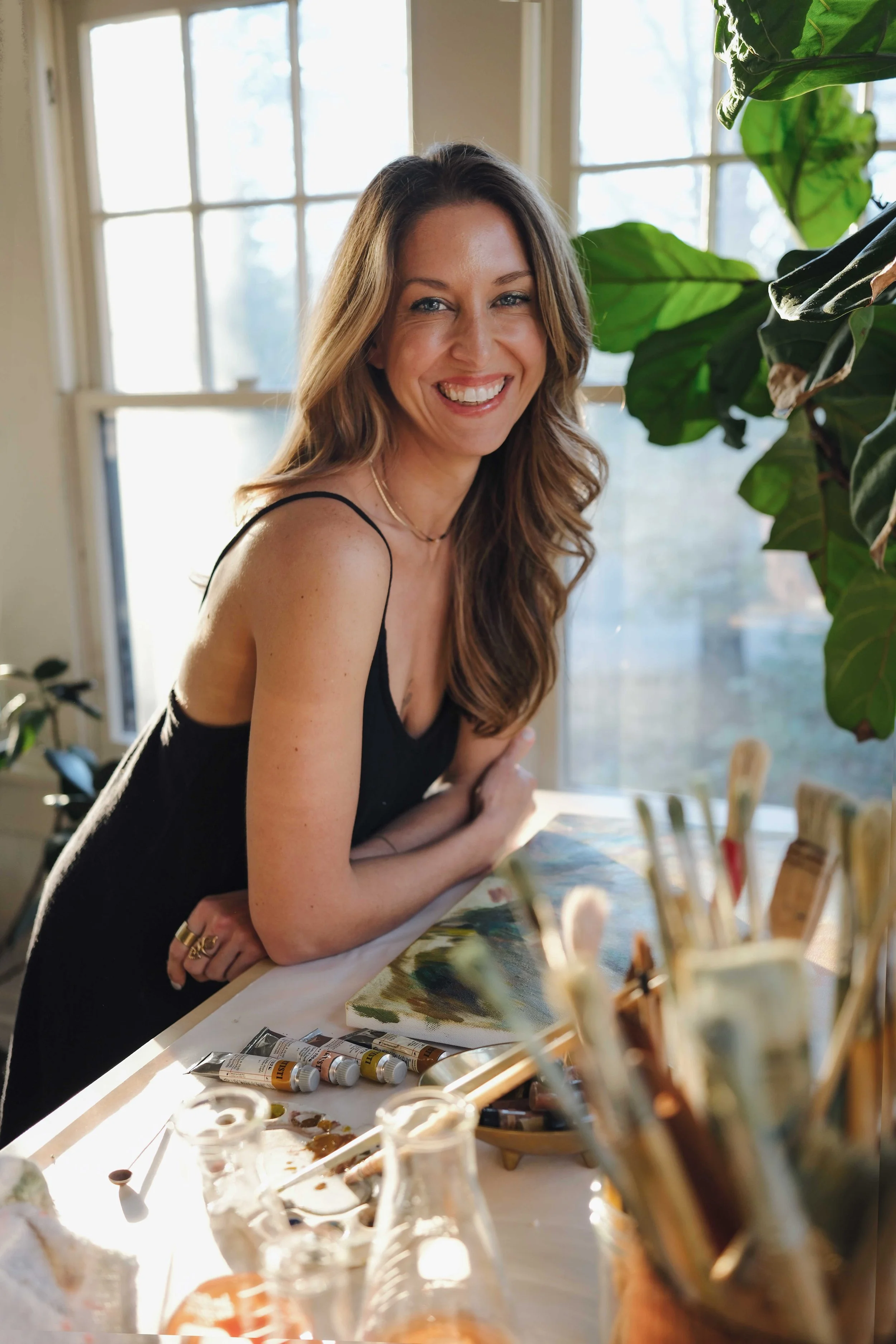
On the practical side: she now handles all her own photography using a Fuji XT5 and a tripod. The camera connects to an app on her phone so she can capture moments while actively painting.
Resources + Links
Emily has two opportunities open right now for artists ready to build a sustainable and profitable creative practice.
➜ Share Your Work — Free 4-Day Challenge Four days of focused ideas to help you understand the value of your work, identify your collector, and show up online with more confidence. A wonderful starting point before Making Art Work.
➜ Making Art Work — 9-Week Masterclass Now in its seventh year. Emily's signature program for artists ready to grow, diversify, and build a business that works on their terms.
➜ Submit Your Work to Create! Magazine We are always looking for artists to feature. Come share your work with our community.