

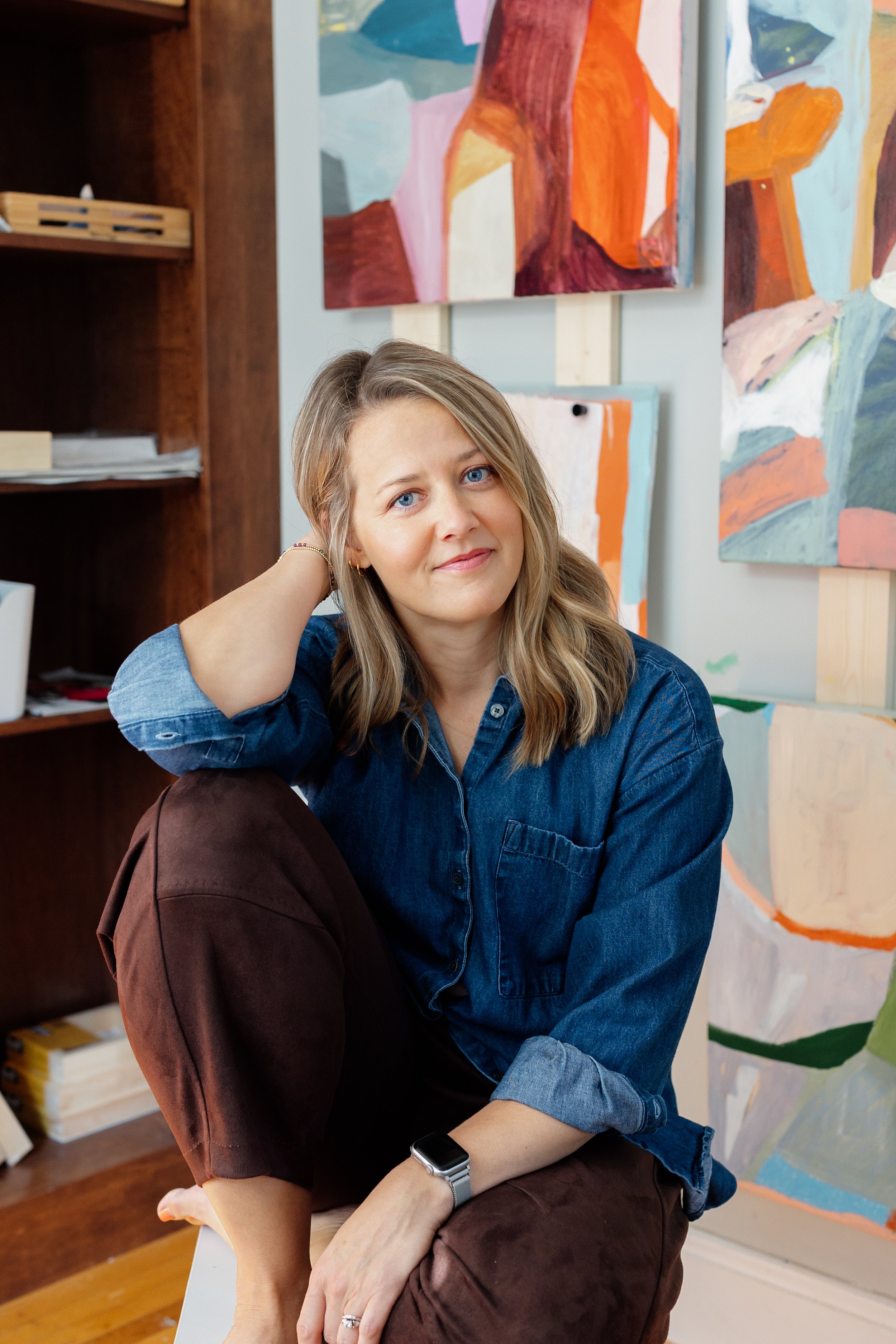
Photograph by Rebecca Carmel Photography
Annie Straka is a contemporary abstract painter based in Cincinnati, Ohio, whose work explores the emotional and structural possibilities of color.
Trained as a dancer, Straka brings an intuitive relationship with form and presence to her painting practice, work that is as much felt as it is seen. Her paintings move between the geometric and the organic, built through a layered process in which color leads and structure follows. The result is work that is visually alive: warm, saturated, and punctuated by surprise.
Her debut collection, Stems, explored embodiment and self-possession through abstracted female figures. Her current work marks a shift toward more geometric and structural compositions, with color functioning not as decoration but as the primary subject, a force that carries energy, tension, and unexpected delight.
Straka holds a PhD in Educational Studies from the University of Cincinnati, where she currently serves as Associate Dean. Her doctoral training included arts-based research methods, a foundation that informs her reflective approach to studio practice. Pieces from her debut collection were included in the Radiance 2026 juried exhibition at ADC Fine Art in Cincinnati, which ran from June 12 through August 7, 2026.
Her work is held in private collections, and she paints from her home studio in Cincinnati.
Artist Statement
I have always been an artist, though I came to painting as the medium later in life. Painting is a practice that allows me to become more fully myself through what I create. I began painting to tap into the less structured parts of my inner world and to express the complexities of my experience as a woman and a mother. I love to engage with materials in an intuitive flow, following the palettes and shapes that develop organically. This practice allows me to suspend all the roles and responsibilities that I hold in my life and feels like the truest form of joyful embodiment. It is my intention that those who engage with my art experience that same sense of freedom and joy.
The pieces in this collection all share an element of surprise in the unexpected pops of color and subtle details. These works are color-centric and developed over time as I played with cohesive elements across the pieces. The compositions are layered and playful and reflect my experience of self-understanding and reinvention through my creative practice, finding the ways the work (and parts of myself) can be woven together in conversation, one colorful detail at a time.
www.anniestraka.com
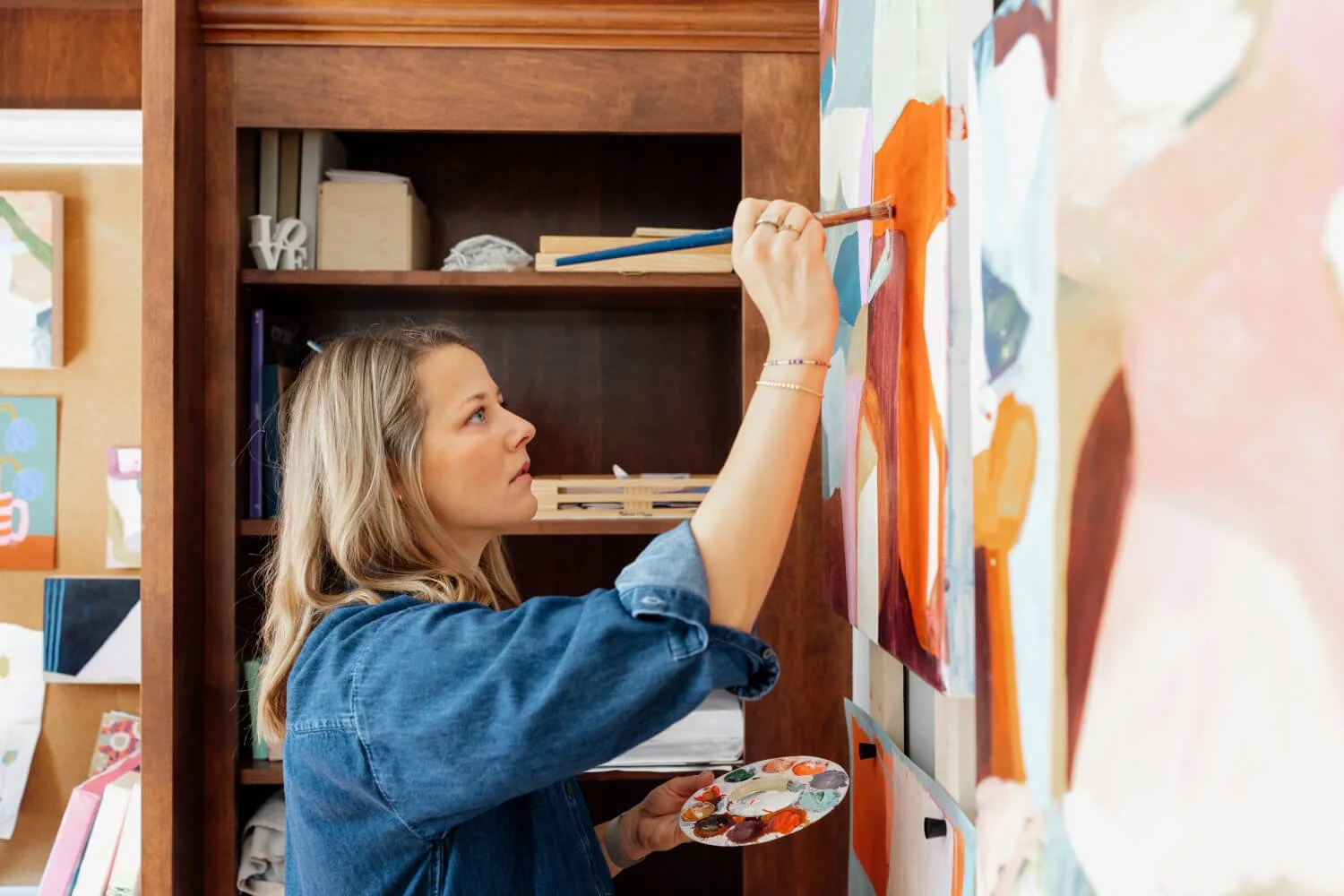
Photograph by Rebecca Carmel Photography
Interview
You say you have always been an artist but came to painting later in life. What made painting the right medium at that point?
I think initially I was drawn to painting from a core desire to create beauty and express the experience of being human. The freedom and movement of working with paint specifically is such an expressive mode of creating that I wanted to explore. I have been so affected by the impact of beautiful art on my own nervous system, and I wanted to create the kind of art that I love to experience and create those kinds of artworks for others. I think I felt a deep desire to create visual art for many years; it just took some time for me to listen to that calling and take action.
You trained as a dancer. How does that intuitive relationship with form and presence show up when you stand in front of a canvas?
There is a parallel between movement of my body through dance and movement of my body through painting, and it’s an ongoing exercise of self-trust. There is a letting go that allows for movement in dance to feel authentic, and that translates to the canvas as well. I love to move back and forth between structure and freedom in my painting practice, and that was my experience as a dancer as well. You build on the fundamental forms and choreography, but what makes it yours is your personal movement language, which is developed through experimentation and releasing the structure just enough to feel organic and honest. I find that the same is true for painting and developing my visual language as an artist.
You describe painting as a way to suspend the roles and responsibilities you hold. What does that feeling of joyful embodiment look like in your studio?
Painting is the one activity where I truly lose myself in the best way. I work in my home studio, and there are often many forms of friction to get myself into the flow (i.e., kids, other tasks, distractions), but once I start, it’s so soothing to be in that creative space. I relish the solitude and quiet of creating. I think it’s partly because that is quite the contrast from my busy, full life. Joyful embodiment for me is several hours painting in my studio with music and coffee.
Your debut collection, Stems, explored embodiment and self-possession through abstracted female figures. What inspired that series, and what did it teach you?
That series poured out of me so effortlessly. It was a really joyful collection to create and taught me to follow whatever creative thread is calling to me. It’s a small body of work, but the pieces are so playful and meaningful. They are whimsical with a bold color palette, and my current work has shifted to be a bit more moody and loose, and I am so excited to see where it takes me. But I think working in that more structured, bold style was a necessary step for me to start making the work I am making now. It’s the kind of series I could see myself returning to again at a later time.
Your current work shifts toward more geometric and structural compositions. What prompted that change, and how has it felt?
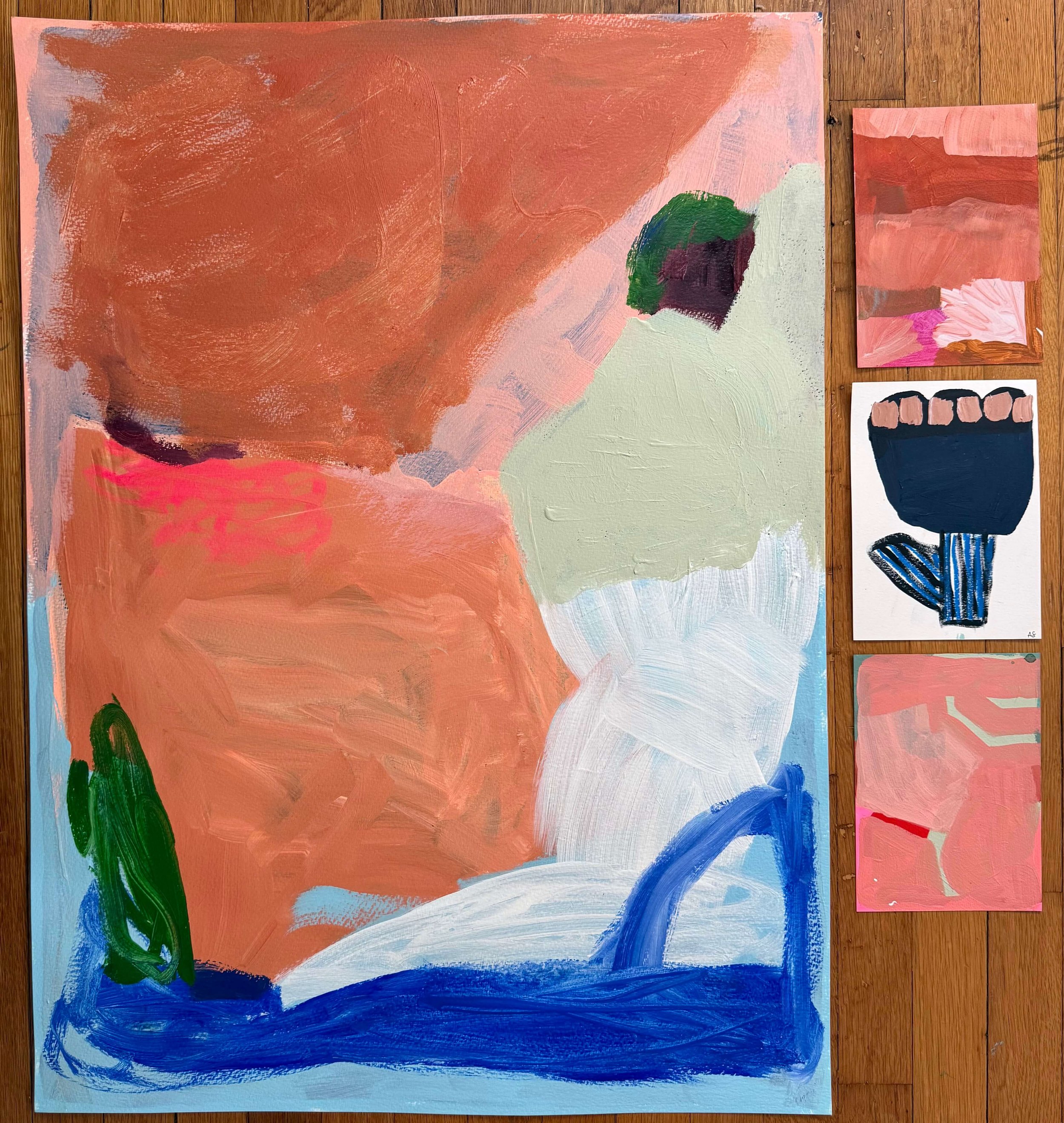
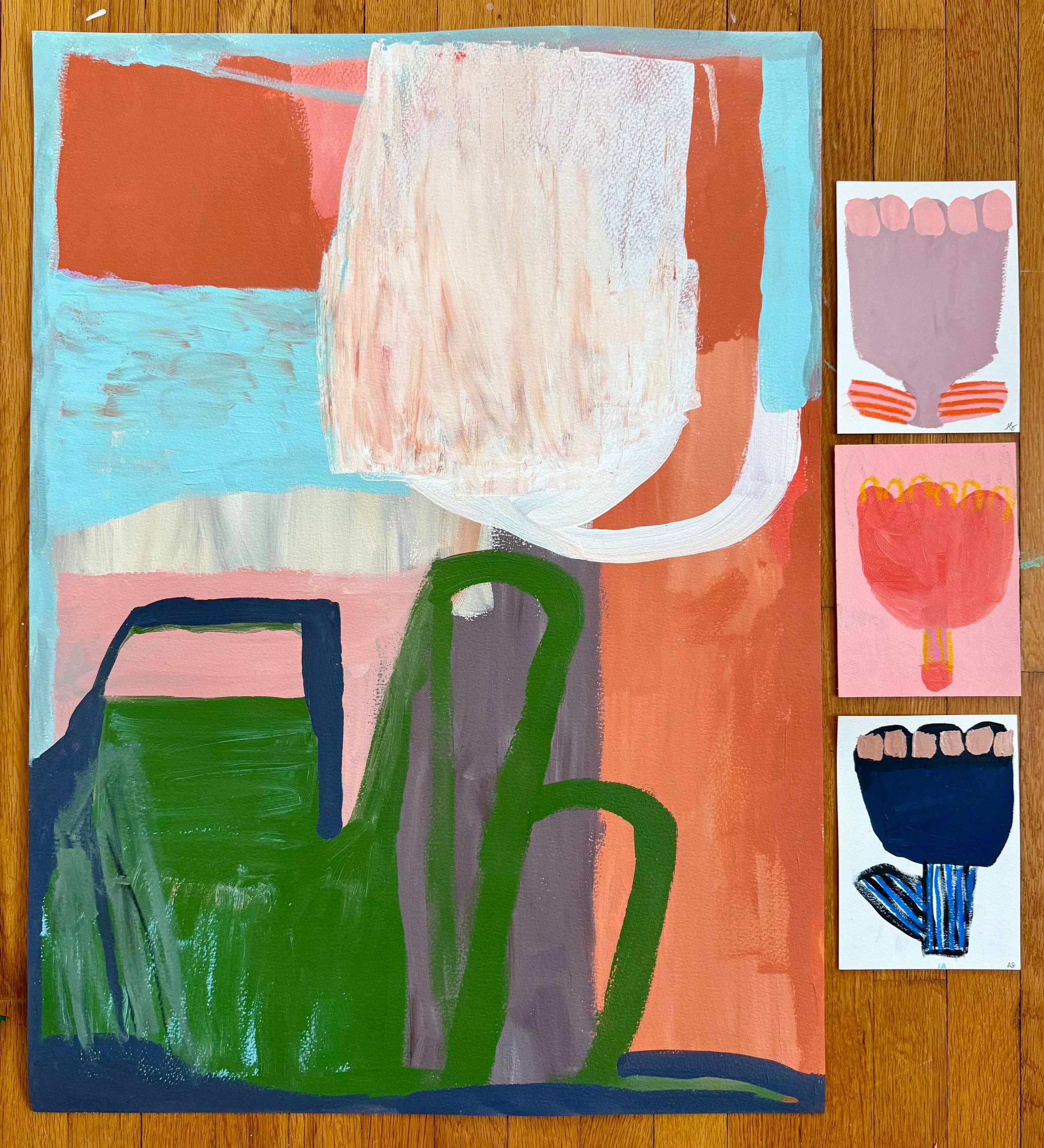
I continue to experiment with mark making and shapes in my work. I play with more structured, geometric shapes, and I also try to keep things as loose and organic as possible. The structured geometric and floral shapes often serve as an entry point for me to move into more expressive compositions. I think reducing the mental load of deciding what to paint is part of why those repeatable practices are so effective as a portal to create abstract work. This is a core part of my painting practice as an artist, and I am really committed to play and experimentation.
You let color lead and structure follow. How do you decide when a surprising pop of color or a subtle detail belongs?
It’s a dance of intuitive painting and intentional decision-making about color. I find I often start with a more limited palette, then I branch out intuitively before I end up editing it back. The paintings almost always evolve with a common thread throughout the creation process. I am inspired by color stories I notice in my daily life and have been especially inspired by interiors lately. I have really been loving maximalist interiors that are centered around dynamic color combinations.
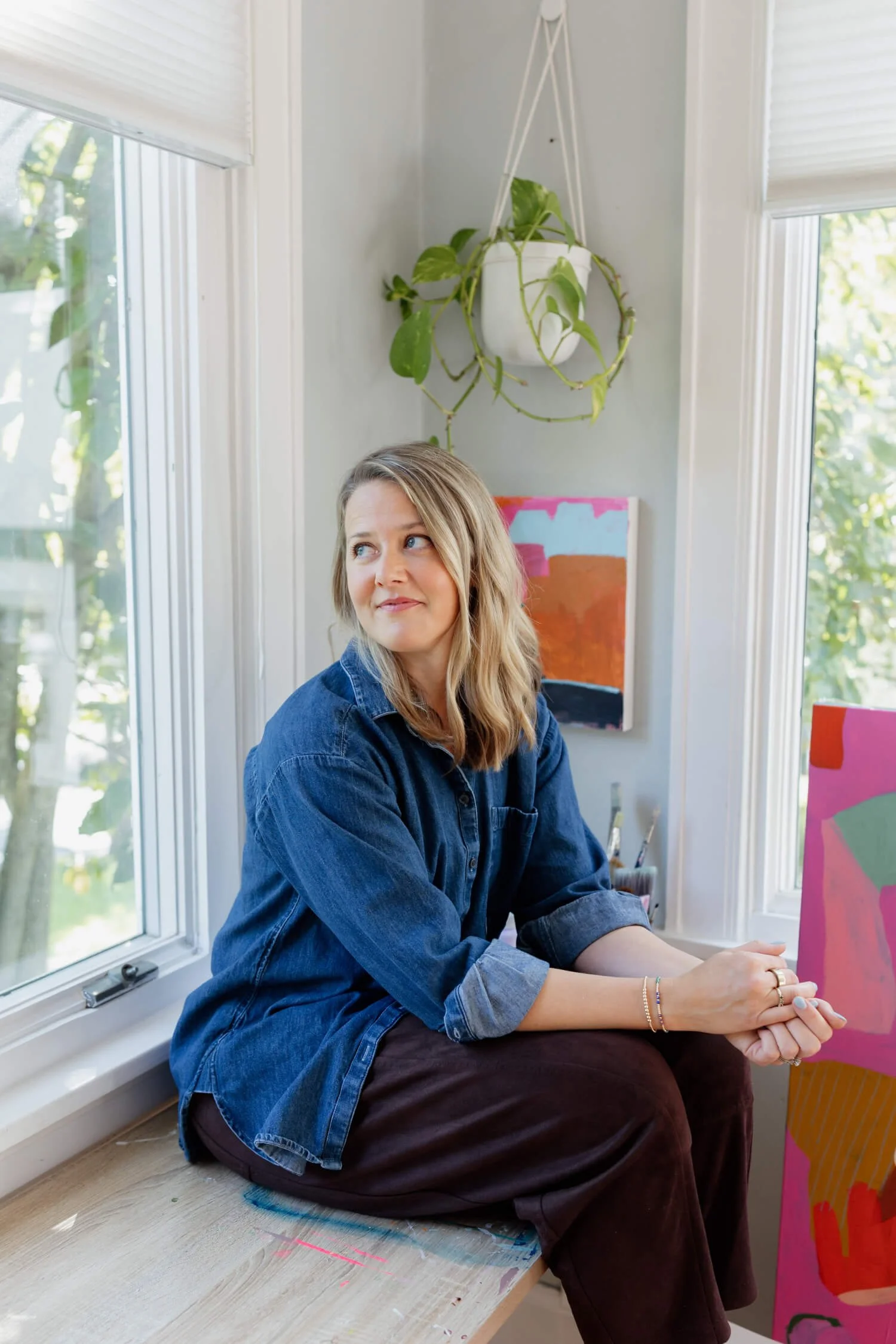
Photograph by Rebecca Carmel Photography
Your background in arts-based research methods informs your reflective approach. How has that training shaped the way you think about your own practice?
I love to learn, and developing my painting practice continues to be an incredibly rich learning experience. I think my training in academia really built my curiosity muscle, and it’s really fun to use that in the context of making art and building my art business.
What are you most curious to explore next in your practice?
I am working on a body of work that pairs small floral studies on paper with larger, more expressionist abstract paintings. Starting with the smaller, more structured studies is an accessible entry point for my larger pieces in this season of my life juggling my art business, my full-time career, and my family. This new series is all about exploring what it takes for an artist-mother to make room for herself. I began painting nearly eight years into motherhood, and my practice lives in the tension between holding on and letting go. That means holding my family, my career, and my commitments to others, while learning to let myself be held by my own creative voice. This work is for anyone who is also juggling all of the roles, being everything for everyone else, while also trying to stay deeply connected to what brings you joy and makes you feel at home within yourself.