

Along the Thames: Sketching London Through the Lens of Along the River During the Qingming Festival
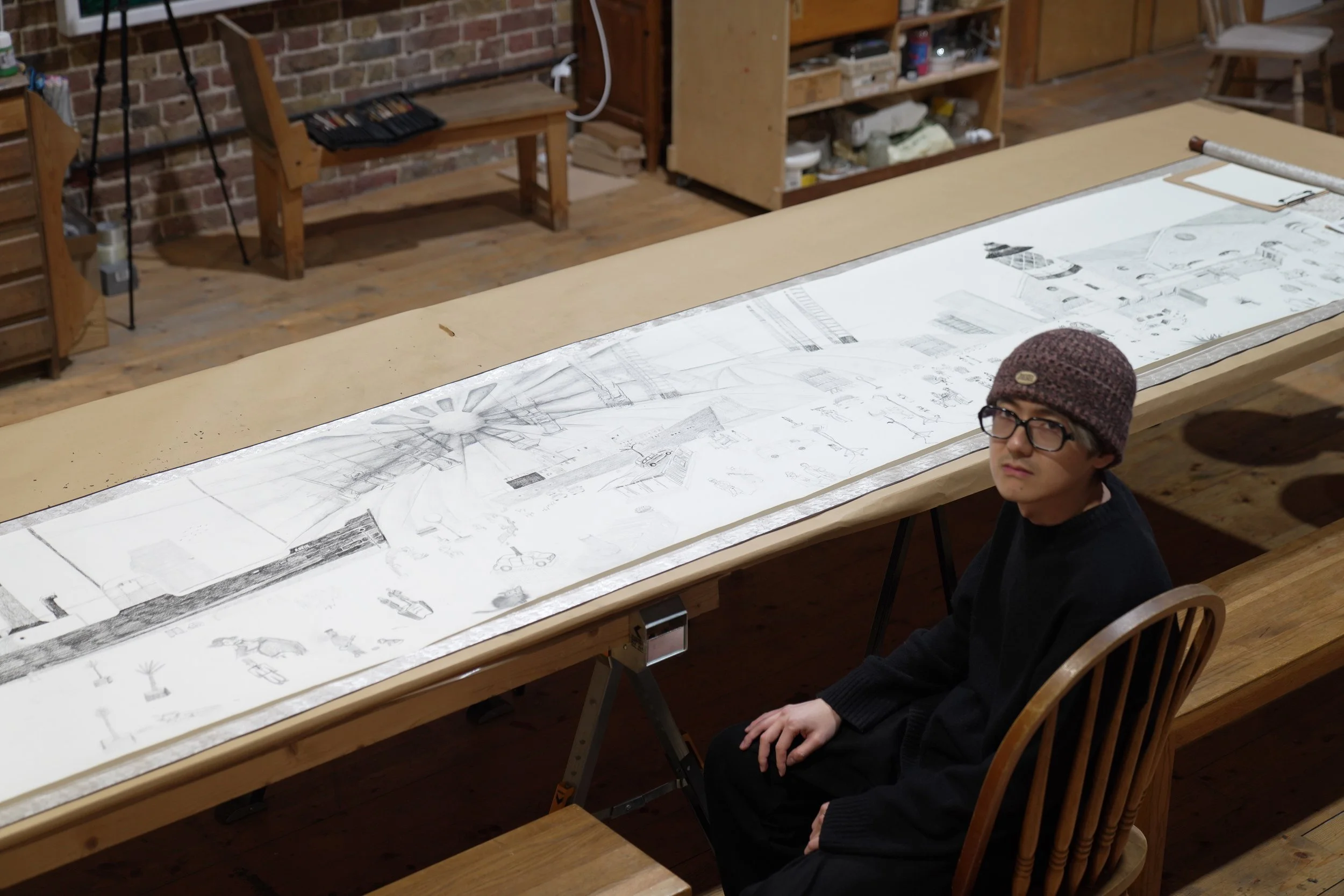
Harbour Scroll: The Trinity Panorama is a collective act of looking, remembering, and imagining—a visual experiment that stretches across cultures and eras. Initiated by artist Yifan Jing (Zorg), the project invites the public into a shared creative gesture: drawing upon the long-scroll tradition of Along the River During the Qingming Festival to reweave the riverfront life of London’s Trinity Buoy Wharf into a contemporary handscroll. From the bustle of its Victorian docks to the present-day hum of its artistic community, from the echoes of old shipyards to glints of modern glass towers, the scroll gathers not just scenery but the full spectrum of riverbank life. And in the act of drawing, every participant becomes part of that vision—folded into the very landscape they depict.
Trinity Buoy Wharf itself is a palimpsest of urban memory. Once the departure point for sailors, a transfer hub for goods, a place where dockworkers labored through day and night, and the first landing site for countless newcomers to London, it has transformed into a haven for artists, studios, and cultural institutions. The lighthouse still stands sentinel. The warehouses still carry the texture of tides and salt. And the slow movement of boats along the Thames layers past and present into a single, shifting frame. The site holds a natural affinity with the handscroll. Here, every inch of landscape feels like a slice of time; every flicker of light contains a body marked by dust, labor, salt, or longing.
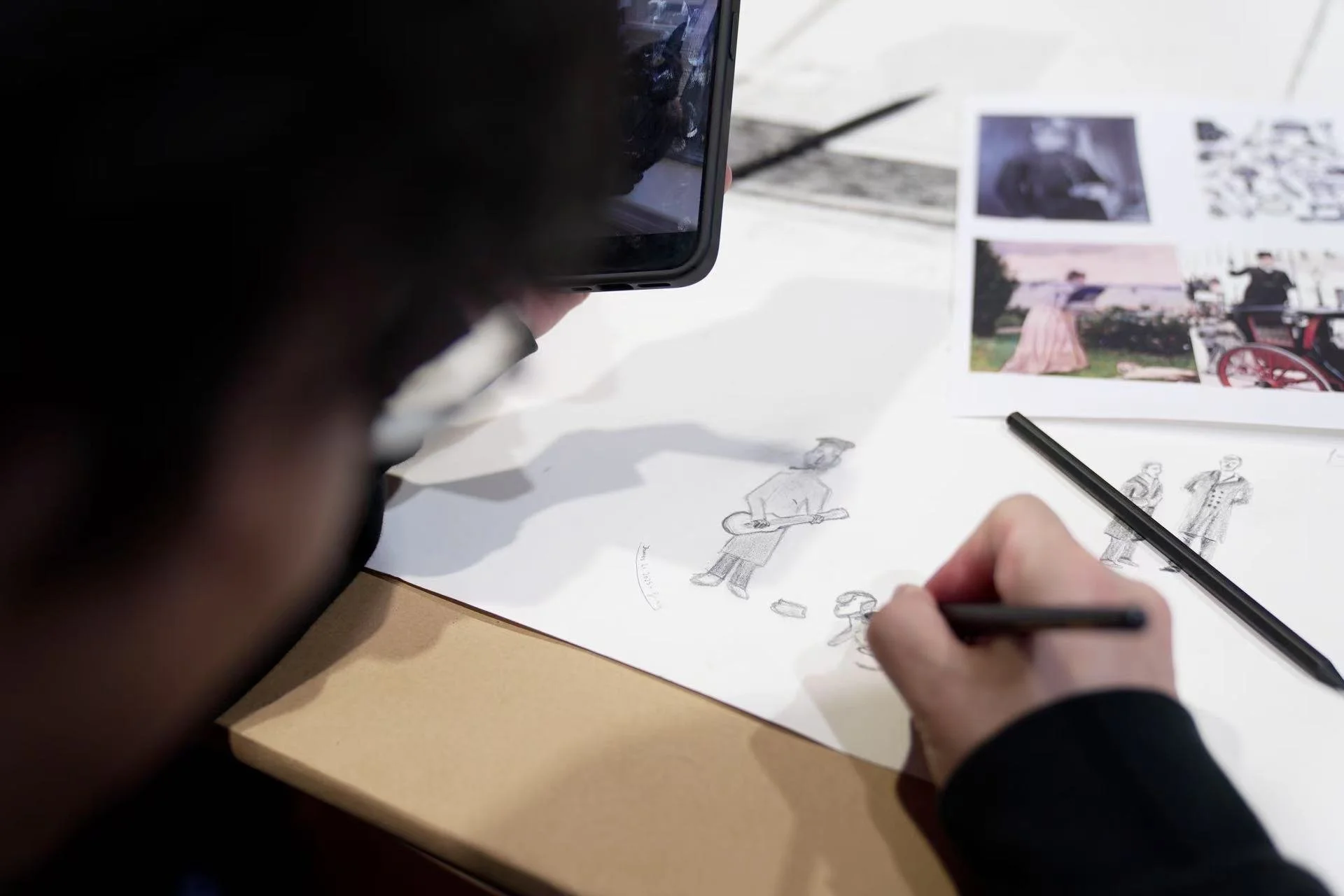
Participants at the workshop do not record the scene in a photographic or documentary manner. Instead, they sketch in a way that echoes the fluid, accumulative spirit of ancient scroll-making—capturing the structure of the docks, the posture of the lighthouse, the interplay of stillness and motion along the riverbank, and the fleeting gestures of people inhabiting this moment. Each person draws a different instant, yet these moments align through their shared focus on Trinity Buoy Wharf, forming a ribbon of time. A scroll never seeks a single perspective; it welcomes polyphony—multiple viewpoints coexisting and overlapping. London’s history, too, is never linear but a constellation of migrations, labors, arrivals, departures, and returns.
As the sketches unfold and join one another, they do not simply stitch images together. They allow eras to flow into one another through the logic of the scroll: a Victorian cargo vessel might sit beside a modern loading crane; the silhouette of a long-ago dockworker might neighbor the gesture of a contemporary artist wheeling supplies; a child walking the riverbank today might meet the gaze of a boy from a century past waiting on the tide. Time ceases to stack vertically. Instead, the scroll unrolls it laterally—rearranged, expanded, made porous. The riverfront becomes a form of “readable history,” and each participant’s mark folds them gently into this cross-century narrative. They are no longer observers; they become figures within the scene, part of the riverbank, a page of London itself.
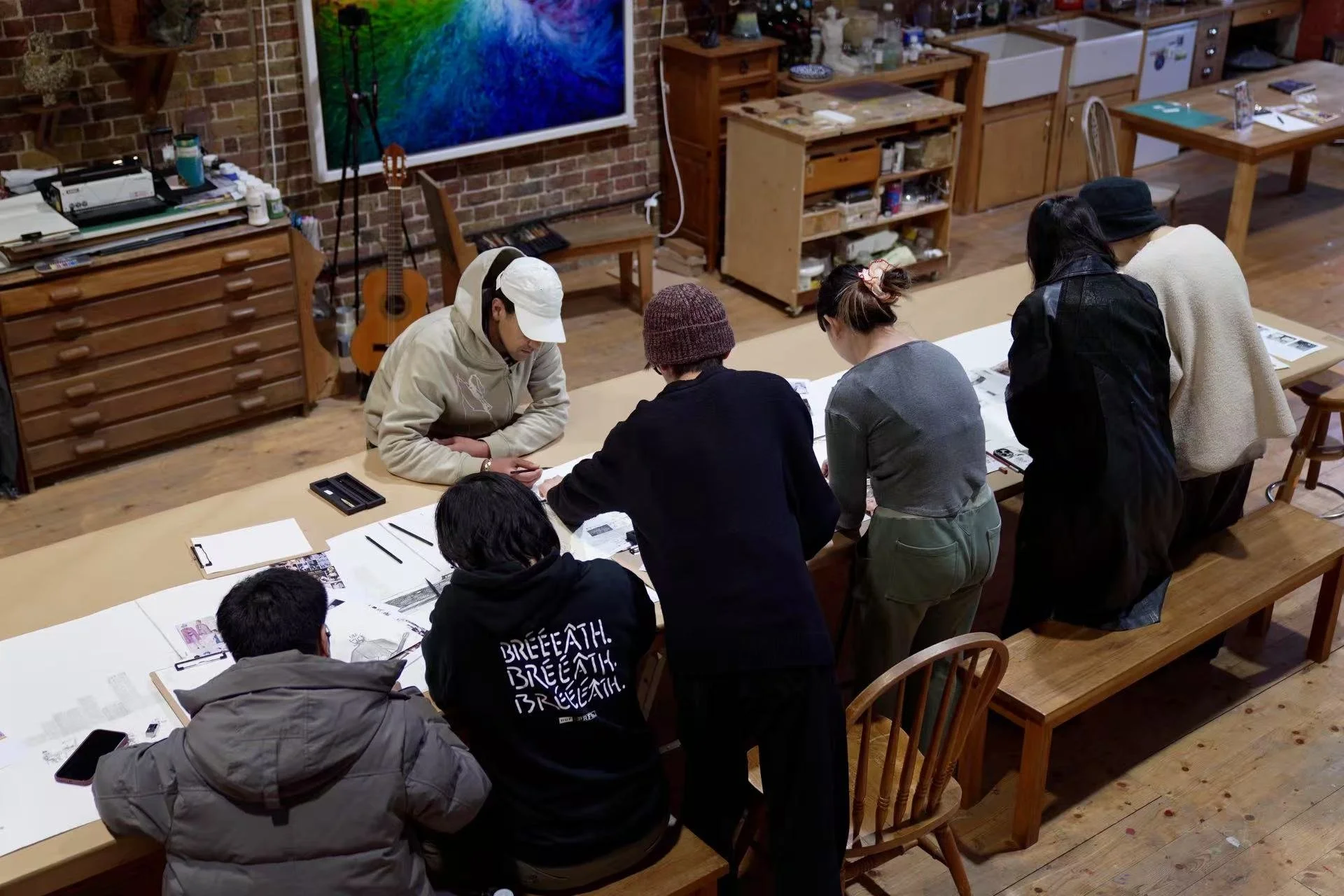
For this reason, Harbour Scroll is far more than an exercise in drawing technique. It is a process of culture-making through participation—a way for people to rediscover the city by co-creating its imagery, to understand how they move with it, are shaped by it, and belong to it. In a time when urban life grows increasingly fragmented and accelerated, such collective acts carry a quiet but profound social resonance: they bring strangers together, allow each person a place on the page, and remind us of our entanglement with one another and with the spaces we inhabit.
Ultimately, Harbour Scroll: The Trinity Panorama unfolds as a handscroll both ancient and new—borrowing the spatial intelligence of Along the River During the Qingming Festival while grounding itself firmly in the textures of London’s riverfront. It is at once an echo of history, a breath of the present, a record of lived experience, and a reimagining of what community can mean. Presented in a traditional Chinese silk-mounted format reminiscent of Along the River During the Qingming Festival, the handscroll is on view at Hackney Gallery from December 15–16, inviting the public to encounter the work in its full, unrolled form.
This event is presented with the support of Trinity Art Studios and The Big Draw.
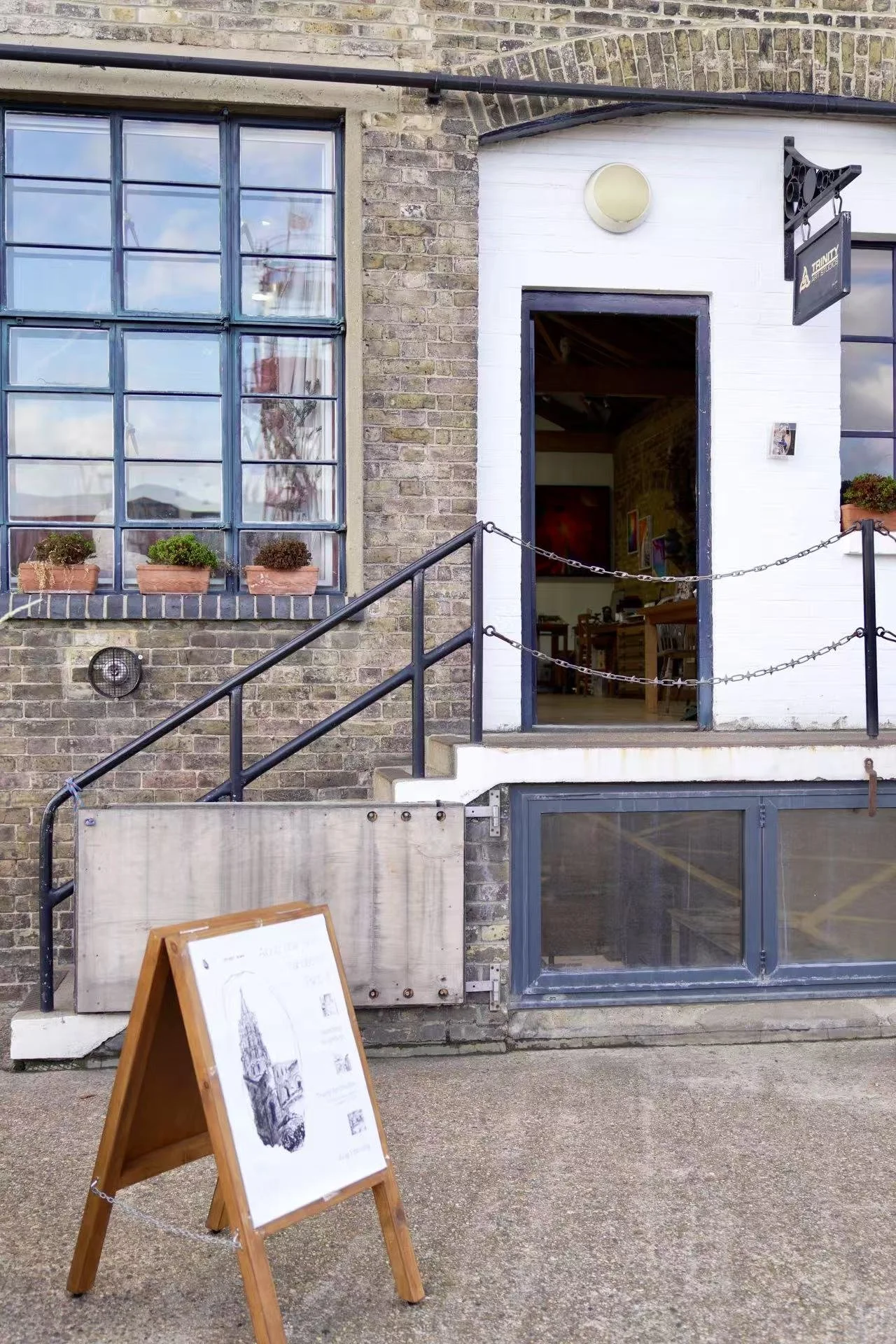
Founded in 2005 at Trinity Buoy Wharf in London’s Docklands, Trinity Art Studios offers a wide range of facilities and services for artists and admirers of fine art. Whether you are seeking studio space, art classes and workshops, exhibitions, cultural events, or are an art collector looking to expand your collection, you are warmly invited to browse their website or visit in person. Sign up for their newsletter to receive updates on upcoming events, new artists, artworks, and other news from their creative community.
Event Date: 28/11/25
Location: Trinity Art Studios, 8 Trinity Buoy Wharf, London E14 0FG
Supported by Trinity Art Studios, and The Big Draw
Edited by Alicia Puig