

Alexandra Niculescu: Painting the Unstoppable Body
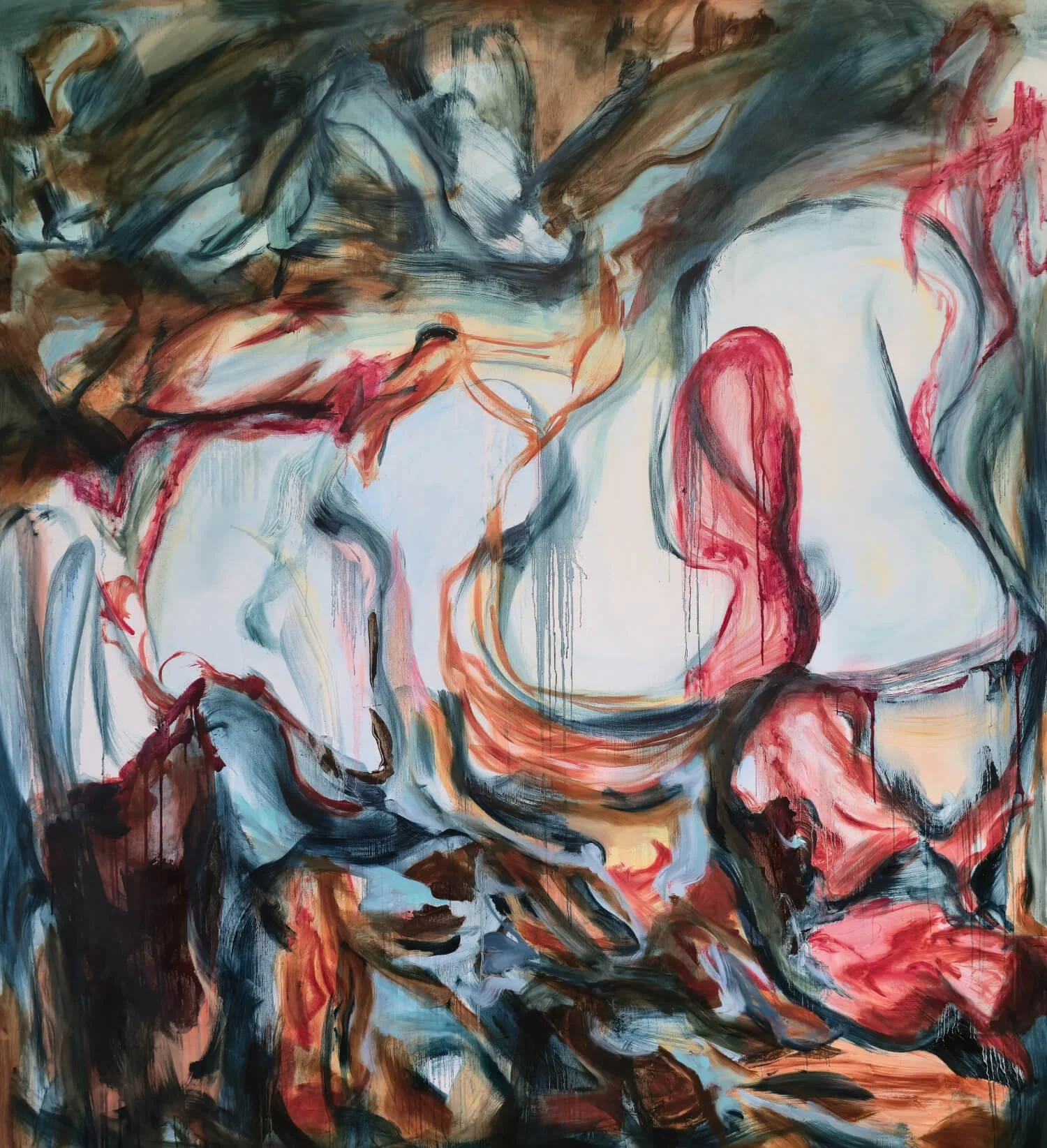
Alexandra Niculescu (b. 1988, Bucharest) is a visual artist based in Bucharest.
Her practice investigates the body as a site of memory, transformation, and inner truth.
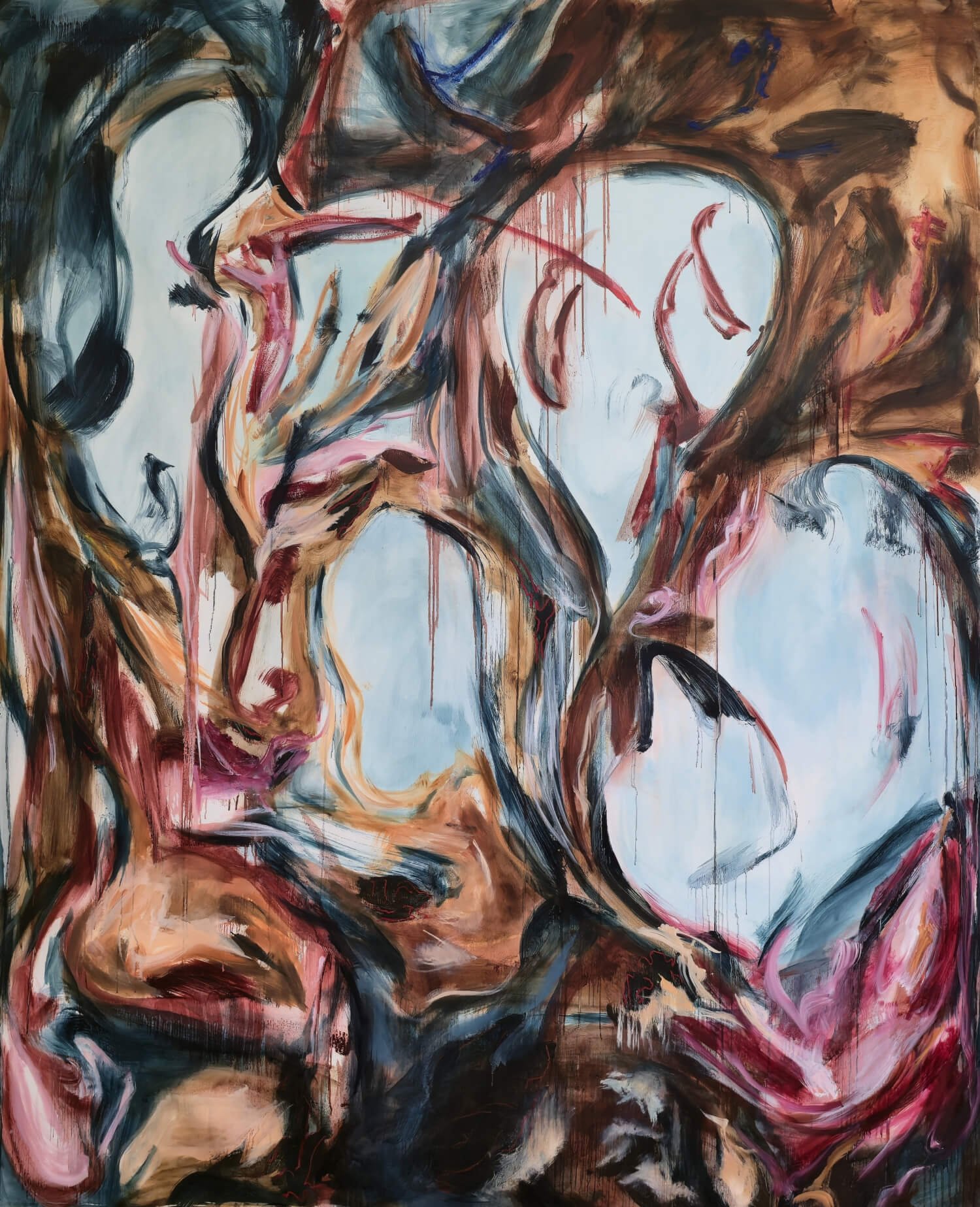
Working primarily in large-scale gestural painting, she blends abstract expressionism with a post-Rococo sensibility to create a visual language of catharsis and healing.
Her personal experience of motherhood, marked by thrombophilia, became the foundation for her artistic symbol, the “Unstoppable Body,” an expression of resilience and rebirth.
Drawing inspiration from art history, Rococo architecture, and the memory of her childhood on Bucharest’s Calea Victoriei, among the great palaces that later became museums, Alexandra transforms biography into a universal visual statement of feminine strength.
Artist Statement
My practice explores the dialogue between body, memory, trauma, and transformation.
I draw from abstract expressionism, from gesture as a form of physical and emotional release, but reinterpret it through a contemporary feminine lens.
I work mainly on large-scale and monumental-scale paintings, where gesture becomes a vital trace and a full bodily experience.
Broad movements, dense layers of paint, and luminous transparencies build an emotional architecture of the body.
I draw inspiration from Rococo as movement, curves as echoes of the body, and from the memory of my childhood in Bucharest, on Calea Victoriei, among the great palaces, one of which later became a museum.
I create an art of truth, honest and authentic, born from the body, from fragility, and from strength.
Beauty arises where truth becomes visible.
For me, painting is not a static image, but a living process, an act of catharsis, healing, and release.
My works propose an interior Rococo abstract expressionist language, where raw gesture and delicacy coexist, and the body becomes a space of continuous transformation.
https://www.instagram.com/alexandra_niculescuart
Interview
You grew up on Calea Victoriei in Bucharest, a street that earned the name "Little Paris" for its French-influenced architecture. How do you see that visual upbringing showing up in your work today?
Growing up on Calea Victoriei felt like living in an open-air museum, but one shaped by both beauty and collective trauma. Alongside its refined architecture, I remember noticing bullet marks left on buildings, wounds embedded in ornament, traces of history that remained visible long after the events themselves had passed. As a child, those contrasts stayed with me.
Over time, I came to understand this as a space where personal memory and collective history overlap, where the past continues to exist within the present. It formed what I now think of as an “inner Rococo,” where beauty is inseparable from tension. In my paintings, the body often moves through or disrupts ornamental structures, creating a dialogue between elegance and rupture.
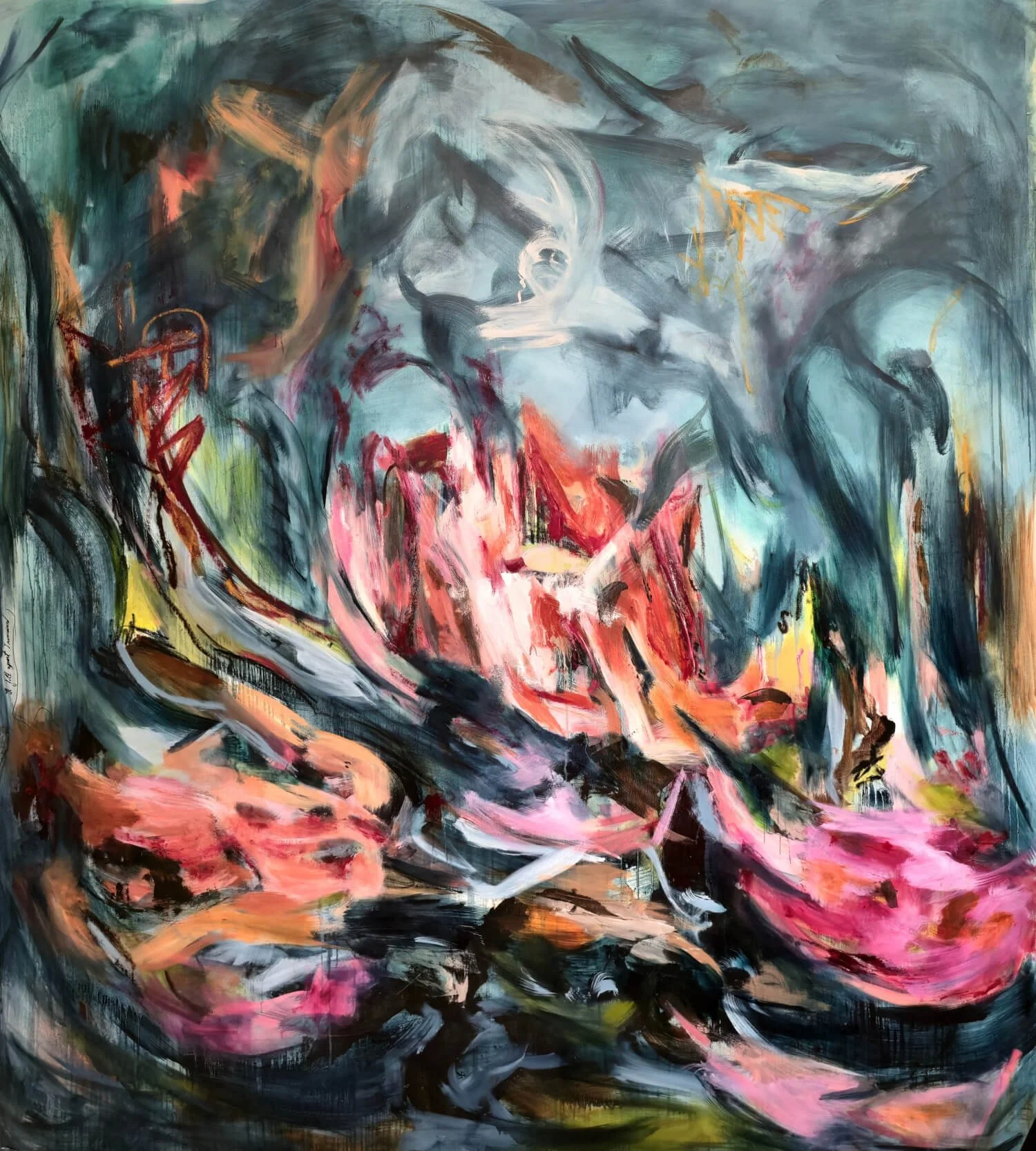
Your paintings draw from both the Old Masters and the Rococo style, but also incorporate very personal symbols like injections. How do you hold classical elegance and autobiographical vulnerability in the same image?
I do not see classical elegance and vulnerability as opposites. Both emerge through the body. The Rococo offers a language of beauty, movement, and ornament, while autobiographical elements introduce fragility and lived experience.
The tension between these forces is central to my work. The body enters, disturbs, and transforms the ornamental space. What interests me is the point where beauty carries memory, and where vulnerability becomes a form of strength.
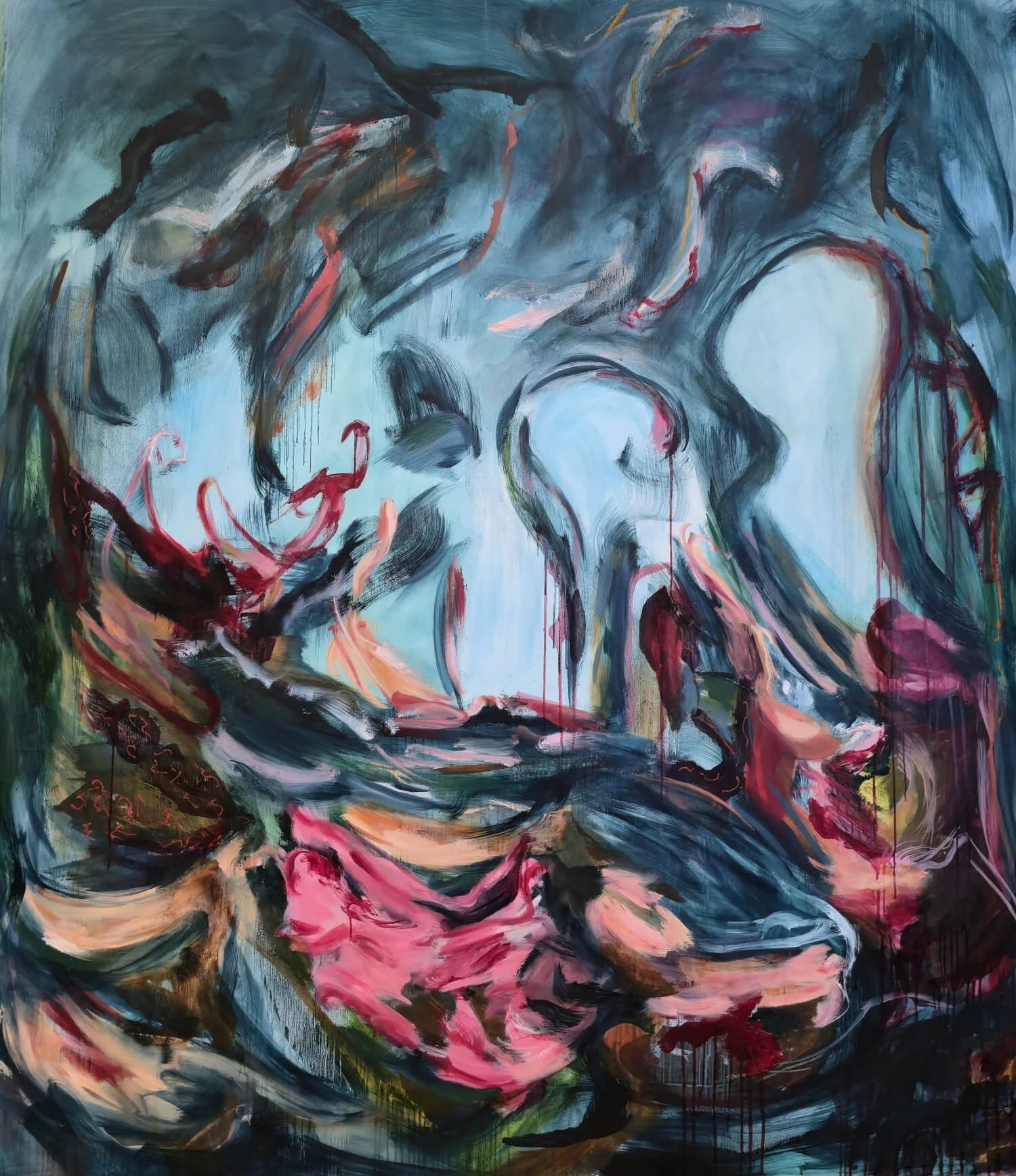
The color blue recurs throughout your work, and you have connected it to your personal journey as both an artist and a mother. What does blue carry for you that other colors do not?
Blue represents a place of rest within the painting. It allows the eye to pause and breathe. Much of that sense of openness emerges through what I call the “Arcs of Hope,” recurring curved forms that create space within the composition.
These arcs are inspired both by the fluid ornament of Rococo architecture and by the movement of the human body. Over time, they became symbols of resilience and transformation in my work.
Blue and these arcs often work together. They introduce moments of possibility within tension. We live in a world shaped by uncertainty, personal struggles, and collective challenges, yet we continue to search for meaning and connection. For me, the Arcs of Hope do not erase difficulty; they create room for hope to exist alongside it.
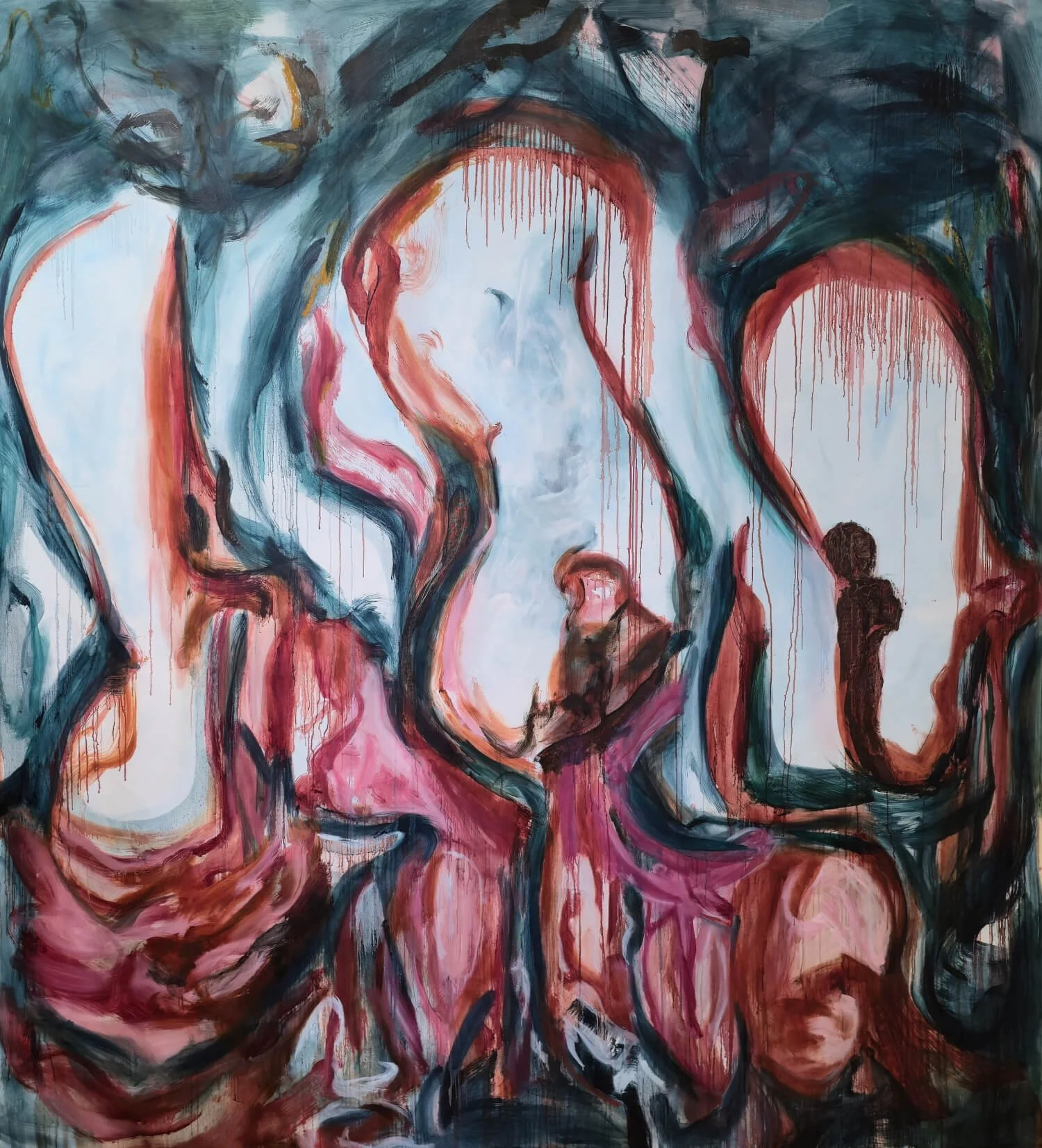
You use painting as a way to express your understanding of the subtle dimensions of the world. Can you describe a moment when a painting took you somewhere you had not expected to go?
One of the most unexpected discoveries in my practice has been the emergence of what I call the “Arcs of Hope.” I often begin a painting from a place of tension, working through fragmented bodily forms and dense areas of gesture.
At a certain point, curved structures begin to appear. They are never fully planned. They create space, openness, and a different emotional direction within the work.
What surprised me was realizing that these forms were not simply compositional devices. They became symbols of transformation. Through them, the painting could move beyond tension without denying it. That is often the moment when a work takes me somewhere I had not expected to go.
You completed a scholarship at the Milan Art Institute that marked your transition to being a full-time artist. What did that decision cost you, and what did it give you?
The most important thing it gave me was confidence. Until then, painting was something deeply important to me, but the scholarship helped me see it as a long-term commitment rather than a possibility.
It taught me that artistic growth comes through sustained practice and trust in the process. It encouraged me to take my work seriously and to dedicate myself to developing my own visual language.
Your Instagram bio reads, "I choose to paint life." What does it mean, for you, to choose life as your subject?
To choose life means to remain close to experience, to the body, to memory, and to what unfolds in real time. I am interested in the way personal experiences connect to larger emotional and historical realities.
For me, painting is not about escaping life but about engaging with it more deeply. It is a way of transforming experience, whether personal or collective, into something that can continue to resonate beyond the moment in which it was lived.
What are you most curious to explore next in your practice?
I am increasingly interested in the relationship between the body, memory, and collective history. I want to continue exploring how beauty and tension can coexist within the same visual space.
I am also curious about pushing the dialogue between the body and ornament further, allowing forms to become more fluid while maintaining their emotional presence. I feel that I am only beginning to understand the possibilities of this language, and that sense of discovery keeps the work alive.