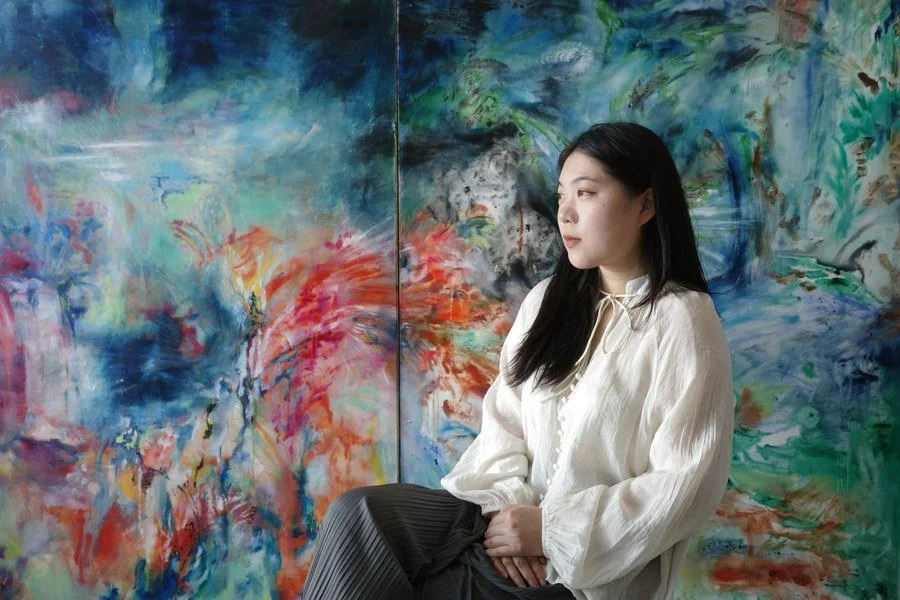
Junhan Shen (b. 2000, China) is a New York-based visual artist whose practice spans painting, drawing, and printmaking. She holds an MA in Art and Art Education from Columbia University and a BFA with Honors from the School of Visual Arts, with additional training at the China Academy of Art and the SVA Paris Program. Her research focuses on perceptual psychology in the visual arts and museum education as a form of social discourse. Shen has worked within the Learning and Engagement Department at the Museum of Modern Art (MoMA) and interned at the Education Department at The Jewish Museum. She is the recipient of the 2026 Gottesman Libraries Art Commission, supported by the Myers Foundations. Her work has been exhibited internationally in New York, Melbourne, Beijing, and Shanghai.
Artist Statement
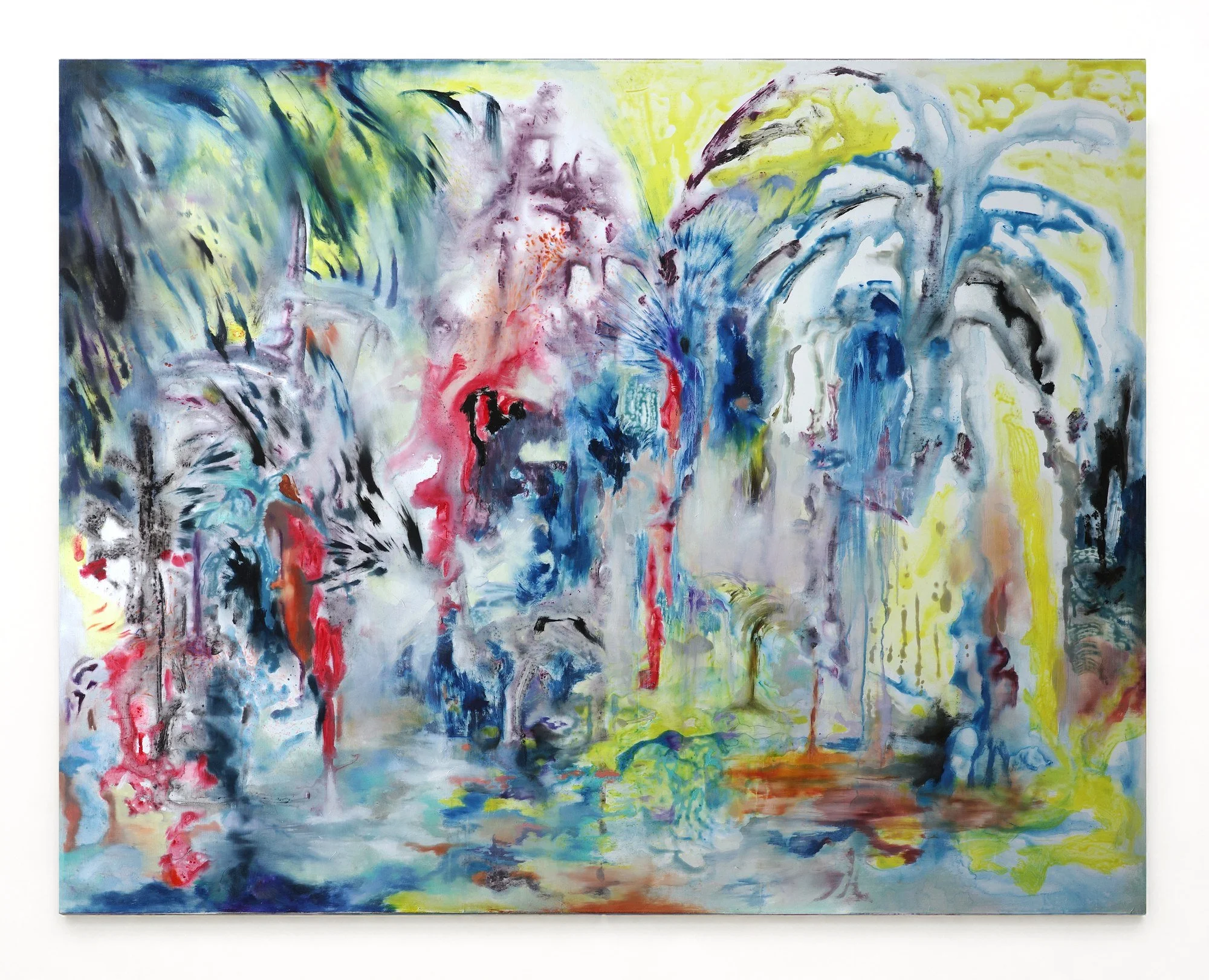
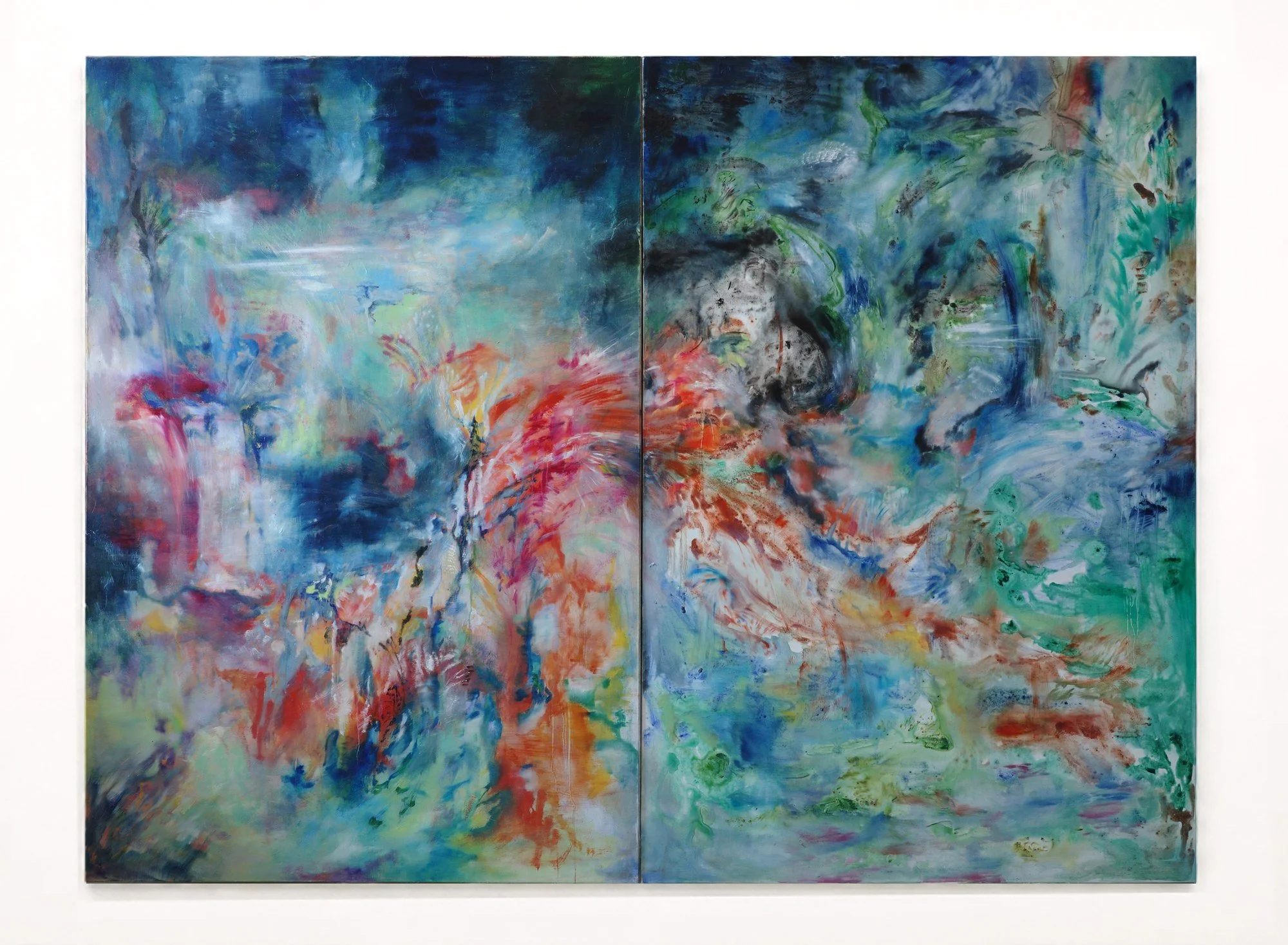
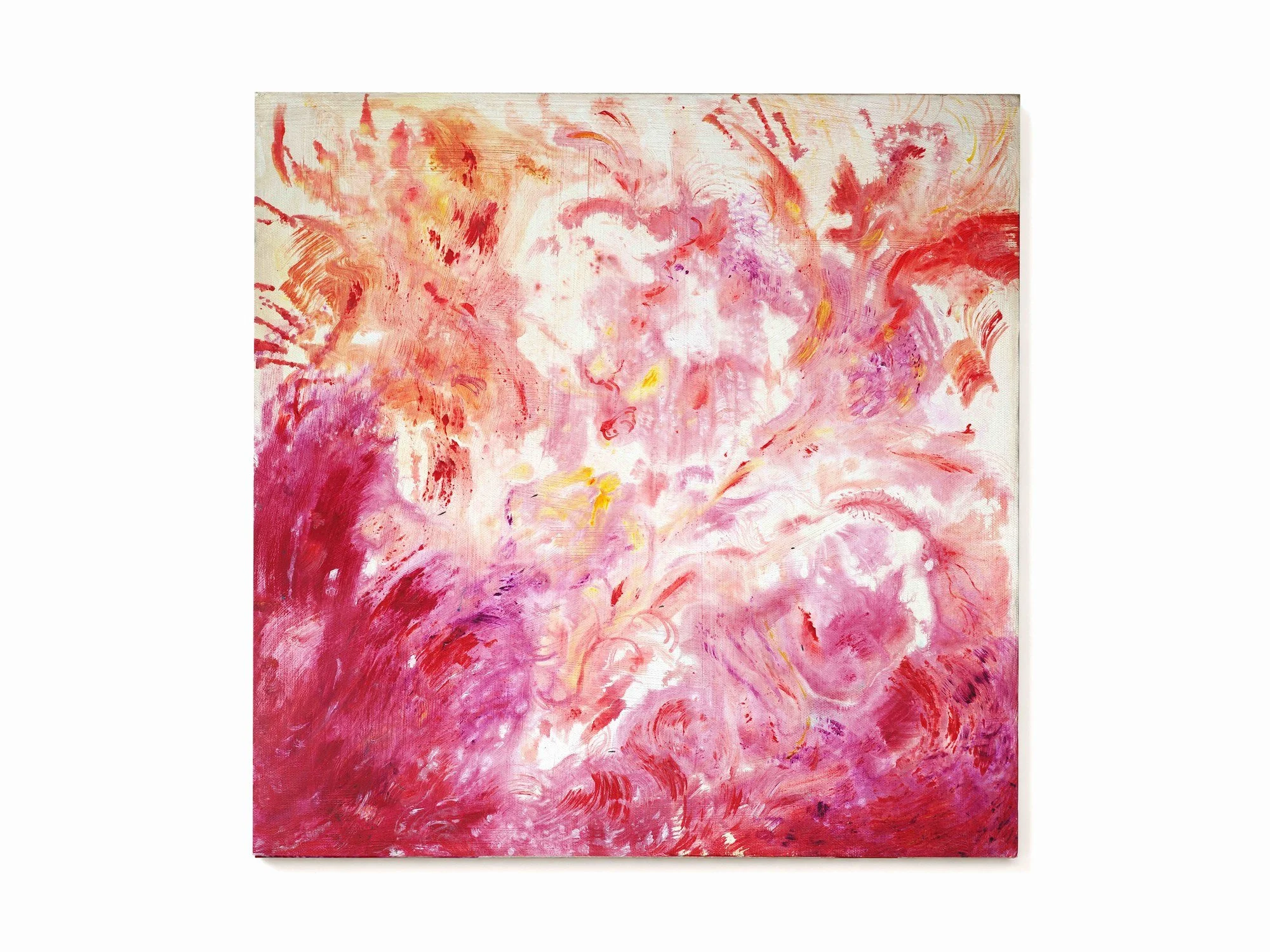
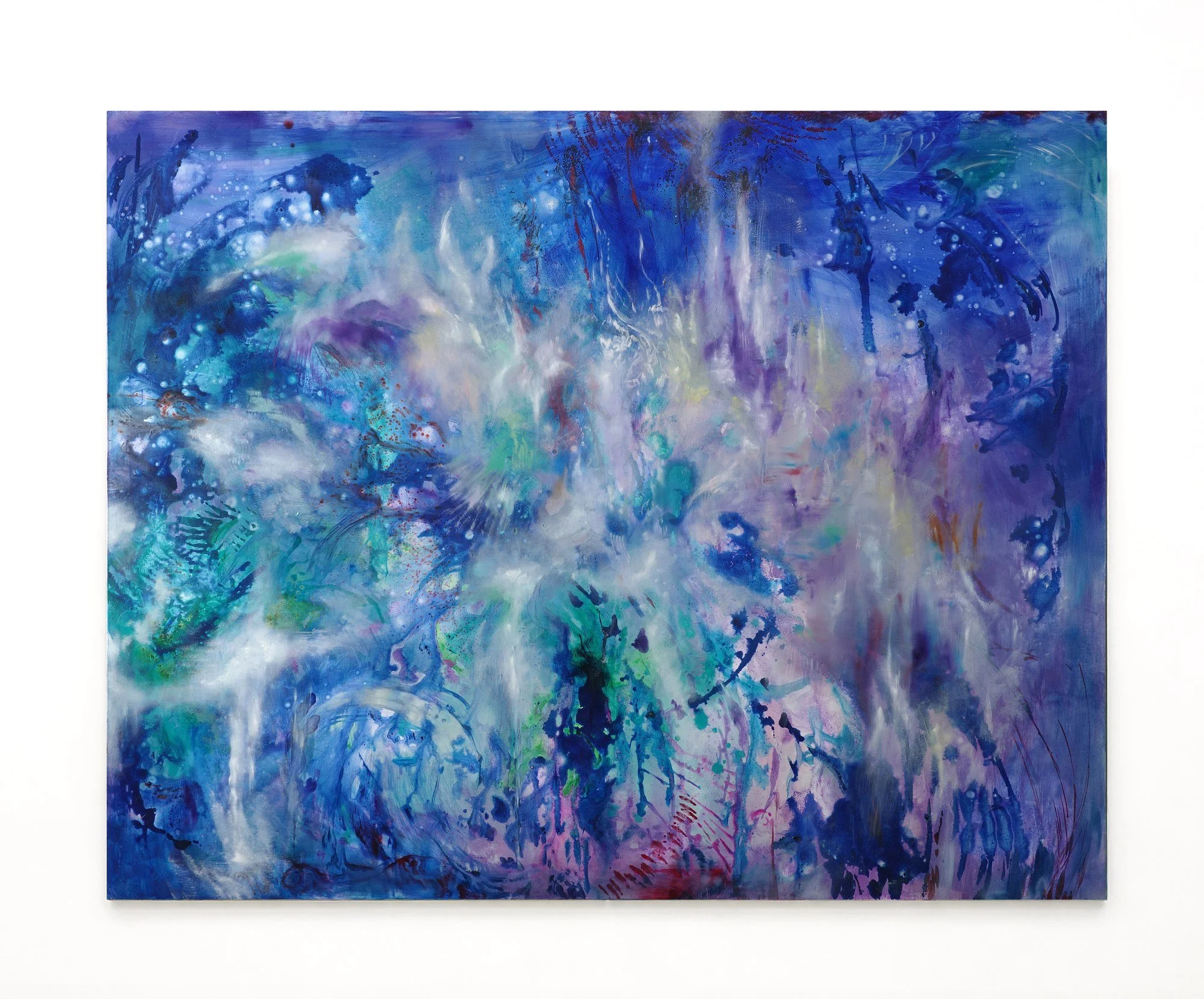
My current work uses the fluidity of medium to explore the idea of impermanence and how we find our footing in a world that never stops changing. I like to watch water carve through stone in Chinese gardens — the twisted Taihu rocks, shaped slowly over thousands of years by nothing but movement and time. Water became, for me, an image of the world itself: a river that freezes in one season and thins to a trickle in another. We live inside it the way a stone, a plant, or a piece of plankton does: shaped by forces we don’t control, carried along by currents larger than ourselves.
When I paint, I imagine letting the water wrap around me, entering a kind of meditative state. I dilute the paint heavily with water, and like flowing water eroding sand and soil, it spreads and gathers across the canvas, leaving traces of where the current once passed. Afterward, I layer more paint on top, adding new life.
Nothing about the process is decided in advance. Each surface holds a record of ongoing change rather than a single, settled image. The traces left behind carry something of calligraphy’s brushwork, the damp air suspended before a rainy season breaks, or a longing that never quite settles on its object. That is the space I want the work to hold open.
Mini Interview
What is the central theme or concept behind your current body of work?
Central to my practice is the fluidity of medium and an intuitive, non-preconceived process. Working primarily with acrylic, oil, and pigment powder on canvas, my work often originates from poetic fragments in literary texts concerning impermanence and memory—such as rain-soaked recollections, fading flora, or sensory emotions that evade precise linguistic translation.
How do you hope your work resonates with or impacts your viewers?
I want the works to remain open rather than point toward a single interpretation. I hope viewers can enter through something familiar—a plant, a current of water, a fragment of landscape—and bring their own memories and associations into the work.
Can you share a pivotal moment that has shaped your artistic journey?
A major shift came when I moved away from the precise, preplanned approach and began working more intuitively on larger canvases. My work experience in museum education also made me more aware of how differently people can respond to the same image, which strengthened my interest in open-ended conversation in an artwork.
What advice would you offer to emerging artists navigating today’s art world?
As an emerging artist myself, I think peer support and community have been incredibly important. Having other artists around you who can offer honest feedback and share their own experiences makes the process feel much less isolated.
Are there any upcoming projects or exhibitions you would like to share with our readers?
My solo exhibition Untranslated Things is currently on view at the Offit Gallery at Columbia University, through November 13, 2026. The project brings together six large-scale paintings developed from literary texts on impermanence, memory, migration, identity, and changing relationships. I will also give an artist talk on October 29 to discuss how reading, painting, and audience interpretation come together in the project.