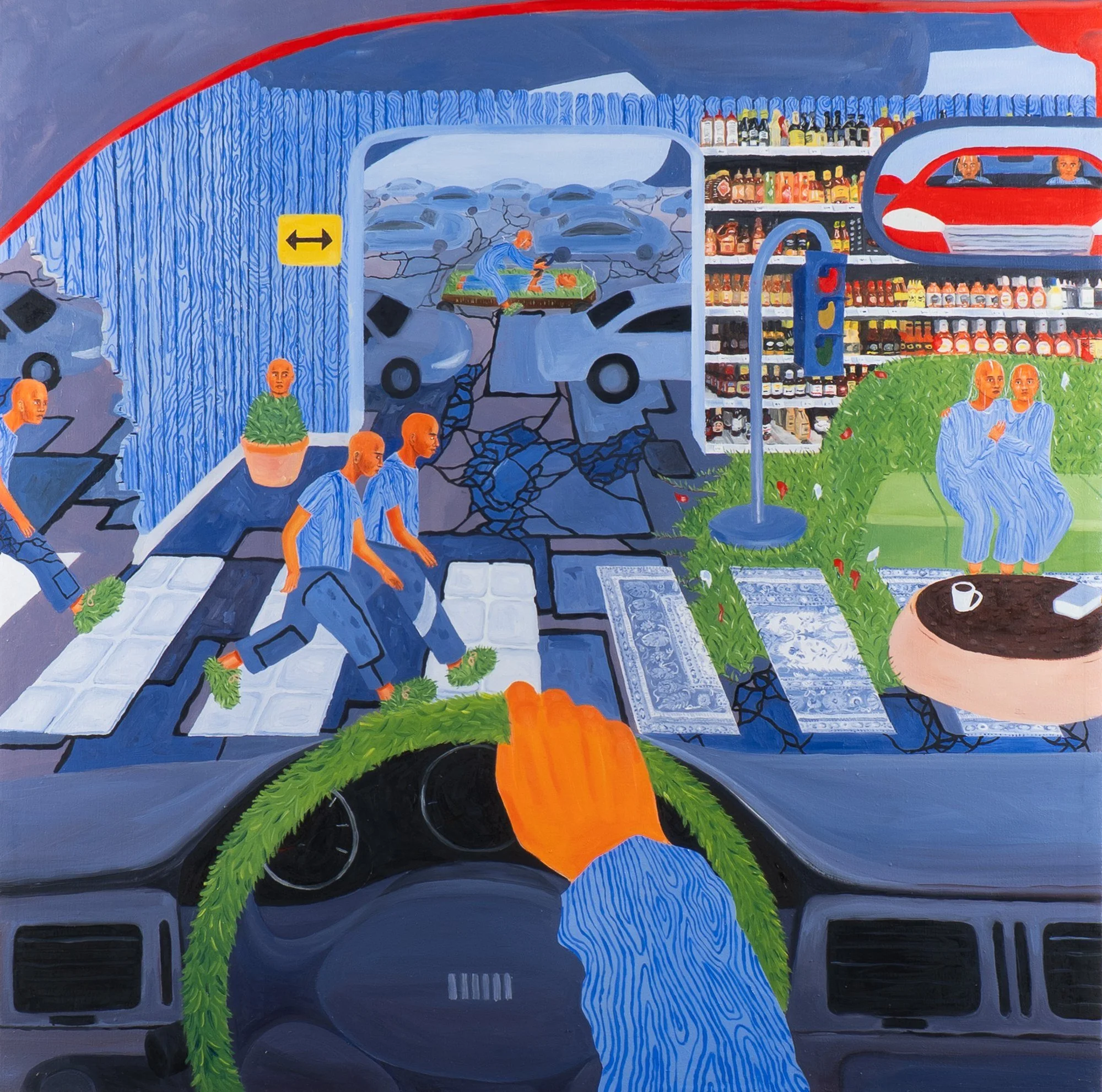
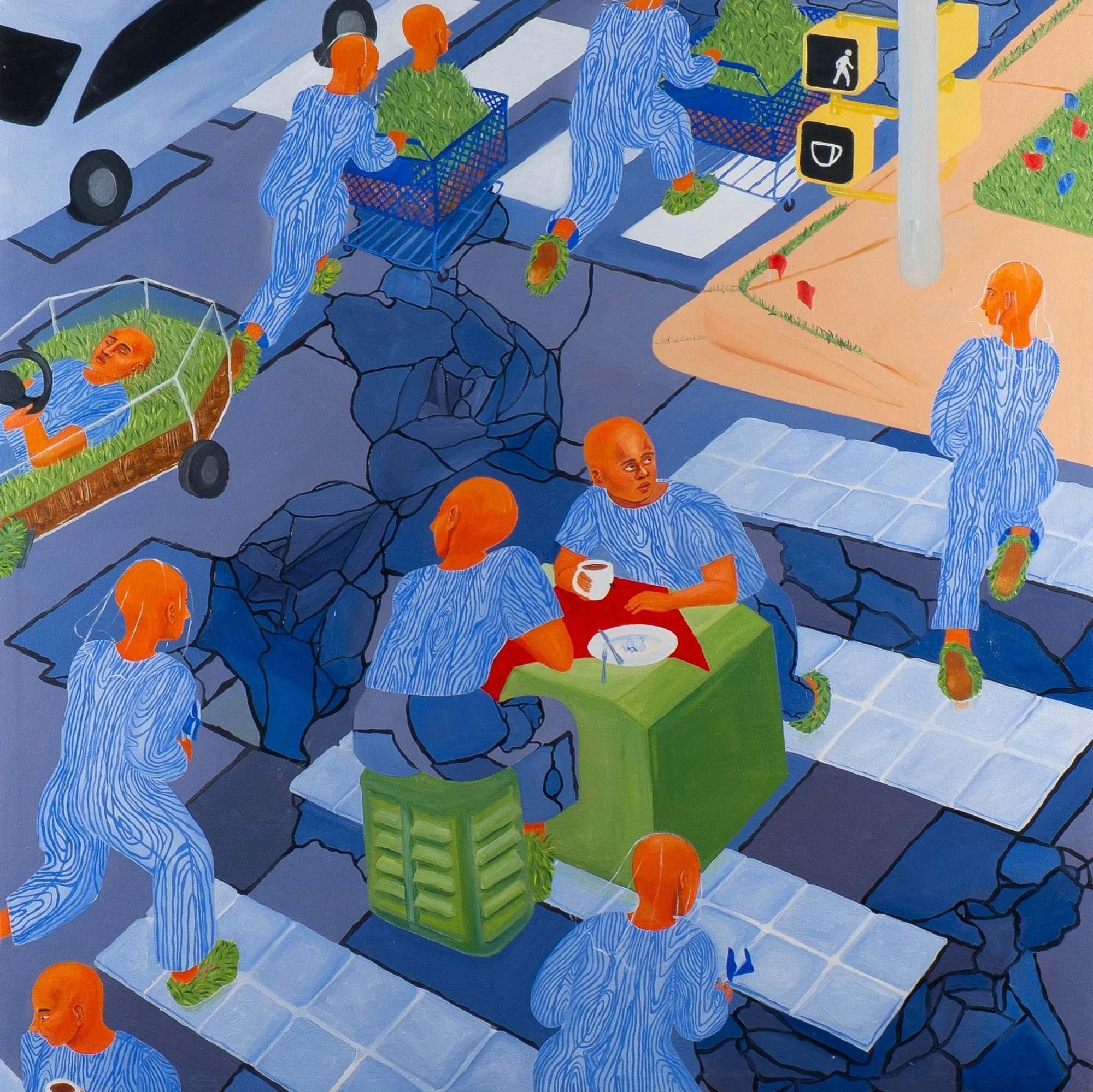
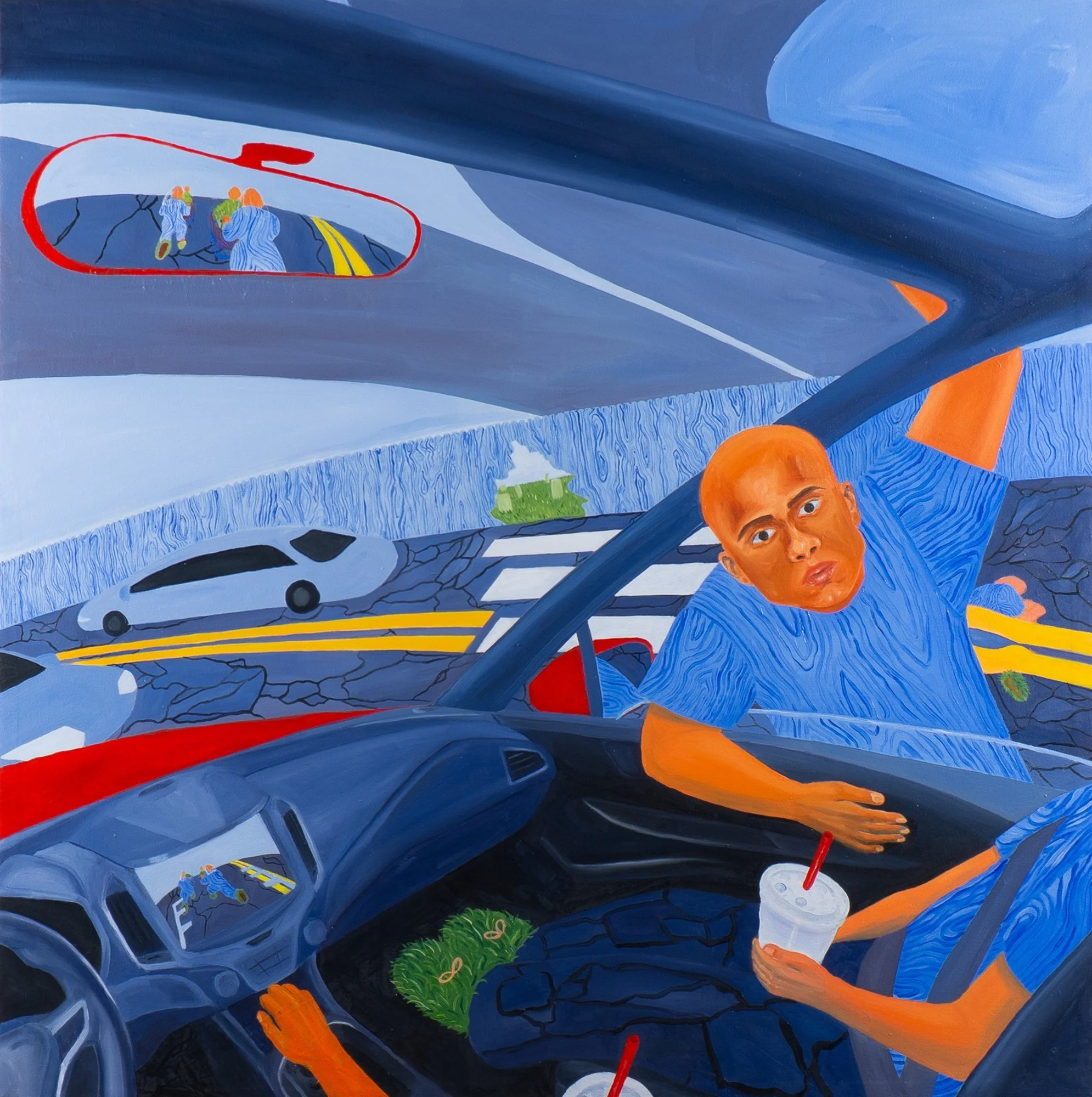
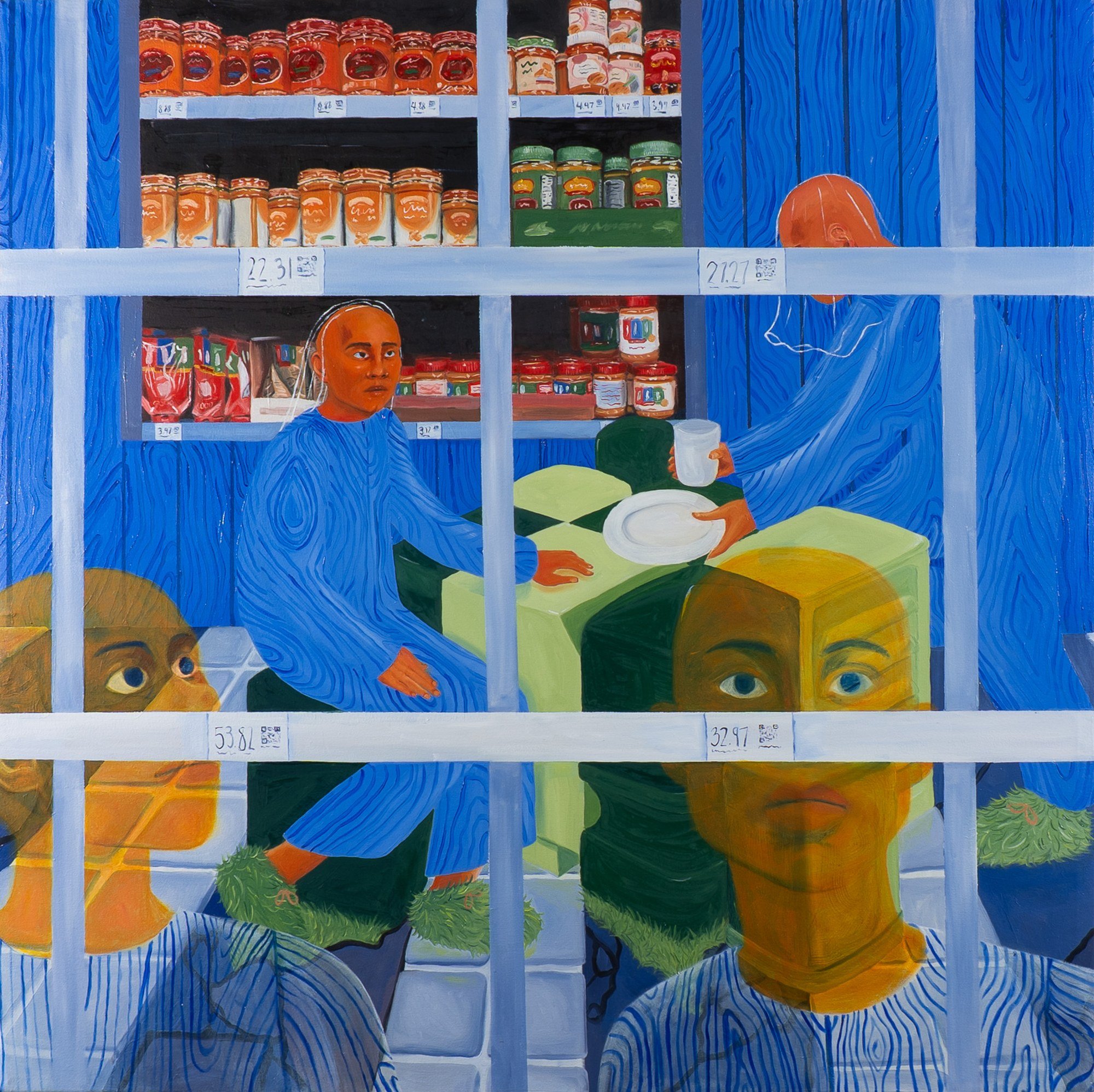
Bella Arianna Clark (b. 1995, Louisiana) is an oil painter based in Norman, Oklahoma. They graduated from the Rhode Island School of Design in 2017 with a BFA in Open Media and have spent the past years working as an animator and video editor across the music and luxury beauty industries, as well as on activist projects. Their background in sequential media deeply informs their current painting practice, which examines the visual and emotional logic of car-centric American sprawl, surveillance, and geographic displacement through cartoon logic and whimsical worldbuilding.
Sprouting from the experience of navigating predominantly white, conservative spaces as a queer, Black body, Clark’s work uses the suburban landscape as an arena for restriction and camouflage. In their invented worlds, figures emerge from the tamed and controlled greenspaces of parking lots to get their footing on the crosswalk, their life’s work a continual crossing, caught in the permanence of transition without any clear destination. Rather than fleeting events, Clark treats grief and the loss of identity as environmental conditions of suburbia’s architecturally imposed isolation and enforced otherness. Their work is featured in the upcoming New American Paintings Nova edition.
Mini Interview
What is the central theme or concept behind your current body of work?
A core theme of my work is what location means about who I become, and how living in the suburbs shapes that right now. It’s about the grief around that, the surveillance that causes that, the car-centric planning that shapes it, and the sort of comedic and arbitrary feeling that middle-American suburbia gives every experience. It’s endless roads without any destination, and a six lane, 4-way intersection that makes you feel like crossing is an interruption.
How do you hope your work resonates with or impacts your viewers?
I think of my work as an auto-ethnographic document of my experience in this specific place at this specific time, so I hope it operates as a record for my viewers. Beyond that, I hope that the feelings of repression and grief are experienced like a poem.
Can you share a pivotal moment that has shaped your artistic journey?
I took a painting class three years ago and discovered how natural it was for me, both as an experience of the medium and as an expression. It was such a major shift from time-based work, having previously focused in digital animation. Painting was totally satisfying and effortless - just meditative in a way that I hadn’t found for myself in other practices.
What advice would you offer to emerging artists navigating today’s art world?
It’s important to not think about what other people are doing, what galleries are looking for, or MFA programs, or residencies when you work. I’m talking about trends. It’s hard to ignore if it’s your livelihood, but maintaining sincerity will keep your art interesting, and as you keep improving and developing in your specific direction, your sincere expression will have higher value than what you think other people want from you, and it’ll feel most natural for you, which I think is important in creation.
Are there any upcoming projects or exhibitions you would like to share with our readers?
I’m currently creating a series of paintings expanding on these themes of suburban spatial logic, but exploring a different realm away from the crosswalk, as well as different experiences and feelings, focusing not on grief but on medicine. Leaving my blue period, it’s much more red, set on the grounds of house frames still in the process of being built.