

White Fantasy: Reading the Interface
Yucen Liu and the Structures Behind Contemporary Experience
Written by Berenika Balcer
March 1, 2025
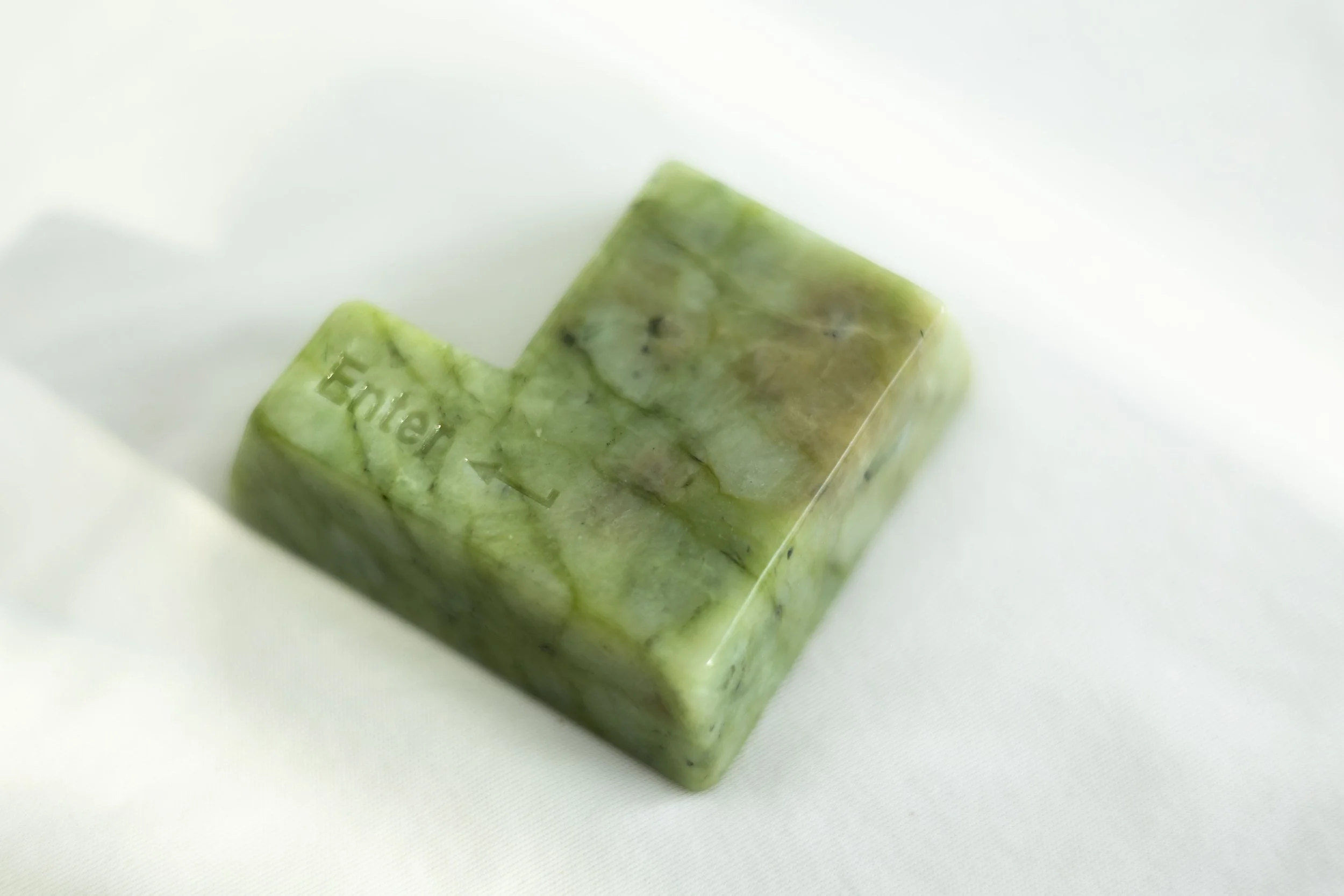
After his solo show White Fantasy at FLOHAUS Gallery, Yucen Liu seems to be wondering more and more about a question that is the basis of contemporary life: how do invisible systems influence the way we see, measure, and understand the world?
Medical residue, measuring instruments, jade sculptures, QR codes, porcelain, and interface visuals at first hardly suggest a common language. However, a common thread can be traced: Liu’s work focuses on the mechanisms that mediate between individuals and the systems they live in.
The right word is “interface.” To most of us, an interface is a screen. In Liu’s pieces, the concept is extended to any structure that converts one type of experience into another: medical techniques convert symptoms into diagnosis; measuring instruments convert the physical world into data; and digital systems convert behavior into data. Interfaces make the world understandable and also define the limits of our understanding.
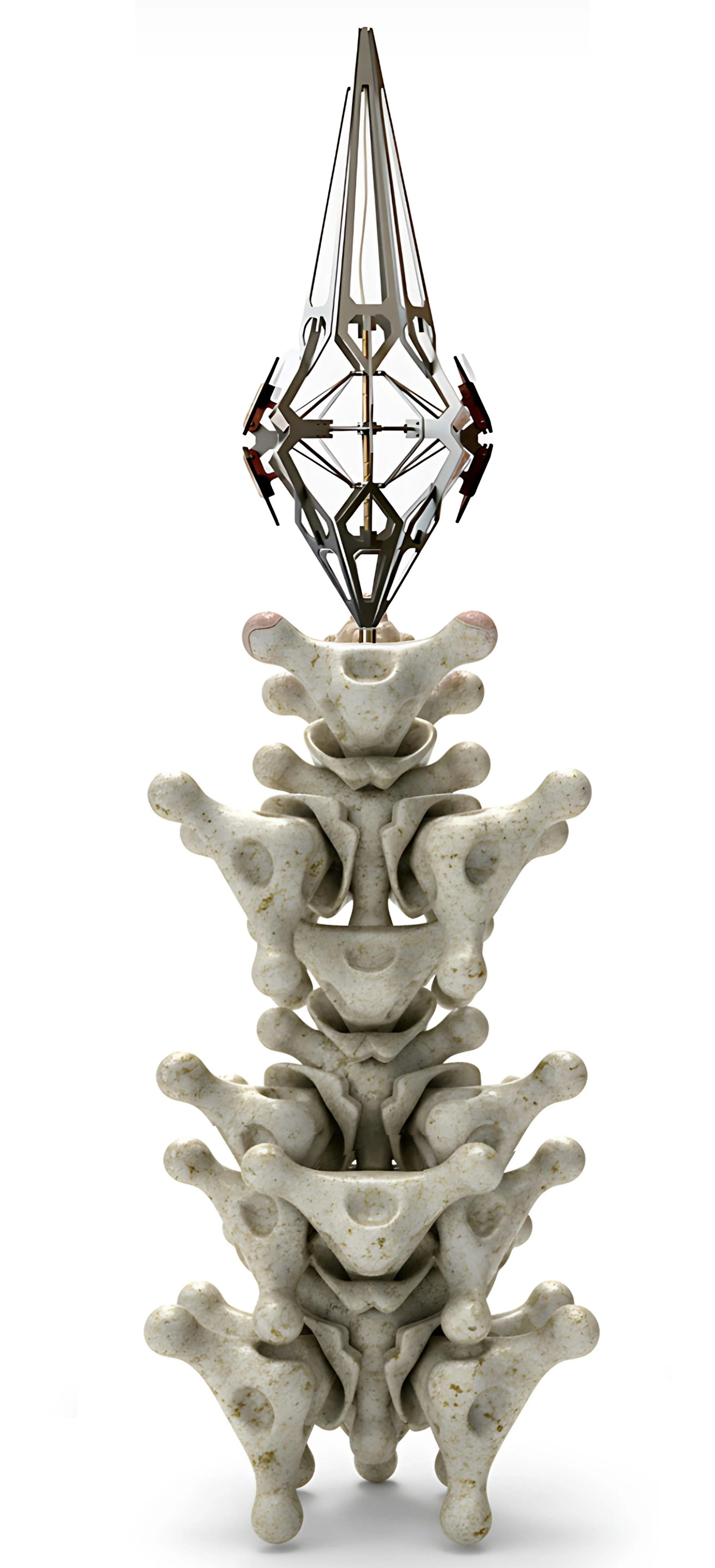
This preoccupation is manifested by Material (2023), a work made of the residue from over one thousand doses of traditional Chinese medicine that the artist himself ingested. On a sculptural level, compressed into a form that resembles geological layers or archaeological finds, what originally was part of a private treatment is now turned into a public object for contemplation.
Material can be seen as autobiographical, but its main importance is in the gesture of away from the self-help story and towards the wider interpretative framework. The experience of illness is always mediated by the systems of diagnosis, records, prescriptions, and the various forms of expertise. It is just one factor in the entry of the body into a network of translation. It also points to a paradox: making medical residue into a well-crafted art object may probably alienate the spectators from the discomfort that gave rise to it, but at the same time, this indeterminacy is what gives the piece its critical power. Instead of directly depicting pain, Material is concerned with the way in which pain becomes visible.
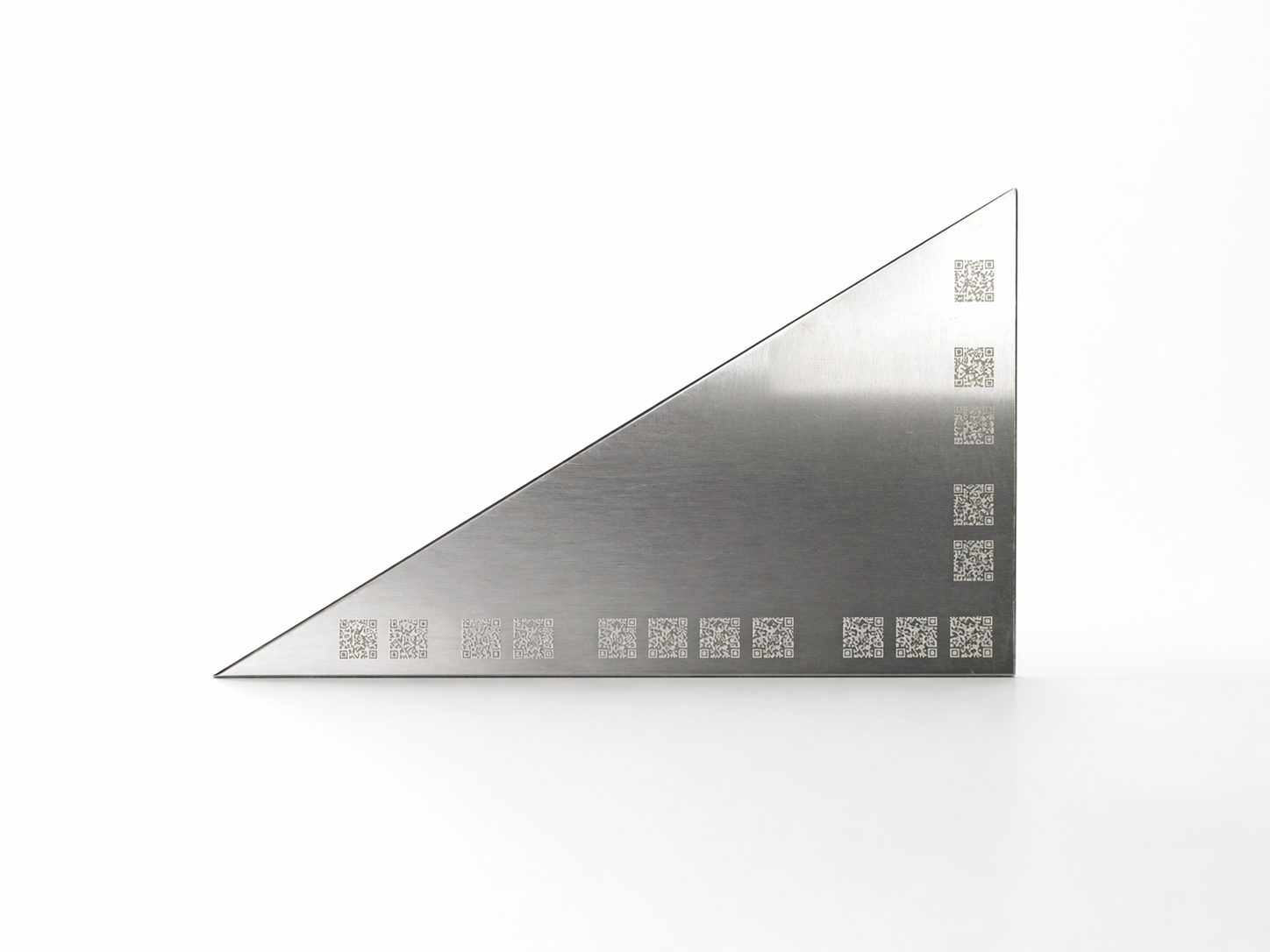
Making art out of translation and legibility, the questions become more apparent in QR Instruments. Here, the old measuring tools are not only taken away from us their scales we have been used to, but also replaced with QR codes. The ruler, though its use is no longer related only to human perception, is still visible as a measuring tool. The act of measuring still happens but understanding increasingly relies on technological intervention.
The artwork is brought at a time when machine-readable systems are becoming a part of people’s everyday lives. Algorithms, biometric technologies, behavioural tracking, automated decision-making are some processes that already go beyond human perception (Chun, 2011). For this reason, Liu’s altered rulers appear as a kind of portrait of the present rather than speculative objects. They also do not depict technology as a separate enemy but show how it has been attached to the daily lives of people. Through the encounter with the object, the spectators are reminded of their own resembling object but suddenly realizing that it is not entirely theirs anymore.
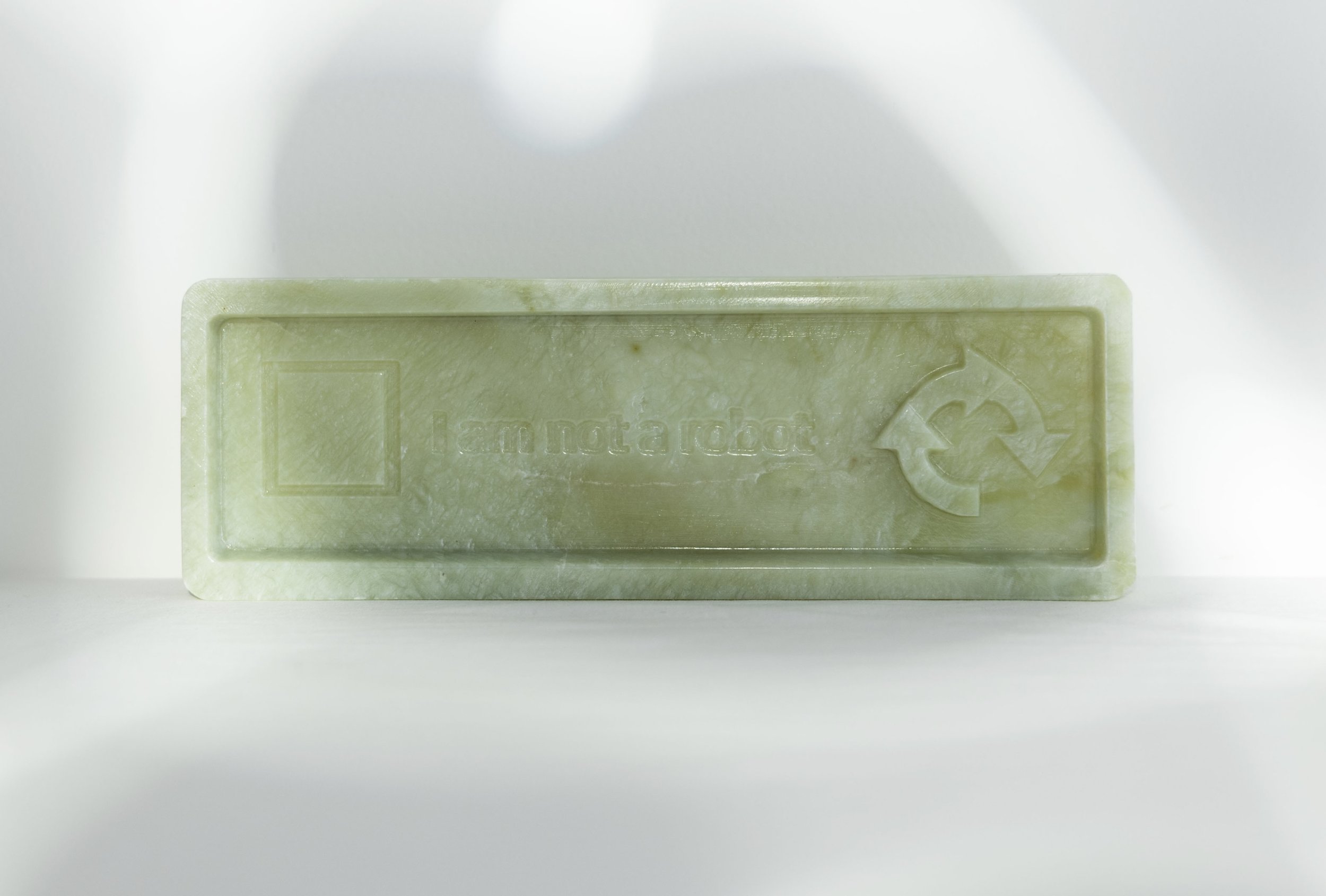
The change is even greater in Jade UI, which is perhaps the most powerful set of works in White Fantasy. By fusing the digital interface language and the cultural connotation of jade, the series produces objects that are on one hand between a relic and software and on the other between a museum item and an operating system. Jade has long been associated with value, social status, remembrance, and spiritual belief (Rawson, 1995). Digital interfaces nowadays can be seen as performing similar functions of organising attention, structuring interaction, and mediating access to information. When looking at them together, these two forms highlight the existence of a thread running from historical to present-day mediation.
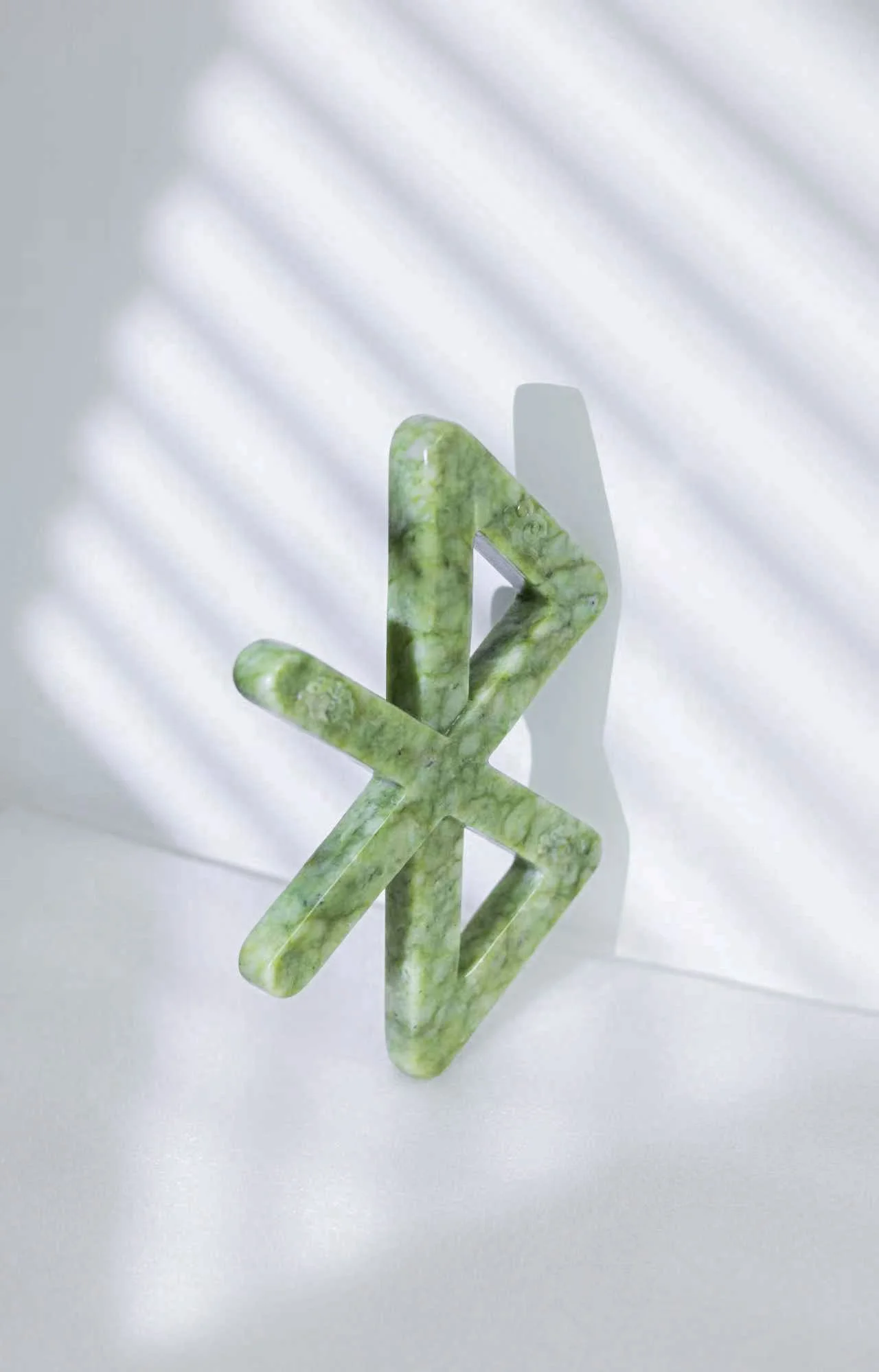
In this sense, the article draws on Alexander Galloway's theory that interfaces are not neutral surfaces but rather protocols that govern user interaction as well as information display (Galloway, 2012). Jade UI, therefore, can be seen as a work that explores the conventions which govern systems of communication.
Nevertheless, the biggest paradox in Liu’s oeuvre is that his pieces are at once laying bare and complicit in the very systems they critique. For example, in Jade UI, E-Ware and QR Instruments he physically represents digital signs: he carves jade with icons, he turns the concept of an online platform into porcelain, and through QR codes, he changes measuring tools. These moves, instead of setting up digital and physical as opposites, imply that interfaces have become a part of our cultural memory.
From a media archaeological perspective, Liu’s view of the interface is that it might be excavated one day or misinterpreted as a relic (Parikka, 2012). Pieces like Folder, Bluetooth, Point, or Keyboard are made for immediate use and rapid disappearance. By assigning them the heaviness of jade or the historical significance of porcelain, Liu not only gives them a physical presence but also prompts a reflection on the imprint of digital life, which is in line with Lev Manovich’s position that new media is part of a continuum in the history of the visual and cultural arts (Manovich, 2001).
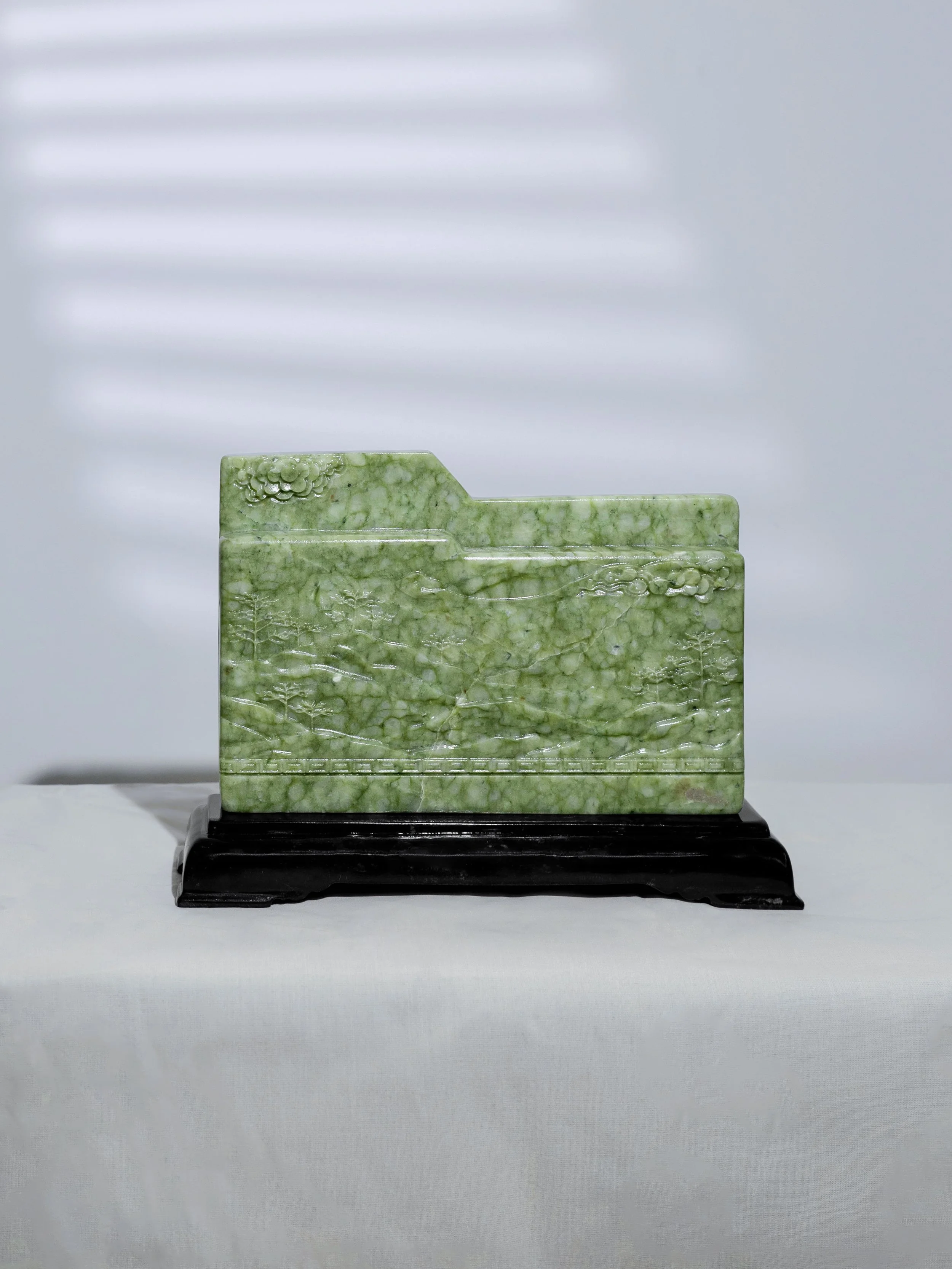
This move is loaded with an important double meaning. When ephemeral digital icons are transformed into permanent physical objects, they undergo a double process of being interrogated and conserved. So, is the physical incarnation of the interface merely revealing its underlying structures or is it this transformation that bestows the interface with new cultural legitimacy and authority? In Jade UI, the interface icon no longer remains a throwaway tool in the digital environment. It is an artifact, a symbol and almost a modern-day inscription.
This duality does not signify a shortcoming in the art pieces. On the contrary, it colors the audience’s perception of the current state of technological existence. Typically, technology interfaces cannot be easily identified as repressive. They appear useful, elegant, and intuitive, almost natural. Before we realize that they have their set of instructions and controls, we are already operating in them due to the comfort and ease they provide. The main merit of Liu’s work is in the visibility of the interface culture it creates while the impossibility of disengaging with it gets highlighted.
Therefore, it is in the liminal space of oscillating between exposure and engagement that Liu’s production of intellectual/creative energies/works gets materialised as a critical practice. White Fantasy is a kind of parable for the problem of inquiry: once the interface has become an integral component of quotidian habit, looking at it with a critical eye, a cognitive-rational sceptical one, is it even possible? Accordingly, its main question could be: through which look do we look at the very systems that are looking at us?
The title White Fantasy raises similar ambiguity.White stands for sheer, neutral, ordered logic, alongside laboratories, hospitals, modernist design, and technology. At the same time, the exhibition contends that transparency cannot be neutral. Each and every interface is just the front of a structure; each structure is, in fact, a particular way of organizing the world, usually one set of assumptions about it.What this White Fantasy threshed out are neither the dogmatic words about the technology, nor an obvious critique of the digital culture. At the same time, it is a presentation of an artist who, in the course of time, has been finding really interesting the invisible conditions that define the contemporary experience. Liu continues to deepen this question as a young artist. Some projects present mature artistic personalities more than others, and some issues have remained undecided, yet this lack of closure is the very essence of the practice. Instead of giving a reply, Liu reveals the usual things in an unusual way.
The most encouraging thing about White Fantasy is not what it decides but what it accomplishes. The show is a departure from digital aesthetic looking towards mediation itself. For now, it is a wonderful chance to recognize the systems by which we perceive the world.
Bibliography
Chun, Wendy Hui Kyong. Programmed Visions: Software and Memory. Cambridge, MA: MIT Press, 2011.
Galloway, Alexander R. The Interface Effect. Cambridge: Polity, 2012.
Manovich, Lev. The Language of New Media. Cambridge, MA: MIT Press, 2001.
Parikka, Jussi. What Is Media Archaeology? Cambridge: Polity, 2012.
Rawson, Jessica. Chinese Jade from the Neolithic to the Qing. London: British Museum Press, 1995.
Edited by Alicia Puig