To Hold What Might Otherwise Slip Away: Interview with Pepi Erdbories
by Christina Nafziger
“Being an artist means, not reckoning and counting, but ripening like the tree which does not force its sap and stands confident in the storms of spring without the fear that after them may come no summer. It does come. But it comes only to the patient […]”
It feels appropriate to introduce the work of artist Pepi Erdbories with a quote from the early 20th century poet Rainer Maria Rilke. Like Erdbories, Rilke was also fond of letters, as he used them to correspond and encourage an aspiring poet in the infamous collection Letters to a Young Poet (1929). Writing a handwritten letter requires care, slowness, and a certain level of thoughtfulness in each word. For Pepi Erdbories, there is intimacy in the ink. A handwritten letter is a “small act of presence.”
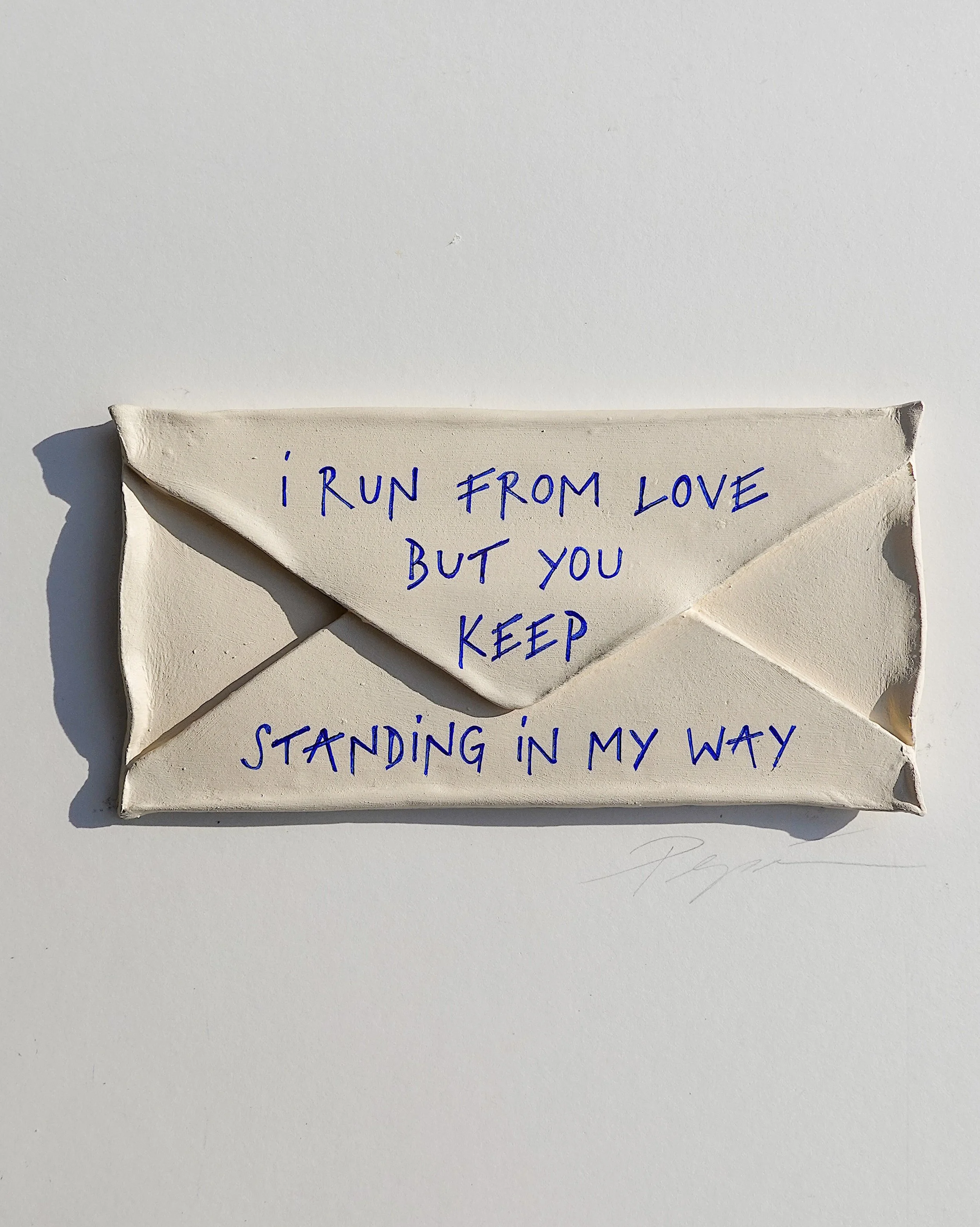
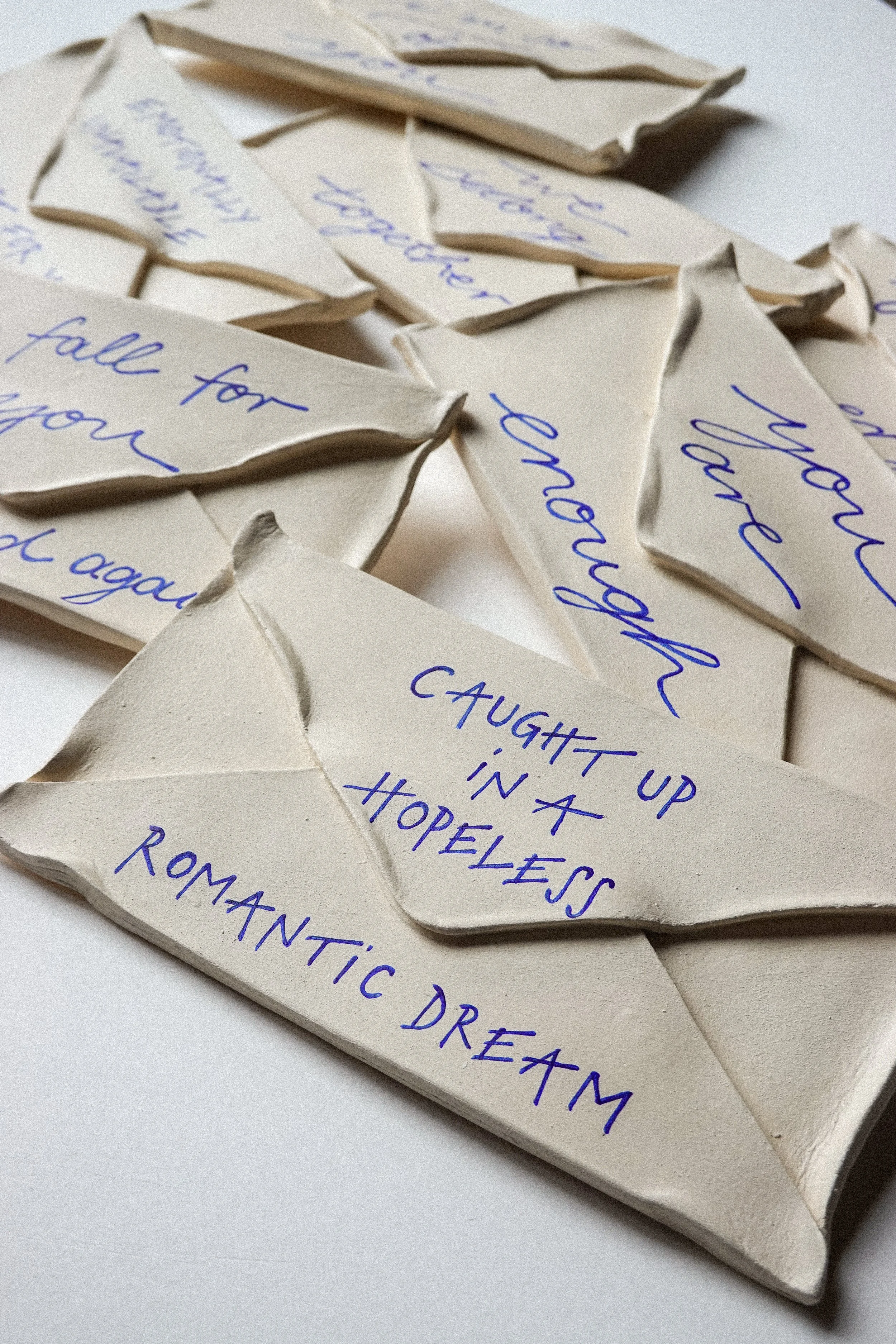
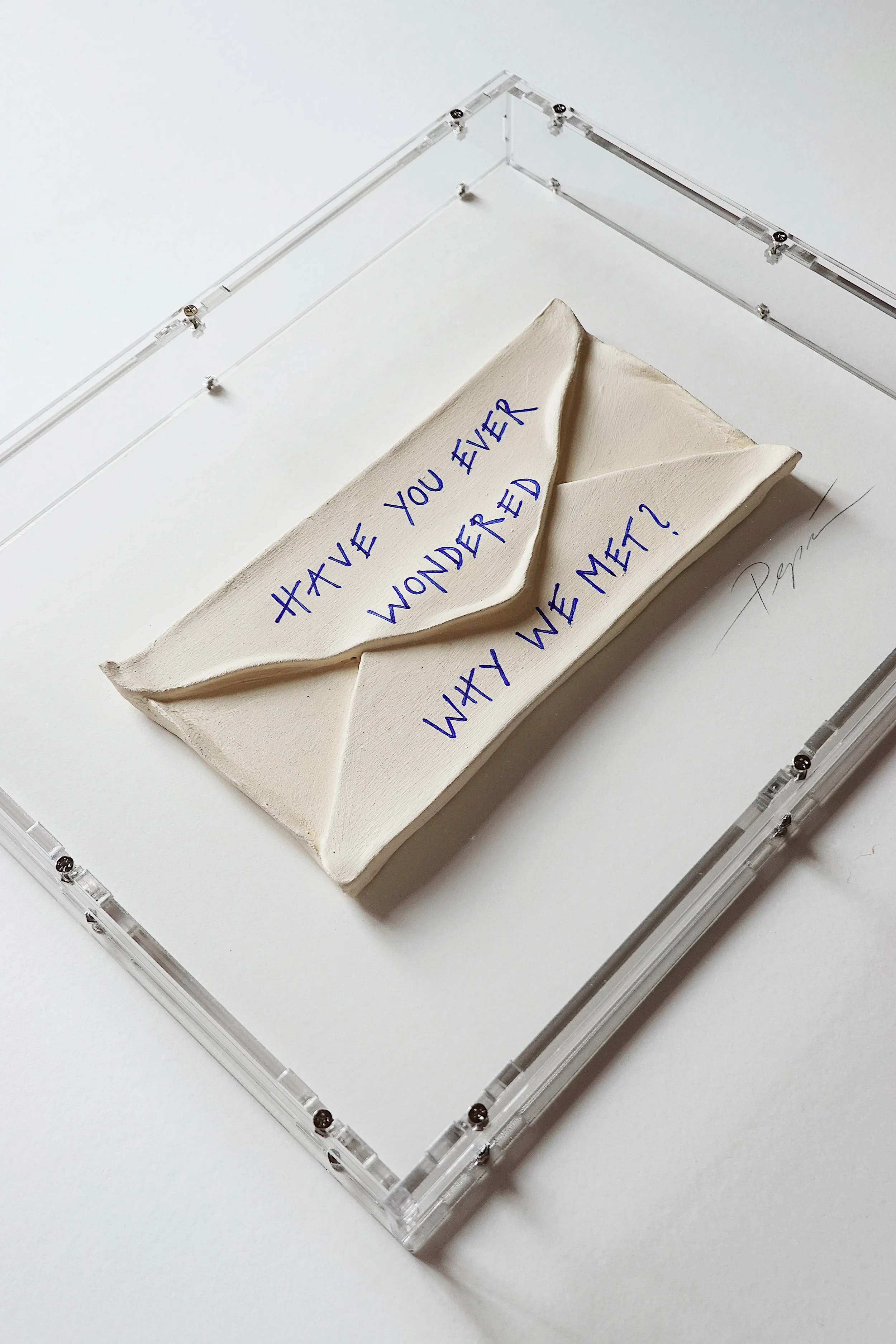
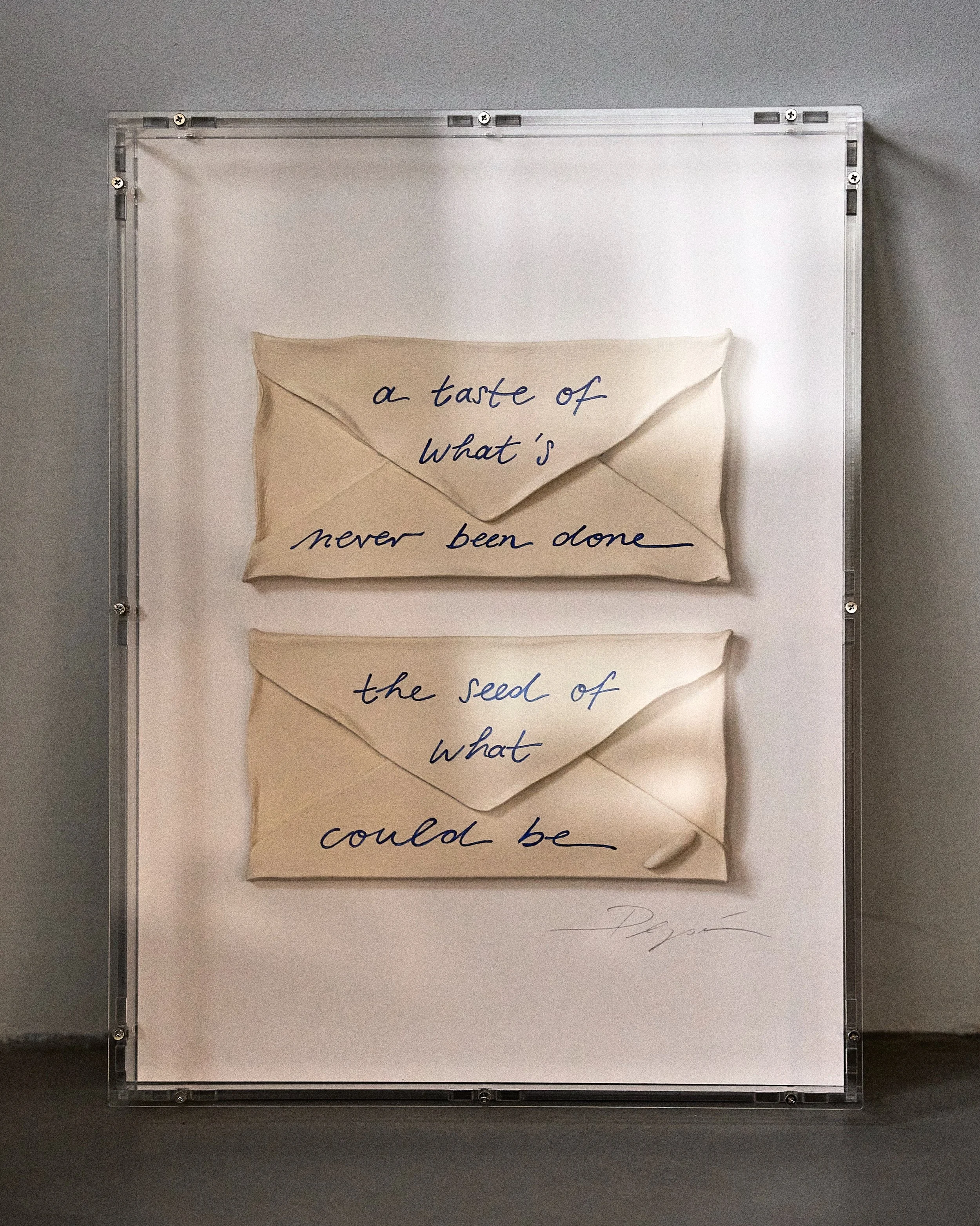
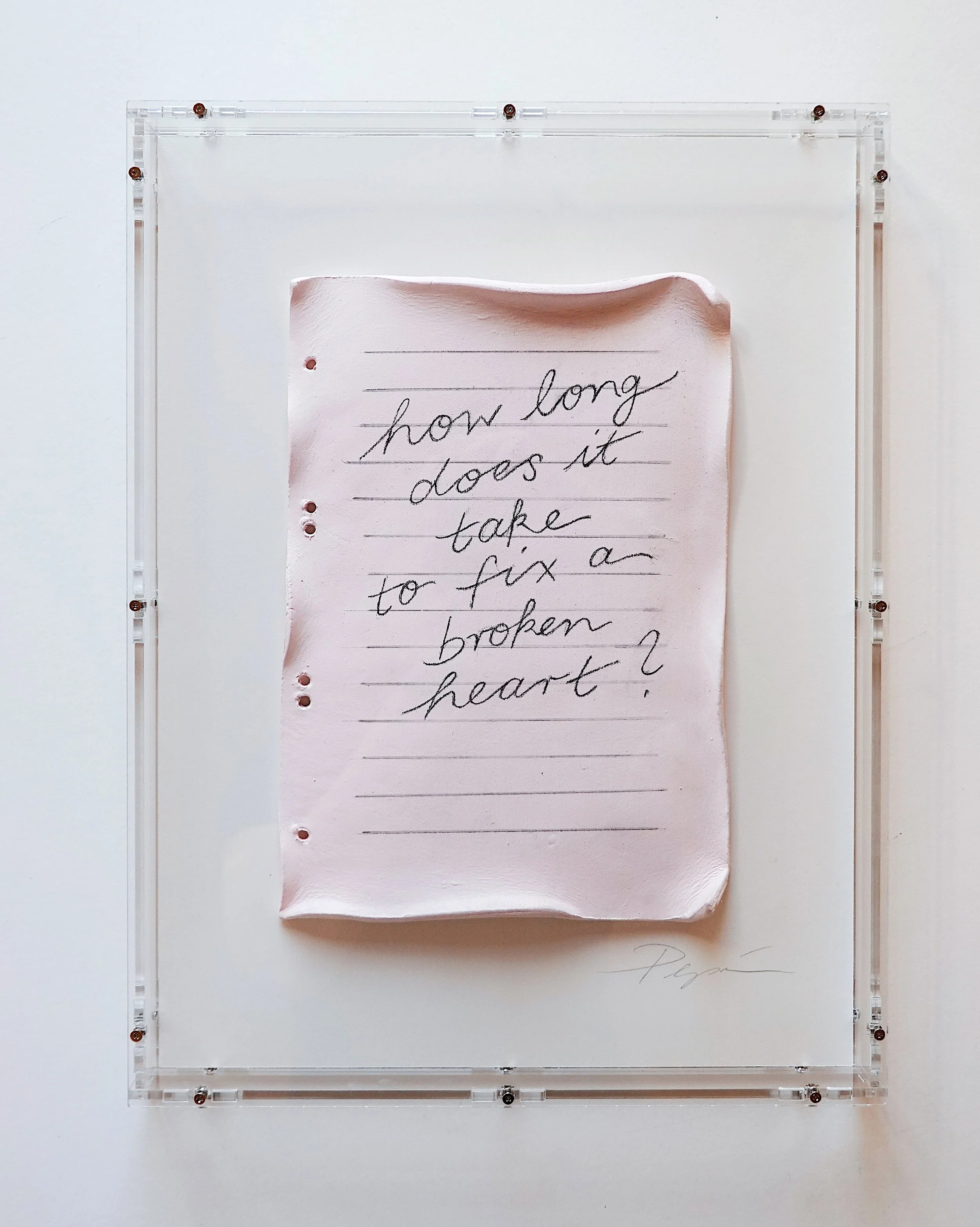
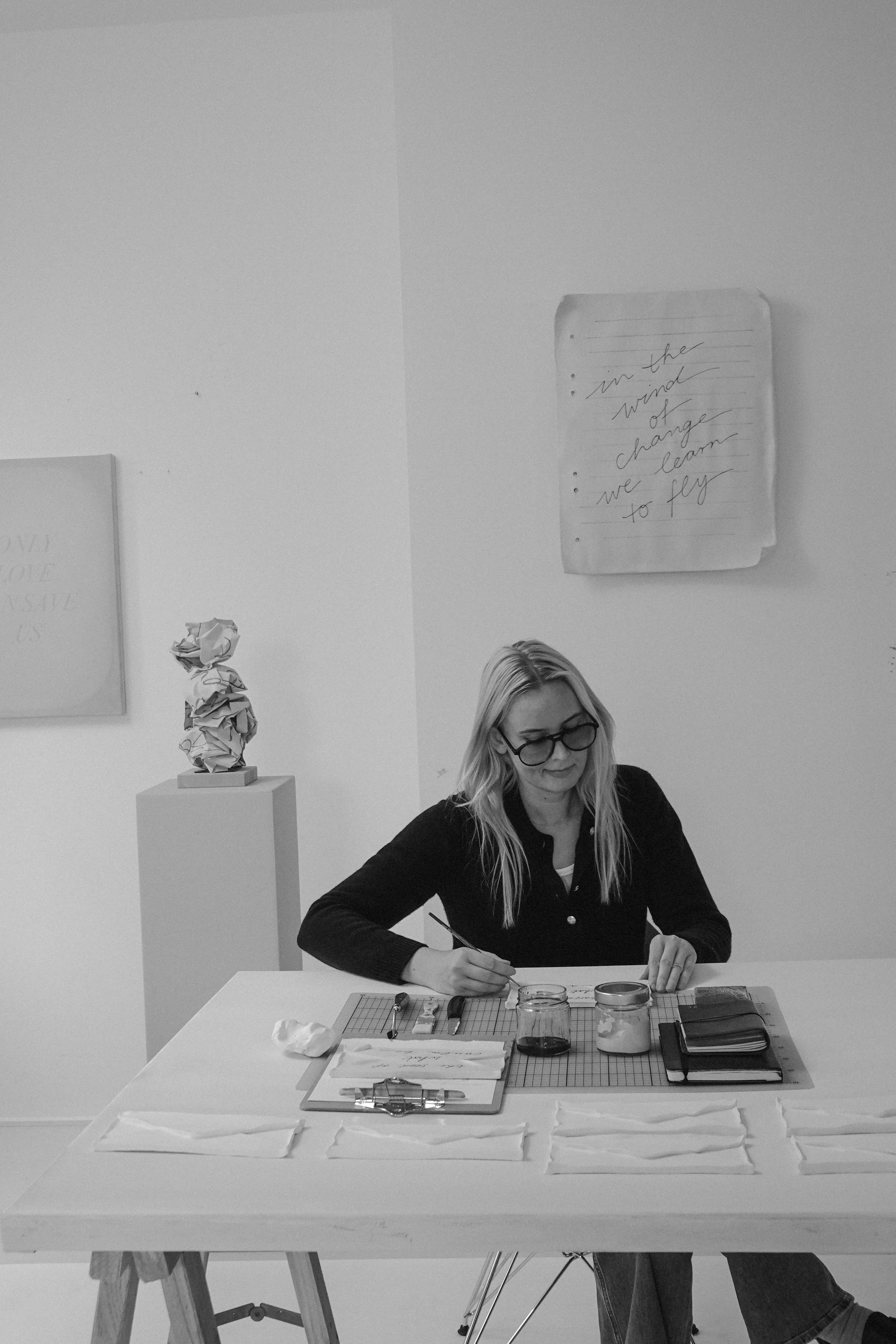
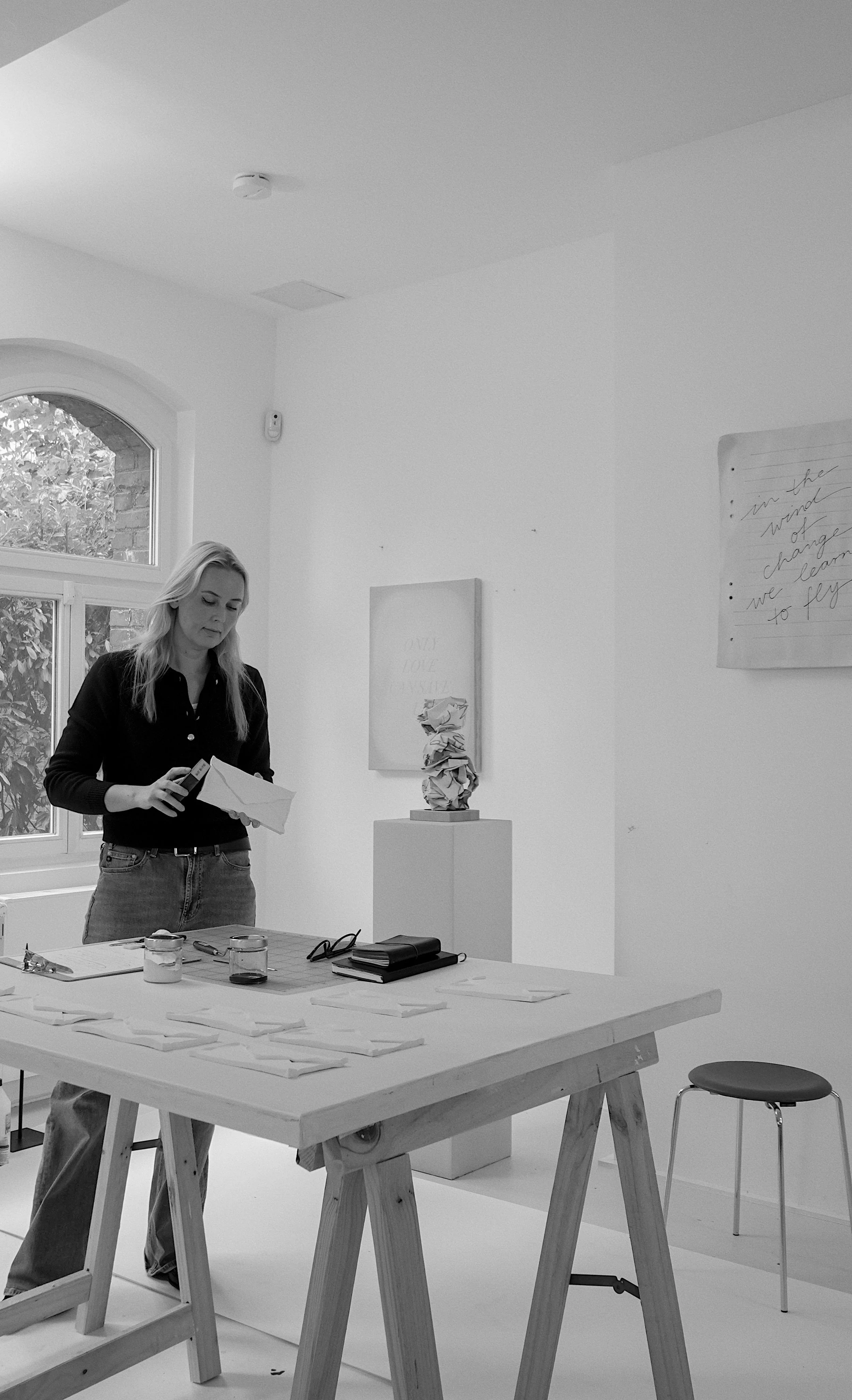
In the artist’s Love Letter series, Erdbories turns to clay and glaze instead of a paper and pen, making the whole process even slower, with an emphasis on the presence of the artist’s hand. On her ceramic Love Letter Sculptures, you’ll find words like “you are loved” or “how long does it take to fix a broken heart?” in what looks like handwritten-cursive. Unlike letters written on paper, these letters don’t open: they are sealed by clay, making them objects of intimate mystery. It’s as if we’ve found a note from a stranger, and we are forever waiting for it to reveal it’s secret. Gorgeous and striking, Erdbories Love Letters are objects of infinite possibly.
Learn more about the artist’s inspirations, her lean towards the analog, and her previous life as a commercial illustrator in this exclusive interview.
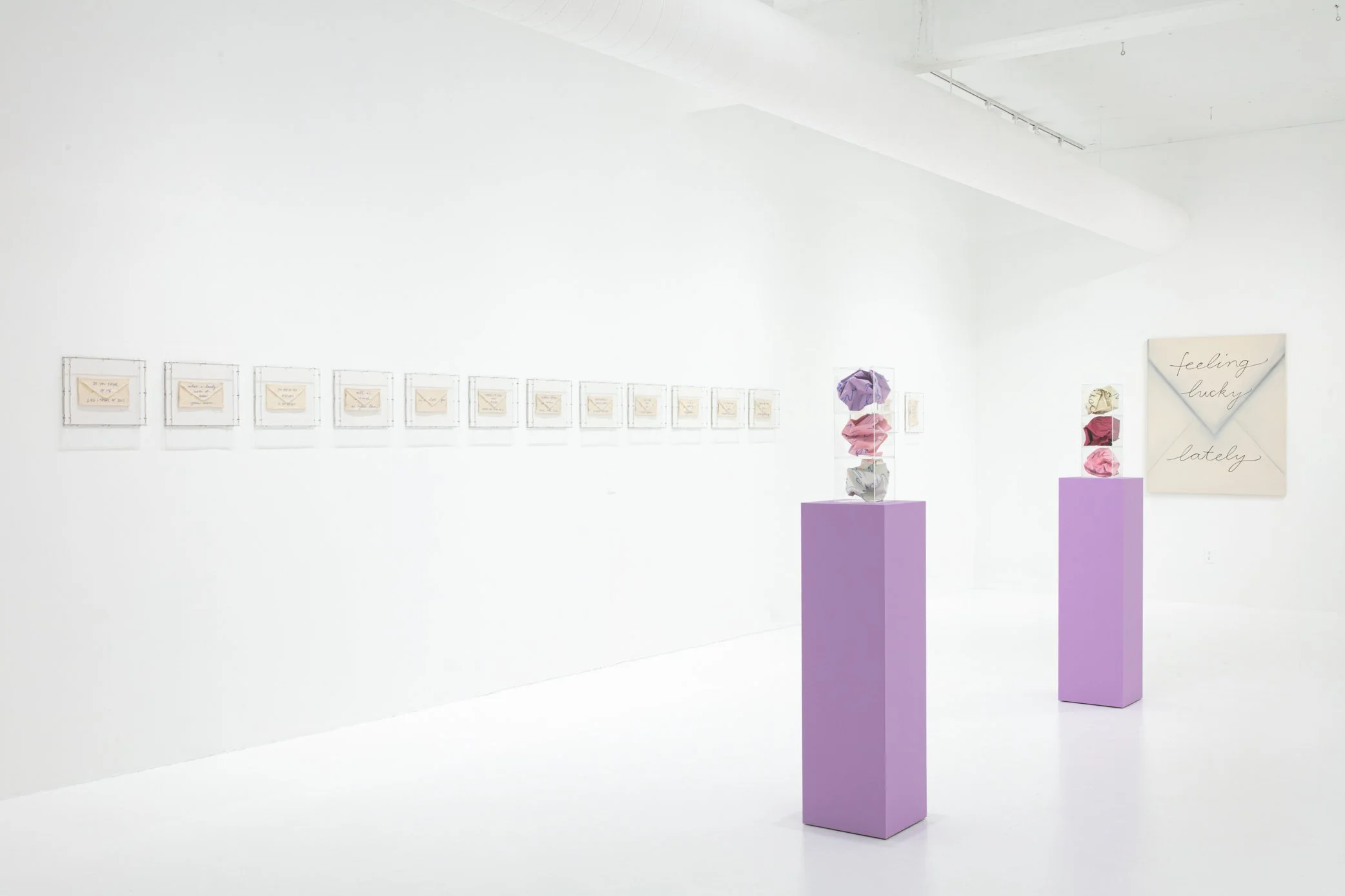
Exhibition at Square One Gallery by @suzygormanphoto.
Christina Nafziger: When did you begin experimenting with ceramics? Can you tell us about your process working with clay?
PepiErdbories:I began working with ceramics in early 2024, when I started creating my Love Letter Sculptures. The idea itself had been with me much longer though—the first Love Letter series was made from paper, and at some point I wanted to rethink that and create something that didn't exist in that form yet. Here I also followed my inner creative voice, and that led me to clay. From there it became a process of exploration—understanding how the material behaves, how it feels, and how I can make it my own.
CN: Your Love Letter series is just gorgeous. Are you a letter writer yourself? What is your personal relationship to letters and/or poetics in general? Are you a big reader of poetry?
PE: Thank you so much. I’m happy that it resonates with you. I believe deeply in the power of the written word, so yes, I definitely love writing—especially when it comes to capturing ideas, thoughts, dreams... or to express my love through handwritten letters.
As for poetry—absolutely. Rilke and Rumi are some of my favorites. I find deep inspiration in lyric poetry, philosophical, and spiritual writings. And if you haven't read Rilke's "Letters to a Young Poet" I can highly recommend it.
CN: What draws you to depicting paper specifically in your work? In a digital world, do you feel like there is a slow return to more analog materials, such as paper and pen?
PE: Paper has a unique ability to catch fleeting thoughts and feelings, to hold what might otherwise slip away. At a time when fewer and fewer people reach for a pen, my work feels like a quiet counter-movement: a way of preserving something precious.
We live in such a fast world, yet I think many people are longing for slowness—for something warmer, more tangible. There is a certain nostalgia in holding a handwritten letter, feeling the texture of paper, the intimacy of ink. My work tries to capture exactly that.
There is so much joy in the ritual itself: choosing a beautiful sheet of paper, picking up your favorite pen, and taking the time to put your thoughts into words. It's a small act of presence. It brings clarity. It reminds us what truly matters.
CN:What compelled you to make the move from working as an illustrator for various clients to working as an independent artist? What was it like transitioning from freelance work to focusing primarily on your independent artistic practice?
PE: Working as an illustrator was a great way to start my creative career, but I always knew it wasn't my final destination. I had a strong urge to develop my own visual language and follow my creative visions.
The projects I worked on gave me confidence in my artistic abilities, so the transition felt very natural. It wasn't a sudden decision—it was something I had been moving toward for a long time. I guess I simply followed an inner calling. I wanted to create work that came from within me, experiment with different materials and styles, and discover where that process would lead. My goal has been to create something authentic that could stand on its own and resonate with the world around it.
CN:Are there any lessons that you’ve carried with you from one practice (commercial illustration work) to the other (personal artistic practice)?
PE: I think the biggest lesson was learning to handle criticism and see constructive feedback as something very valuable. Working commercially taught me this directly: when a draft doesn't meet a client's vision, it pushes you to keep going, to refine, to find a better way. That openness has stayed with me; I’ve learned to see critique as part of the process, not as something separate from it.
CN: What’s a typical day like for you in the studio? What keeps you motivated during studio time?
PE: When it comes to creativity, there is no routine for me—or maybe my routine is simply that I never stop creating. Some days that means hours of making, other days it means sitting quietly, staring into space, letting thoughts settle. Those still days are just as important. Ideas need time to brew on the inside before they can explode on the outside.
Of course, there's also the other side of studio life—emails, coordinating with galleries, shipping and logistics. But whenever a good idea strikes, that always takes priority. No matter the time. And those are the moments that keep me motivated—when you just begin, without thinking, and something comes through you. Also the exchange with collectors and gallerists, everyone who is part of this journey and walks alongside me. Gratitude keeps me going, and the dreams and visions that are still waiting to be realized.
CN: If your art practice had siblings, whose work would you consider related to yours?
PE: What a great question! There are so many artists I deeply admire. Ed Ruscha and Cy Twombly immediately come to mind. Their use of text has always fascinated me, and I feel a certain kinship with the way they explore language as a visual and emotional medium. I would never compare my work to theirs, but they have always been a great source of inspiration.
CN: Do you have anything coming up you’d like to share with us?
PE: Yes! I'm currently working on a new series called "Abstract Poems"—exploring what happens when text dissolves into pure abstraction. Alongside that, I'm also developing larger sculptures, and I'm very excited about where that's taking me. There are some exciting projects and exhibitions in the pipeline too, but I can't say too much just yet. I’m excited for what‘s coming.