

Working Artist Takes on a Whole New Meaning Inside "Citizen Artist" at the Delaware Art Museum
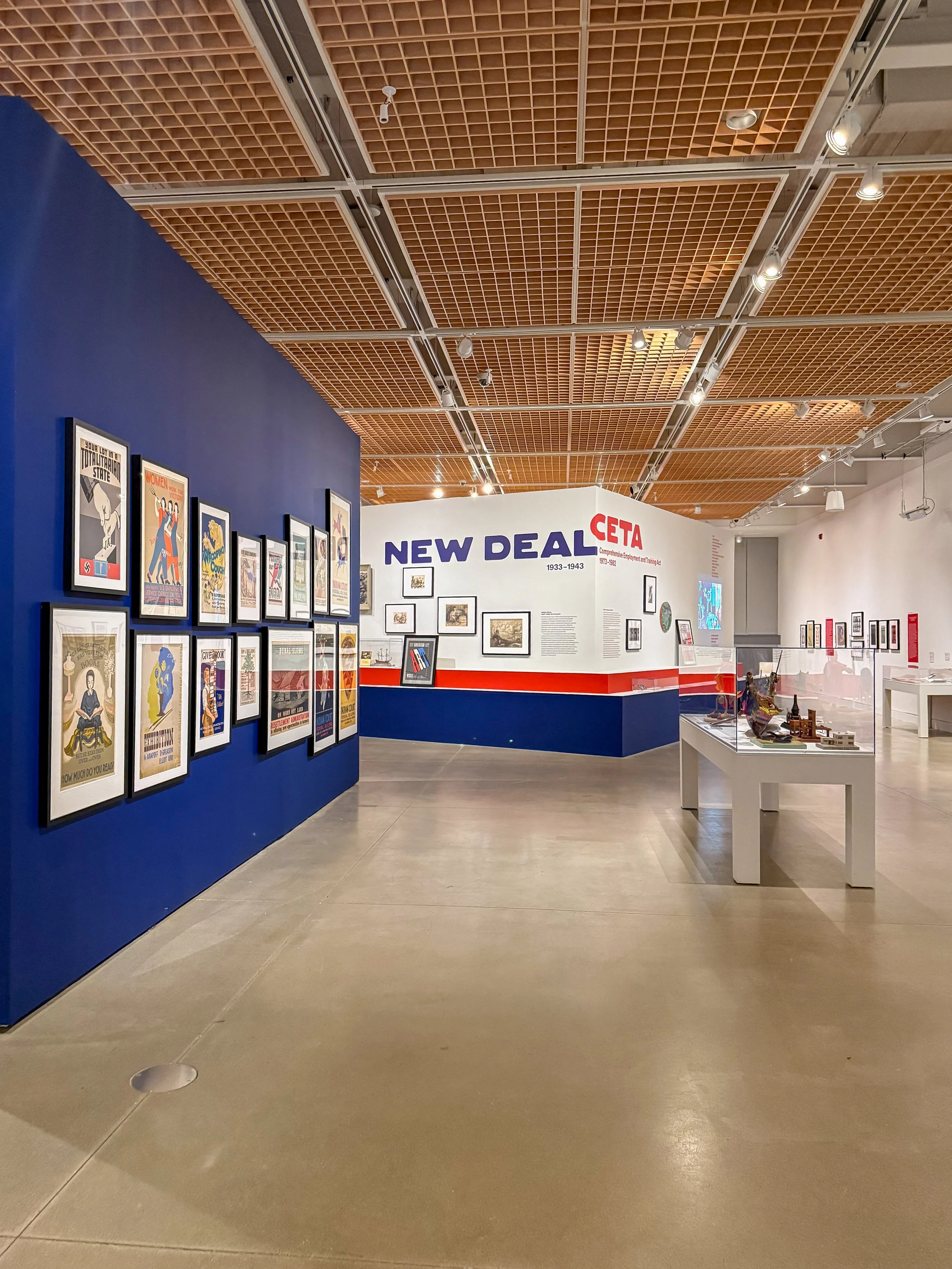
Citizen Artist exhibit at The Delaware Art Museum
By Ekaterina Popova
What happens when the government supports the creative economy? I took a trip to the Delaware Art Museum to learn more about this part of our history.
Walking into the Citizen Artist exhibit, I was surrounded by paintings, prints, photography, and vintage advertising. Seeing how federal funds propelled the arts forward in the past made me stop and wonder. Why can't this type of funding be a normal part of our experience as creators today?
On view at the Delaware Art Museum through July 19, 2026, Citizen Artist tells that story through two federal programs launched four decades apart. One was built specifically for artists. The other wasn't, and artists stepped in and rewrote it anyway.
The New Deal Set the Precedent
Before there was a government program, there was a union. Professional artists were hit especially hard by the 1929 crash, not just because the market for original fine art dried up, but because publishers and advertisers stopped commissioning illustration and design work too.
In 1933, out-of-work artists in New York formed the Unemployed Artist Group. Hundreds of creators packed into union meetings that became social hubs and professional lifelines as much as organizing spaces. By December of that year, the Artists Union brought a hiring proposal directly to the federal government. The Public Works of Art Project was established that same month. Two sketches by artist Moses Soyer in the show capture the energy of those union meetings firsthand.
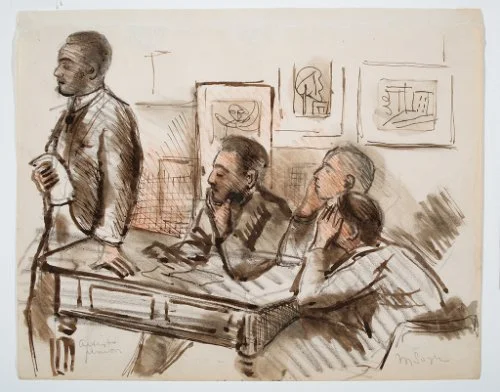
Moses Soyer, A Meeting of the Artists Union, c. 1930. Conte crayon,
This is the origin point of everything that followed. Programs like the Works Progress Administration, the Farm Security Administration, and the Treasury Section on Fine Arts all put artists to work during the Depression. The WPA alone employed more than 8.5 million Americans between 1935 and 1943.
A separate agency, the Farm Security Administration, hired photographers whose names now define the era: Dorothea Lange, Walker Evans, Gordon Parks, and Ben Shahn. Their images of Depression-era life did more than document a moment, they shaped how the public understood it, which helped build support for the New Deal itself. Lange's Migrant Mother, Nipomo, CA, 1936, on loan from the Museum of Modern Art, is one of the images on view.
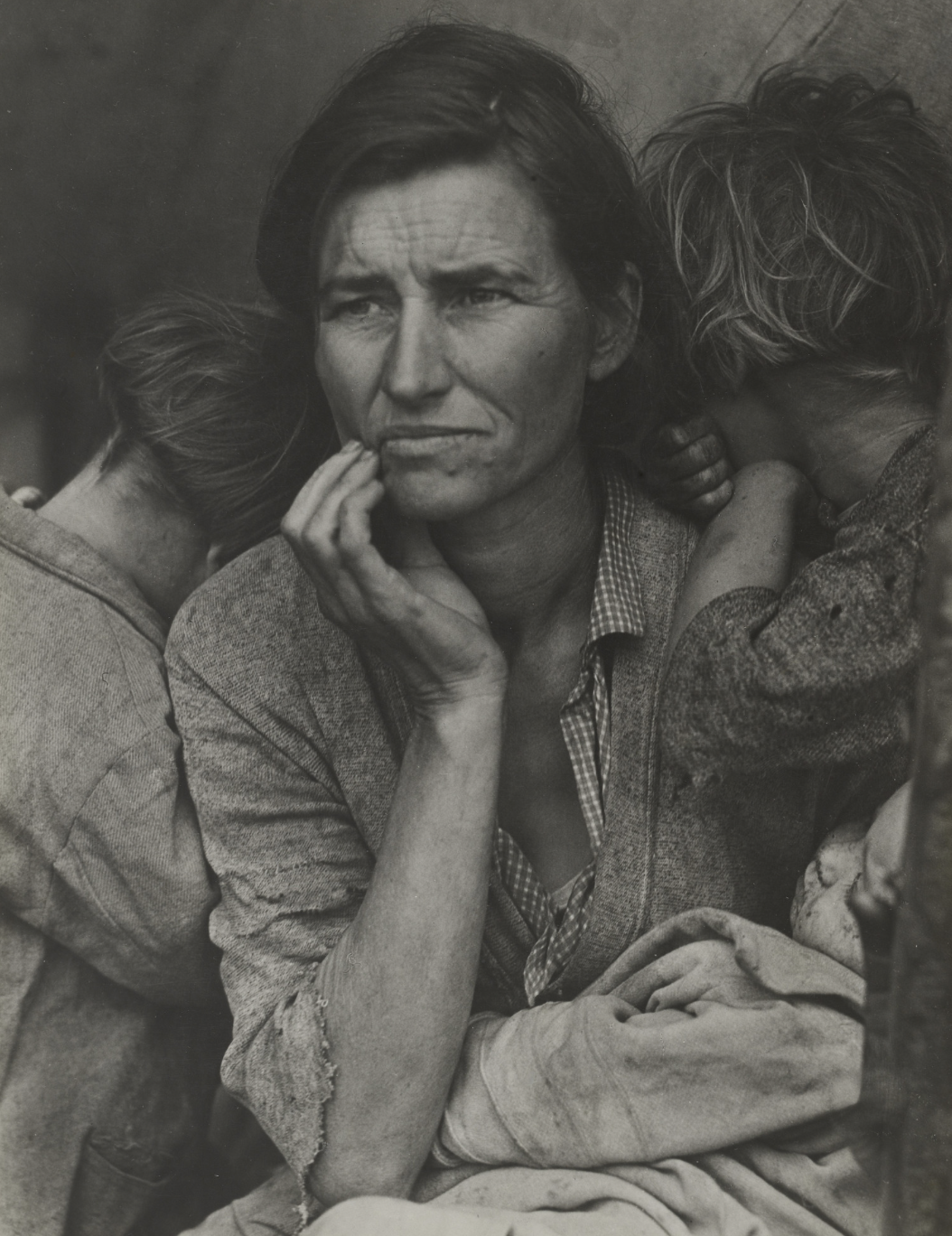
Migrant Mother, Nipomo, California, March 1936 (printed 1949). Gelatin silver print. Gift of the artist. Courtesy of The Museum of Modern Art (MoMA).
The exhibition traces this history along a blue wall, opening with fifteen framed WPA silkscreen posters. You'll spot everything from a Pennsylvania State Forests advertisement to a "Protect Our Birds" call from the Pennsylvania Game Commission.
One of the most grounding accounts in the show comes from Delaware painter Edward Loper Sr., whose 1937 oil After a Shower hangs in this section. Loper joined the WPA Art Project because his wife was looking for relief work and mentioned her husband could draw. He spent his time rendering drawings of decorative art objects, chairs, toy banks, furniture, for the Index of American Design, a federal archive of American folk art. A co-worker on the project, Walter Pyle, encouraged him to go study the great painters at the Philadelphia Museum of Art instead of settling for illustration work. Loper took that to heart. He started taking the train to Philadelphia on weekends, self-taught, and it shaped the painter he became.
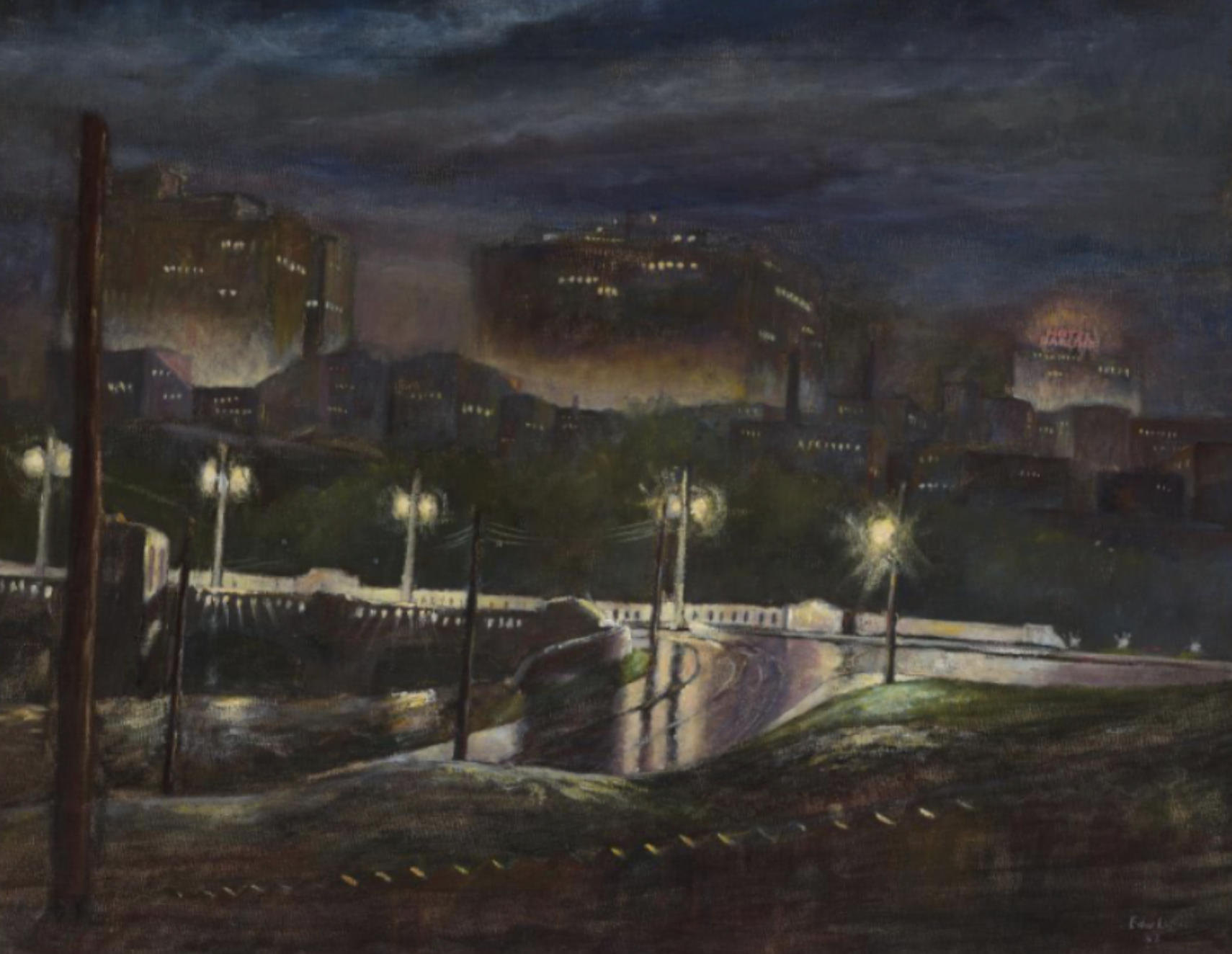
Edward Loper Sr., After a Shower, 1937. Oil on canvas. Louisa du Pont Copeland Memorial Fund, 1937. Courtesy of the Delaware Art Museum.
CETA Wasn't Written for Artists. Artists Rewrote It Anyway.
CETA, the Comprehensive Employment and Training Act, wasn't an arts bill. Nixon signed it into law in December 1973 to get unemployed Americans back to work during a brutal stretch of stagflation. Nothing in the legislation mentioned painters, sculptors, or dancers.
But administrators like John Kreidler, who joined the San Francisco Art Commission after working at the Department of Labor, saw an opening and built the first CETA artist program from it. Other cities followed fast.
Between 1974 and 1982, CETA employed close to 20,000 artists and arts support staff nationwide, more than any federal program since the WPA. Dance historian Colleen Hooper has tracked how CETA reclassified dance itself, moving it from something performed in theaters to something delivered as a public service in senior centers, hospitals, prisons, and parks.
Philadelphia is one of the best-documented CETA case studies, and it shows what the funding actually built. Joan Myers Brown used CETA support to pay Philadanco's dancers for the first time, $150 a week. Playwright August Wilson, actor Bill Irwin, and writer and actor Peter Coyote were all shaped early in their careers by CETA jobs. Allan Edmunds used CETA funding to send Brandywine Workshop artists into schools and rec centers across the city, an arrangement that became part of Brandywine's identity as an organization.
Delaware's Chapter
The exhibition's second half, marked in red, tells this same story through Delaware. Photographers Norma Diskau Calabro, Tony Calabro, and Carson Zullinger documented the state through CETA-funded work. Photographer Morris Brown II joined Delaware's Metroscope project and covered the bicentennial from the top of the state to the bottom. His 1976 gelatin silver print Riverside Rose is on view.
Artist Flash Rosenberg, whose 1976 video Unidentified Working Women screens at the exhibition's entrance, has said the job did more than pay her rent, though it did that too. She's described it as proof that she could build a life as an artist, the kind of confidence she says can't be legislated after the fact.
That funding also helped shape early programming at the Delaware Art Museum and laid groundwork for what became The Delaware Contemporary.
Curators Margaret Winslow and Dorothy Fisher built the show around that throughline. It spans more than 200 works by over 110 artists across painting, printmaking, photography, puppetry, and archival material. One wall lists the 22 arts and arts-adjacent professions that qualified for CETA funding, everything from actor to offset printer to composer.
Winslow has said she wanted the exhibition to trace historic models of equity and access forward, into questions about what a thriving creative economy could look like today. Delaware Arts Alliance director Neil Kirschling has framed CETA as a genuinely different way of thinking about public investment in artists, one he hopes will inform Delaware's current CREATE Plan for the creative economy.
A Companion, Built the Same Way
Running alongside Citizen Artist is Citizen Photographer, a statewide open call that invited Delaware residents to document identity, place, and civic life ahead of the nation's 250th anniversary. Twenty-four photographers were selected through a juried process, and their work is on view inside the main exhibition. It's a small, current-day echo of what CETA proved decades ago. Give people a reason and a way in, and they will shape how their community's story gets told.
Why This History Feels Urgent Right Now
I keep coming back to my first question. Why can't this be part of our experience as creators today?
Here's where things stand. The National Endowment for the Arts, founded in 1965, has awarded more than $5.5 billion in grants over its history. Arts and cultural industries contributed $1.2 trillion to the U.S. economy in 2023, growing at roughly twice the rate of the broader economy. And yet the NEA's entire annual budget is a small fraction of that, around $207 million.
In May 2025, following the administration's FY2026 budget proposal to eliminate the agency, the NEA began terminating active grants to arts organizations nationwide. Congress pushed back, and by early this year had passed a bipartisan funding package holding the NEA steady at $207 million for FY2026, with full funding restored by spring. That fight isn't over though. The administration's proposed FY2027 budget goes further than past proposals, calling for a permanent wind-down of the agency rather than a temporary zeroing out. Whatever side of that debate you land on, the numbers make one thing clear. Federal arts funding has always been contested, and it has never been guaranteed.
That's exactly what makes Citizen Artist feel less like a history show and more like a mirror. CETA proved that support for artists doesn't have to come wrapped in a grant labeled for the arts. It can come from jobs programs, workforce development, local ingenuity, if the people running it are willing to see artists as workers worth investing in. Delaware did that once. The exhibition is a record of what happened when it did.
Citizen Artist closes July 19, 2026, at the Delaware Art Museum in Wilmington. If you're anywhere near Delaware before then, go see it.
Learn more about Citizen Photographer at delart.org/de250/citizen-photographer.
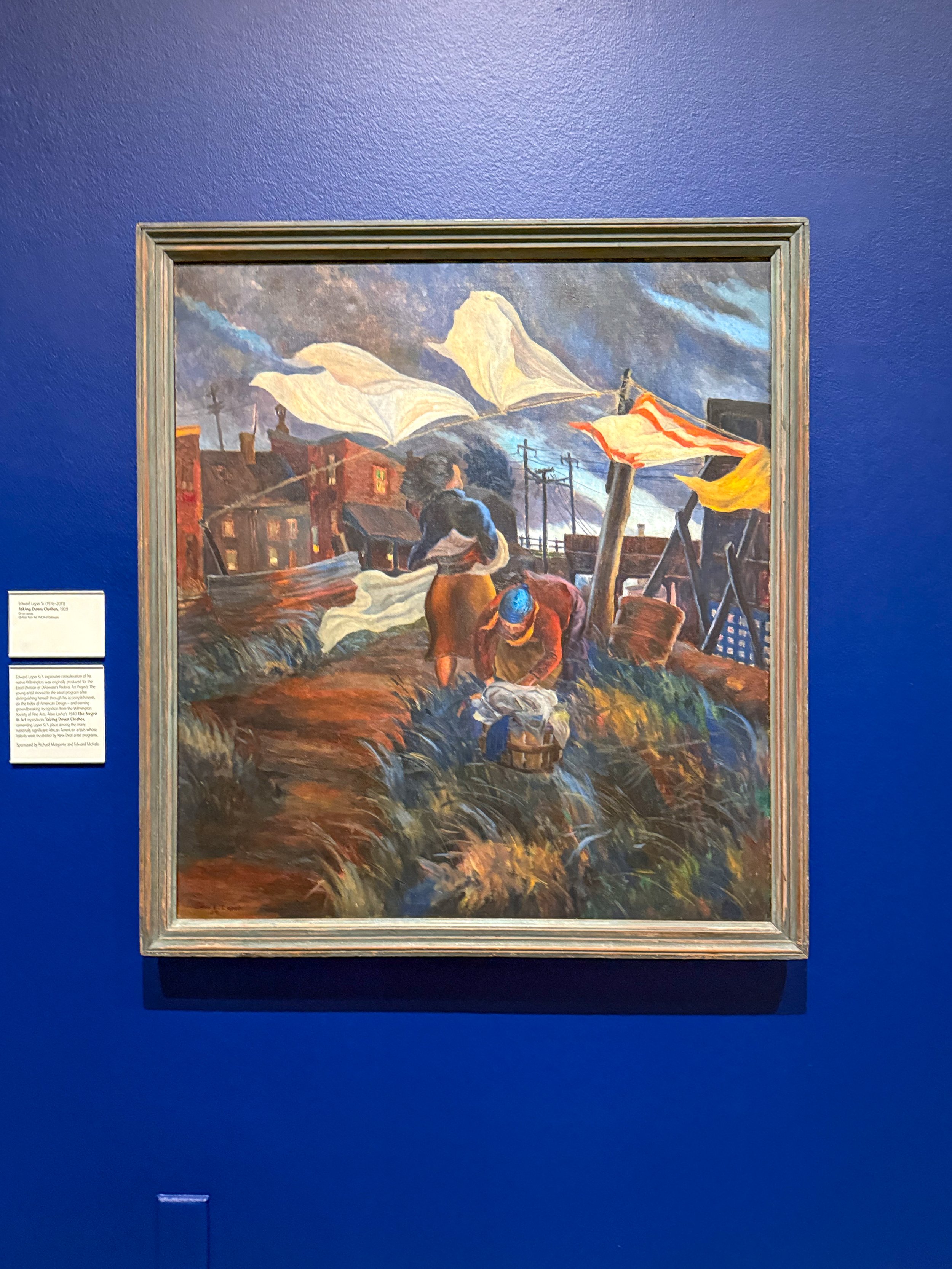
Edward Loper Sr., Taking Down Clothes, 1939. Oil on canvas. On loan from the YMCA of Delaware.
Sources & Further Reading
Delaware Art Museum archives: official press materials, exhibition notes, and curator commentary from Margaret Winslow and Dorothy Fisher.
Bloomberg Connects audio guide: object labels and historical context available through the museum's app.
Living New Deal, for WPA-era employment statistics and program history.
CETA Arts Legacy Project, for CETA-funded artist data and program history.
Colleen Hooper, "Ballerinas on the Dole," Dance Research Journal, December 2017.
Broad Street Review, Delaware Arts Alliance, Delaware Today, and The Philadelphia Inquirer ("Nixon-era CETA jobs program could offer federal relief for the arts," April 2021), for exhibition and CETA context.
Wikipedia, Woodmere Art Museum, the African American Registry, and Black Art Story, for Edward Loper Sr. biographical detail.
National Endowment for the Arts, NPR, National Assembly of State Arts Agencies, and Artnet News, for current NEA funding status.