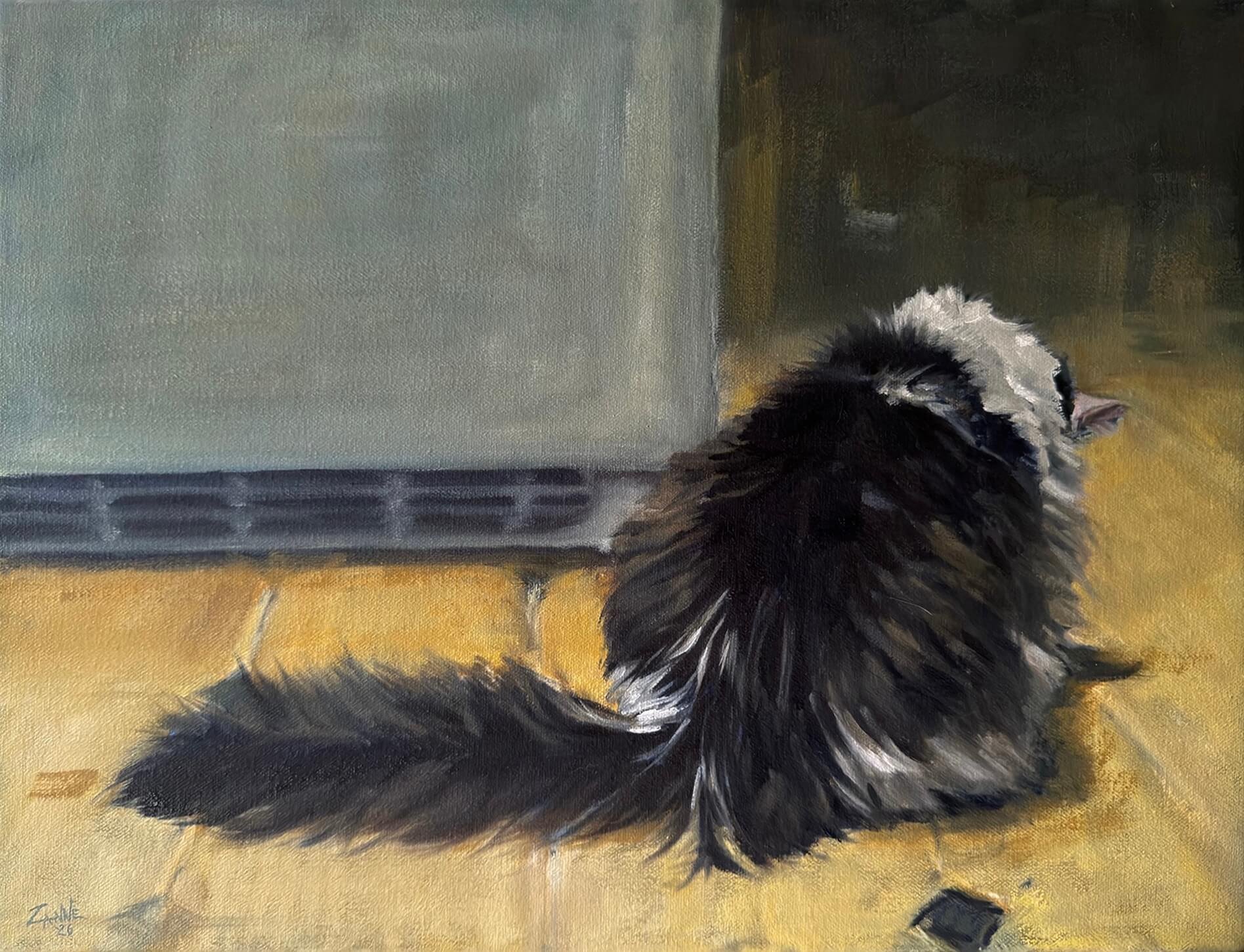
The Quiet Drama: Suzanne V Paddock on Trust, Loss, and Painting the Lives of Her Pets
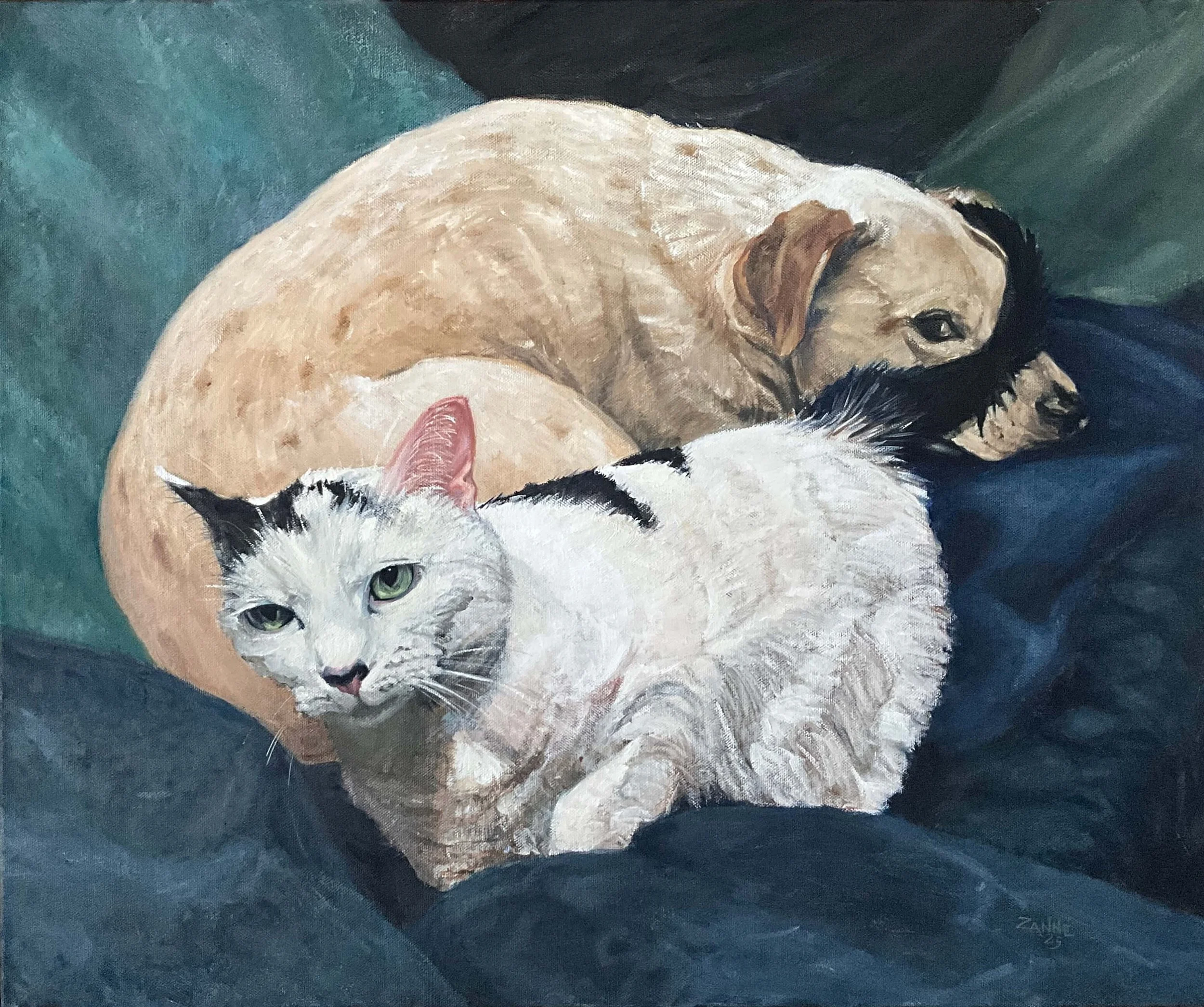
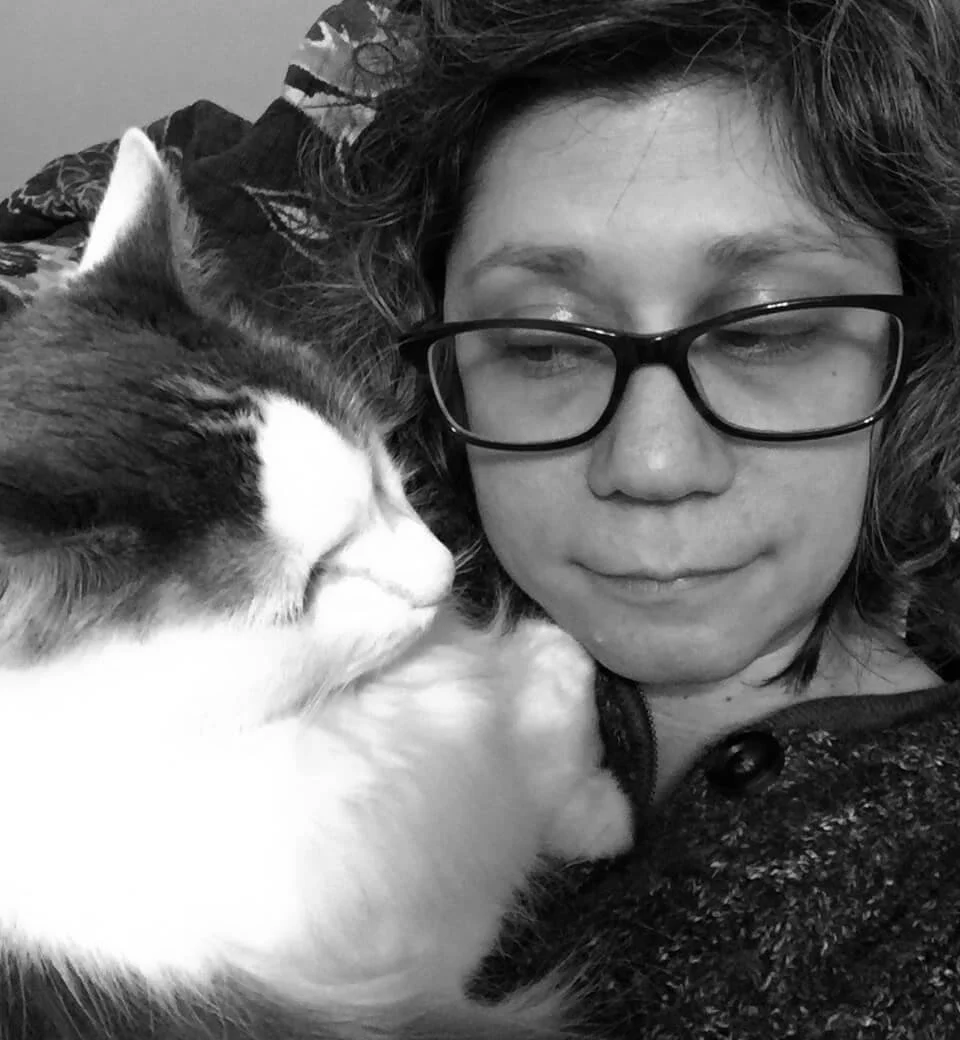
Suzanne V Paddock is a re-emerging Virginia-based oil painter exploring the day-to-day living of domestic animals. Known for conveying relatable narratives, Paddock's current work focuses on situational awareness among members of her own pet community. In 1993 she earned a Visual Arts degree from SUNY New Paltz in New York. Her work has received awards in juried exhibits including Best in Show in 2018 at Bower Center for the Arts in Bedford, VA. She has had a solo show at Riverviews Artspace in Lynchburg, VA and exhibits in many group shows in galleries throughout Virginia.
Artist Statement
I am a figurative oil painter currently obsessed with my pets' daily lives. It began in 2020, after I received a grant from the James River Arts & Cultural District Program for a solo show at the city of Lynchburg's Riverviews Art Space. Due to the pandemic that year, the exhibit closed after less than a week. Affected by the shutting down of art communities everywhere, I sought refuge at home. Isolated and surrounded by pets, it was a natural pivot toward a deeper investigation of animal art. Within the following year I inherited four cats, and my household pet population burst to nine cats and one dog. Managing peaceful relationships between so many personalities became a perfect catalyst for painting.
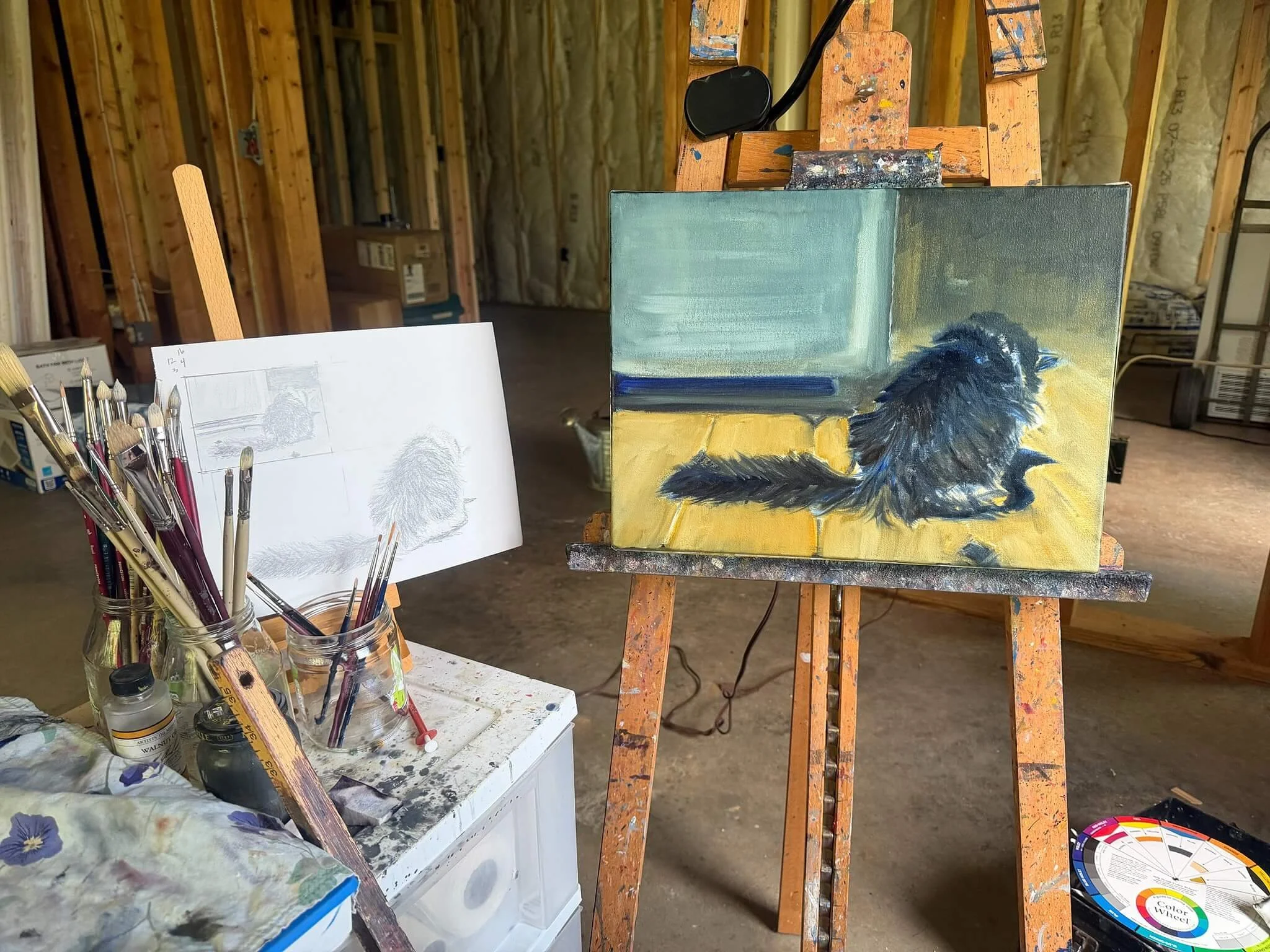
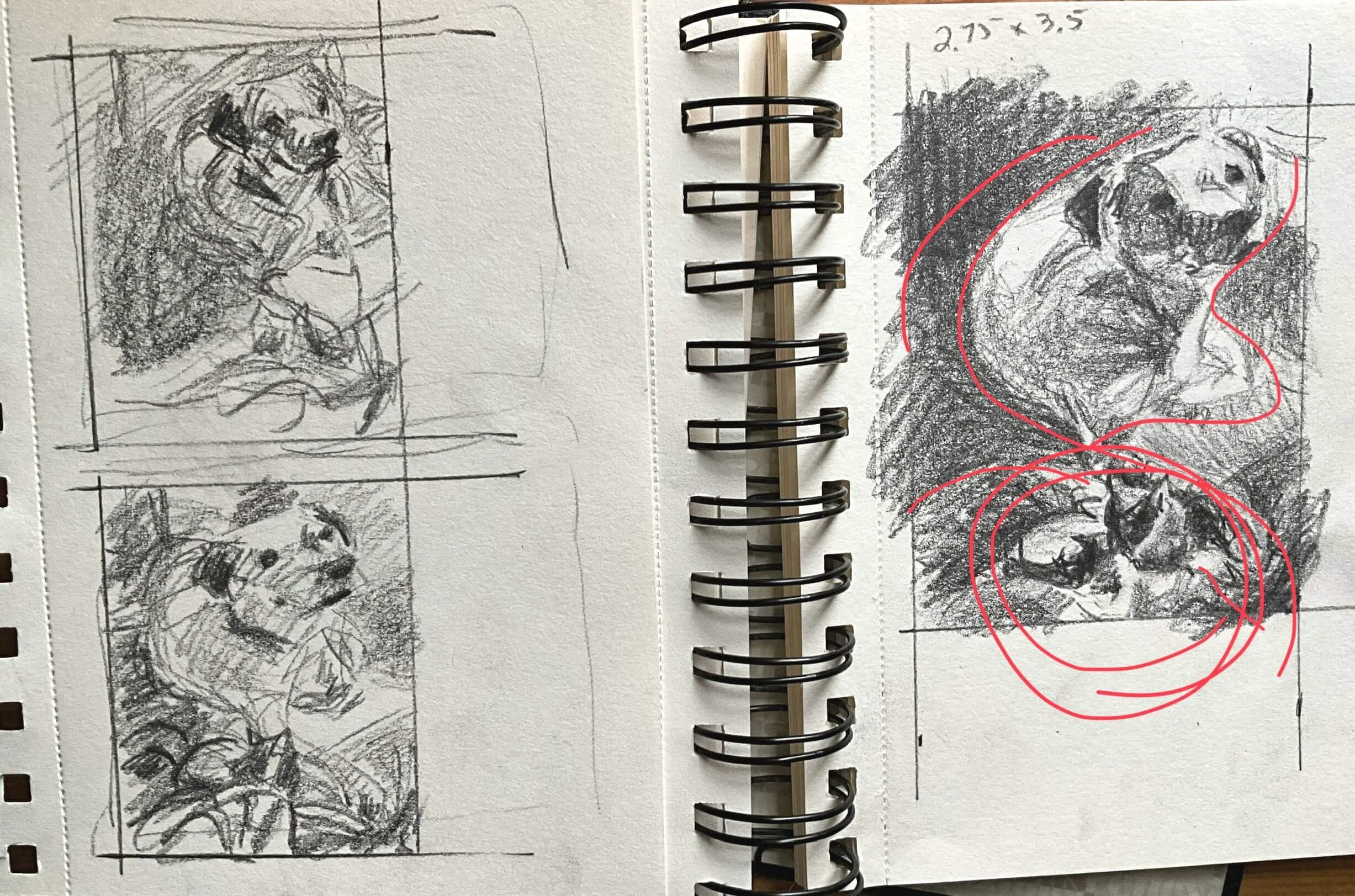
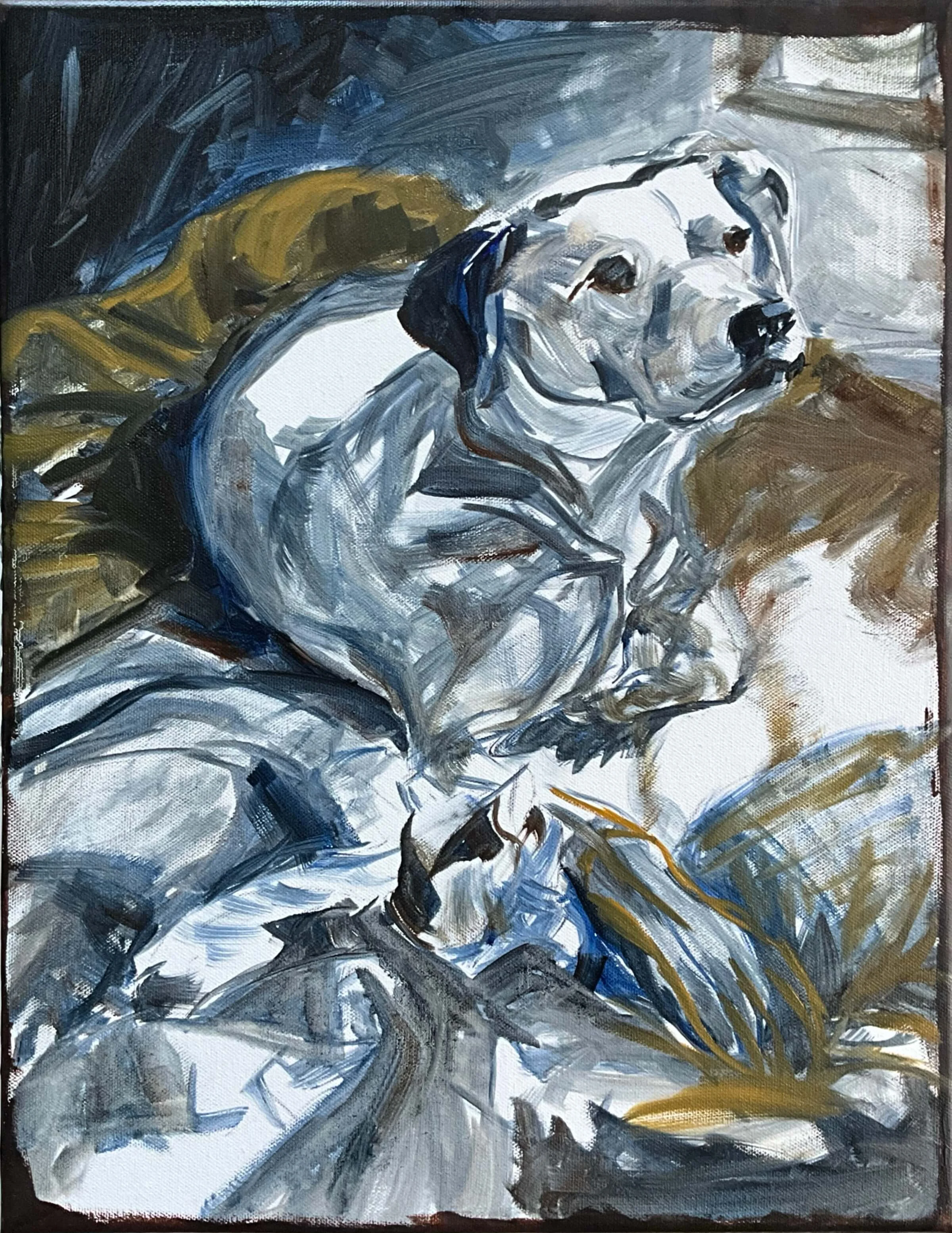
My pets are extremely honest in motivation. I am curious about their awareness of life and observe interactions to paint recognizable, everyday moments as my central theme. Influenced by an expressionistic approach, I usually start with a separate graphite sketch to think about and make studies of light and intimate compositions that will focus in on a specific situation. I paint from a limited primary palette to explore color mixing, shape, and texture. I have started to incorporate lessons in color temperature to gain more intention and control in my multi-layered application. I create on stretched canvases, birch wood cradle boards, and the occasional artboard.
suzannevpaddock.com
Your current body of work emerged from an unusually intimate period spent at home during the pandemic. How did that experience reshape your artistic focus?
The 2020 Covid pandemic forced me to rethink the purpose of my art. During the shutdown, I reconnected with a high school friend who was a frontline X-ray technologist. We talked about a commission, and a body of work inspired by her experiences. She shared the haunting effects of triaging patients despite her fear and exhaustion. Then she tested positive for Covid and died. Her death left me feeling helpless and disillusioned about my power as an artist. I took a break and went back to basic sketching to reconsider the reason I make art. I focused on the immediate world around me and found it in the love and trust from my pets. I realized trying to creatively respond to global or political issues was not my authentic self.
The most meaningful conversations with my friend were about trust, and listening deeply to her quiet, personal truths. I gifted a portrait to her family which brought a sense of comfort. That experience realigned why I create art. My work is still evolving, but it stays based in listening, intimacy, and finding meaning in the unobvious, quiet moments of life.
With nine cats and a dog in your household, observation seems central to your practice. What have your animals taught you about behavior and relationships?
My animals have taught me that behavior is the same for them as it is for me. They have a sense of humor, a sense of wonder, they feel jealousy, love, safety, fear, playfulness, and anger. They make decisions about trust and are brutally honest in their intentions. They also all have opinions and judgements about the pet-determined social hierarchy that affects their lives. In dealing with creating as peaceful an environment as possible, I had to learn to be a more peaceful person. This has helped me relate to people more effectively, to be honest. For my pets there is only a sense of now, and I also try to embrace that. There is only now and I want to appreciate it as much as I can.
Your paintings often capture seemingly ordinary moments. What makes a particular interaction worthy of becoming a painting?
I sense a mood or lighting, or sometimes it is just fun to imagine so many of them all together. It could be intimate or humorous, and I get a certain feeling that this is a deeper moment. I start sketching if I can but usually start taking a bunch of pictures. I review them to see what attracts me as far as light, composition, and I sketch from one or several images to get movement and values. I look for obvious emotions, quiet moments, but also too when there is sudden tension in the air. If I don't think a fight is imminent, I start taking pictures.
Humor and empathy often coexist in animal portraiture. How do you approach that balance?
Painting my own pets gives me an advantage in our existing connection and I want to share that along with their personalities. My hope is if you see enough paintings, you learn who they are and discover a larger story within their interactions, like a soap opera, or the Marvel Universe. That is humorous to me, in an enjoyable way, and relatable like knowing a family.
You begin with graphite studies before moving into oil painting. How does drawing help you uncover the story within a scene?
Drawing first helps get a feel for what each animal is communicating, and which personality will be the right fit for my narrative. Then it helps me understand and finalize movement, values, and composition so I can direct the viewer.
What interests you most about situational awareness and social dynamics among animals?
I am most interested in their distinct personalities and point of view. The world is literally a big place for my little cats, and I can relate to that. I enjoy watching them get along of course, grooming, playing, and snoozing together. I am curious about how they make decisions on sharing space, and I try to understand how the natural hierarchy functions. I know when any cat is sick when a particular cat will start to chase it. How did they know? Behavior around dying is also remarkable. Before my dog died, I was not aware of how sick he was, but the one cat who disliked him their entire relationship began to snuggle with him. I only realized in retrospect how that cat understood things I had missed. How did he know to lend comfort and why did he not like my dog in the first place? That is fascinating to me.
You have been incorporating lessons in color temperature to gain more intention and control. Can you describe how that shift has changed the feeling of your recent work?
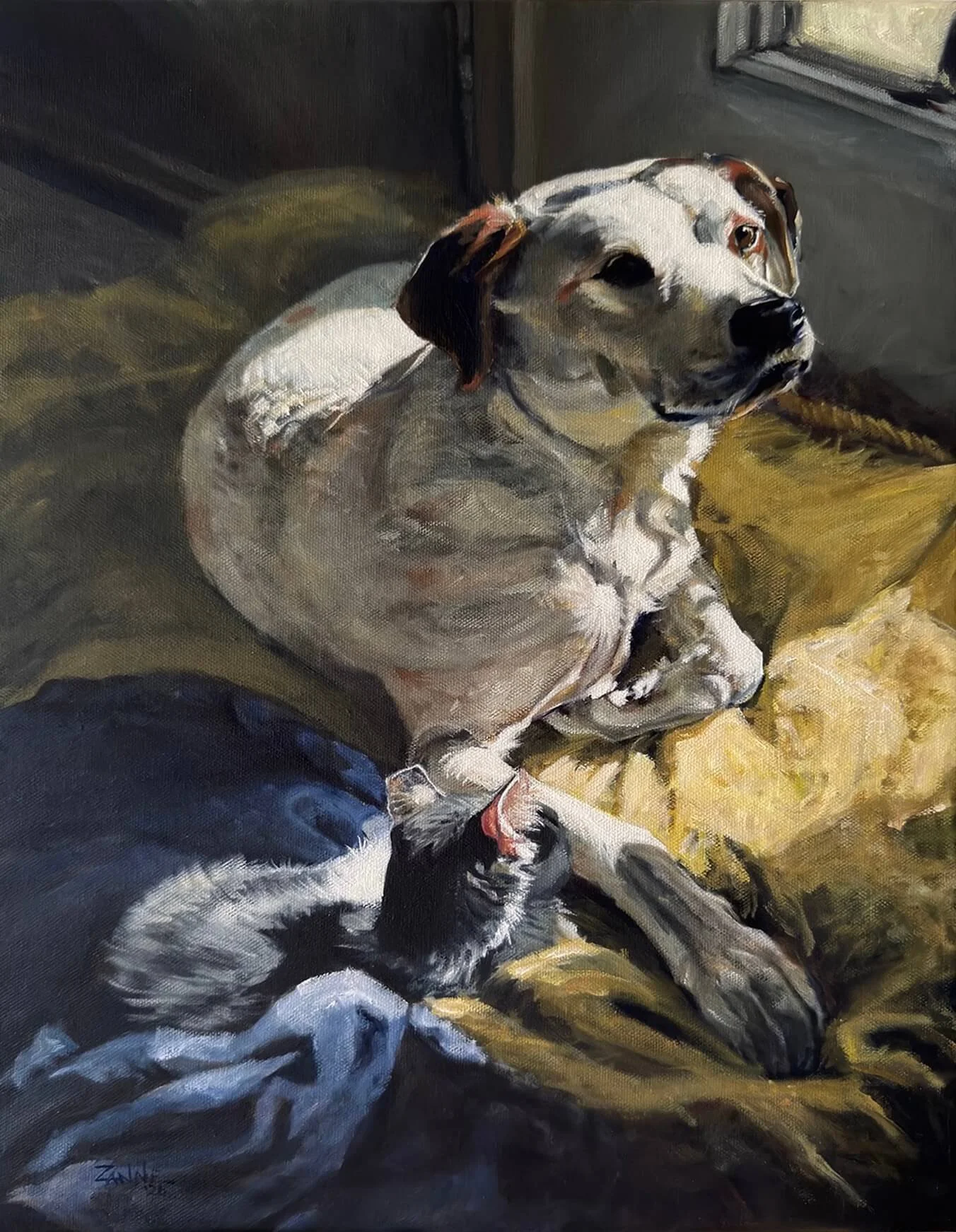
A better understanding of color temperature has improved my ability to select color for stronger impact of mood, composition, and movement instead of using color only to record what I see. This makes me a better storyteller because I am deciding the color with purpose instead of letting my references lead me. My work is further informed and more personal. I have improved immensely in my ability to paint sunlight and shadow and that is exciting for me.
What are you most curious to explore next in your practice?
I am thinking about really pushing color in stories about my pets who have gone over the rainbow bridge. I am thinking about houses and ideas about houses versus homes. These are old inspirations that I am looking back at with fresh eyes. I want to see how time and my new sense of purpose will shape the work.