

Traces of Time: Interview with Mixed Media Artist Xue’er Gao
Xue’er Gao is a mixed-media artist utilizing paper to explore connections between the past and the present. Working across bookmaking, printmaking, sculpture, and installation, she experiments with handmade papers, pigments, and a wide range of techniques to transform paper into complex and expressive forms. Inspired by the traditions of Chinese craftsmanship while drawing from many cultures, Gao combines historical methods with contemporary ideas to create work that is both innovative and deeply rooted in material exploration. Her work has been presented in exhibitions at Philadelphia International Airport and at Metropolitan Art Atelier. Beyond her studio practice, she has served as an invited juror for NYCxDESIGN Festival and has contributed to the field through exhibitions, teaching, and book arts programming. Through intricate textures, folds, and layered compositions, she encourages viewers to appreciate both the fine details and the larger forms of her work. Above all, Gao’s enduring fascination with the simple qualities of paper continues to shape and inspire her artistic practice. Enjoy an exclusive interview with the artist below.
Paper is at the center of your practice. What was it about this material that first captivated you, and why has it continued to hold your attention over time?
I have always been drawn to physical things, especially paper. It carries traces of time: a fold, a stain, a tear, or a mark becomes part of its story. Even different kinds of paper behave in their own ways, and much of what I do involves learning how each one responds to being handled.
What interests me most about paper is that it has never been a fixed material. It has changed along with how people produce and use it. In the studio, paper feels very immediate. I can sense its texture, its strength, and its limits the moment I begin to work with it.
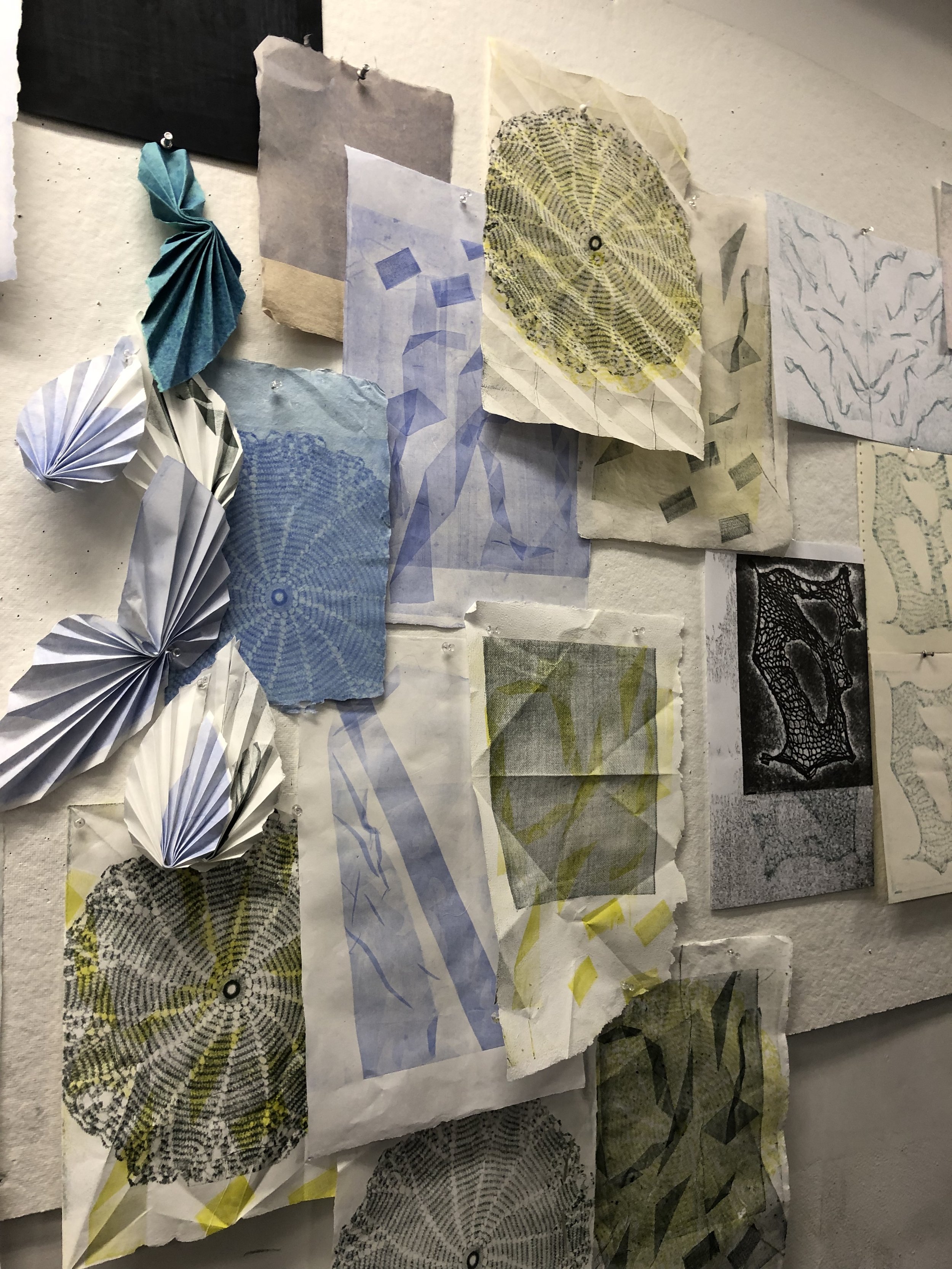
Untitled - Work in Progress
You often make your own papers and pigments from scratch. How does that hands-on process influence the meaning of the finished work beyond its visual appearance?
For me, making paper and pigments feels a bit like cooking. I adjust the ingredients along the way, guided by my own sense of what seems balanced.
Sometimes I create the materials completely from scratch. Other times I mix handmade parts with existing ones, depending on what each material can add to the work. Their textures, colors, and reactions are not apart from the final piece; they help shape what it becomes.
Unexpected things often occur during the process. Instead of seeing them as mistakes, I usually follow where they lead. A few of my projects actually started with a reaction or outcome I hadn’t planned for.
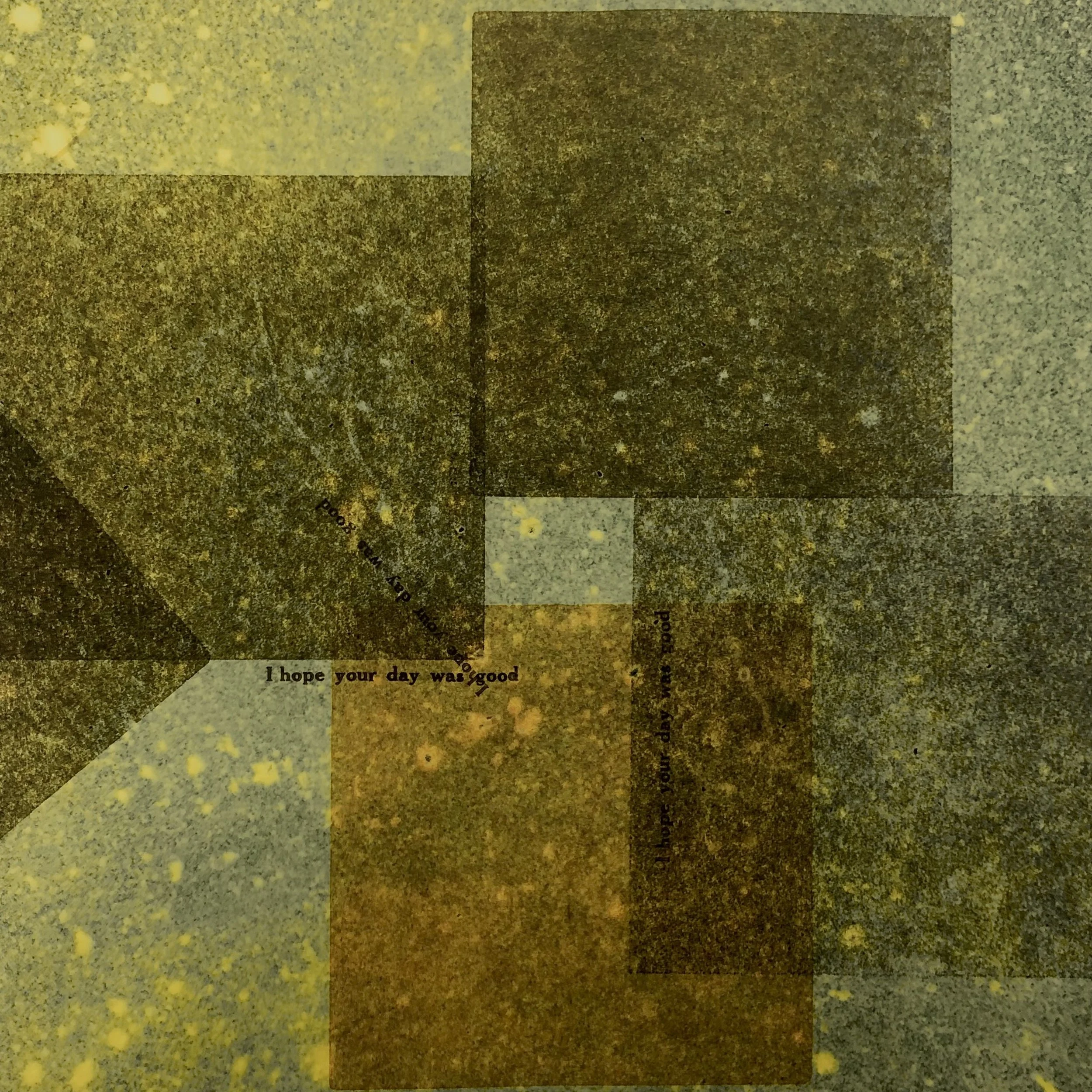
Untitled, 2023 - Detail
Experimentation seems to be a defining part of your practice. Can you share a time when a material or technique surprised you or changed the direction of a piece?
The work Hazy View, Lake Vapor is an example. I used long-fiber kozo paper for its gentle texture and surprising strength. As I kept layering the sheets, I saw how the fibers started to catch and cling to one another.
The installation was finally assembled without any glue. The overlapping layers formed enough structure for the paper to hold a window-sized piece by itself. That process shifted how I thought about the material. Paper was not just a surface to work on; it could also serve as the framework of the work itself.
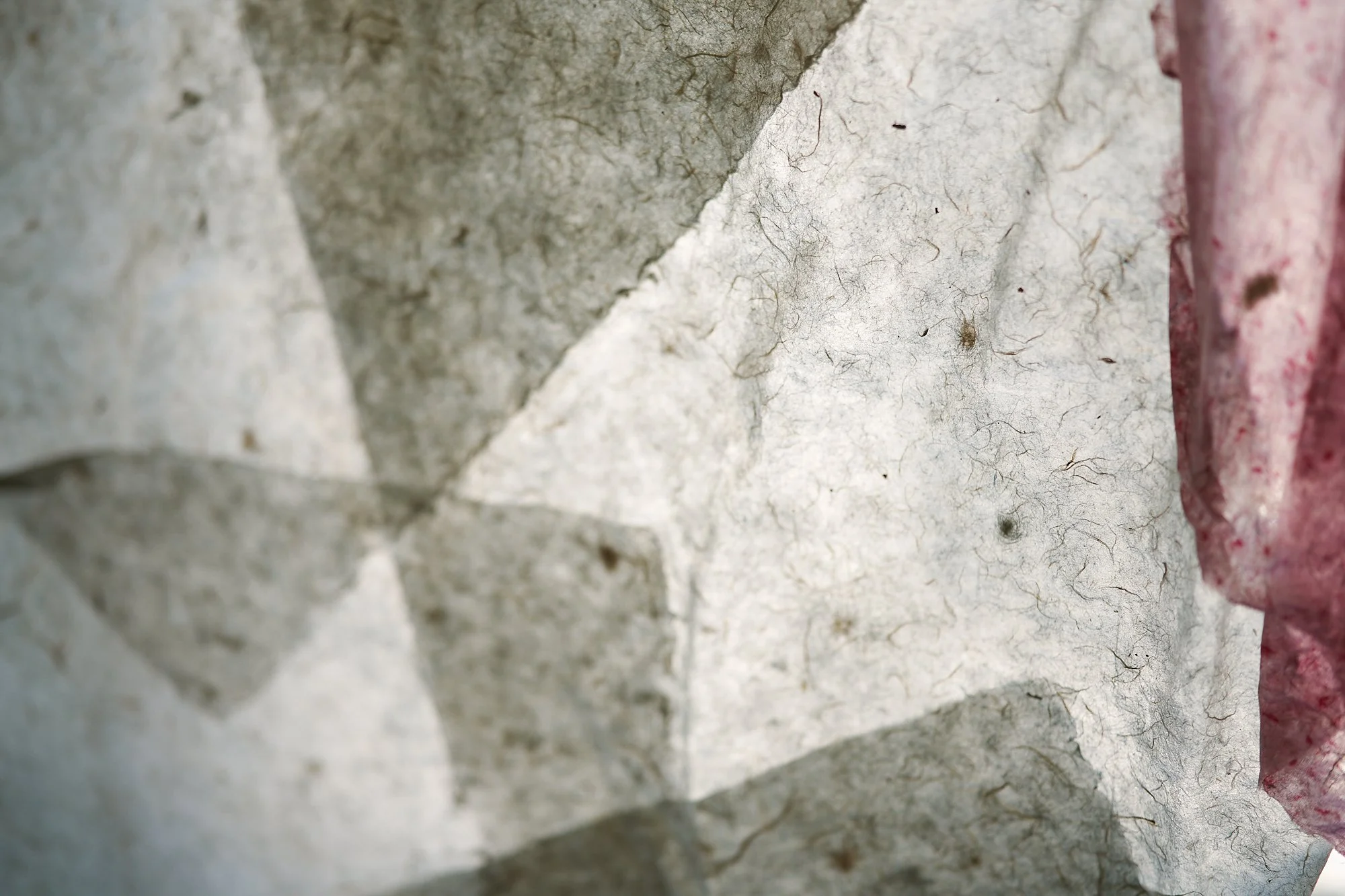
Hazy View, Lake Vapor, 2023 - Detail
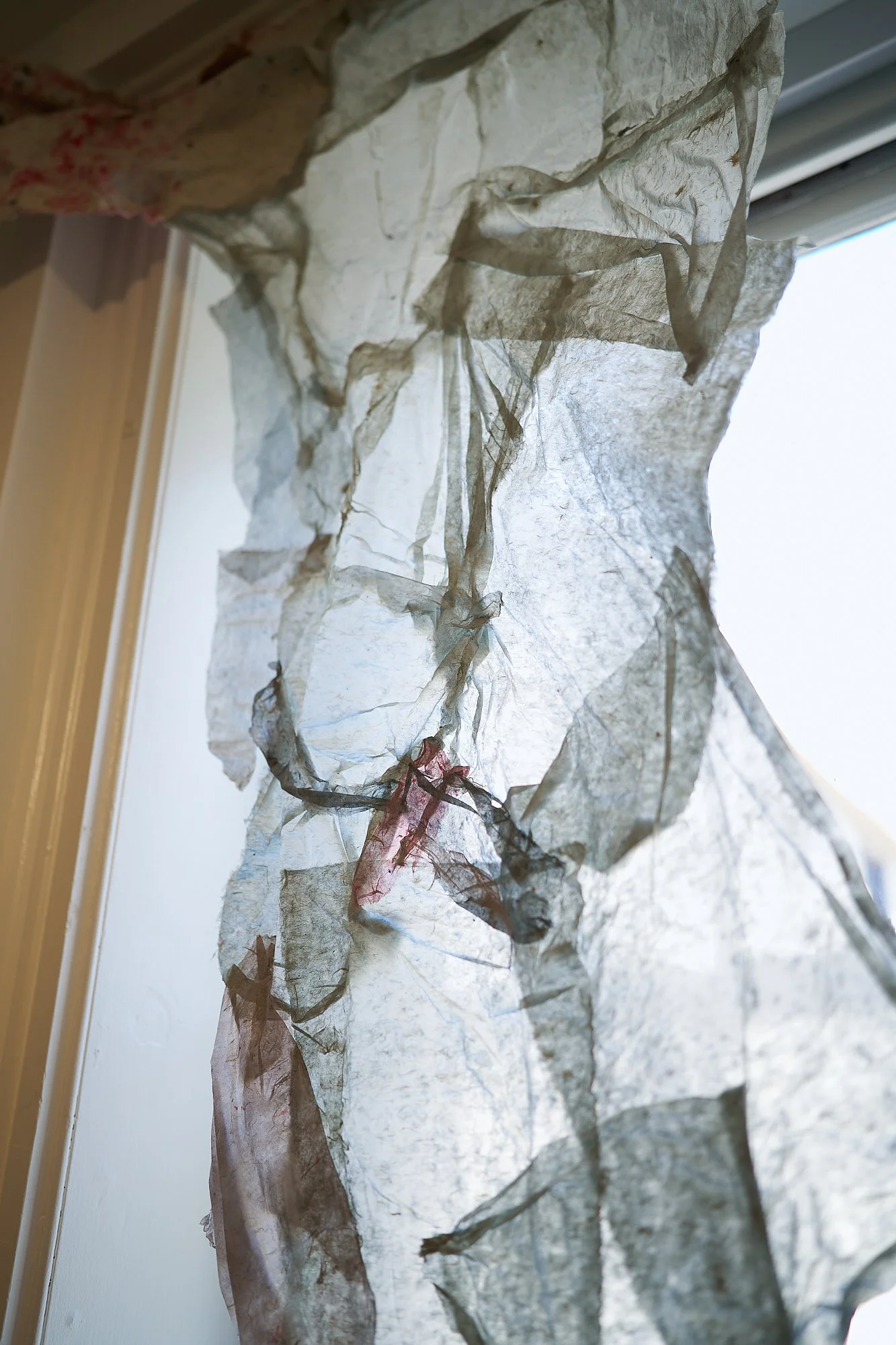
Hazy View, Lake Vapor, 2023 - Detail
Your work highlights not only the visual qualities of paper but also its textures, sounds, and even smells. How important is the sensory experience in the way you want audiences to engage with your work?
Sensory play is what I live for, and I make sure to include it in all my work because it’s always personal. Two people can look at the same page and notice completely different things, the texture of the paper, the sound it makes when it moves, or even a faint scent coming from it.
I’m quite attached to the objects I create, and I keep most of my own pieces rather than just storing a photo or a file as documentation. I also want the work to be touched whenever that’s possible.
It’s like paper in that it’s usually just looked at, but touching it shows something you can’t get from an image: its weight, its feel, its tensile strength, and, I guess, its fragility. I don’t think everyone has to be moved by it.
For me, it’s really about giving viewers immediate contact with the material so their sense of the work begins through touch and perception.
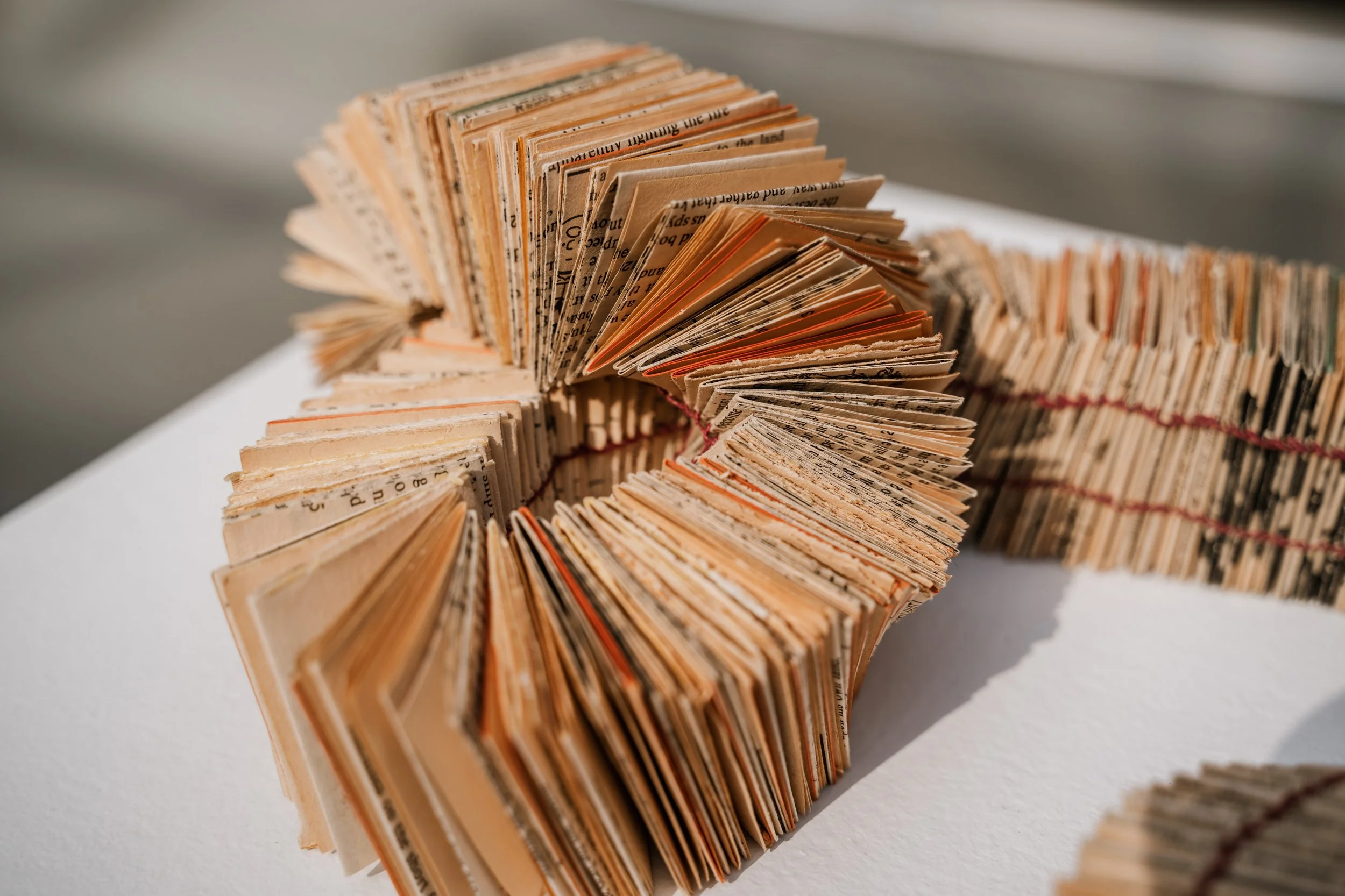
Futile, 2022
Vintage book sculpture with traditional binding
Many of your works combine different materials and historical influences. What kinds of conversations or tensions emerge when these different elements meet?
Most projects start from something unknown rather than from history itself. Once in a while, when I come across a material, a technique, or even a small piece of information I hadn’t thought about before, I try to look into it. As I follow that trail, I often find that many things we think of as "modern" actually have much older roots, and that those earlier forms still shape how we handle materials even now.
Origami is one such example. For most people, it’s simply the art or craft of folding paper, but when I studied it more closely, I became fascinated by its structural reasoning. The same folding ideas have been applied in architecture, engineering, and even space technology, where folded designs allow spacecraft to unfold, expand, or gain strength. Seeing those links changed how I viewed paper, not merely as a delicate surface but as something capable of defining space and supporting itself.
The same goes for traditional papermaking. Handmade paper came about because different fibers meet different needs. Papers made from mulberry bark, bamboo, hemp, and other plant fibers vary in strength, flexibility, and absorbency. Those material differences were learned through generations of practice, and many of those techniques remain in use. What interests me is not preserving these traditions unchanged, but understanding why they developed and how that understanding can inform contemporary work.
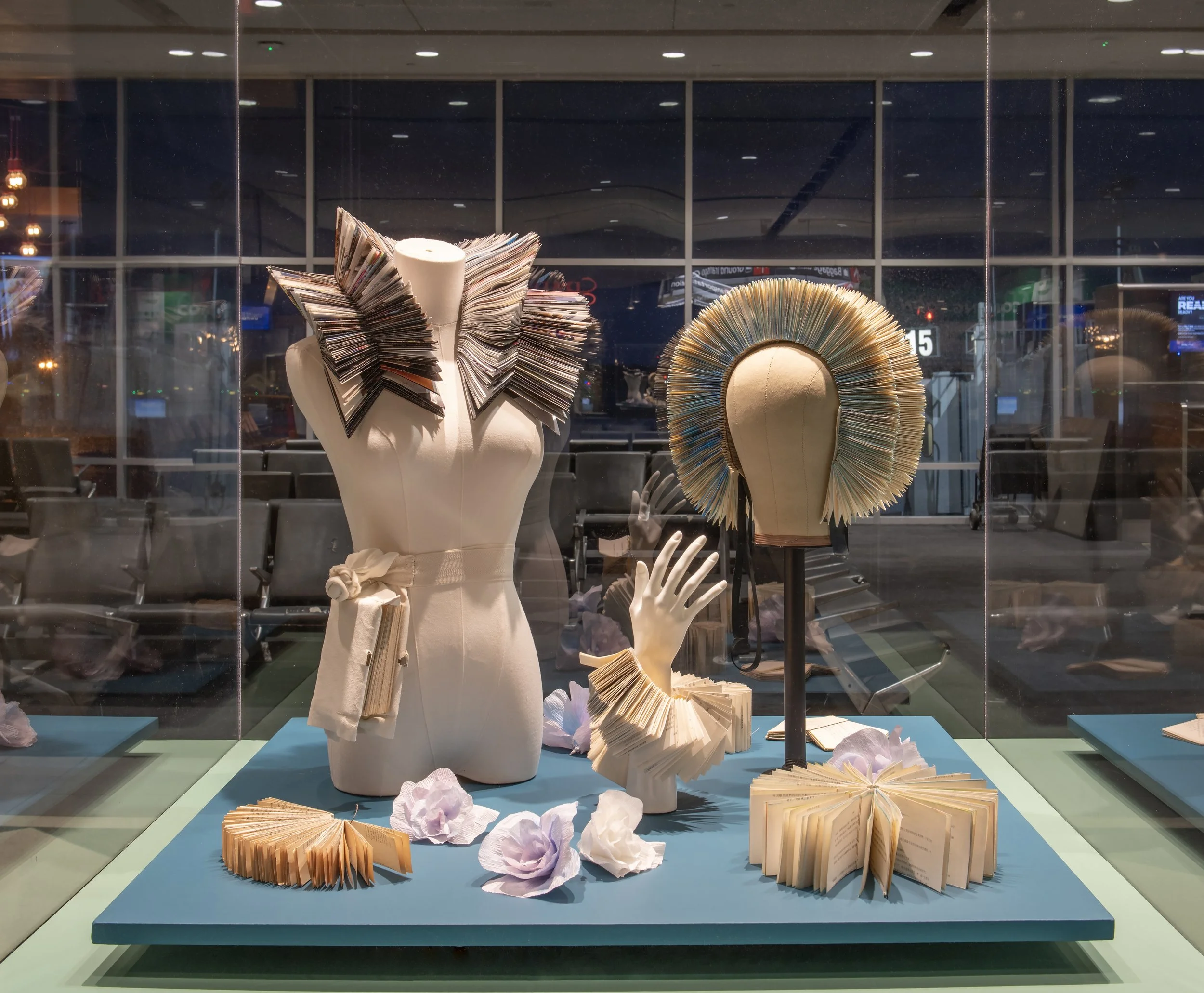
2025 Paper Morphosis Exhibition: The Poetic Flow of Book Forms and Textures, Philadelphia International Airport, Philadelphia, PA
Looking ahead, are there materials, techniques, or cultural traditions you're especially excited to explore next, and how do you see your practice evolving?
I have spent time thinking about how simple structures can develop and shift over time. Within the folds, I notice the start of rhythm and the ability to evoke different feelings about space. I see how texture, thickness, and the way sheets are opaque or translucent all influence how the paper softens the light. I like how light, distance, and paper always change depending on where you view them from, and I’m not concerned with creating illusions for the eyes. Instead, I focus on how the view itself can change in different ways. Paper is never quite the same in the same position. It absorbs the surrounding humidity, and air decides where and how it will move next.
I enjoy looking at old traditions of folding and paper crafts, not to copy them, but to understand where the thinking began. Many structures and techniques in space and in other fields come from these generational crafts. I don’t see my work leading to one single outcome. Some ideas must become an artist’s book because of the importance of feeling and sequence. At times, something needs light, space, or movement, and it grows into an installation or sculptural work. I don’t see these as separate forms. They simply show different possibilities for the work’s presence.
More than anything, I want my work to keep bewildering me. I usually begin without a clear or literal image of the final result. Most often, the work starts from one of several beginnings, which might involve a material, a process, or a small discovery I don’t fully understand. This doesn’t exclude the work itself, because those discoveries are part of it. I believe my role is to stay with the material long enough to understand what it wants to do. The unexpected is not something I try to eliminate, but where the material often teaches me something I couldn’t have imagined beforehand.
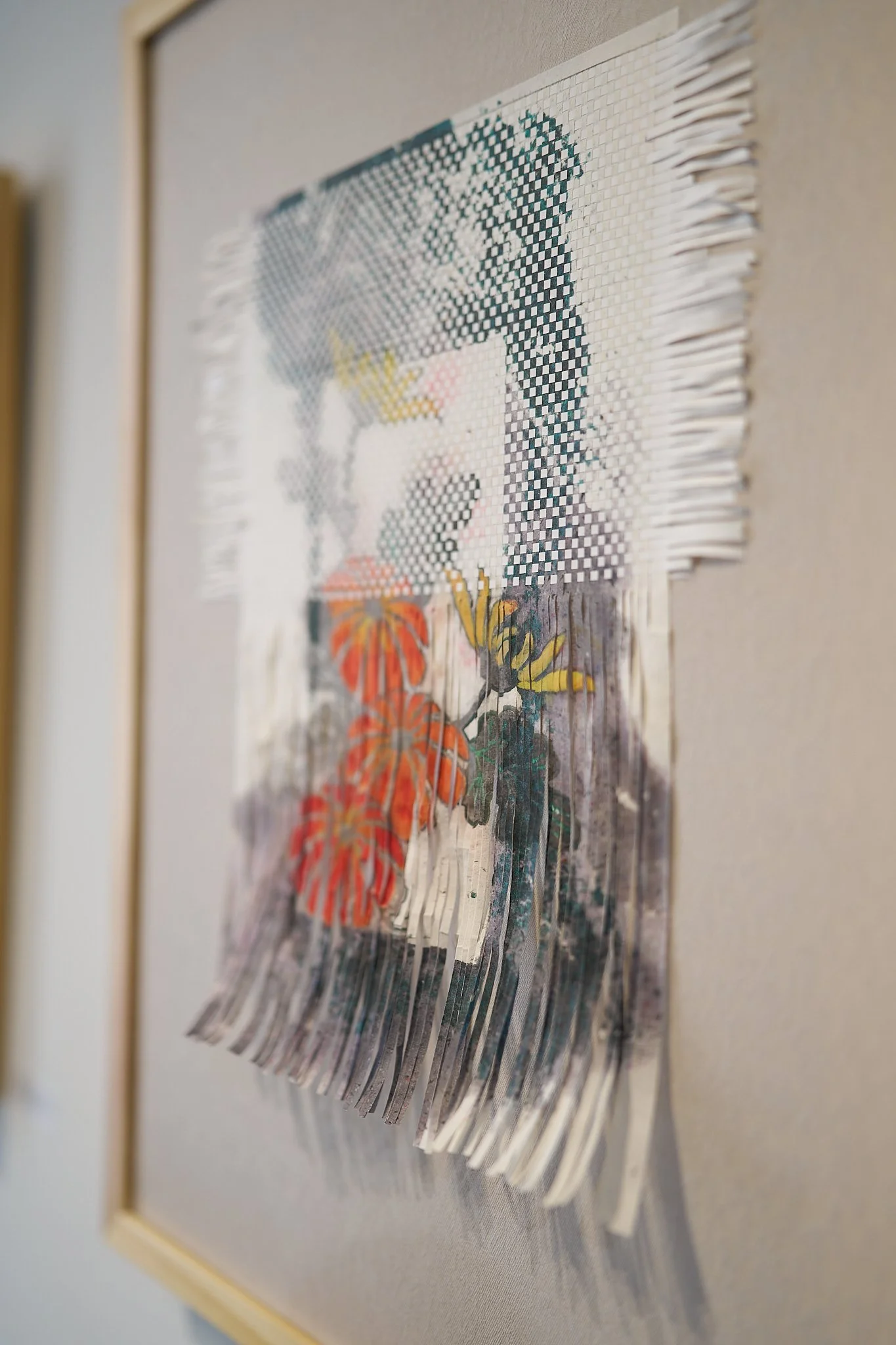
Left: Flower in the Fog, 2023 - 2026 In the Pursuit of Happiness Exhibition, Cannery Village Gallery, Newport Beach, CA
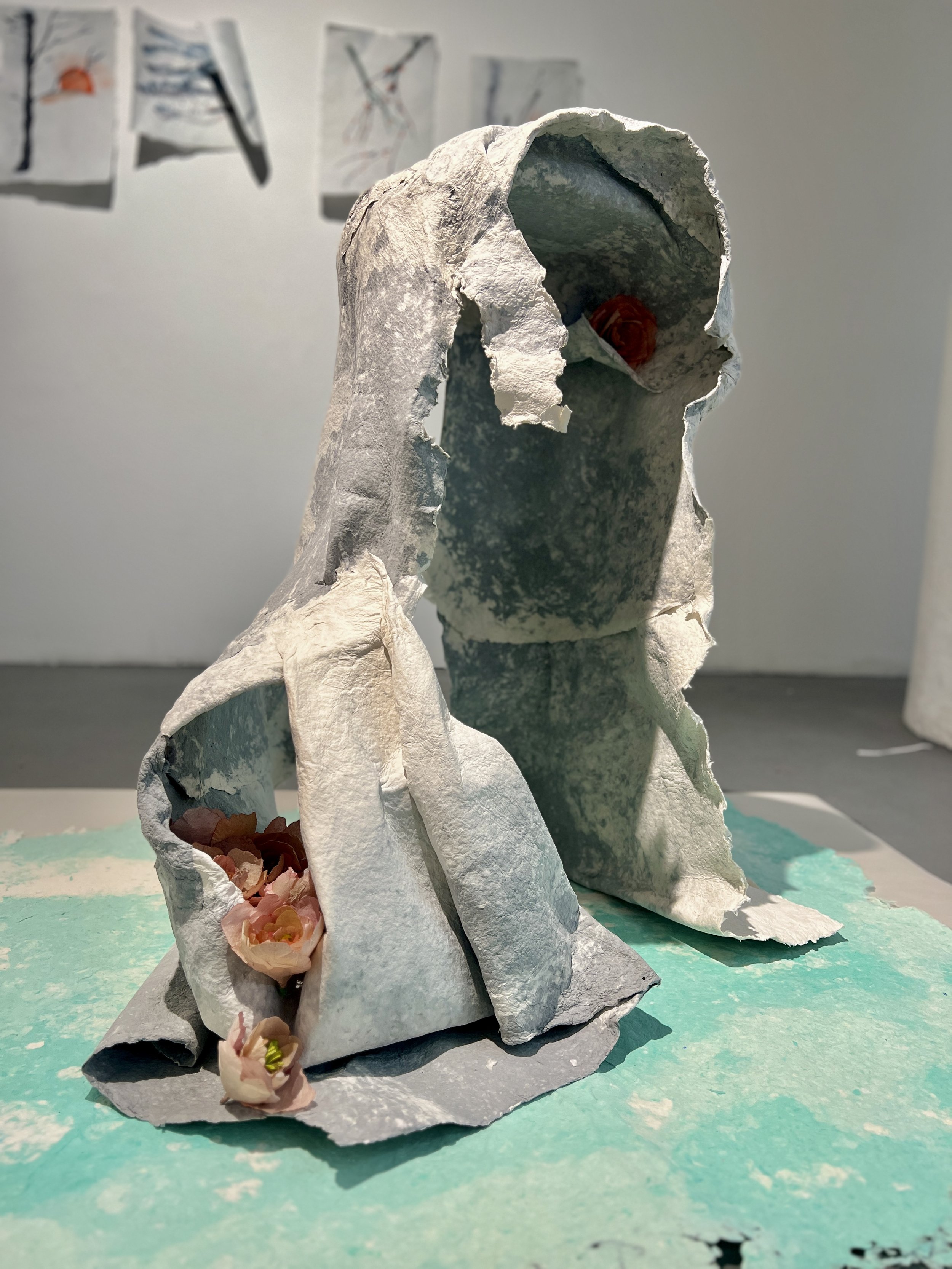
Right: Bloom, 2023 - Detail
Edited by Alicia Puig.