Painting as an Act of Witnessing: A Conversation with Sarah Valinezhad
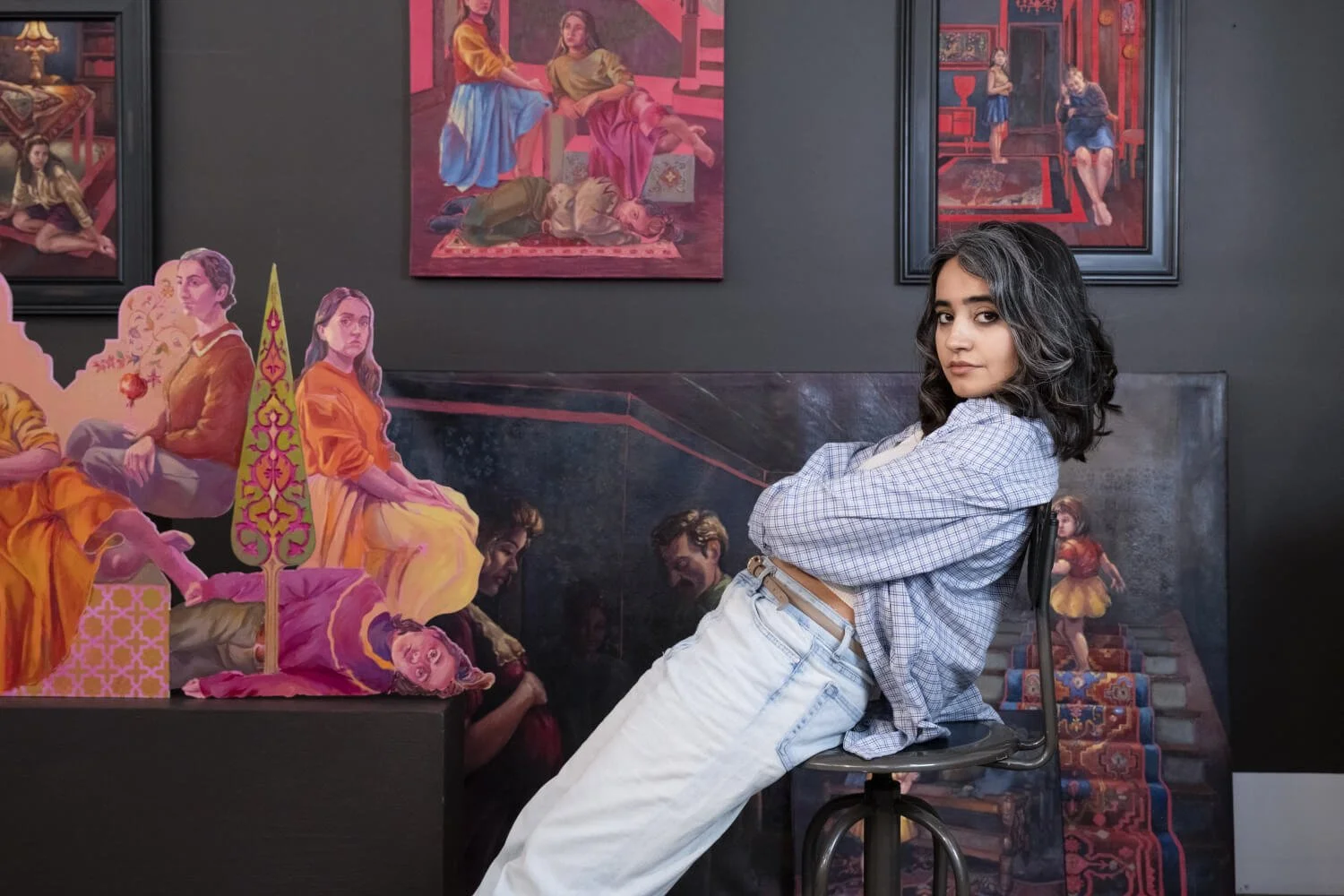
I am an interdisciplinary artist and educator based in Massachusetts. My research-driven practice centers on painting, drawing, and narrative image-making, exploring themes of memory, interior space, and feminist experience. Through domestic environments and symbolic visual language, my work examines how personal and collective histories are carried, witnessed, and reactivated over time.
Artist Statement
My studio is not a place of separation from life. It is where memory, fear, care, and persistence accumulate over time. I work through painting and drawing as a way of staying present with what cannot be resolved quickly, allowing images to emerge through repetition, hesitation, and physical engagement with the surface.
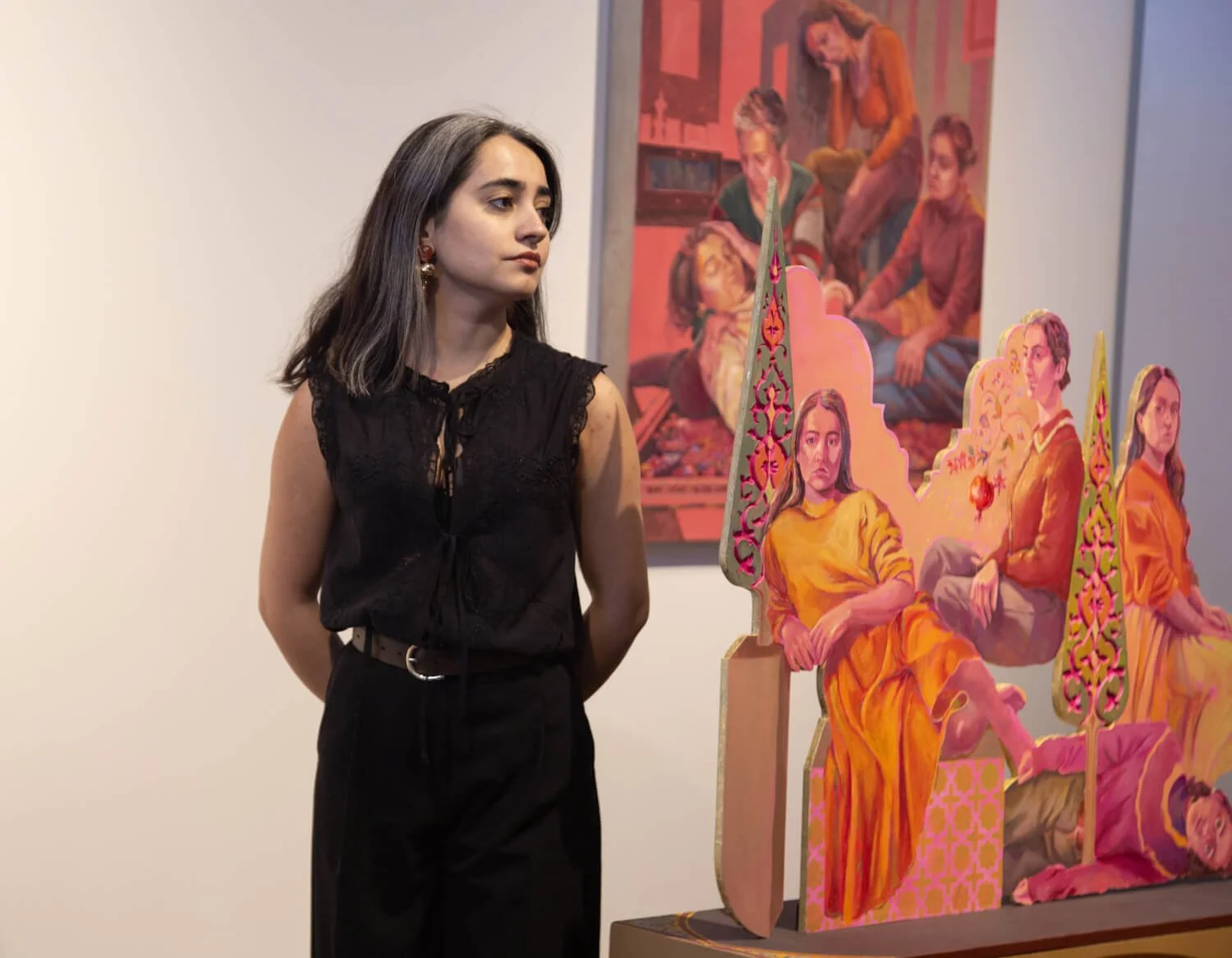
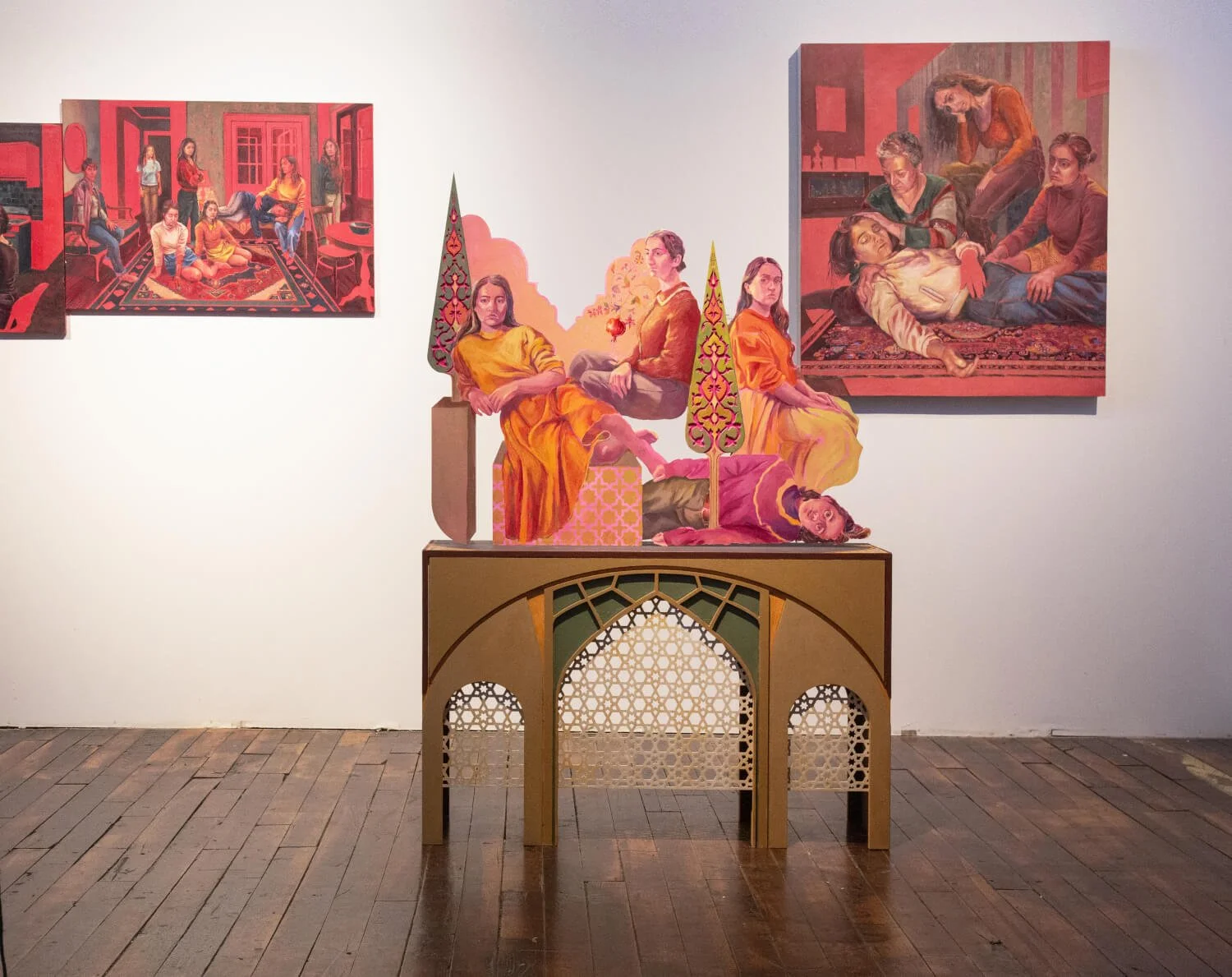
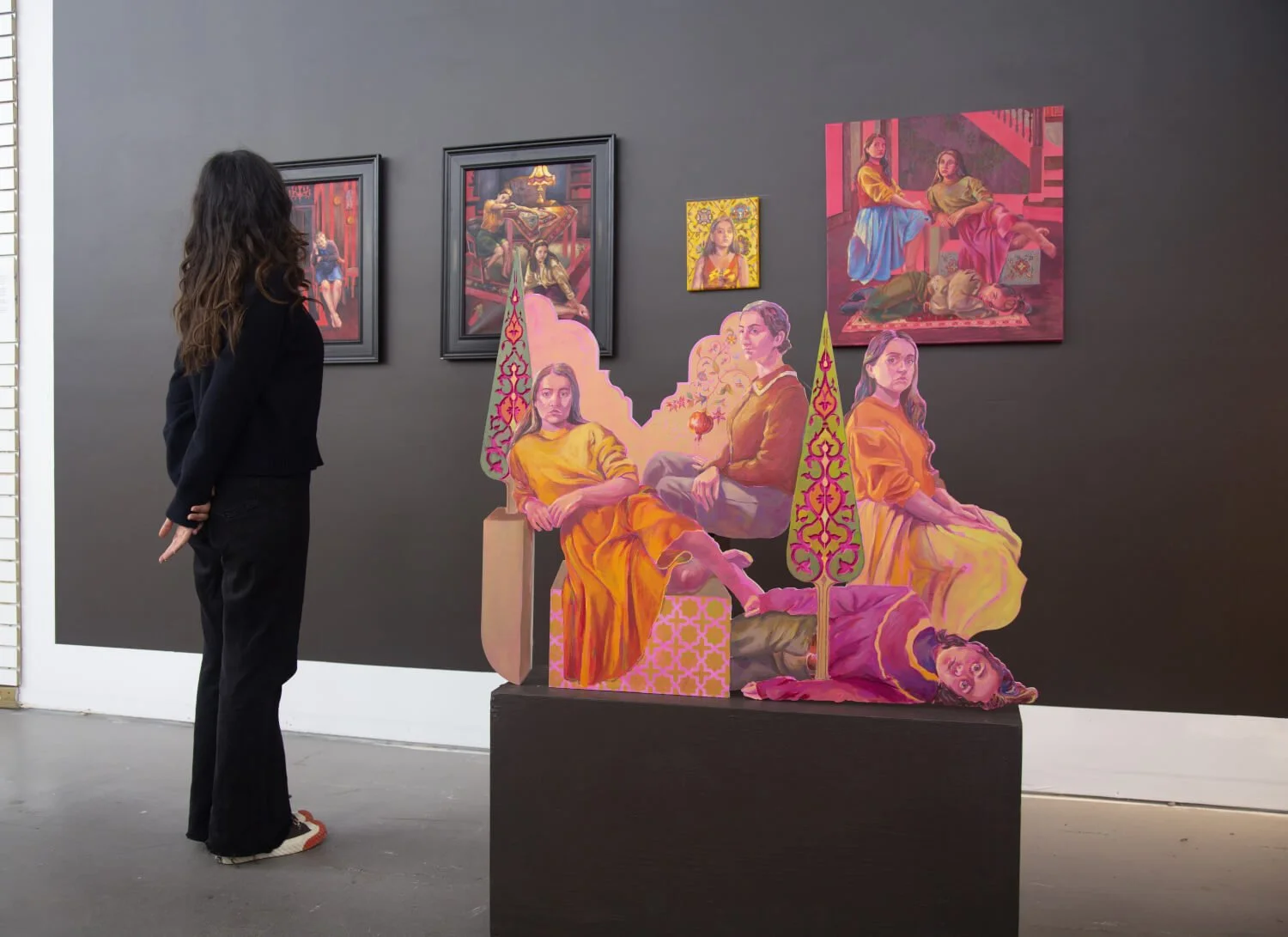
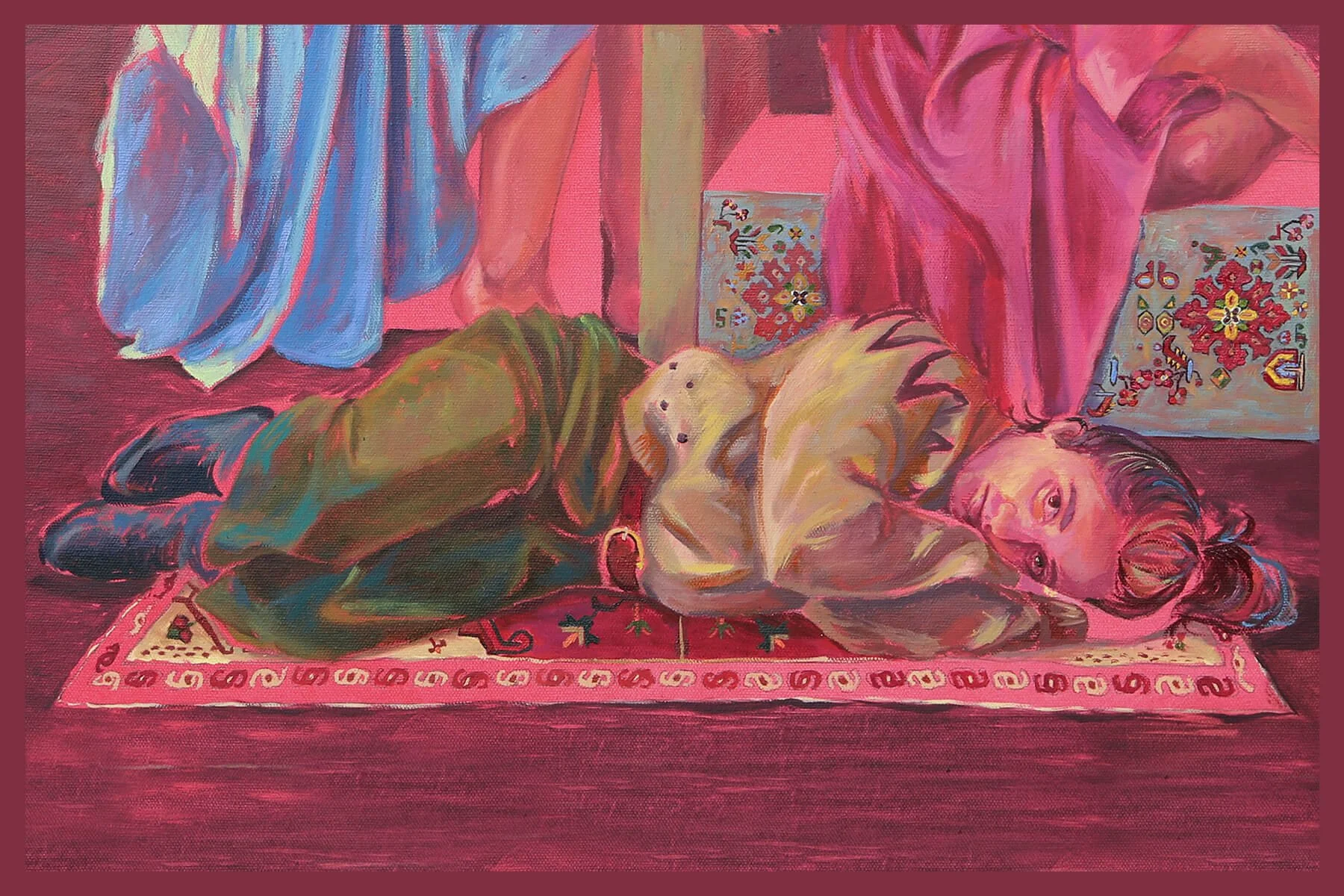
My paintings center on Iranian women's lived experiences, particularly states of endurance, vigilance, and quiet resistance. While rooted in specific cultural and political realities, the work speaks to a broader and shared condition of oppression, where the body carries fear, responsibility, and care under systems that restrict freedom. Interior spaces function not as descriptive settings but as emotional structures shaped by tension and intimacy. Figures often appear suspended in moments of attention or restraint, holding histories that are both personal and collective.
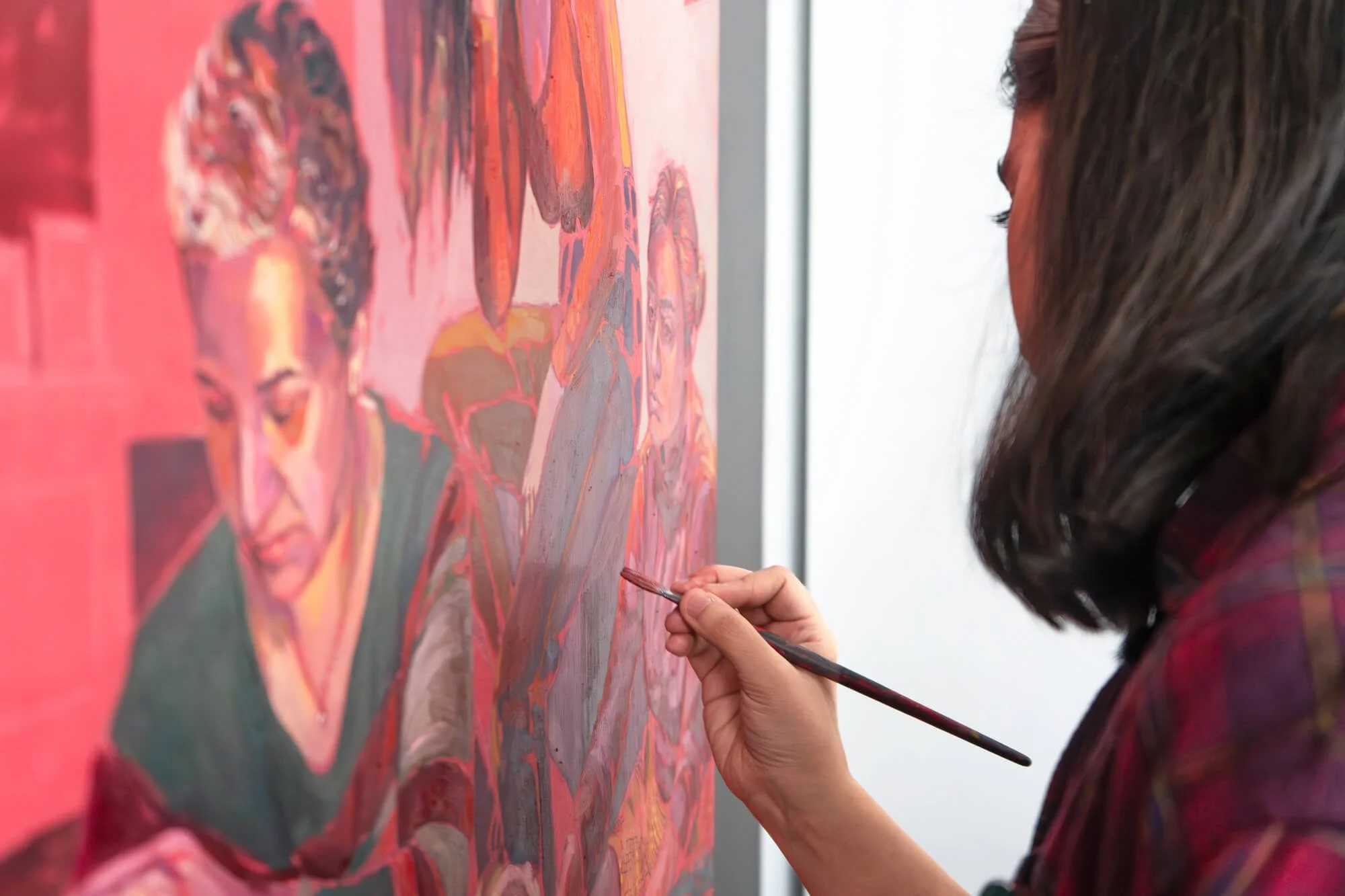
Process is essential to my practice. I build surfaces slowly through layering, revision, and visible change, allowing the hand to remain present in every decision. I resist polish and automation in favor of touch, slowness, and vulnerability. Painting becomes an act of witnessing rather than representation, a way to hold space for what persists beneath daily life.
What I make in the studio reflects what I am living through. The work is shaped by ongoing political and emotional realities, but it does not illustrate them. Instead, it registers their presence through atmosphere, gesture, and restraint. The studio becomes a site of attention and care, where continuing to paint is itself an act of commitment.
sarahvalinezhad.com
Interview
Your work centers on Iranian women's lived experiences while addressing broader themes of oppression and endurance. How do you navigate the relationship between personal history and collective experience?
Growing up in Iran, I never experienced my emotions as mine alone. They belonged to my family, to the women around me, and to generations before us whose stories of resilience, sacrifice, and survival became part of everyday life. When you are raised within that kind of shared history, it becomes difficult to separate the personal from the collective because you begin to recognize fragments of your own life in the lives of others.
Every Iranian woman experiences restriction differently, but the source of those experiences and the emotions they leave behind are deeply connected. I have always been moved by the way women stand beside one another, especially in moments of profound danger. During the Woman, Life, Freedom movement, I witnessed extraordinary courage as women risked everything not only for themselves, but for one another. To me, that courage comes from a shared understanding of pain, hope, and dignity. While my paintings are rooted in Iranian women's lived experiences, they are ultimately about something deeply human. Across cultures, we recognize grief, love, fear, and resilience in one another. That is where I hope the work can move beyond my own history and become a place of connection.
Interior spaces play a significant role in your paintings. What draws you to these environments as emotional and psychological structures?
I think my attraction to interior spaces comes from growing up with the duality that many Iranian women experience. Within the home, there is often a freedom to laugh, grieve, speak openly, dance, sing, and simply exist as yourself. Outside its walls, however, your appearance, your body, your voice, and even your everyday choices become subject to constant scrutiny and control.
Because of this, the home becomes both a sanctuary and a prison. It is a place of intimacy, care, memory, and belonging, while also reminding you of the limits placed upon your life. It often feels as though a woman can exist with her full identity only inside the home. That experience has profoundly shaped the way I think about domestic space. In my paintings, these interiors are never simply backgrounds. They become emotional and psychological landscapes where freedom and confinement, tenderness and fear, can exist simultaneously, carrying the invisible weight of the world beyond their walls.
You describe painting as an act of witnessing rather than representation. What does that distinction mean to you?
For me, the distinction lies in the way I enter a painting and the way I hope a viewer enters it. Representation can remain observational, but witnessing asks something more of us. It asks us to stay present, to care, to grieve, and to accept a responsibility toward what we have seen.
I am not simply trying to depict what has happened. I am painting from a place of remembrance and responsibility, inviting both myself and the viewer to become witnesses to this moment in history rather than distant observers. I am not trying to illustrate suffering. I am trying to honor presence, memory, courage, and survival, because I believe that to truly witness another person's story is, in itself, an act of humanity.
Your surfaces reveal layering, revision, and visible traces of decision making. How does the physical process mirror the themes you explore?
The process of layering, covering, removing, and rebuilding feels deeply connected to the way memory exists. Nothing in my paintings arrives all at once, and the surface carries traces of hesitation, revision, damage, repair, and persistence. In many ways, the painting remembers every decision that has been made, just as people carry the marks of what they have lived through.
Working with oil paint is also an important part of that experience. It demands patience and care. Its slow pace allows me to sit with difficult emotions rather than rush past them. The physical act of painting becomes a way of moving through grief, carrying memory, and giving time to experiences that cannot be resolved quickly. In that sense, the process itself reflects the resilience I see in the women whose stories shape my work.
Vulnerability and restraint appear throughout your work. How do you know when a painting has reached the point where it can hold those tensions effectively?
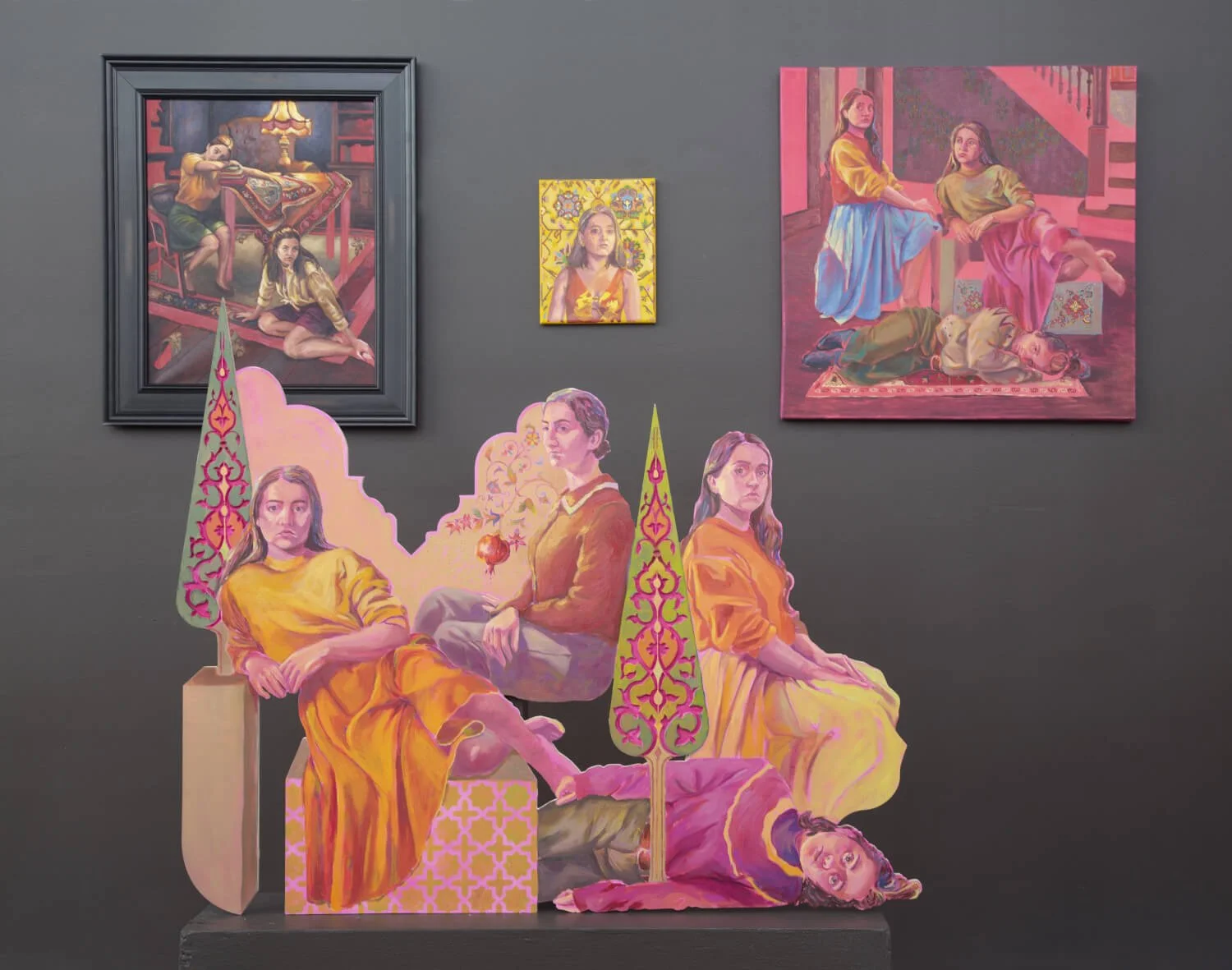
I think that tension grows from the same dualities that shape the lives of the women I paint. My figures are resilient while remaining vulnerable, and the domestic spaces they inhabit are both places of refuge and places of confinement. I try to carry those contradictions into the painting itself. Some areas remain almost untouched, exposing the underpainting, while others are built slowly over months through layers of careful attention. The contrast between what is revealed and what is withheld mirrors the emotional experience I am exploring. I know a painting has reached the right point when those visual and emotional tensions begin to exist together without one overpowering the other. I stop before everything is resolved, because vulnerability, restraint, and truth often live in what remains unsaid.
You are both an artist and an educator. How does teaching inform the way you make and think about your own work?
Teaching reminds me that art is not only about making images, but about creating space for attention, risk, and transformation. Working with students keeps me connected to curiosity, language, and the courage it takes to begin something without knowing exactly where it will lead. It also makes me more aware of my own choices in the studio, because teaching requires me to think deeply about process, intention, and care.
Your paintings often feel suspended in moments of attention or anticipation. What role does silence play in your work?
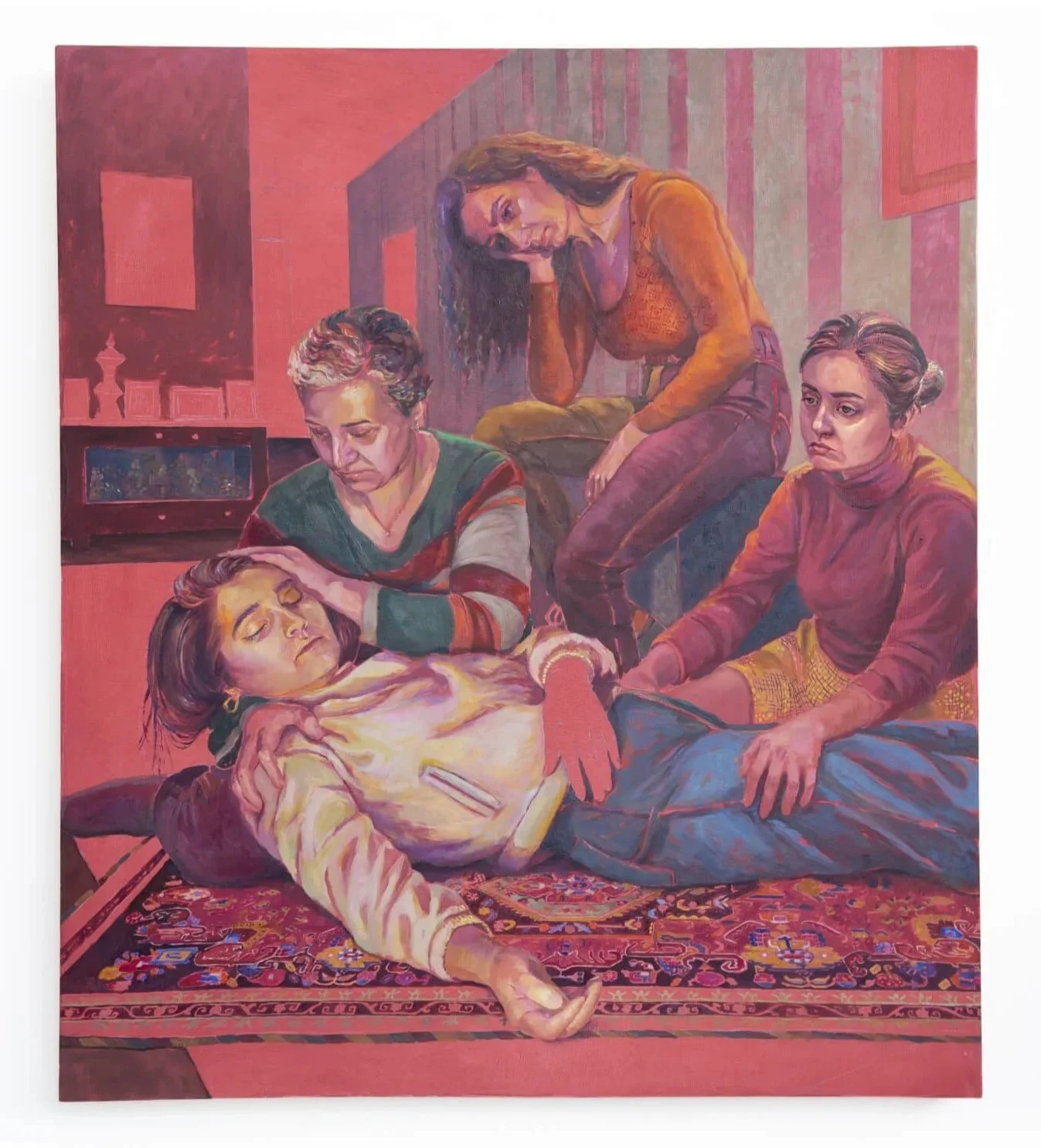
Silence is deeply rooted in my experience of growing up under a system where censorship shapes everyday life. When women are constantly told what they can say, how they can appear, and even how they are allowed to exist, silence becomes more than the absence of speech. It becomes something that is lived, carried, and inherited.
Many of my paintings exist in the aftermath of difficult or tragic moments, when words are no longer enough and what remains is a heavy emotional stillness. I am interested in that kind of silence because it is never empty. It carries grief, fear, resilience, and hope all at once. In my work, silence becomes another language, one that allows emotion to exist without having to be spoken.
What are you most curious to explore next in your practice?
I am excited to continue expanding my paintings beyond the traditional rectangle, allowing figures and painted forms to enter the viewer's space and become more physically present. I want the work to feel less like something we look at and more like something we stand beside.
At the heart of my practice, I am a storyteller. In Iran, so much of our true history has survived because people have carried it through stories when they could not record it openly. I feel a deep responsibility to continue that tradition through painting. I want to keep creating visual records of the lives of Iranian women, giving space to their grief, their tenderness, their beauty, and their extraordinary courage. They continue to fight for freedom knowing the risks, holding their lives in their hands while refusing to lower their heads. If my paintings can preserve even a small part of that history and ensure that these stories continue to be seen, then I feel I have fulfilled my responsibility as an artist.