

Yao Cheng is an artist known for her serene yet vibrant watercolors. Discovering her passion at just four years old in a drawing class, she has spent a lifetime creating with her hands. After graduating from Rhode Island School of Design (RISD) and working in the fashion industry, she launched her dream business in 2012.
Based in Columbus, Ohio, Yao Cheng Design is an independent studio dedicated to making joyful, intentional art. In an over-saturated digital world, Yao’s watercolors offer a welcome pause—turning nature and daily experiences into a powerful form of expression meant to bring joy into your everyday living.
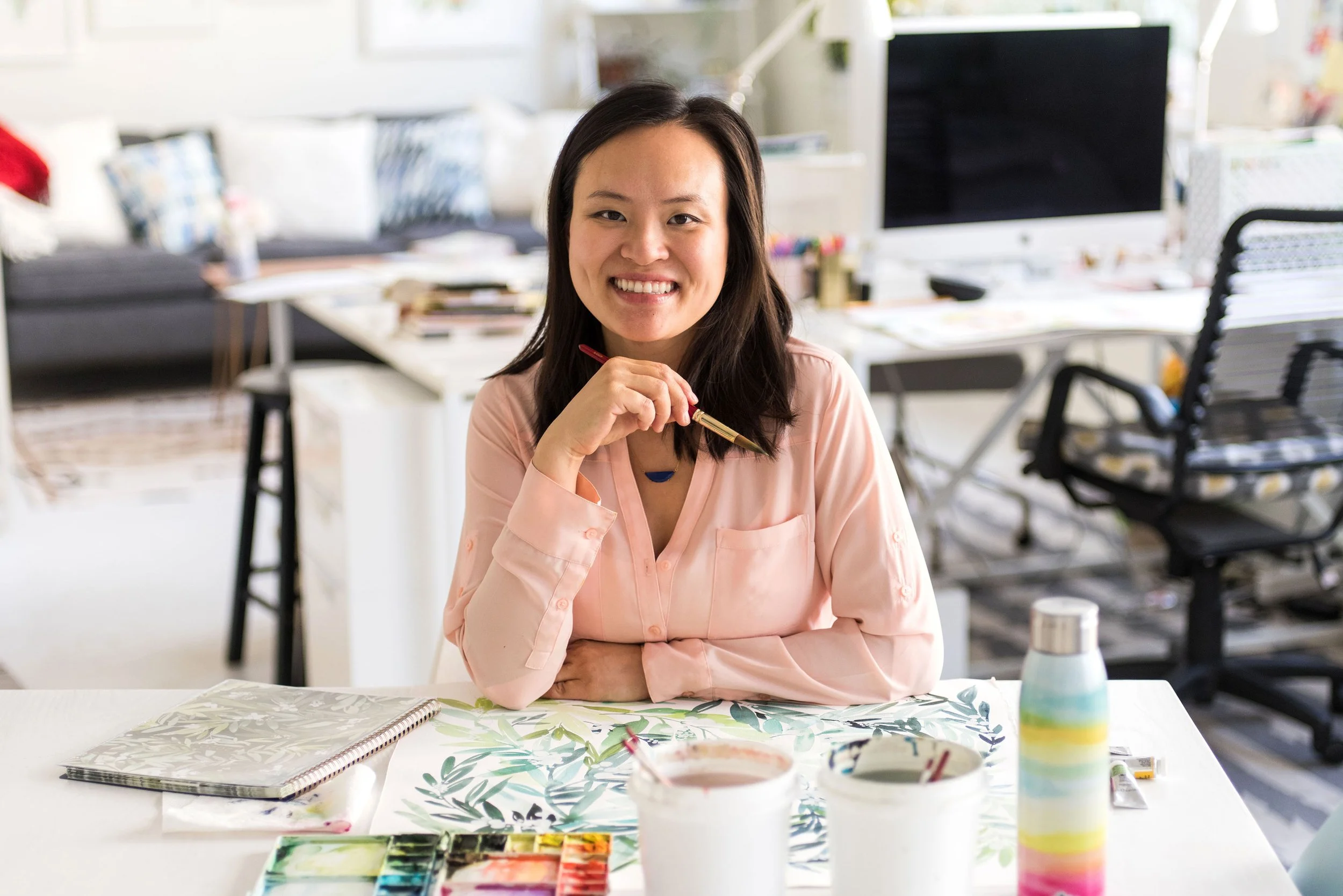
What first drew you to the medium of watercolor and how would you say your stylehas evolved over the years?
I was first drawn to watercolor because it is so different from every medium that I've ever painted with. I love how unpredictable it is and how dynamic it can be if you decide to push it to its limits. At first, I was very intimidated by a medium that seems untamable! It is such a wild card, you never know how it will turn out until you try. But that same fear is also what made me gravitate towards it...I realized that I should lean into this unpredictability of watercolor. Today, it is still my teacher in reminding me that nothing is perfect and it really is about the process and acceptance in what I can’t control. Sometimes, that acceptance is that what I've painted does not at all resemble what I’ve imagined. And other times that acceptance looks like many, many failed and half-painted watercolors. My art is always there, though, quietly encouraging me that a faltered painting does not mean that I am a failed artist. Rather, it is always another step in the discovery of something more meaningful, that I just have to trust the process. It always unfolds in a surprising way, so I cannot help but keep coming back for more!
In the beginning of Yao Cheng Design, back in 2012, watercolor was my way of creating my own voice. It was a big departure from my fine art, technical background. I went to RISD for my undergraduate with a degree in textiles. In the beginning, I wanted to show everyone that watercolor can be just as poignant and important as oils. Art is art, no matter what medium I am using. I firmly believed from the start that watercolor is the key to how I bridge fine art and design together. I was frustrated to have to choose between a career as a graphic designer or illustrator and one of a painter. I still believe that an artist’s work can be both, and my work should be both.
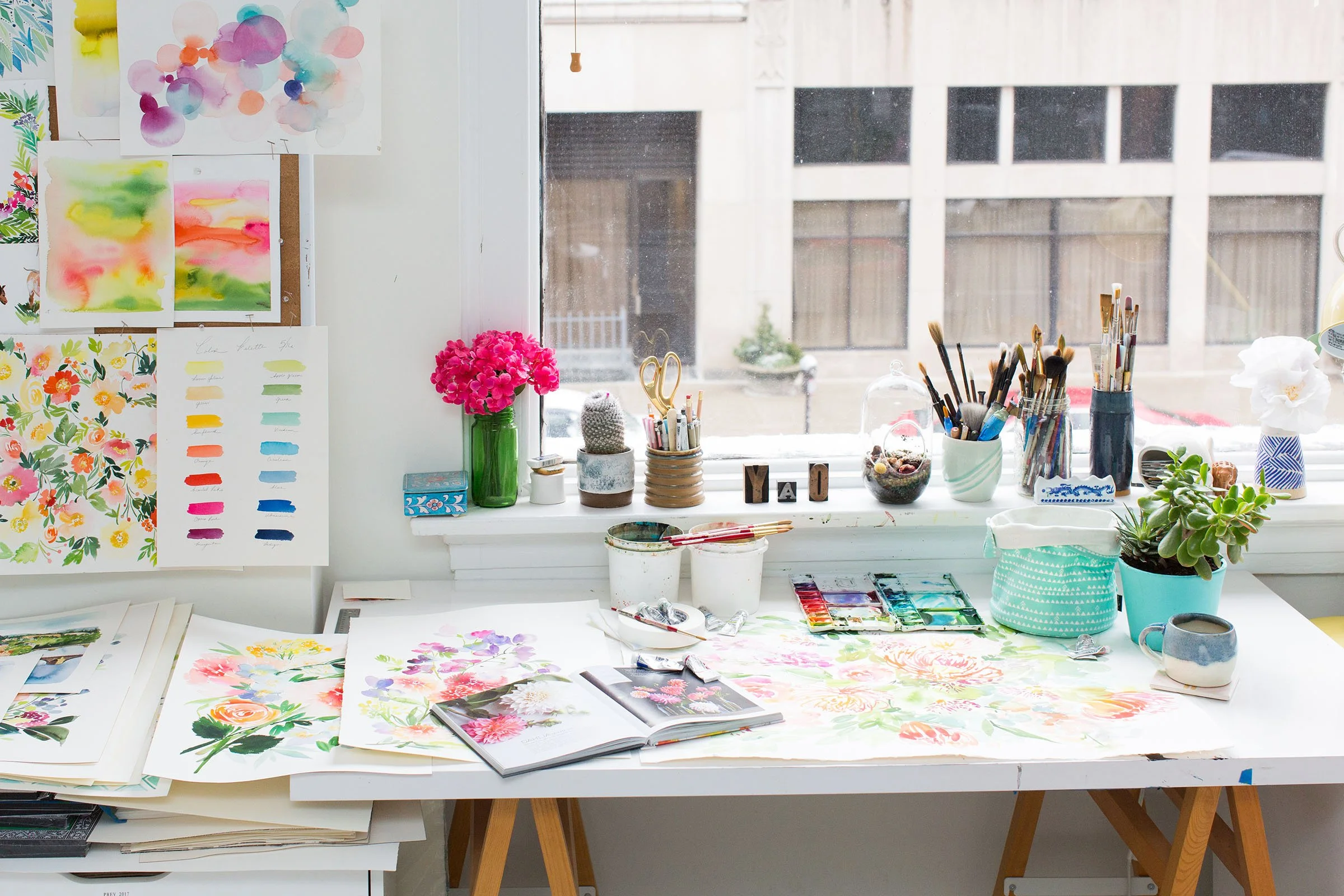
My work in the beginning was very loose and simple. Before I founded Yao Cheng Design, I was a surface pattern designer for a corporate fashion label. That was where I actually discovered watercolor with the help of a friend, and it was very freeing from the tight designs that I was doing at my job. In those early years, watercolor was just starting to trend and people really resonated with my loose florals. They were very simple and just about bringing color and fluidity into someone’s everyday life. Florals is still a big influence in my work today, as is nature, pattern and color. But I was also afraid to dive any deeper into the medium, because I was idealistic in how I thought watercolor should be approached. I sort of set these arbitrary boundaries for my work and refused to venture out of it.
Fast forward to about 5 years ago, and I finally felt ready to start pushing watercolors in new ways that I have not seen before. For example, I began layering with the medium with translucent, abstract forms. They turned out to be a very meditative experience for me, and the result is a series of work that describes landscapes in an abstract way. In the years since, my work has continued to evolve. Slowly, I am trusting my subconscious way of painting more and more.
For the last 3 years, I've been almost solely focused on writing and painting my debut children's book. This book represents the largest project I've ever embarked on. Through this long and technically-challenging project, my work has become even deeper in details. For the first time, I feel like my paintings are coming singularly from a place of my subconscious where I do not doubt my vision and simply just paint! Every painting in this book required multiple versions in large scale, all done by hand. This prolonged process forced me to push ever deeper into a state of mind where I was no longer thinking but simply feeling. It challenged me to continue seeking questions and go as far as I could trying to find those answers.
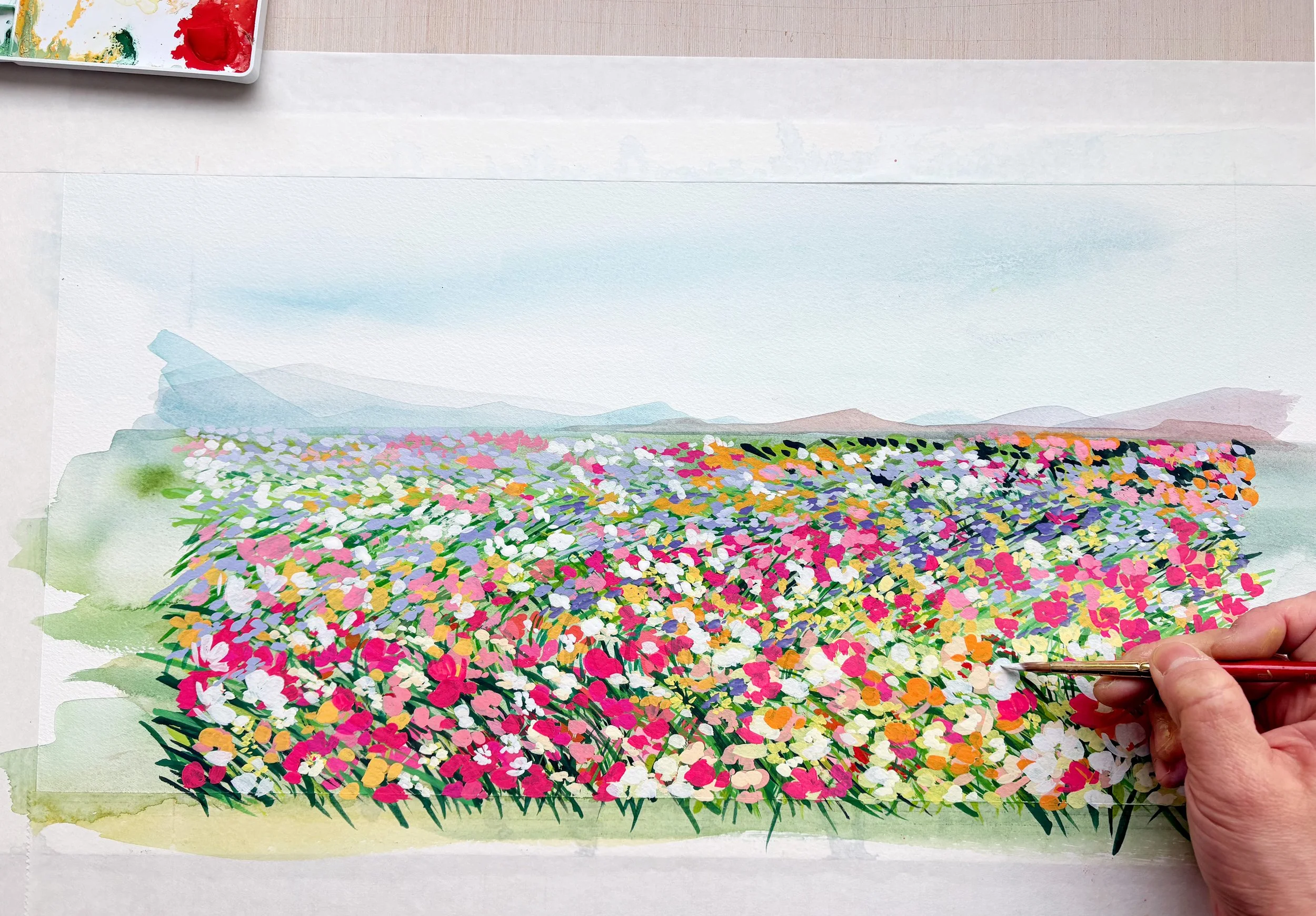
"Grass Sway No. 2" is one such painting that surfaced after this project. I realized that detail and repetition (comes from my pattern background) are very important to my work. For me, these two ideas work really well in trying to describe movement. For this piece, I really wanted to explore the idea of wind as it sweeps across a grassland. The question that I was wondering was- how do I capture something dimensional, yet has no form and is completely invisible on a 2-dimensional surface? This painting, along with “Grass Sway No. 1”, attempts to answer this.
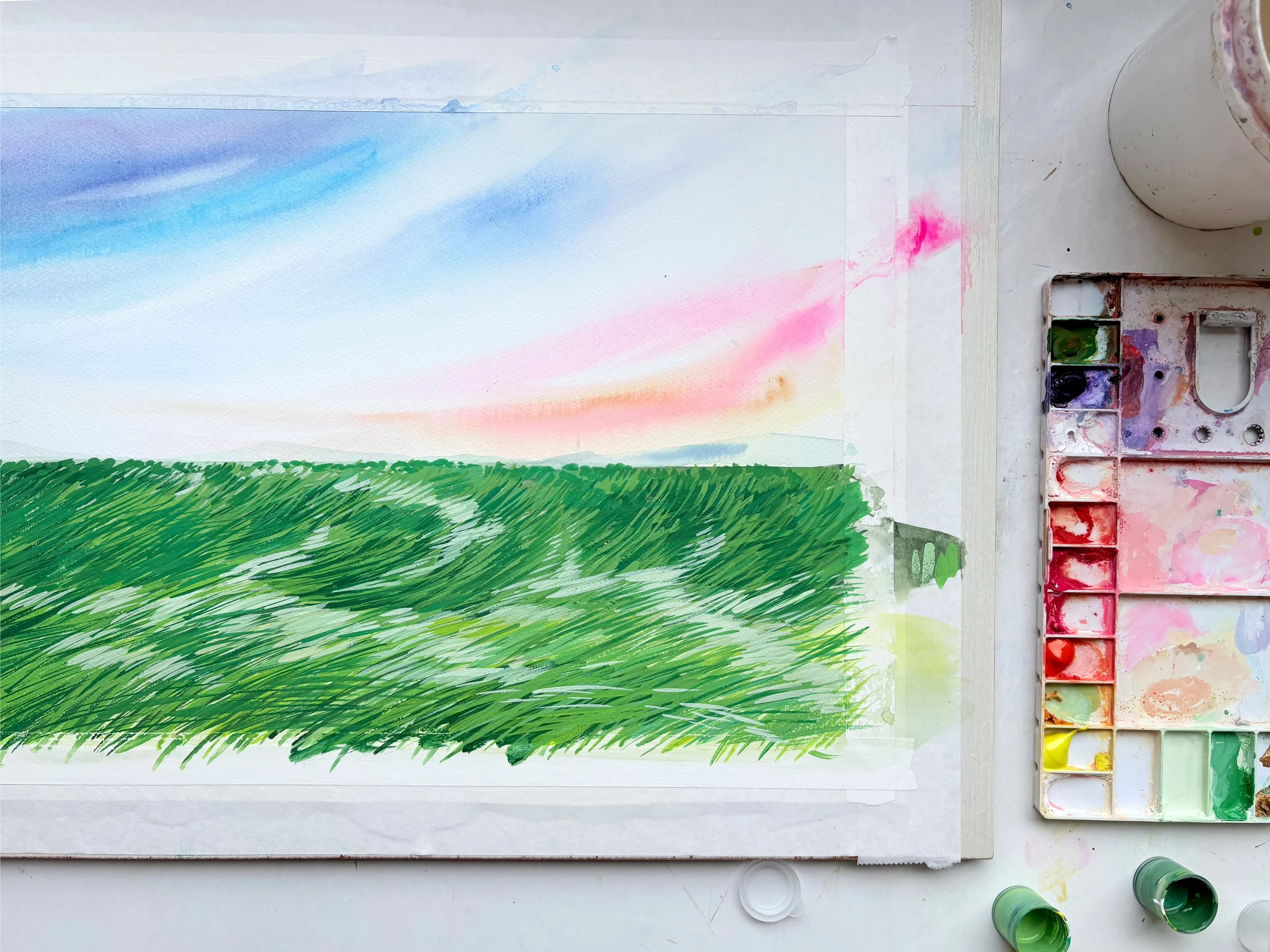
And I don’t know about you, but when I stand amid an endless field out in nature, I feel very mesmerized by the wind. Because it is invisible, I notice more in how everything around it interacts with the wind, especially the blades of grass. But how do I capture that swaying of each piece of grass? I realized that my deep influence by Impressionist painters is how I answer that question.
I’m so excited to continue building on this new body of work that will be complimentary to my earlier work but feel more evolved! I’m sure nature will play a big part in it, but otherwise I’m open to where my art wants to go.
You jump between subjects such as landscapes, abstracts, and florals. Is there one you would consider your favorite or do you tend to work on what is inspiring you most at the moment?
For me, they all come back to my love for nature. I don’t think I have favorite though, because they all serve different purposes in my creative brain. Abstracts has a very important place because it forces me to pair down my ideas into its most important parts. Abstract paintings feel the most like poetry to me. Every shape and color is intentional. Florals, landscapes, travel paintings…they all have their own role to play. I like to bounce between all of these because they ignite these different parts of my creative brain, which is especially helpful when I feel stuck on an idea. Landscapes tend to be what I am focused on at the moment because I am still thinking a lot about the paintings I created for Our Love is a Sea of Stars.
I am also exploring more about portraits. This also is born (in-part) out of this book project, but it is true that it is also the first subject that I was ever interested in drawing, starting in middle school. I think the human face is endlessly fascinating. It’s so unique to each of us and tells such a story about who we are, what we are feeling, etc…I feel that it is very important that I explore this subject matter more thoroughly now. I’ve never tried painting portraits before because I was afraid I couldn’t render the face well enough. But, the decade-plus of working with watercolor has given me a lot more creative confidence to improvise as I go. I don’t need it all figured out, I just need to pick up a pencil and try!
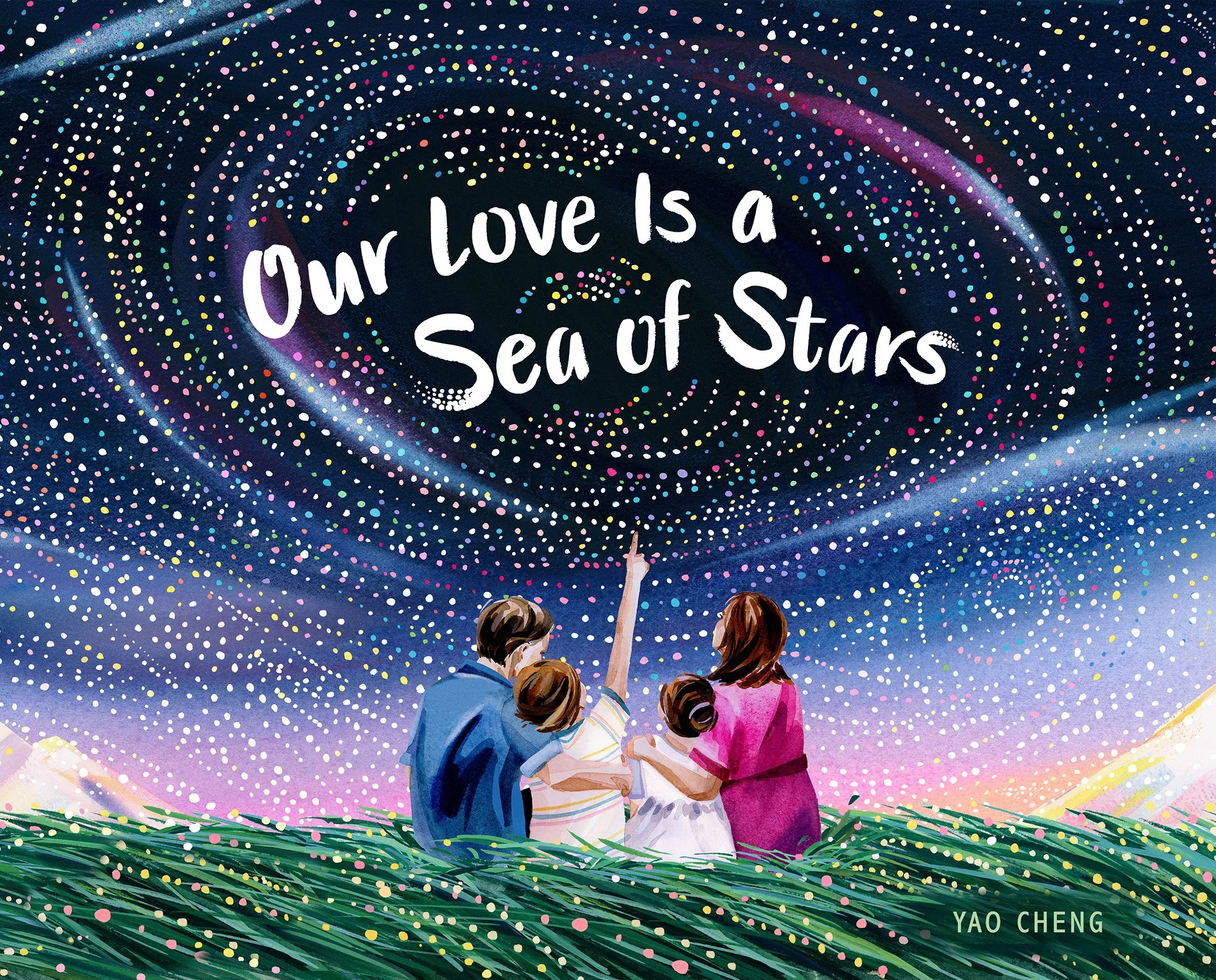
Congratulations on your first book "Our Love Is a Sea of Stars", which comes out next year! Please tell us all about it.
Thank you so much! It comes out on April 20, 2027, and I’m beyond thrilled for the release as it has been about 5 years in the making…
Our Love is a Sea of Stars is a book that contains many layers. The meanings I’ve imbued into this book feel just like the title itself- they are as endless as a sea of stars!
Firstly, it is about what our love for each other looks like. I always find that words are not enough to describe the love we feel for another, especially from a parent to a child. This idea was first inspired by my children’s nightly bedtime questions about how much I love them. While I loved this game, and as elaborate as we would get, such as “I love you more than 10,000 chocolate cakes!”, I still did not feel like it captured the endlessness, the infinitude of love. This book is my way of answering their question by painting a book to show the expansiveness of love. The book is filled with places and things in nature that a child can relate to- like “it (love) is as vibrant as the coral reefs.”
Another layer to this book is about me wanting to pursue an artistic idea that I’ve had for over 20 years. I’ve always wondered if we can rely on imagery alone to tell a story, to convey a feeling. It is what I try to do with every watercolor painting, but I’ve never tried it as a narrative story. What would it mean for a child and a parent to open the book, as an art object, and fall into this world along with me and its characters? What if there are only the most necessary of words to drive the story from beginning to end? And how far can I push watercolor as a medium to tell a story that is dimensional and rich with life like nature itself? This book is my way of trying to answer these questions as an artist. I also wanted every part of this project to be hand-painted. It is a large part of why it took many years to finish, but it is my way of thinking through what AI means for us as artists.
As I’m sure you know, art is also incredibly powerful, and deeply healing. This book began as a love letter to my children, but I also wrote it as a letter to the inner child in all of us. Whether it is a child or an adult reading it, it is important to me to remind the reader, as art reminds me, that in the difficult moments of our lives, love is always there. It is what connects us to each other and it is what carries us through those hard times.
There is also the imagery of Mother Nature as the voice speaking to all of us, and that comes from my enduring curiosity and love for nature. And what is so interesting is that there are stars that “shimmer” on every page. As you flip through the book, you’ll see the stars sometimes as ones in the sky, and other times as the shimmering colors patterns in the coral reefs. Either way, the feeling and look of glowing stars are present throughout. Lastly, I also wrote this book for my grandfather. There is an author’s note in the back where I talk about what his love for me was like, and how I used it as a guiding light as I painted every spread. My grandfather and my art played very important roles in shaping my early years. It is with his care and wide latitude to pursue art as a career that I am the artist that I am today. I owe so much of myself to him and I’m grateful that the publisher gave me the opportunity to include this in the book as well.
How are you navigating the growing use of AI and its impact on creative industries?
I am still figuring it out! What I do know is that watercolor cannot be fully replicated with AI. It is inherently a physical, in-the-moment type of medium. The washes are as dynamic as they are because it was made by the human hand and depends on the subtle nuance of water to pigment, dry vs wet, and so on...So for me moving forward, my work will always have a deep emphasis on the human hand and art as a powerful form of human expression. I do use AI everyday in advising me on strategic ways to conduct my business or navigating the intricate world of e-commerce. But the work itself is always going to be hand-painted. I love the imperfections of every brush stroke because that is what it is to be an artist. It is why, I believe, society values art. Because it reflects the humanity in us all.
As for the creative industry, it is a hard story that I see unfolding. I have very much felt it in my own licensing business. Our current economy and the increase of AI has made artists' ability to sell work much more difficult. I am hopeful that people will value handmade art even more than before, but this middle part before we get there is very challenging as an artist and business owner.
What advice would you have for someone just starting out as an artist to build a solid foundation for a creative career?
You have to believe in and love what you do, 120%. The creative industry goes through big swings and because what we do is out of the box, every creative business is different. Therefore, there is not a roadmap, although there are great resources out there like Real Artists Wear Black and creative friends like Lisa Congdon who is so supportive to help others along! But, because each of us do it differently, I think a creative person will always be tested in the direction or vision they are embarking on. I certainly have many doubts about whether or not I am making the right decisions in my business. In those hard moments, believing in my work 120% helps me keep pushing this forward.
For someone just starting out, remember that we all have imposters syndrome! It used to inhibit me from reaching out to others with questions because I did not want to appear like I was in the dark. But, reaching out and asking for help is how we know we are part of this community of creatives and how I've grown as an artist. This will also help anyone starting out to continue growing.
Lastly, I also think it’s important to give back with art, even if someone is just at the beginning. Art is a human visual language- it communicates our ideas and emotions across age, geography and culture. It doesn’t matter if you are starting out or a seasoned painter, art remains true to this. So for anyone starting out, remember that art is this wonderous and is what connects us to each other. It is from this perspective that I try to inspire kids to keep making art. It is magical and for all of us.