

Drawing the Nahual: Nayeli Lavanderos on Power Animals, Presence, and the Language of Stillness
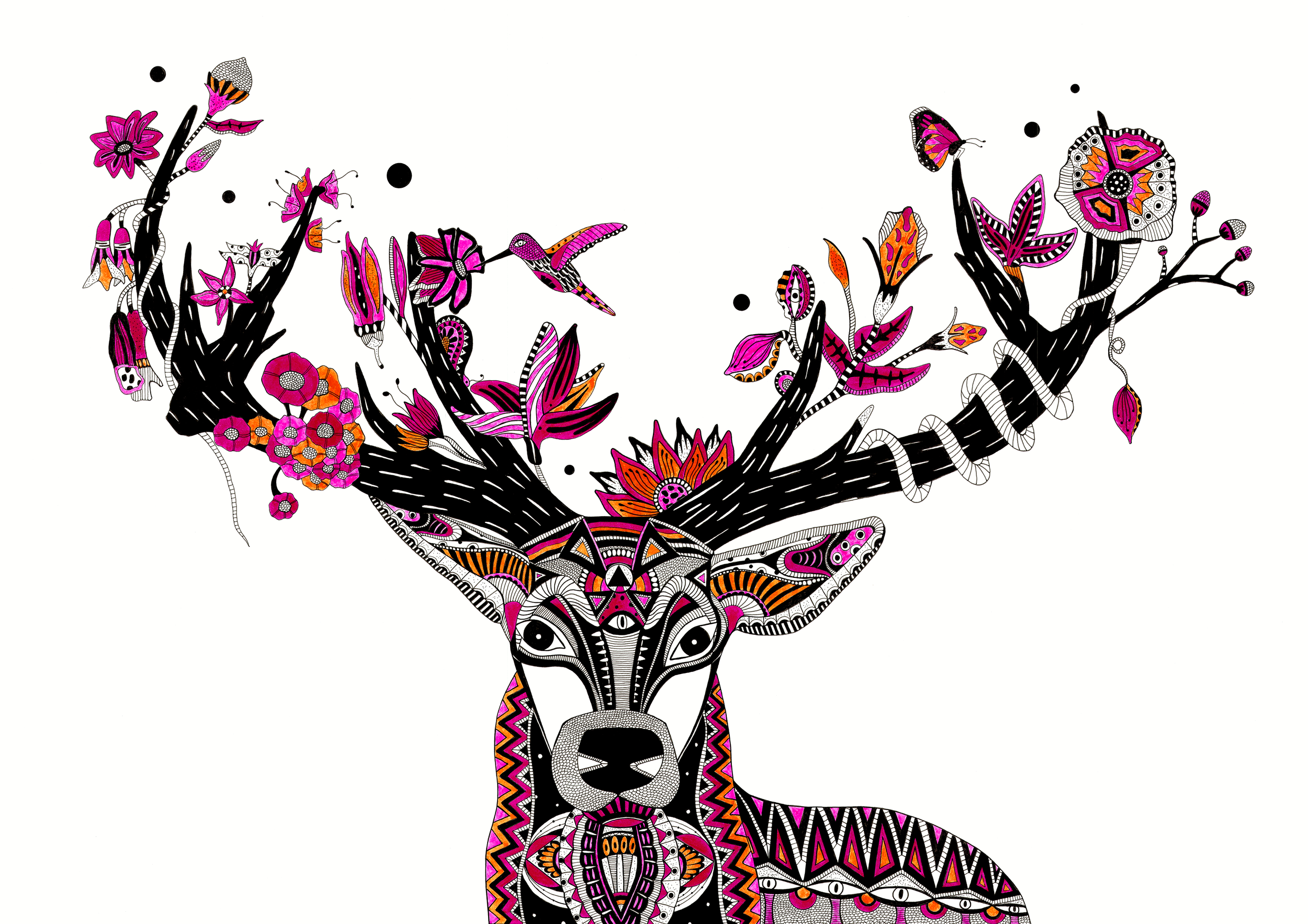
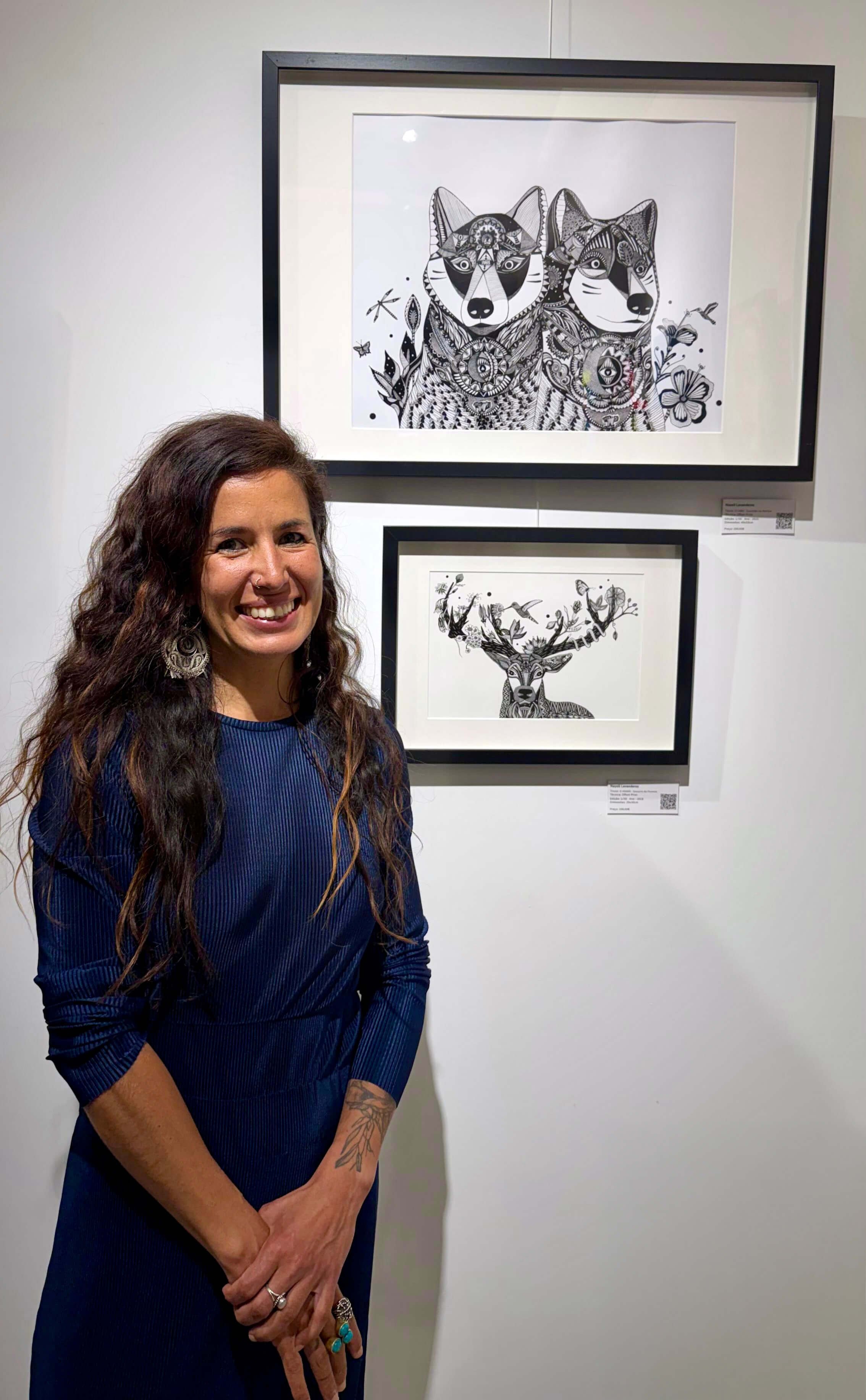
Nayeli Lavanderos is a Mexico City–born artist now based in Lisbon, Portugal, whose path has also taken her through Brooklyn, New York. Working primarily in fine art pen on paper, she creates intricate, meditative drawings of what she calls Power Animals — figures rooted in the Mesoamerican concept of the nahual, the animal companion believed to walk beside a person through life. Her practice draws on a shamanic practitioner training undertaken in Portugal, and her work has been shown in group exhibitions and developed through both a personal body of work and a growing commission practice.
Artist Statement
My work lives at the intersection of an ancient tradition and a very contemporary visual language. I draw Power Animals with fine art pens directly on paper, with no sketching and no undoing; every mark is final, and that constraint is part of the translation itself. I begin each piece with the eyes, because that is where the presence lives, and from there I let the drawing unfold intuitively, line by line and pattern by pattern. The geometry that moves through each figure is not decorative; it is structural, a container that holds the animal's presence and speaks to a world I was raised to understand as patterned and interconnected. I hope the people who spend time with these drawings slow down, and that somewhere in the stillness they recognize something in themselves.
shamanicanimalartist.com
Interview
How have these different geographies and cultures shaped your relationship to animals, spirit, and the natural world in your drawings?
Mexico shaped me in many unexpected ways. I grew up surrounded by a culture that understands the natural world as alive and interconnected — where animals, plants, and the elements are not separate from human life but woven into it. Ancient cosmologies, ceremonies, rituals honoring deities, ways of moving through the world that treat everything as part of one ecosystem. I felt deeply connected to animals from childhood — drawing them, looking for ways to represent them that felt true to what I sensed they carried.
New York arrived as a counterpoint. The pace, the pressure, the relentless forward motion of a career in motion design. I began a spiritual practice there as a way of staying grounded — a way of navigating all that noise without losing myself. It was in New York, during a painful period of heartbreak, that I made my first drawing in this style — The Howling Wolf, black ink on paper. Something about that moment cracked open something within. I kept drawing, began showing in group exhibitions, and slowly built a practice alongside my design work.
Portugal brought something I hadn't anticipated: stillness. The ocean, the light, the slower rhythm of life. Space to go inward. A few years after moving here, I undertook a shamanic practitioner training where I encountered the concept of Power Animals with real depth and formal understanding. I recognized it immediately — not as something new, but as something that felt familiar. In Mexico, this same idea lives as the "Nahual." The training gave me the conceptual and spiritual framework that redirected my work entirely and gave it its essential nature.
Each place gave me something the others couldn't. Mexico gave me the roots. New York gave me the rupture that started the work. Portugal gave me the space to understand what the work actually was.
Your Power Animal illustrations emerge from a slow, meditative process and are rooted in the Mesoamerican principle of the nahual. How do you translate that inner, shamanic experience into specific lines, patterns, and forms on the page?
The nahual, in Mexican cosmology, is the animal that walks beside you through life — a companion, a mirror, a figure of inner symbolism and archetypal presence. I grew up in Mexico, where the natural world is understood as alive and interconnected. It's the worldview I was raised in. And the way I'm working with it now is entirely contemporary — rooted in an ancient tradition yet expressed through a visual language very much of this moment.
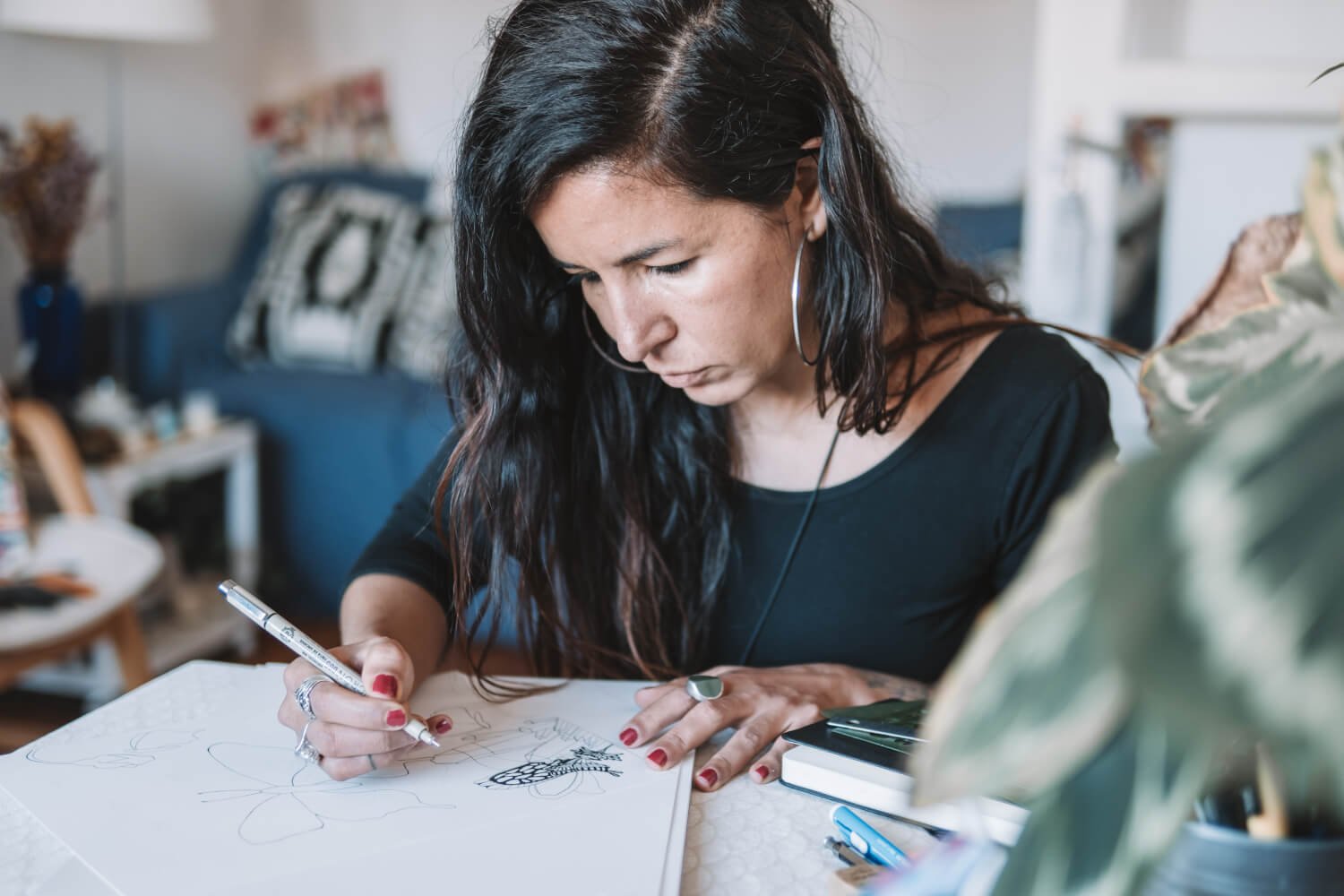
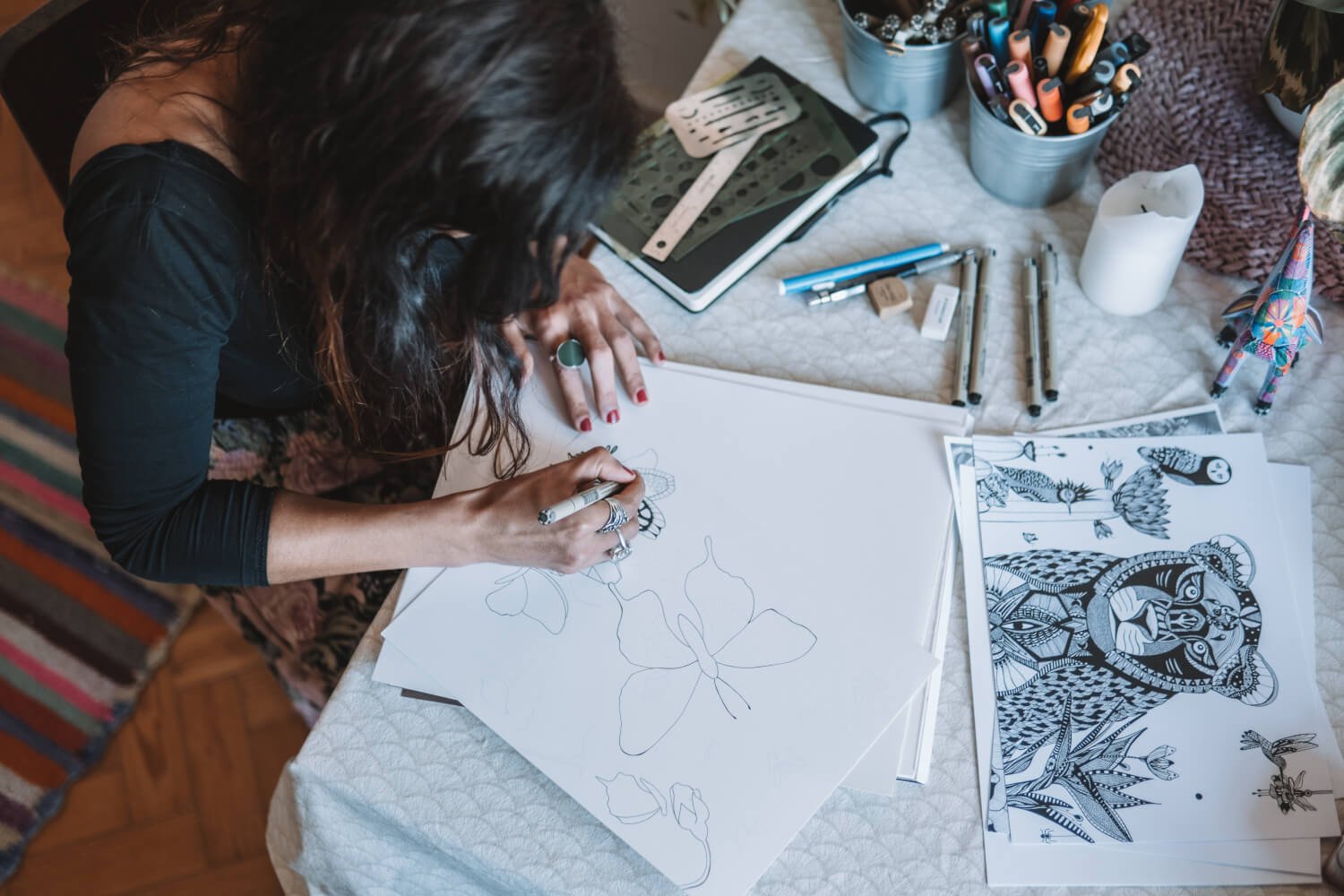
I work with very fine art pens directly on paper — no sketching, no undoing, no going back. Every mark is final. That constraint forces a quality of presence that I think of as the translation itself. The patterns, the symbolic details, the geometric elements that weave through each animal don't come from planning — they arrive through sustained attention, over days and sometimes weeks. The detail is not decorative. It's presence made visible.
The shamanic experience doesn't precede the drawing — it happens through it. The act of drawing slowly, with full attention, is itself a form of inner listening. The nahual isn't something I apply to the work. It's the place where the work comes from.
Animals in your work are treated as presences rather than symbols. How do you "listen" to these presences during the creation process?
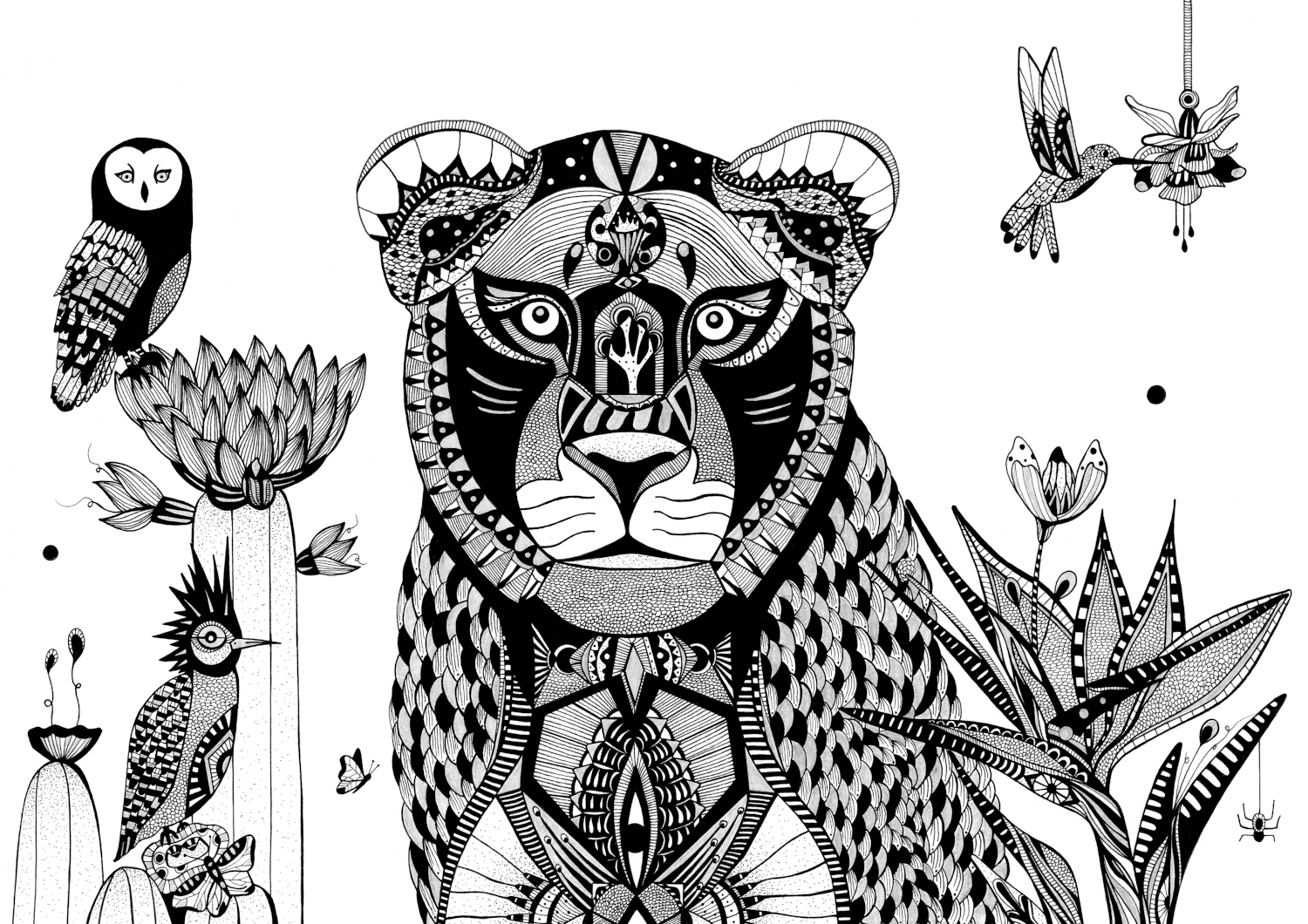
When I draw a Power Animal, I always begin with the eyes. Before any pattern, before any detail — the eyes are where the presence lives. I need to feel the animal looking back at me before the drawing can go anywhere. Once that happens, something shifts. It stops being a representation and becomes an encounter.
From there I connect intuitively and allow the drawing to unfold, line by line. A particular pattern leads to another. A detail emerges that I didn't consciously choose. There's a genuine pleasure in not knowing where it's going — in sitting with that openness, trusting that the piece will find its own form. I've learned to trust these arrivals rather than step outside the flow to evaluate them.
The listening isn't mystical in the way people might imagine. It's closer to the deep attention you give something you genuinely care about — where you're so fully present that it begins to reveal itself. There are moments in every piece where something arrives that I couldn't have planned. Those moments tell me the presence is there.
Sacred geometry appears throughout your compositions, often framing or intersecting with the animal forms. What draws you to this language of geometry, and how does it relate to the cosmologies that inspire you?
Geometry arrived in my work intuitively before I had language for it. I was drawn to pattern and structure from the beginning — to the way repeating forms create rhythm, the way symmetry creates stillness. Only later did I understand how deeply geometry is woven into Mesoamerican visual culture — in architecture, in textile, in ceremonial art. It was already inside me before I consciously chose it.
In my work, geometry functions as a kind of container for the animal's presence. The patterns that weave through the body of each Power Animal aren't decorative — they're structural. They hold the energy of the piece. They create a visual language that sits somewhere between the organic and the ordered, between the wild and the sacred.
There's also something about geometry that speaks to the cosmological dimension of this work. Many traditions understand the universe as fundamentally patterned — that beneath the visible world there is structure, repetition, meaning. Drawing these patterns into the body of an animal feels like an attempt to make that visible.
How do you hope viewers will experience the stillness and transformation embedded in your drawings?
I hope they slow down. That's the first thing — that something in the work asks them to stop moving and actually look.
These drawings open slowly — the more time you give them, the more they reveal. They're not meant to be seen quickly. The detail asks you to stay. In a moment when so much art competes for attention through scale or spectacle, I'm interested in the opposite — work that rewards closeness and patience.
Beyond that, I hope viewers feel something they recognize but couldn't identify. The Power Animals carry archetypal qualities — strength, devotion, grief, protection, transformation — that live in all of us. When someone stands in front of a piece and feels unexpectedly moved, I think it's because the animal is reflecting something already inside them.
That recognition is what I mean by transformation. Not a dramatic shift, but a quiet one — a moment of meeting something true.
You describe drawing as a nourishing link to your inner landscape and intuition. What does your ritual of sitting down to draw look like, from first impulse to final mark?
It begins before I sit down. There's a moment — sometimes during a walk, sometimes in the space between sleeping and waking — when an animal arrives with a kind of quiet insistence. Present until I pick up the pen. That's the first impulse, and I've learned to trust it.
When I sit down to draw, I create conditions for stillness. I put on meditative music — it allows me to drop into a flow state while remaining open and receptive, listening and being guided at the same time. Then I search for references — looking for a specific pose that feels right for that particular animal, that carries the quality I'm reaching for. Once I find it, I trace only the outline or silhouette as the base. That's the structure. Then I let go.
The middle of a piece is pure flow — following what wants to come next, filling space line by line, pattern by pattern. Time disappears. Hours pass without my noticing. That flow state is what I return to the studio for. It's nourishing in a way that's hard to describe — a sense of being exactly where I'm supposed to be, doing exactly what I'm here to do.
The final marks are the quietest. Knowing when a piece is finished is its own kind of listening. Usually I feel it before I can explain it — a sense of completion, of the presence having fully arrived.
Commissioned work is an important part of your practice. What does the experience of drawing a Power Animal for a specific person look like, and what do you hope they receive from it?
Every commission begins with a conversation — about the animal, about what it means to the person, about what they're carrying at this moment in their life. That context shapes everything, even though the drawing itself remains entirely my own artistic interpretation. I don't illustrate what someone describes. I listen, and then I draw what I hear.
I understand Power Animals not as symbols assigned from outside but as inner companions — figures that already belong to the person. My role is to draw that companion into form with care and attention. The same process I bring to every piece, directed toward something very specific and personal.
Sometimes I offer a guided drum journey before beginning — a way for the person to meet their Power Animal before I draw it. Some people find it changes how they arrive at the commission entirely. It also gives me a richer sense of the animal I'm reaching for.
When a commission is complete, I hope the person feels an immediate connection to it. That the animal I drew is the one they recognize as theirs.
Looking ahead, what new territories — spiritual, personal, or formal — are you most curious to explore in your Power Animal project and beyond?
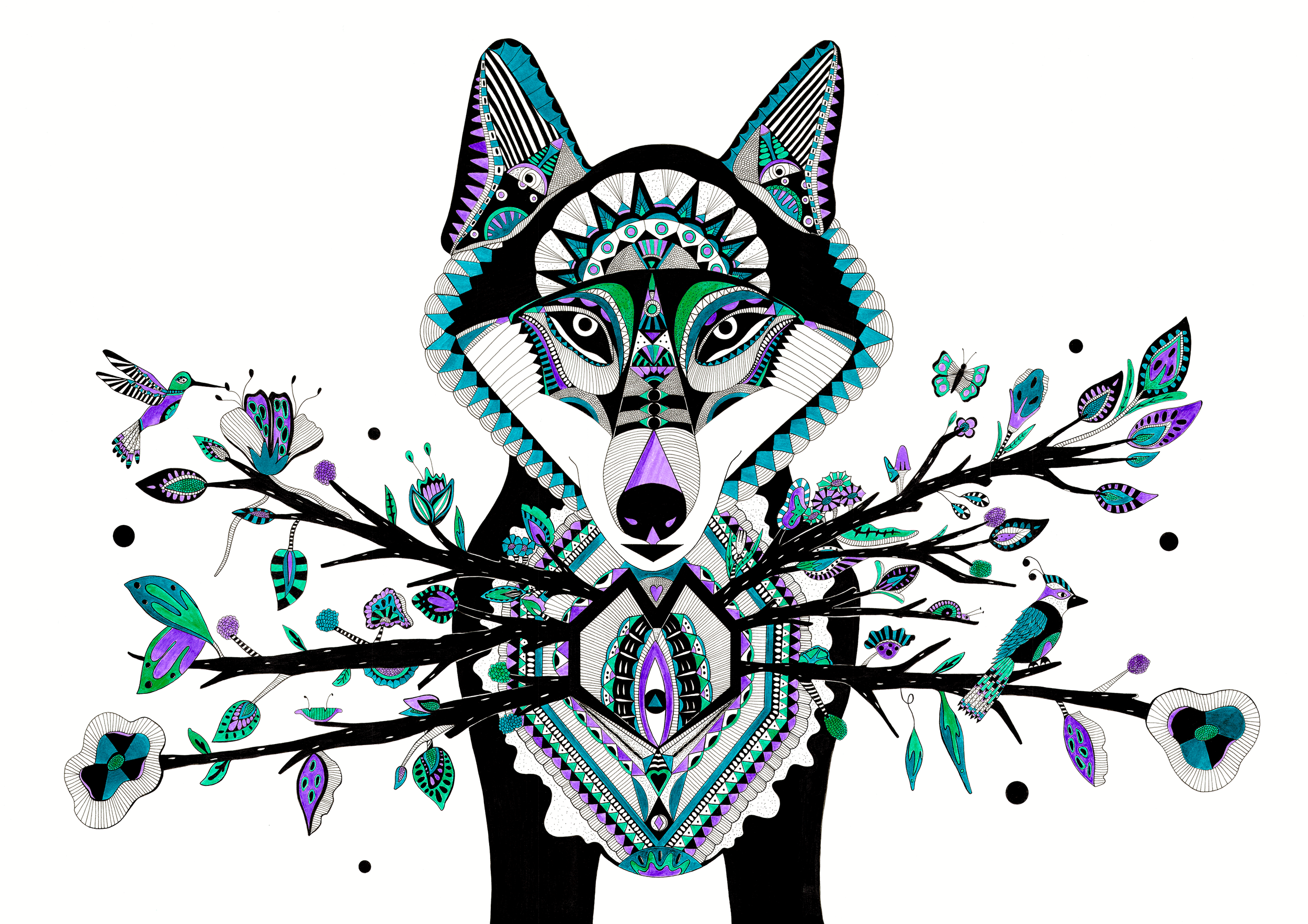
Formally, I'm in the middle of a significant shift. I've begun working in larger formats — up to 23 × 33 inches — and introducing color for the first time. The first pieces in this new series are already complete, and something has changed. The animals feel more present at this scale. More commanding. The color arrives the same way the line does — intuitively, one decision at a time — and it's opened a new conversation with the work that I'm only beginning to understand.
I want to see where this takes me — what palettes belong to which animals, what compositions emerge when the animal has more space to inhabit. There's a conversation happening between the pieces that I can feel but not yet fully see.
I'm also moving toward exhibition contexts that position this work within contemporary drawing rather than illustration or craft. The nahual tradition is one of the oldest ideas in Mexican cosmology, but the way I'm working with it is entirely contemporary. I want the curatorial framing to reflect that.
Commissions are another territory I'm drawn to explore more deeply. There's something particular about drawing an animal for a specific person — knowing their Power Animal, understanding what it carries for them, and then meeting that animal on paper with full attention. Each commission is its own encounter. I want to develop that relationship with collectors and deepen it over time.
What keeps me returning to the studio is the work itself — what these animals carry, and what it means to draw them slowly, with sustained attention. Each new piece opens a question the previous one couldn't answer. The animals keep arriving. I keep listening.