

Hard glass rods slowly soften and turn into fluid in the burning heat of thousands of degrees, melting into a liquid form that can be shaped by the artist. Once cooled, the glass form is permanently set—its position is fixed and cannot be changed unless it is shattered. This "irreversibility" is the core of Yujie Yang's work.
Born in 2000, Yujie Yang has lived and worked in China, Cyprus, and the United Kingdom. Moving between different areas, she has seen firsthand the cost of industrialization and how it changes cities. Glass as a medium became her way to reflect and explore these related themes. Not to pass judgment, but to take a sober look at what we have sacrificed in the name of progress and how we live with such irreversibility.
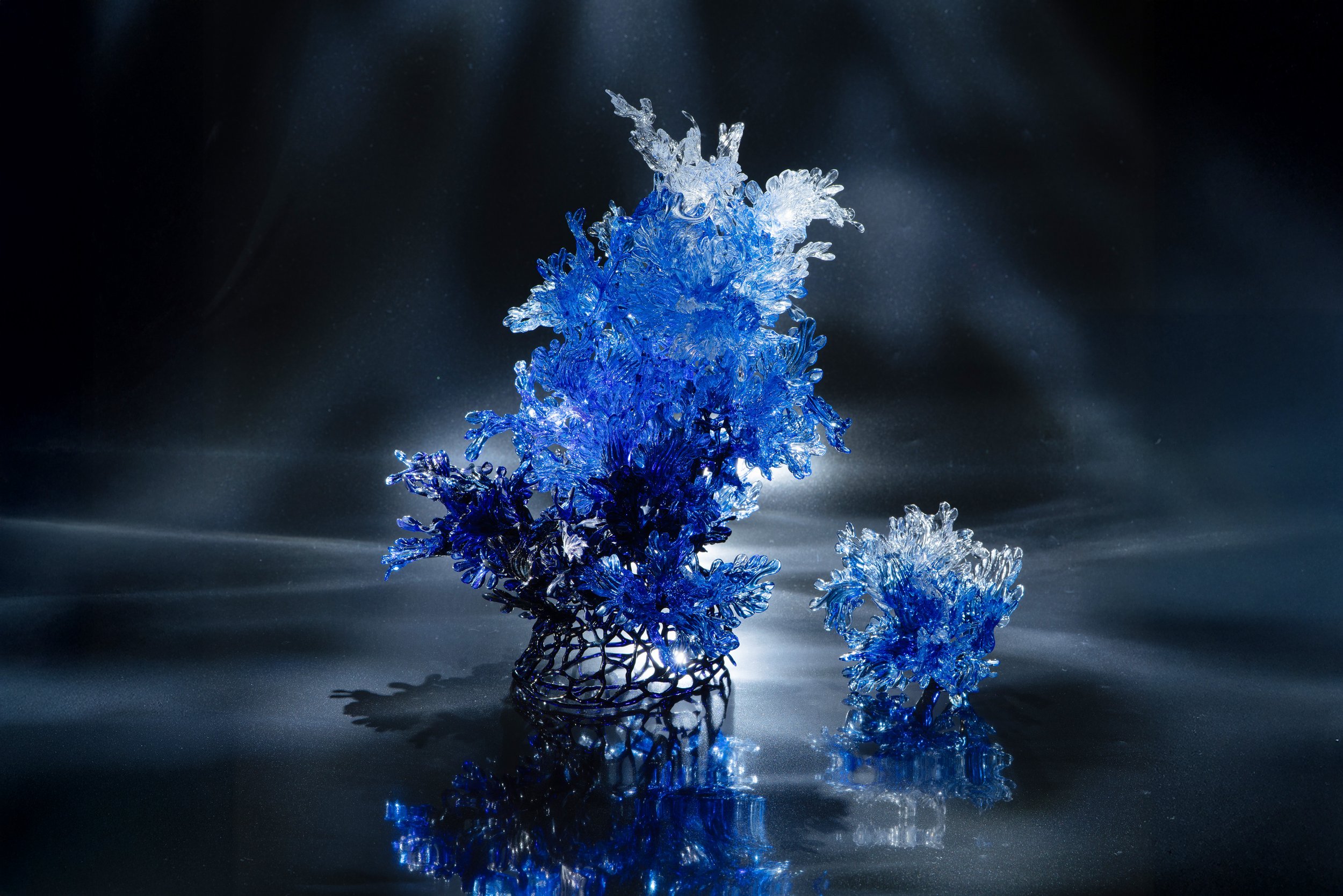
As a material, glass holds the logic Yang wants to explore in her work. It starts as loose, shapeless sand, plentiful and common, and then, through deliberate, controlled industrial processes, it becomes the glass we all know and see. Just as glass cannot revert to sand, this change is irreversible. Finally, the object born of nature becomes one of the most classic products of the Industrial Revolution. This is the trajectory of modern society's development. Thermodynamically, the establishment of order in one place always comes at the expense of disorder somewhere else. Progress produces clarity and efficiency by displacing its costs beyond view. Wetlands are drained to create productive farmland. Forests are cut down to build mass production factories. In the supermarket, customers only see the neatly arranged vegetables, but not the traces of the ecosystems that were lost in this process.Yang’s work remains attentive to this obscured and hidden space. She asks how one might see beyond the surface and respond to losses that are irreversible, that were integral to the order we now inhabit, and that the dominant narratives of progress work hard to conceal.
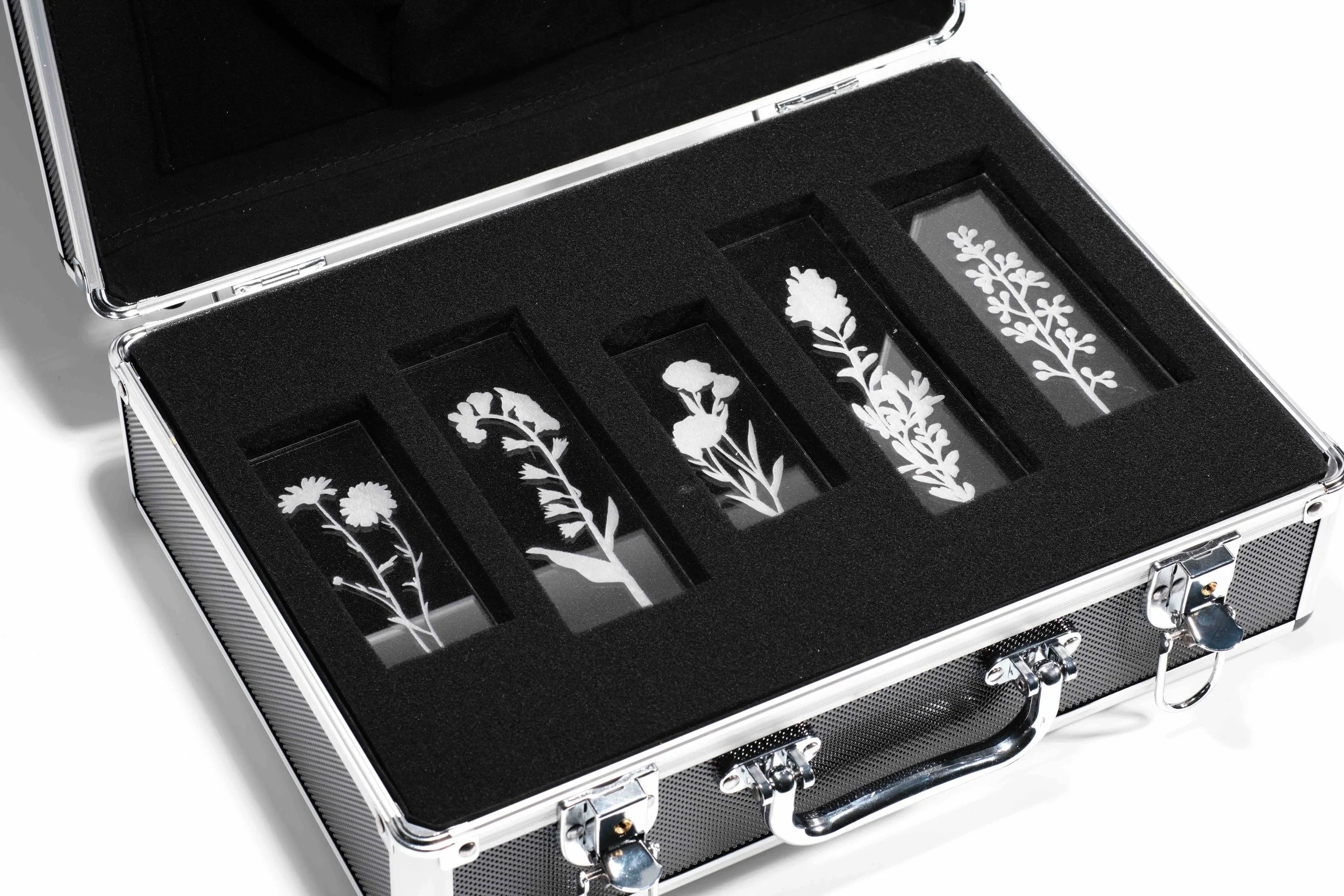
Her early Fragments series emerged as an attempt to bear witness. Chosen for their apparent permanence—Yang etched the silhouettes of wetland plants facing extinction on to transparent glass panels. Unlike paper or photographic media, glass would not fade; the image became embedded in the material itself. Yet a contradiction soon became unavoidable. These forms could only be etched from specimens that had already been collected, already removed from life. The archive expanded only as the living world contracted. Rather than preserving what was disappearing, each work quietly marked another disappearance. Fragments thus accumulated not as a record of survival, but as an inventory of loss. Over time, it became clear that recording loss did nothing to stop it, and this realization began to alter Yang's approach. If documentation could only follow disappearance, she began to consider whether creating itself might offer another way of engaging with time.
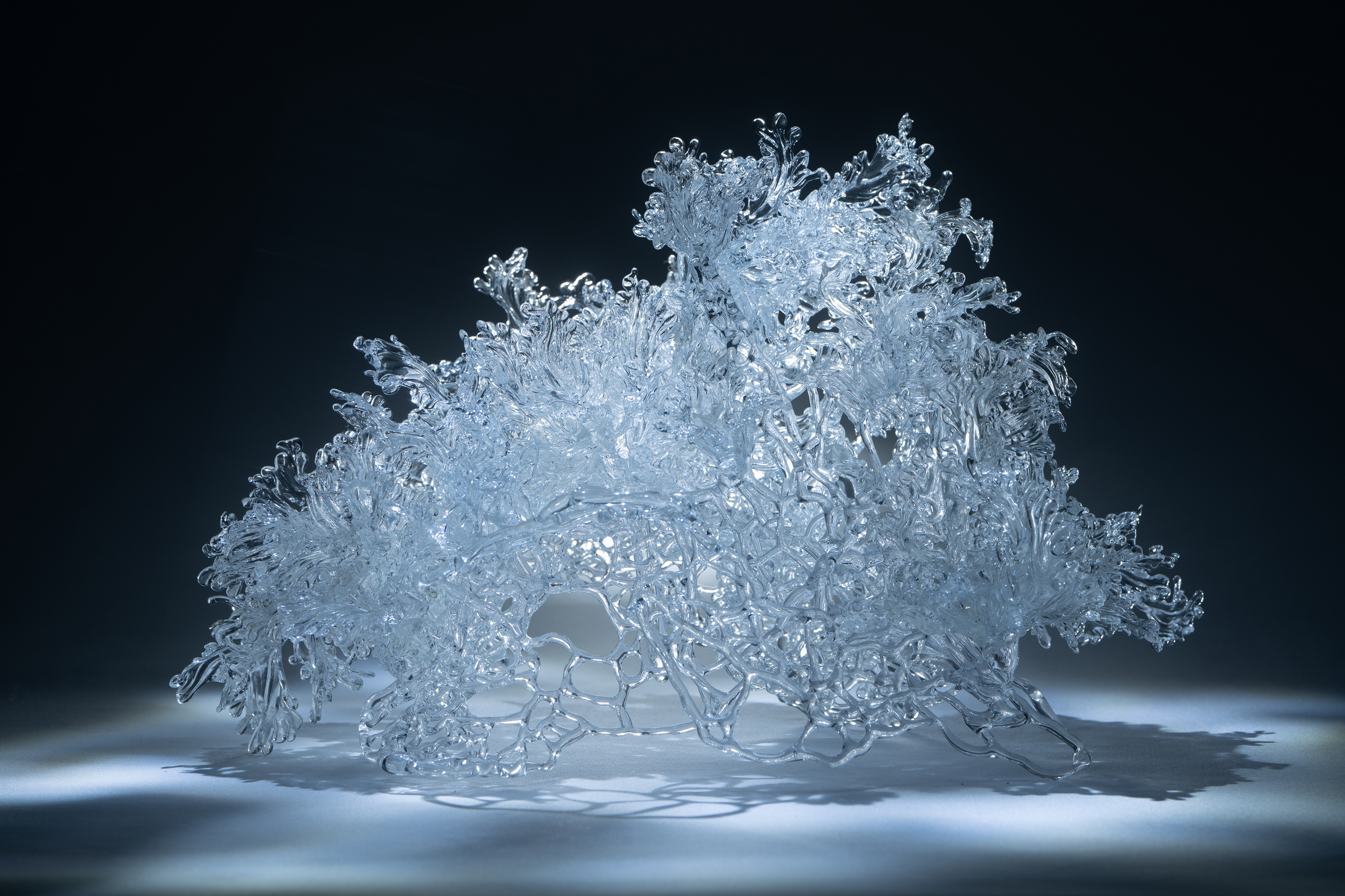
In the ongoing series "Ephemeral", the artist chooses to confront the limits of documentation, actively pushing against them. This is an attempt to do something more than record, but rather to preserve the fleeting nature of the world. Delicate glass sculptures here capture the moment of transformation in waves crashing, moss growth, and ice on the verge of melting. These sculptures capture those fleeting and ever-changing processes. Glass is regarded as one of the longest-lasting materials. Archaeologists have unearthed glass vessels dating back to 4000 BCE, which are still bright in color. From Yang's perspective, by using this kind of everlasting material to freeze the momentary, change itself will be eternal. But these efforts in the end proved to be in vain. The sculptures are fragile, even a slight change affects their delicate structures. In the act of trying to stop the changes, these works reveal the limits of doing so. As vulnerable to change as the ecosystems they represent, they follow the same rule: once broken, they cannot be repaired or restored. Throughout this process, Yang recognizes that irreversibility—whether chosen or imposed—is unavoidable. Thus, a third way must be found.
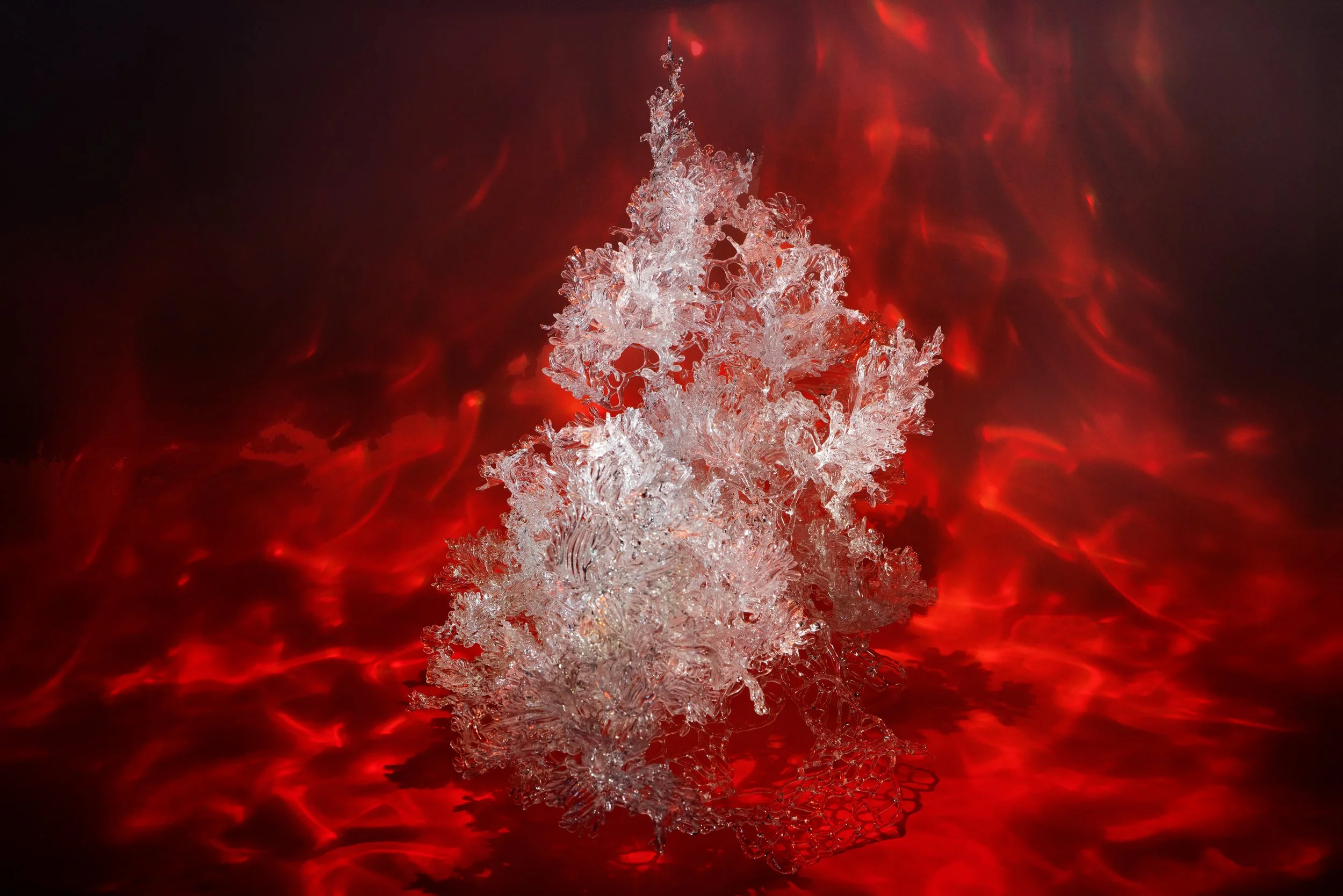
It resulted in the change of the narrative in Yang’s most recent piece, Stillness of the Wind. This time, rather than attempting to maintain the status quo of change, she explored a more uncertain form of coexistence. The branches of glass wind their way around pieces of driftwood as though a soul has departed its body. The driftwood has already been formed by weather and time, and the glass does not want to reverse it or bring it back to its former state; rather, it is derived from the material as it is at this moment, allowing the man-made and the natural to coexist in the same space, with no hierarchy and no attempt at repair. Through this, Yang's relationship with transformation has changed. Where earlier pieces sought to confront change through capture, Stillness of the Wind accompanies it. Yang is no longer concerned with whether or not change can be halted—it cannot be—she rather questions how one might be present with change and how to witness the process that cannot be reversed. The glass branches grow from decay rather than seed, acknowledging their own artificiality. We, too, must acknowledge that industrial modernity has irreversibly transformed the natural world and learn to witness what that transformation costs.
Why witnessing, then? Why make space for mourning? Because mourning begins with acceptance. It does not attempt to undo what has already happened, it asks only for hearing what is ending, or what has already ended. Yang realized that when working with glass, the change in the state of the object as the glass transitions from one state to another can be clearly seen, but the same cannot be said about modern industrial society. On the contrary, it is good at hiding these changes, disguising the process of creating order as if it were free of cost. Living in London, a city whose wealth was built through resources drawn from elsewhere, makes the phenomenon of displacement even more prominent. With this in mind, Yang's glass works push what is usually out of sight back into view, bringing attention to moments of strain, of breakage, of instability that are often overlooked.
Yang's work is not intended to be accusatory or claiming moral high ground, but rather to call attention to what has been lost in the name of progress. These things should not be quietly shelved, nor should they be considered dispensable. Even though sometimes the losses are irreversible, they should still be acknowledged.
In this case, mourning is not passive grieving, but an unavoidable ceremony to be practiced. Yujie Yang's work does not ignore the brokenness or offer the viewer false comfort. She does not idealize the concept of progress, nor romanticize an unindustrialized past. Instead, she chooses to stand at the intersection of this industrial landscape and does not turn a blind eye to it. Yang's task, and the task of her work, is to recognize the benefits of industrialization, and to confront what it has destroyed head-on. It is from this difficult, unromantic starting point that Yang's work asks how we might continue forward—facing what is, while holding on to what was.
Edited by Alicia Puig
Published 1.21.26