Mark Liam Smith
About the Create! Magazine 10th Anniversary Book: Create! Magazine is honored to celebrate a decade of contemporary art by publishing a look back at previously selected artists: their achievements, career growth, and more since being published. Stay tuned for the book launch in fall 2026, and join our newsletter to stay up to date.
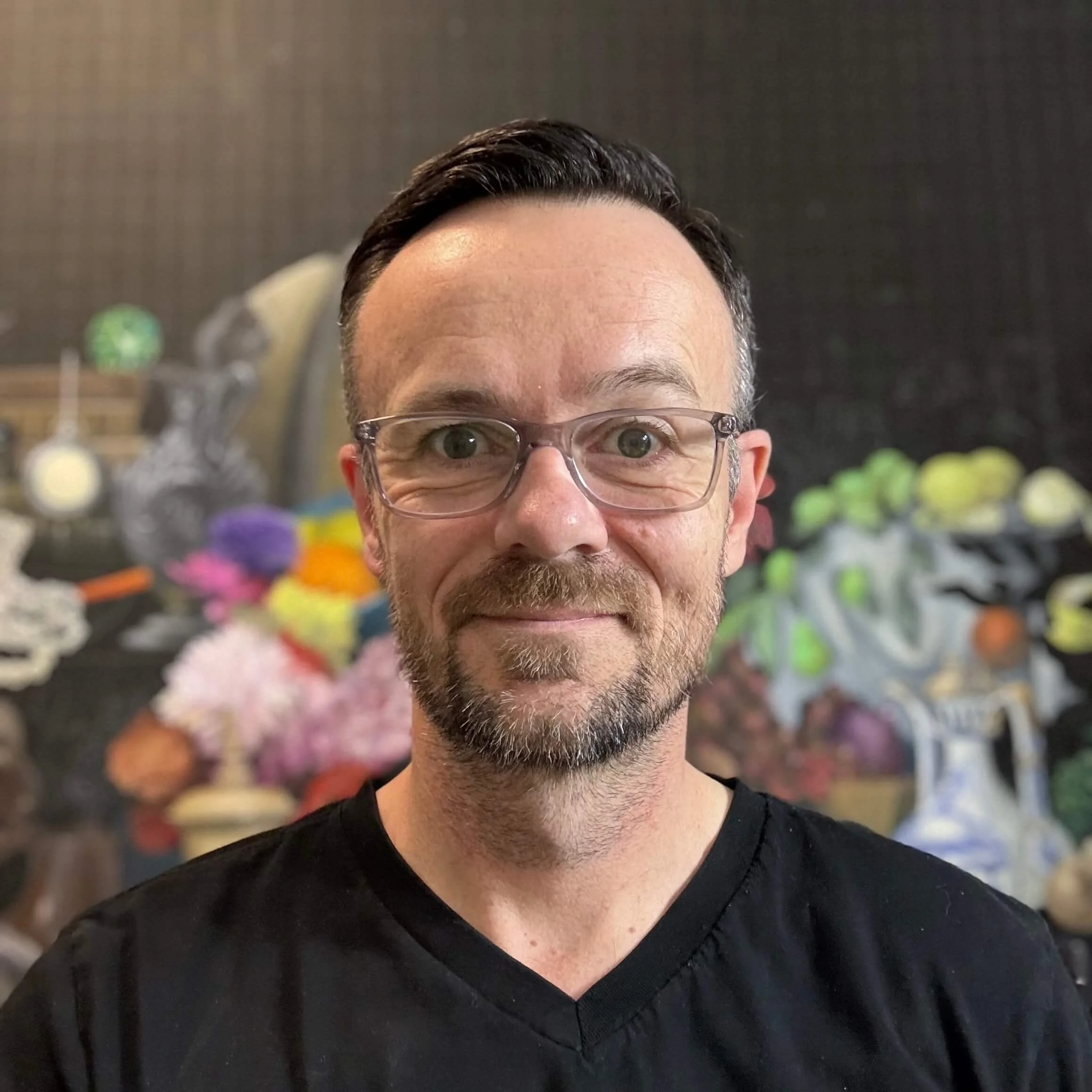
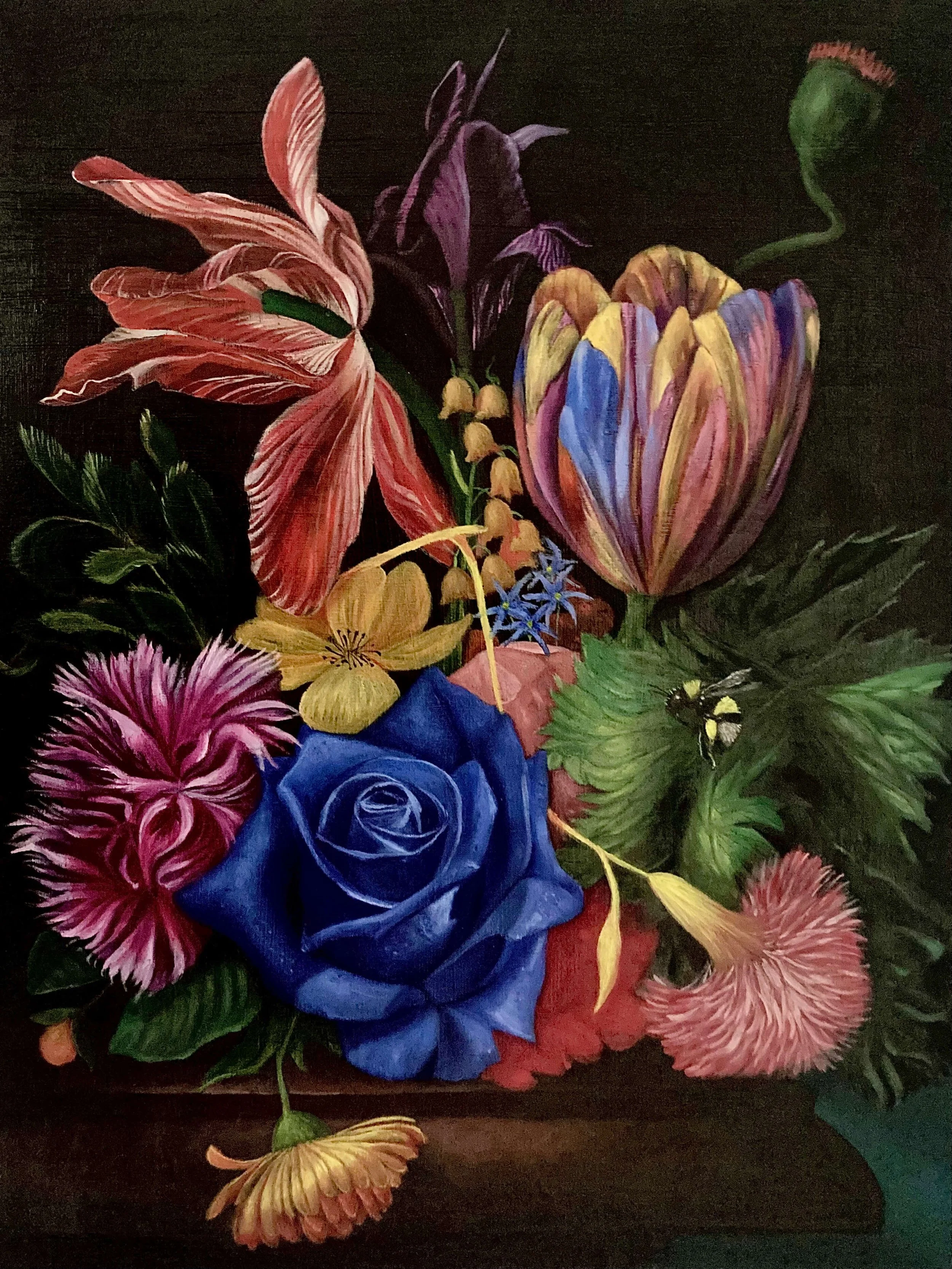
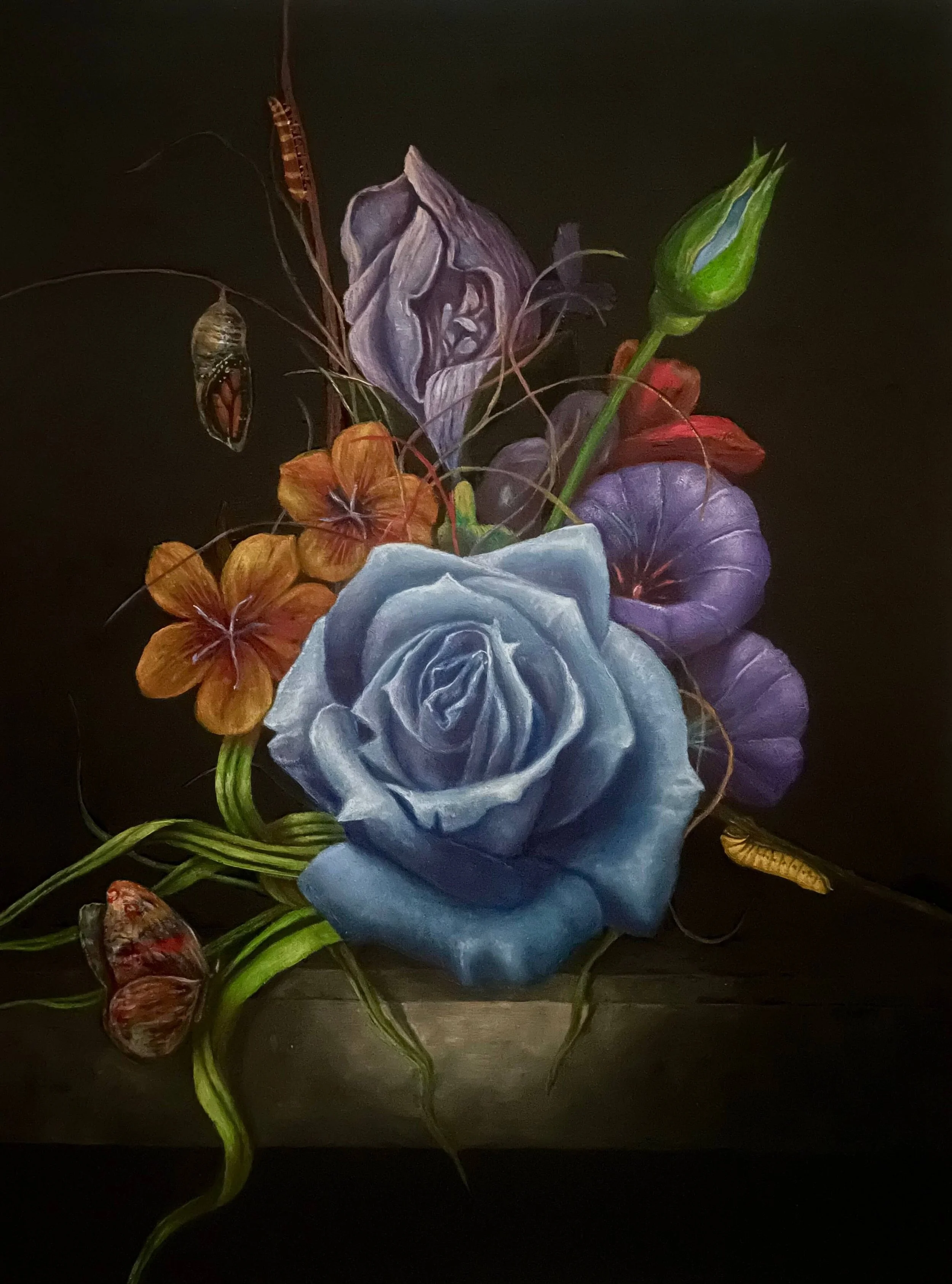
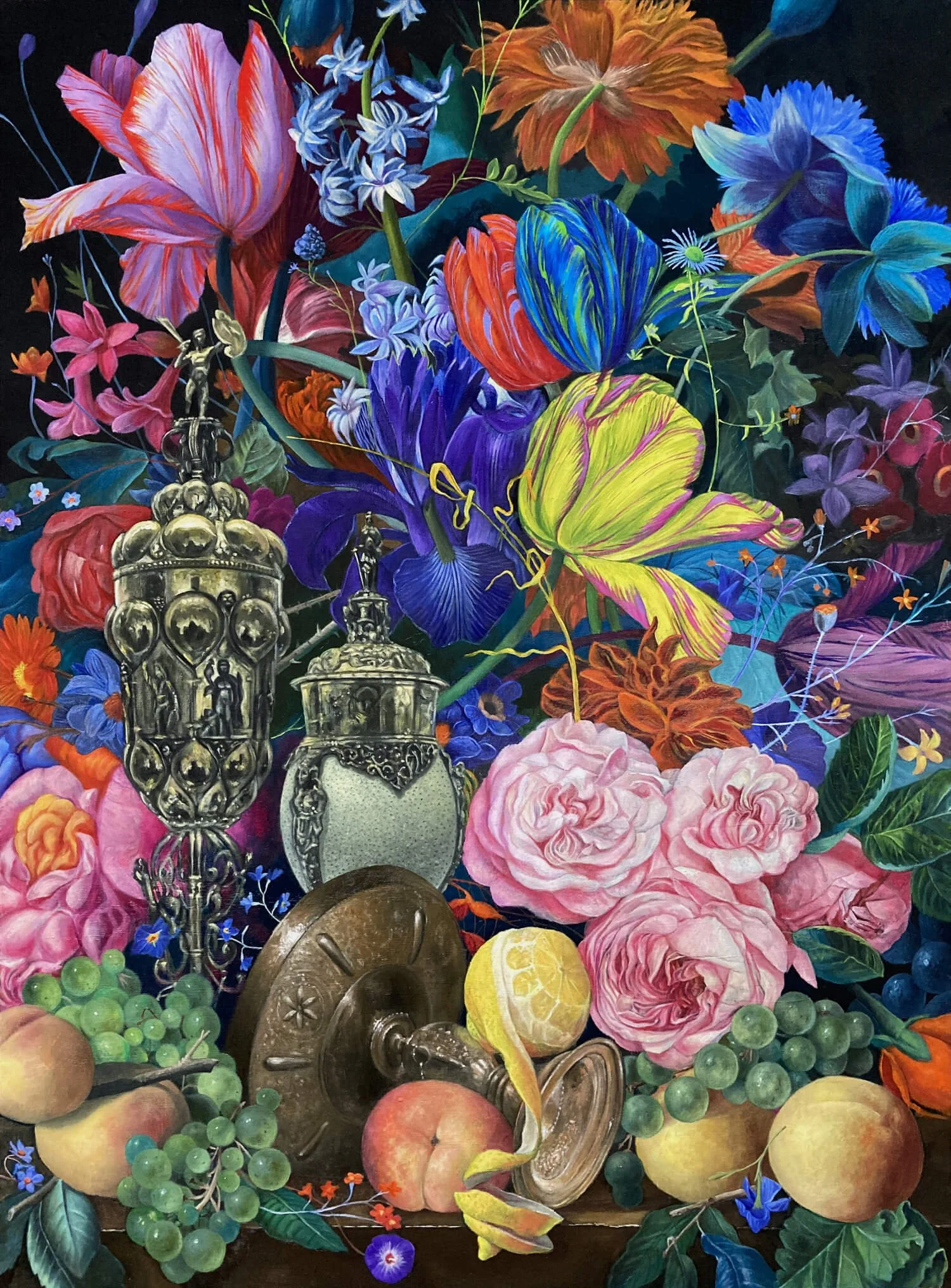
Mark Liam Smith, featured in both Create! Magazine and the Create! Magazine10th Anniversary Book, is an artist based in Toronto, Canada, known for highly saturated, symbolically charged works that merge classical art history with contemporary visual culture. Colorblindness plays a defining role in his painting practice: rather than working toward local colors, Smith embraces non-local palettes that give his paintings an emotional intensity.
With a background in Linguistics, Smith approaches image-making as a kind of visual language, using narrative, symbolism, and recurring art history tropes to explore how meaning is constructed, remembered, and reinterpreted across time. His work moves between digital and analog processes, drawing from the traditions of still life, allegory, and vanitas painting while reframing them through a contemporary lens.
Smith’s work has been exhibited in galleries in Montreal, Toronto, Los Angeles, New York, and London, and at art fairs including SCOPE Basel, PULSE Art Fair Miami Beach, Affordable Art Fair NYC, Satellite Art Fair NYC, Seattle Art Fair, Art Toronto, and Art Busan. Smith’s work is currently available through Treat Gallery in New York City.
Alongside his studio practice, Smith is a widely followed art educator (@markliamsmith), teaching millions of people around the world how to draw and paint through social media. Smith is also a best-selling author. His first book, The New Artist’s Guide to Drawing, helps beginner artists and creative hobbyists learn to draw in an easy and approachable manner. His second book, The New Artist’s Guide to Drawing Animals, comes out in October 2026.
Artist Statement
I re-examine 17th-century Flemish still life painting through a modern lens. I am drawn to this genre of painting for its inherent beauty and symbolism: flowers representing the life cycle, accoutrements pointing to scarcity, drama, and the inevitability of death. For me, within each painting is contained a rich narrative that broaches questions from the mundane to the existential.
Though the themes are universal, the way I express them on the canvas is personal. I am colorblind, which means I have difficulty matching colors on the palette to their real-life referents. Early in my career, I attempted to paint my compositions using local colors. Over the years, however, I have come to view my color blindness not as a deficiency, but rather as a difference. As a result, I use a hyperchromatic palette in lieu of a local one, creating bouquets and memento mori that, hopefully, build on the tradition of still life painting.
www.markliamsmith.com

What is your first memory creating?
When I was around six or seven years old, I used to spend hours drawing scenes on loose pages and then taping those pages to my bedroom walls. I covered every inch of those walls. I used to love making up little stories about the imagined people in my scenes—who they were, what they did, and where they were going.
What is your relationship to your medium? What draws you to it?
I didn’t happen upon oil paint until quite late in my artistic journey. As a kid, I drew with pencils. In university, I learned to paint with acrylic. It wasn’t until after I graduated that I tried painting with oil. I immediately took to oil paint. I liked how forgiving it was, but more importantly, I was drawn to its slow drying time. With oil paint, I can take time to consider my color choices. Being color blind, that’s especially important as I don’t have a natural intuition about colors—I have to rely on remembering mixing recipes and color theory.
What is the main thing you hope your audience takes away from your art?
That life is short. Vanitas paintings are, at their core, intended to remind us just how fleeting our time here is. From fruit to cut flowers and extinguished candles to skulls, the symbolism all points to fragility and impermanence. And, with my hyperchromatic color palette, I hope to draw attention to my color blindness and show that differences don't have to be deficiencies.
Tell us about a challenge you overcame last year.
I wrote a book! Correction: I finished a manuscript. When I’m not painting, I’m on social media teaching people to draw. My how-to-draw account earned me a book deal last year, which saw me write and illustrate more than 150 pages of drawing tutorials. The challenge was in the writing itself, obviously, but also in translating my tutorial-style videos into written form.
What is your main goal or resolution this year in terms of your art practice?
In 2024, I aim to put together another body of paintings, building on the themes of life and death that I have been working on for the last four years.