Claudia Hollister
About the Create! Magazine 10th Anniversary Book: Create! Magazine is honored to celebrate a decade of contemporary art by publishing a look back at previously selected artists: their achievements, career growth, and more since being published. Stay tuned for the book launch in fall 2026, and join our newsletter to stay up to date.
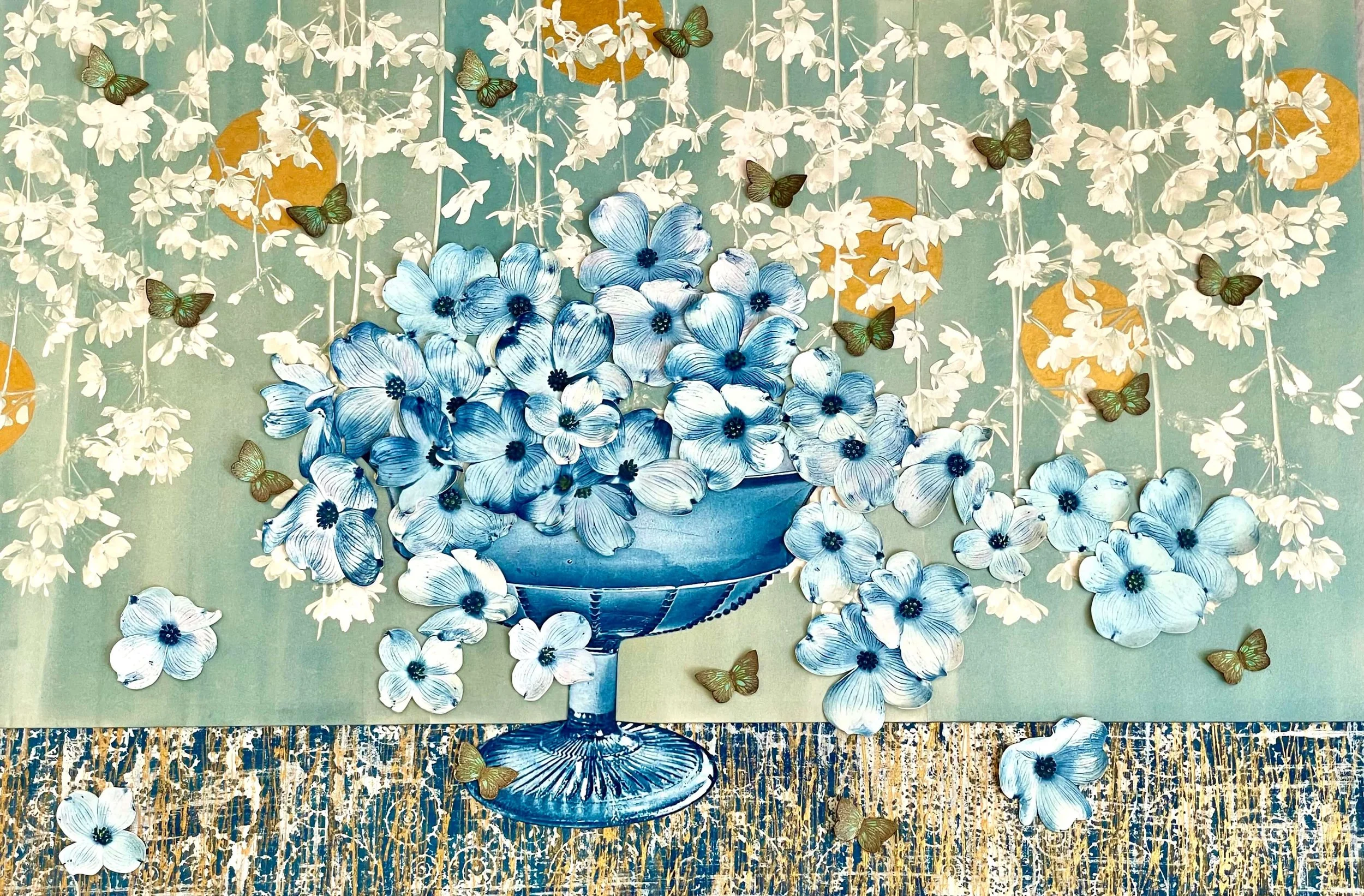
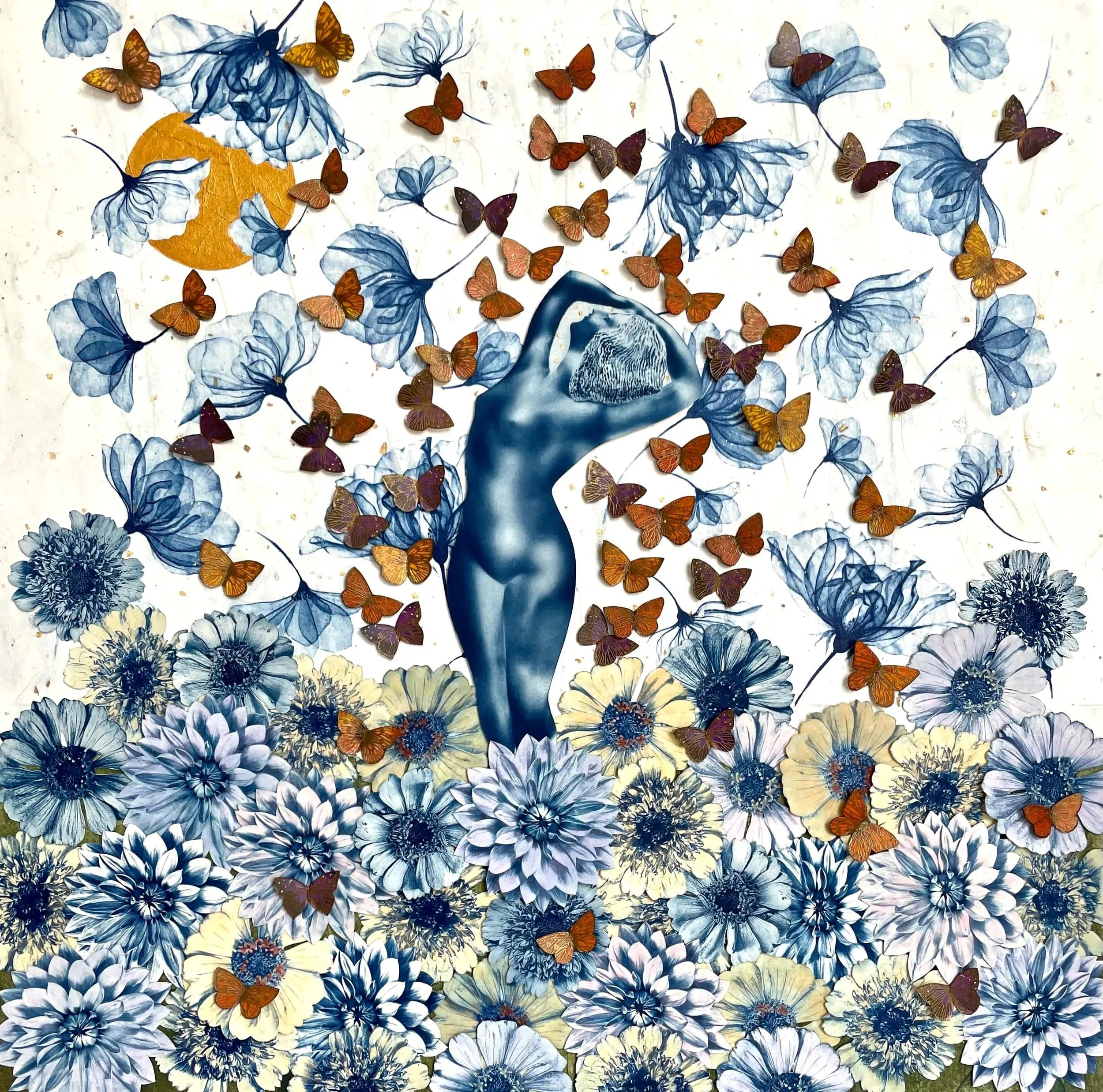
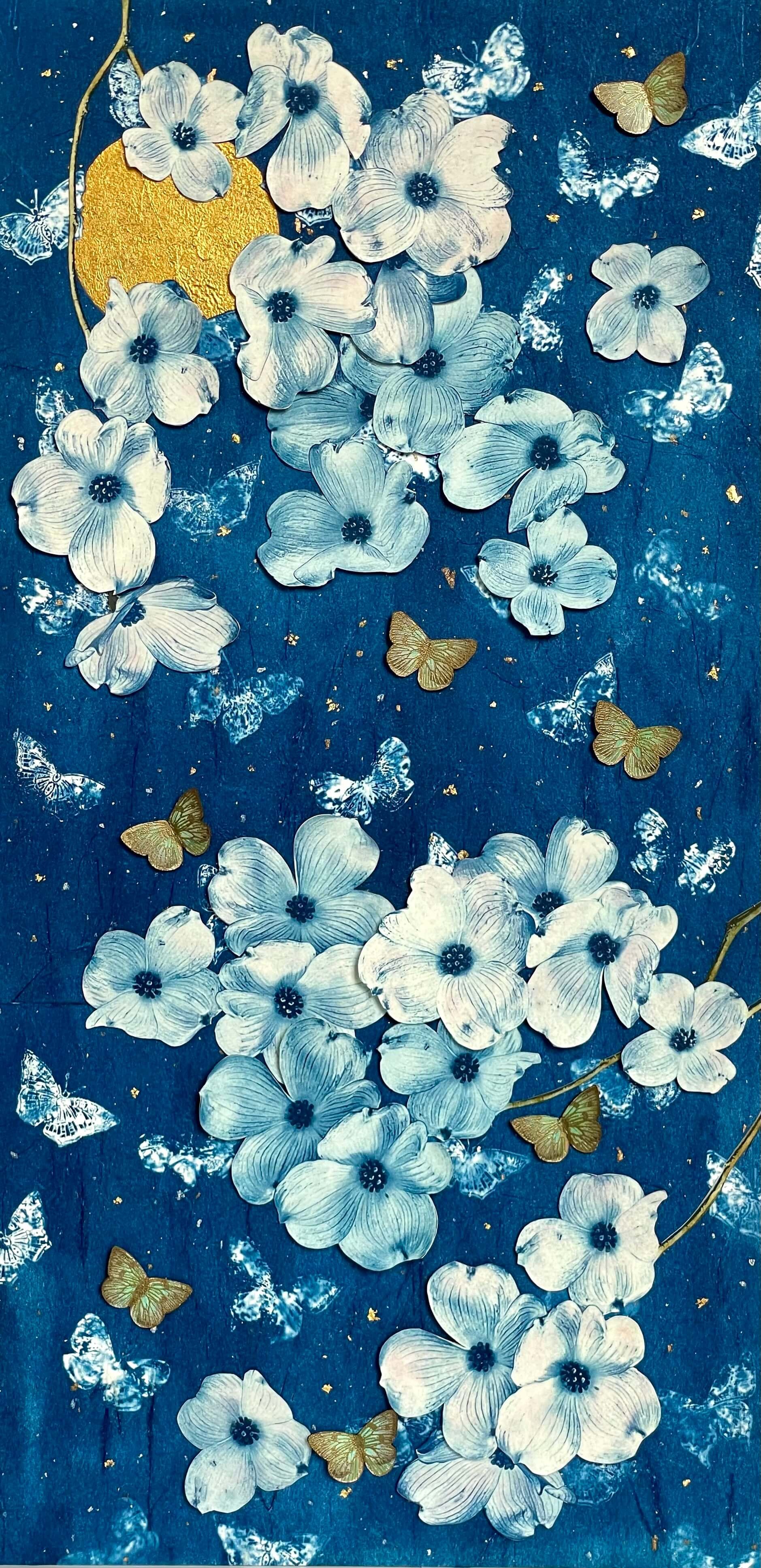
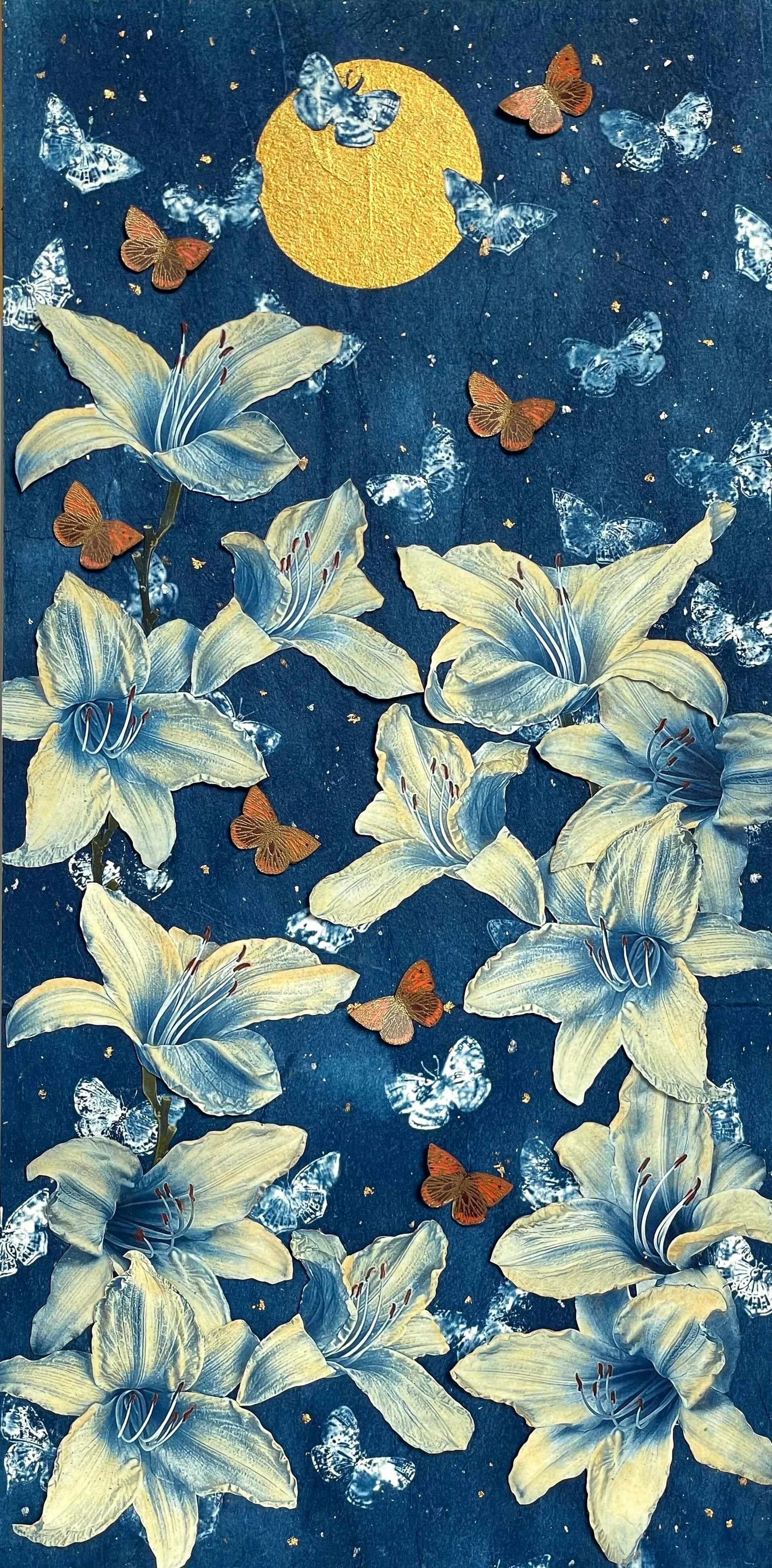
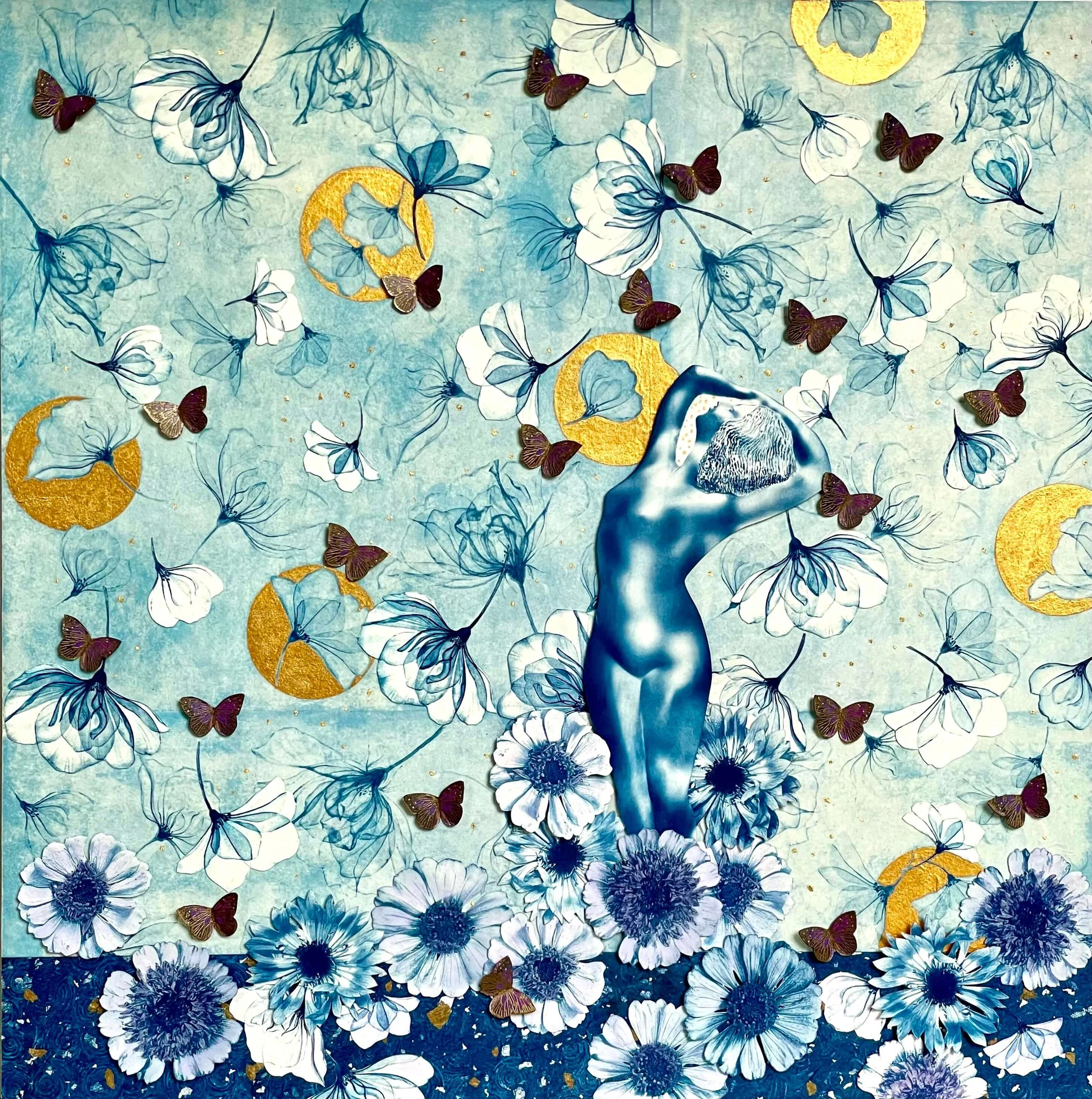
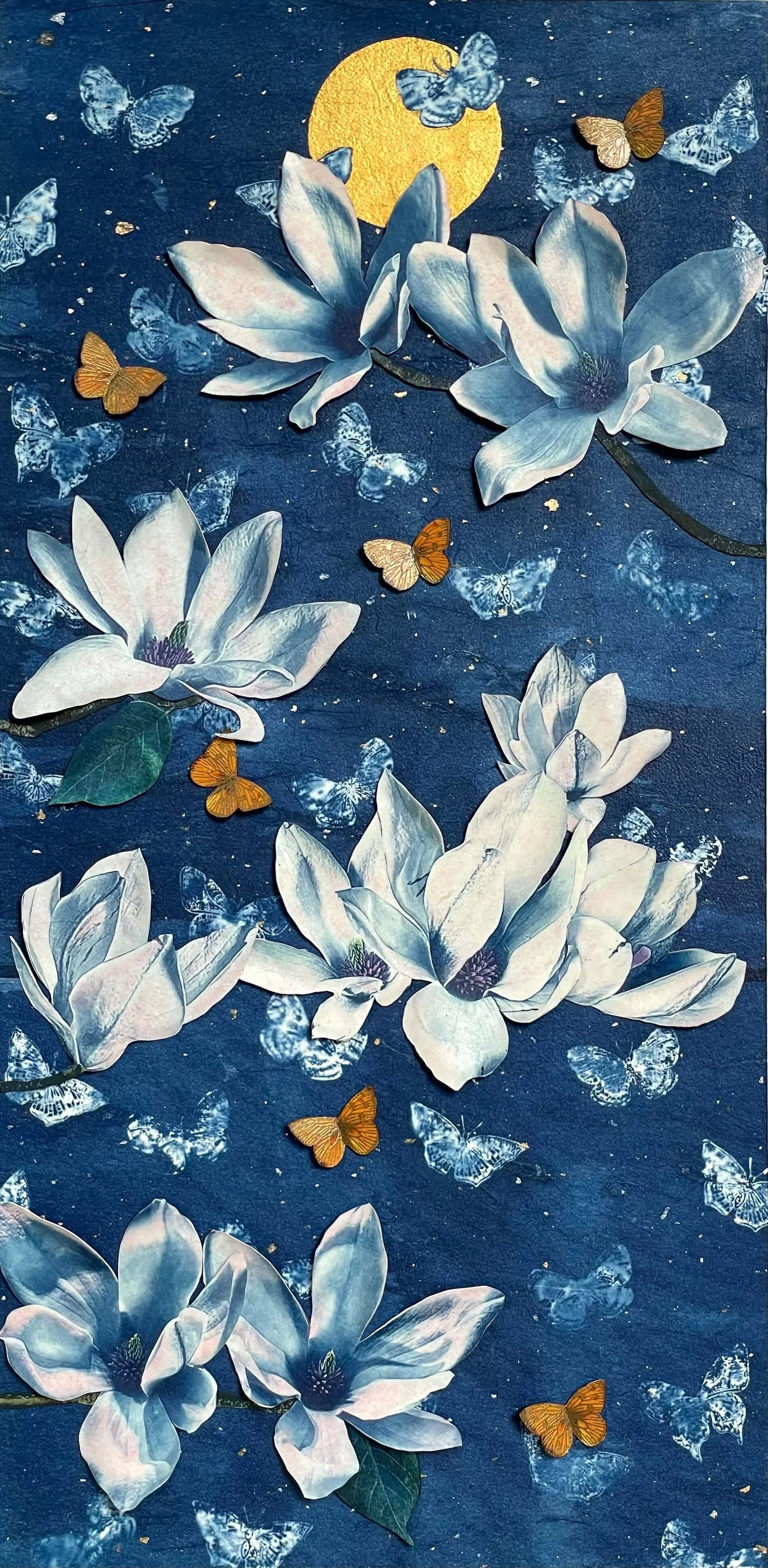
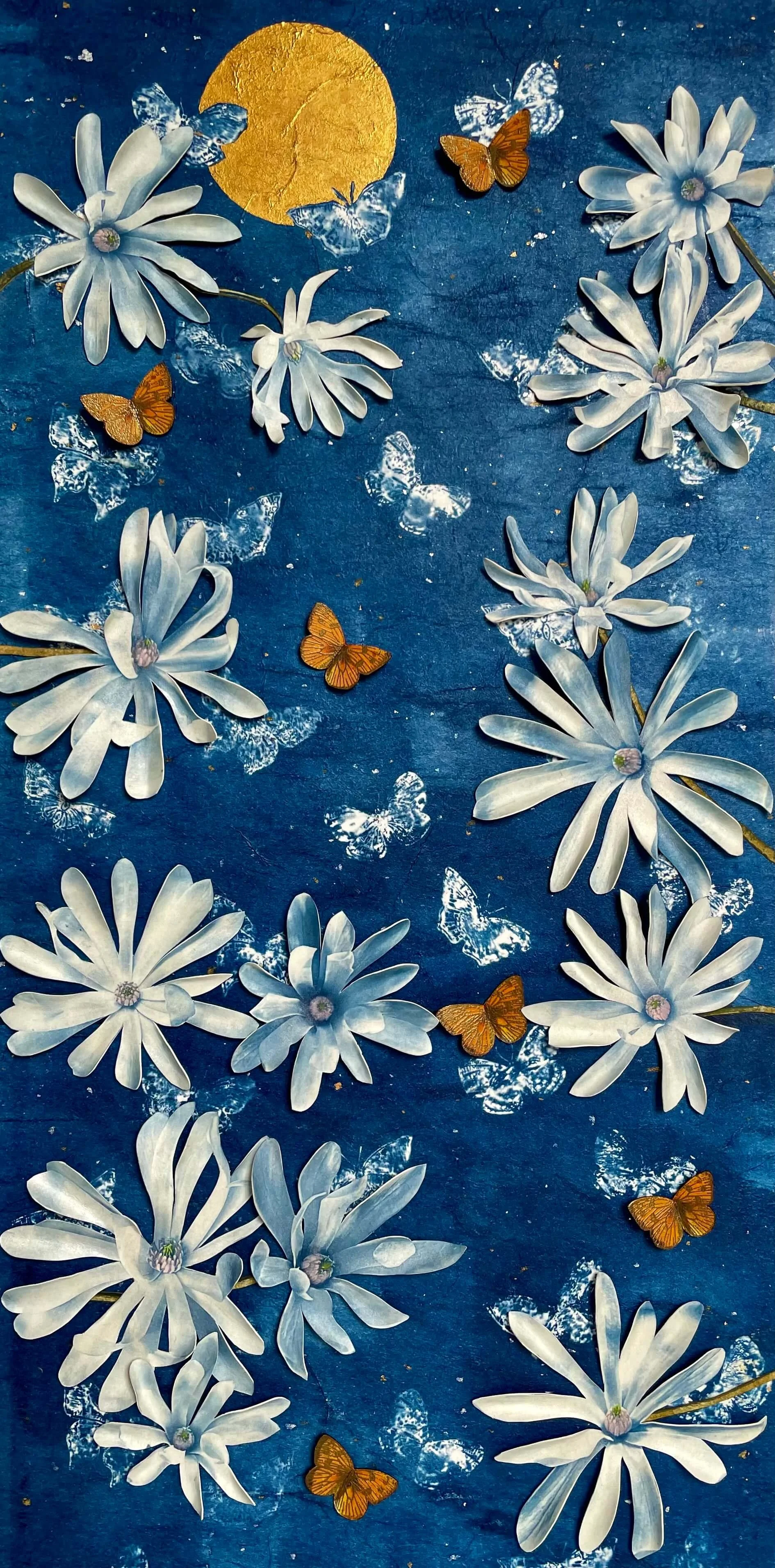
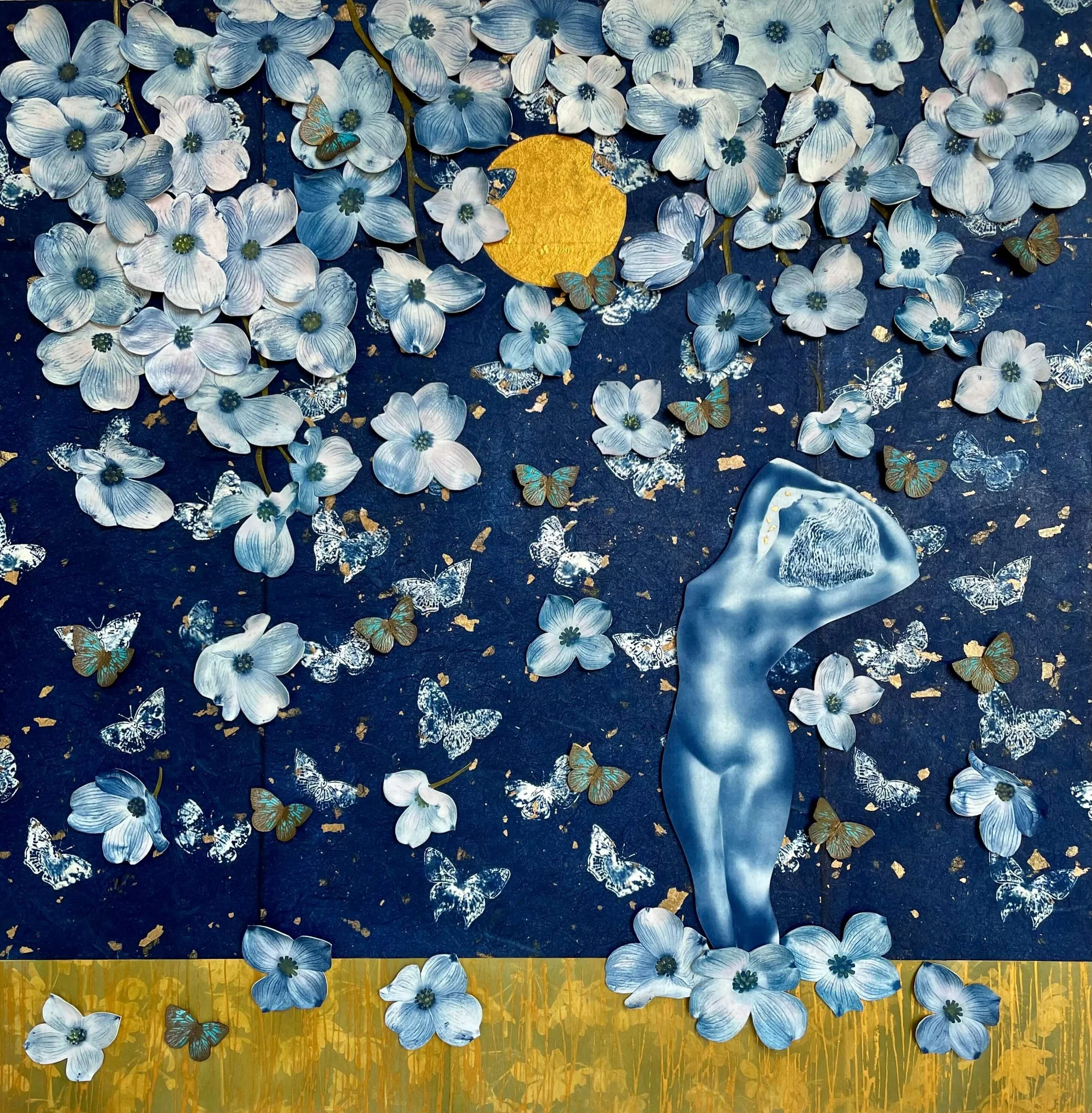
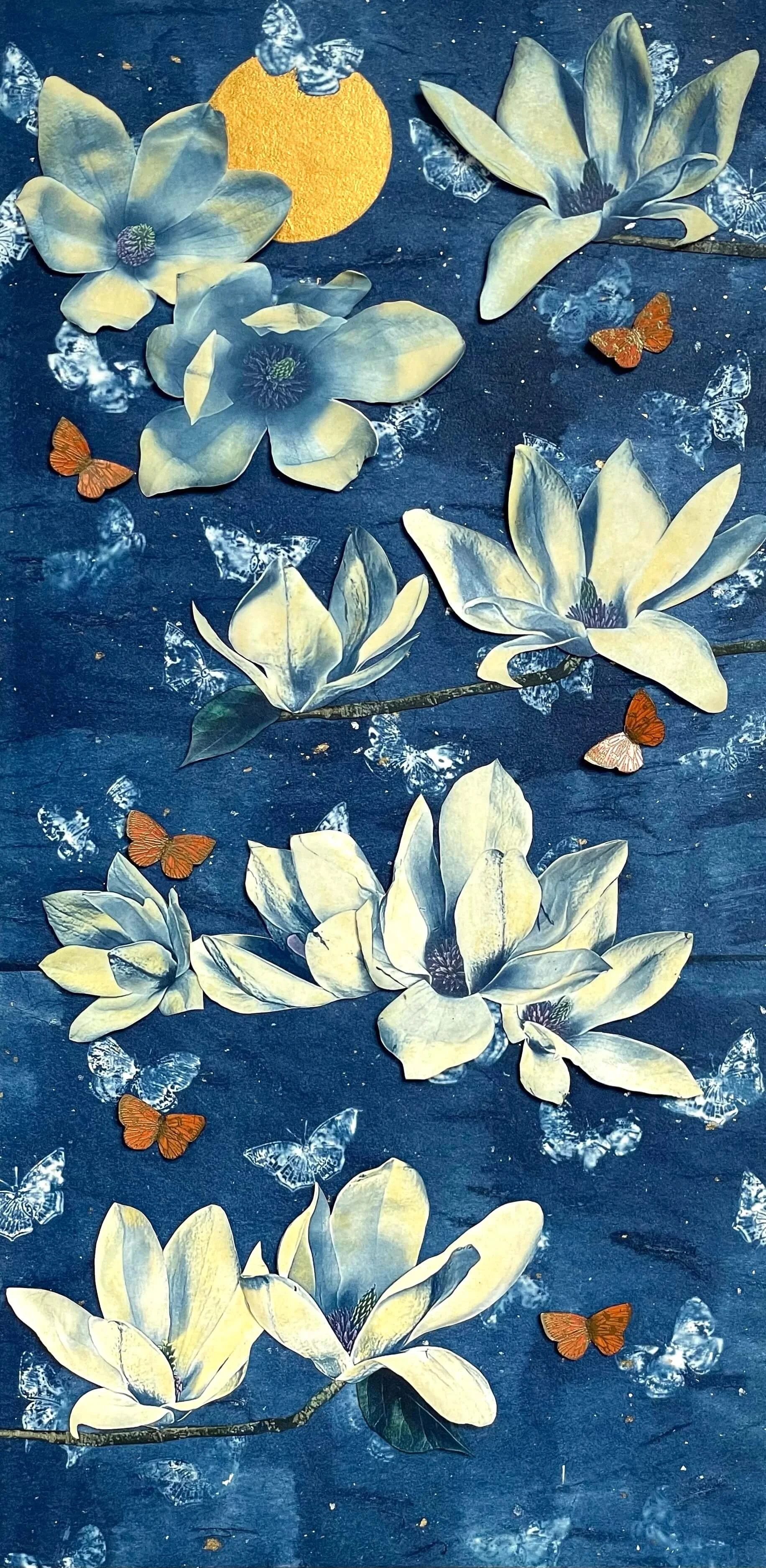
Claudia Hollister’s work (featured in both Create! Magazine and the Create! Magazine 10th Anniversary Book) utilizes a historical process that combines alchemy, nature, timing, and technology, using innovative methods to invite viewers to experience the mesmerizing blues of cyanotypes. The 2020 pandemic shifted her artistic focus; she started to photograph flowers from her garden for cyanotype prints. This evolving practice captures the fragile cycles of flora, resulting in vintage modern artworks distinguished by stunning shades of blue.
She has exhibited her cyanotypes throughout the United States, with solo shows at Waterstone Gallery, Jen Tough Gallery, and Riversea Gallery. Notable shows include Hoffman Center for the Arts, Vashon Center for the Arts, Seattle Art Fair, Santa Fe Art Fair, Superfine Art Fair Seattle, ArtExpo New York, RedDot Miami, Sitka Invitational, LightBox Gallery, BlueSky Photography Gallery, among others.
Hollister has been featured in Printing With The Sun by Madge Evers, The Hand Magazine, Rfotofolio, Create Magazine, Smoore Art, Variable West, and The Jealous Curator.
Based in her Portland, Oregon studio, she holds a BFA from the University of Oregon. Hollister taught encaustic painting at the Pacific Northwest College of Art. A versatile artist, she is a sculptor, encaustic painter, porcelain artist, and jewelry designer, having worked with Reed & Barton, Orrefors Crystal, The Metropolitan Museum of Art, and Godiva Chocolates. Her work has been showcased at the Smithsonian Museum of American Art.
Hollister is currently exploring layering silk cyanotypes with her prints.
Artist Statement
From a young age, I was impacted by my parents' support of my creative pursuits. Their encouragement allowed me to pursue my dreams and talents as a practicing artist.
Having worked in several different mediums, each one has deeply influenced my visual vocabulary and creative expression. In the last ten years, my luminescent encaustic paintings have focused on the vessel as a voluptuous form. While painting in encaustic, I started creating wallpaper backgrounds utilizing color, texture, and imagery, thus developing a dialect to frame or situate the dimensional vessel.
For all of us, life has changed since the isolation of COVID-19, and the course of my art practice has changed too. During the lockdown, I turned to the flowers in my garden and captured their beauty through photography. This exploration brought the calm and joy I feel when working and cultivating plants, resulting in intimate images of lush floral prints.
My process involves alchemy, nature, artistic license, technology, and timing. The current cyanotype prints bring a new perspective as I expand my vision into creating a range of depth of color and compositions using my garden flowers. This is the fourth year documenting the cycle of seasonal blooms in a uniquely beautiful and sometimes mysterious format.
This year, I have created two new series, "Visual Poetry," consisting of cyanotype collages that showcase my garden flowers and vessels in my home. The original floral narratives appear both modern and vintage.
The "Muses, Mermaids, and Nymphs" are sweet, small framed cyanotype collages. The shades of blue and soft white are contrasting variations of light and dark. Each individual print is a piece of art kissed by the sun.
www.claudiahollister.com

What is your first memory of creating?
As a child, I had a huge imagination. I spent most of my summers outside and remember loving making houses out of moss, rocks, and sticks placed along pathways in the flower beds, so my pretend little people could live among trees of flowers. I wanted them to have a beautiful home.
What is your relationship to your medium? What draws you to it?
First, I need to share how I got involved with cyanotypes and how it has become my passion. Previously, I worked exclusively in dimension, lost wax casting, and then porcelain as an art form that frequently featured vessels as decorative or voluptuous forms. Learning the basic process of creating cyanotypes was a generous gift in 2014 during a long weekend workshop in my studio taught by my friend Timothy McDowell, an art professor at Connecticut College. I always loved photography but never wanted to work with the chemicals. The concept of printing images in the sun seemed like a dream come true.
I explored different possibilities for a couple of years, trying to figure out how to utilize the process in my work, and then it hit me: I could use it to print backgrounds for my encaustic paintings. These backgrounds are the foundation that develops a dialect of pattern framing the final composition. A few years later, when the COVID-19 lockdown happened, everything changed. I turned my focus to my garden, started photographing flowers using my iPhone, creating negative transparency film, and explored creating cyanotype prints as standalone pieces of art. I committed to a daily practice for 100 days, creating and posting the prints on Instagram, which saved me during that chaotic time.
Although most of what I posted was not great, I learned a lot about what not to do and gave myself permission to pursue cyanotype prints as a full-time practice. Now in my fifth year of documenting my garden, I am constantly looking to develop new works utilizing techniques I know while experimenting with new compositions that transform flowers and everyday objects into delicately detailed cyanotype prints and collages. I aim to bring visual dimension to what is essentially a blue image captured on paper.
The cyanotype process can be very unpredictable. There are times you achieve a result that you cannot replicate. For example, in "Loop de Loop," the background cyanotype was printed by painting the sensitized UV solution directly onto a linocut, then pressing it onto iridescent silver paper, repeating the process to cover the paper. The solution pooled once exposed to the sun, resulting in a mess. I placed it in an ammonia bath, which transformed it until it was almost silver on silver. I think it is stunning now, but I've tried recreating the process several times without success.
The challenges that come with this practice keep me wanting to explore different concepts and ideas, striving to create beautiful work that makes me happy. I love this cyanotype world.
What is the main thing you hope your audience takes away from your art?
As my work has evolved over the past four years, the main takeaway I hope people will feel is the sense of beauty, peace, and calm I experience when completing a piece. I want to provide something we can use when the world seems out of our control. I also aim to educate the public that cyanotypes are an art form and not just a kit that you did as a child.
Many of my followers on Instagram are serious photographers. For me, this affirmation that I am creating something of value and have earned their respect is deeply gratifying.
Tell us about a challenge you overcame last year.
Last year, I decided to participate in an art fair—my first since the 1990s. I felt both excited and vulnerable introducing myself and my work to Seattle. I chose an 8’ booth, which required me to intentionally edit my work and narrative while presenting cyanotypes to the public. Within the space, I managed to fit all new work: framed cyanotype prints, framed cyanotype collages, small framed cyanotype collages, and two encaustic paintings with cyanotype backgrounds. I also had bins with unframed pieces and sets of cards. The consistent theme and colors worked well together, leaving enough space for each piece to shine. The booth was extremely well received; 80% of fair visitors stopped, engaged in conversation, and commented on the beauty of my work. I almost made my booth fee back, but the exposure and confidence I gained were transformative. Instead of printing business cards, I handed out oversized postcards with different images of my larger collages, which turned out to be an excellent decision; people were excited about them!
Unfortunately, I just found out the promoter decided not to return to Seattle due to a lack of fairgoers, which was actually due to a massive event happening at the same time. While the venue was wonderful, the longest day—Saturday—was dead because parking was closed for an annual parade held in the same location for years. Seattle has a long history of supporting the arts, and I hope to find a way to show there again in the near future.
My takeaway? Ensure the venue is in a safe, accessible location at the time of the fair!
What is your main goal or resolution this year in terms of your art practice?
My main focus is on my solo show in Santa Fe, New Mexico, this coming August, featuring my garden and the language of flowers through my cyanotype work. I will be introducing additional color into selective cyanotype collages using different methods and media. There is still much to explore, but I believe I am on the right path. I will also have at least four larger works: two 24" x 24" and two 16" x 30" horizontal pieces. Currently, my larger cyanotype collages are 16" x 12" unframed.
Ultimately, my goal is to create a body of work that is fresh, with added subtle colors and textures, while remaining authentic and intentional to my style of modern vintage, staying true to the cyanotype process. I aim to give viewers an understanding of how cyanotypes are made, instilling a sense of wonderment, calm, and beauty for them to enjoy as much as I do.