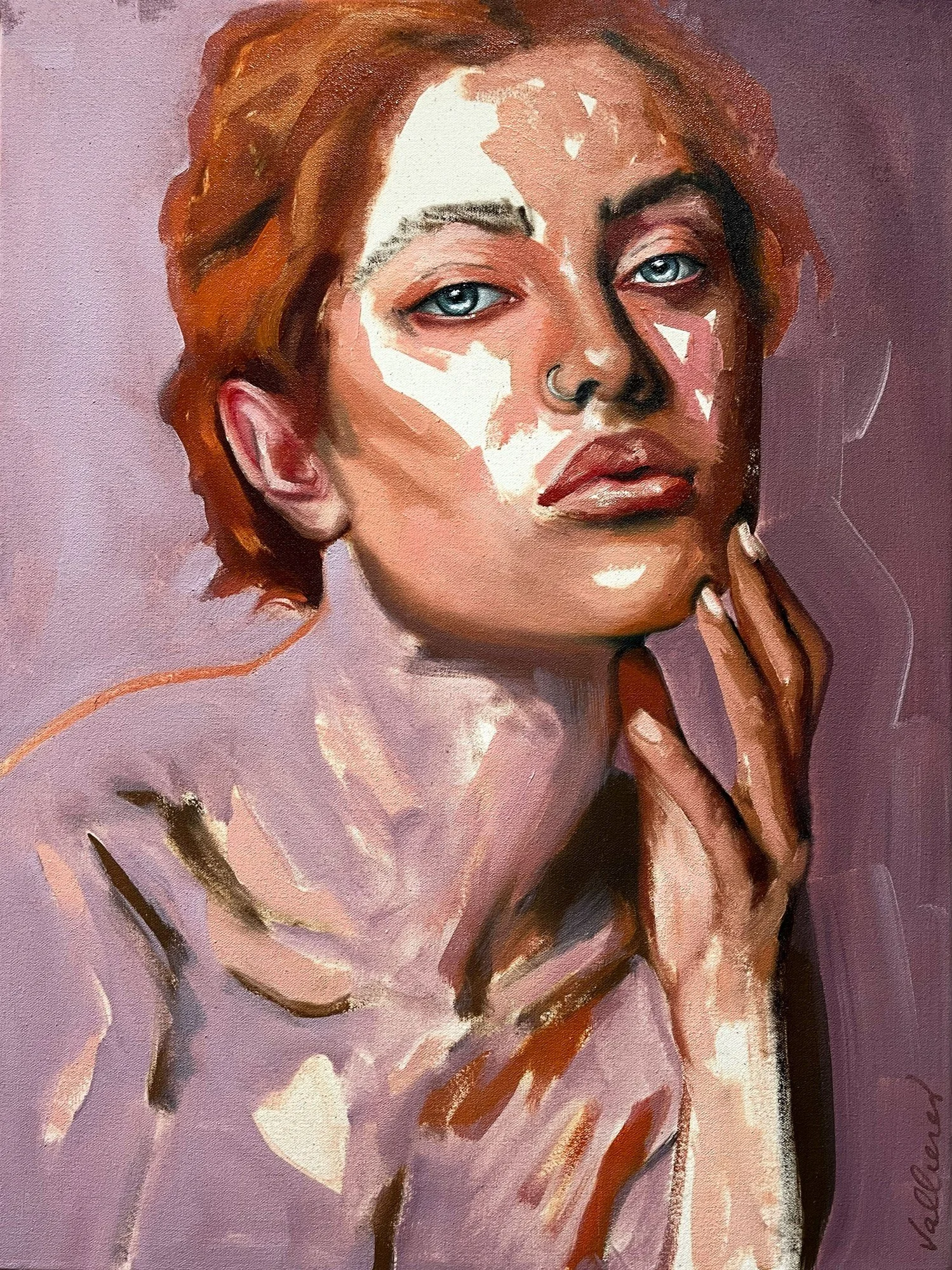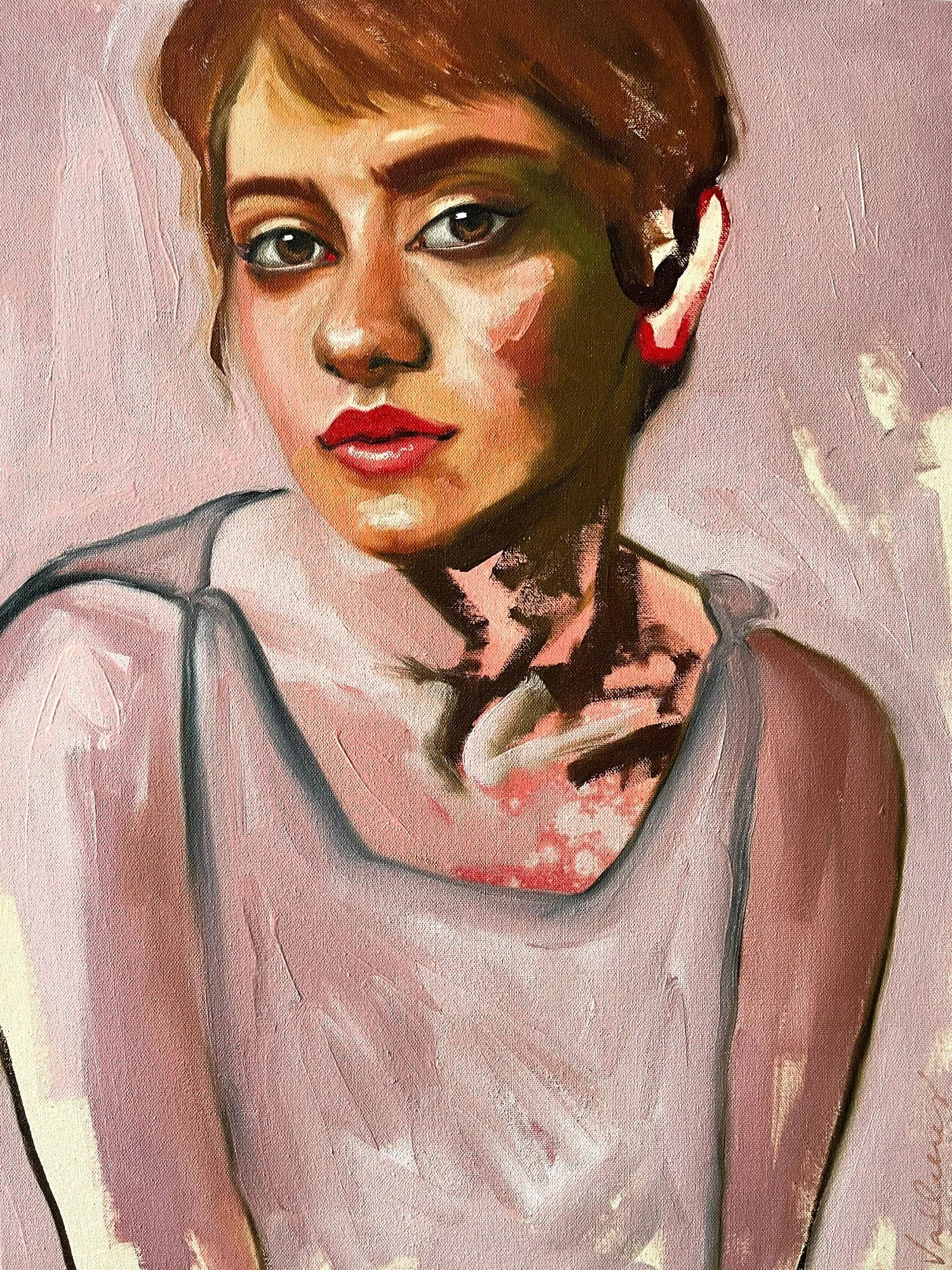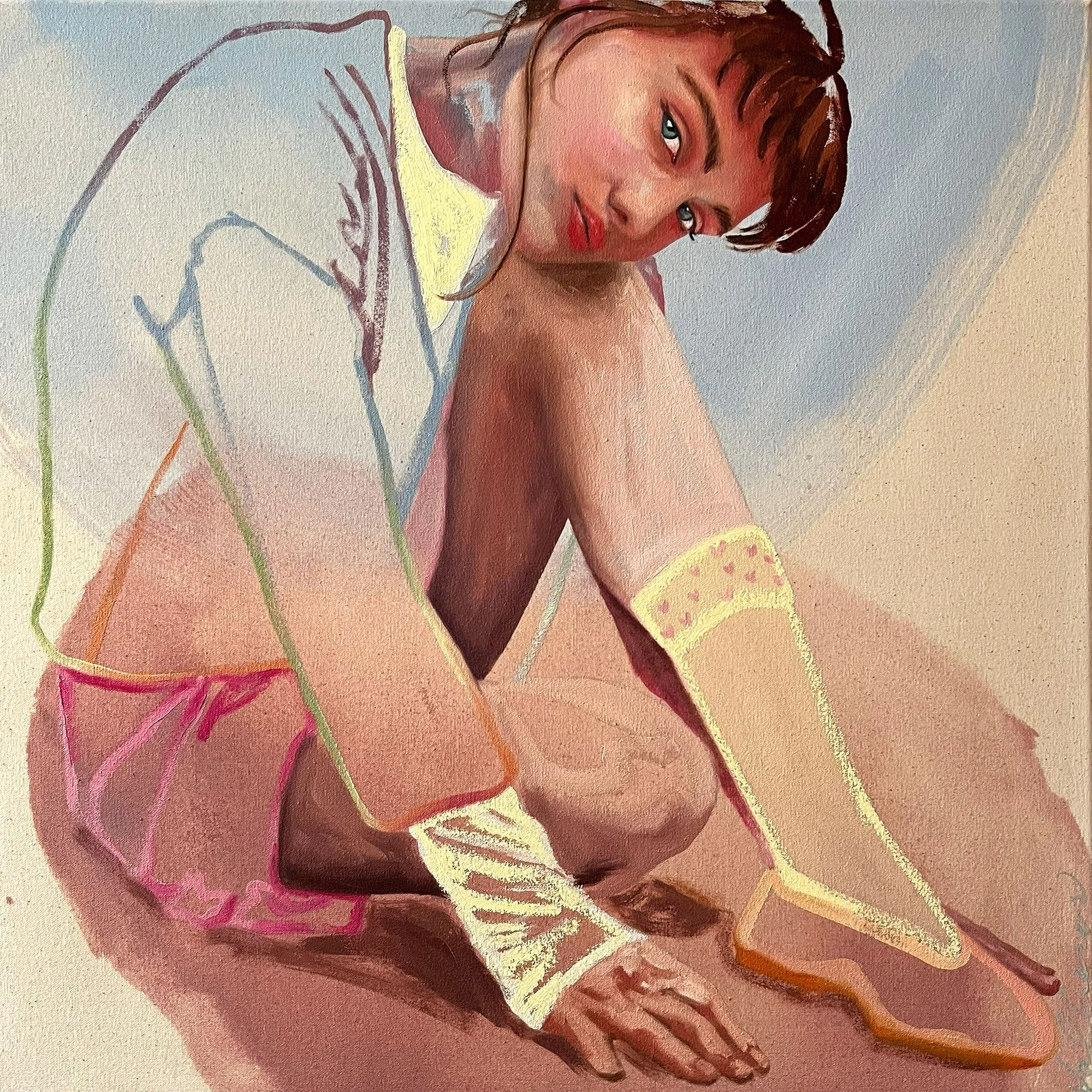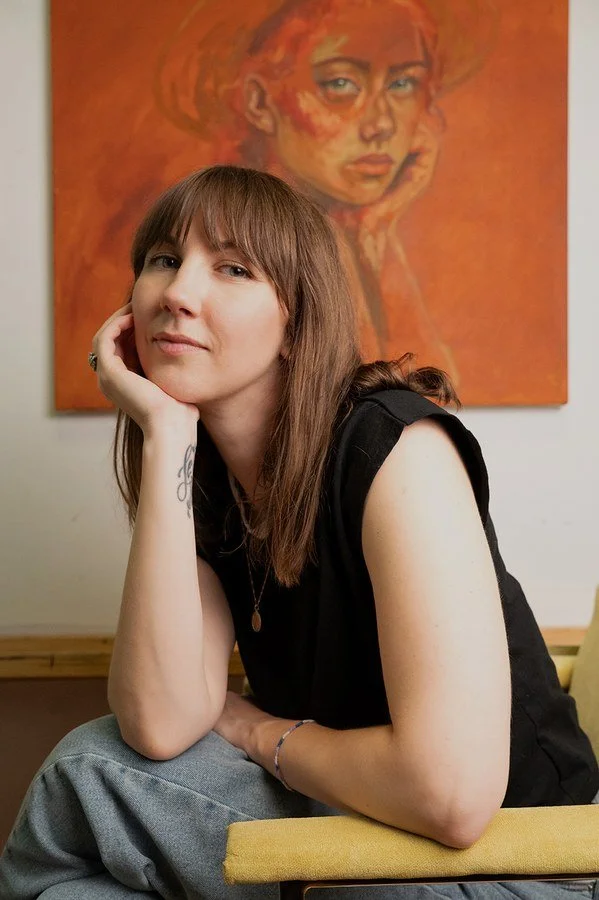
Amélie Vallières is a Canadian contemporary portrait artist whose oil paintings explore identity, memory, resilience, and the complex emotional landscapes of womanhood. With a background in visual arts and art history from Université de Montréal, Vallières combines classical portrait traditions with a deeply personal, contemporary approach. Her practice centers on the female gaze, using expressive faces, layered symbolism, and unexpected details to examine themes of transformation, vulnerability, and self-discovery. Over the past years, her work has been exhibited in Canada and internationally, including presentations at art fairs and galleries. Through her portraits, Vallières invites viewers into intimate moments of reflection, creating spaces where women can recognize their own contradictions, histories, and becoming.
Artist Statement
Amélie Vallières’ work investigates the fragile space between who we are, who we were expected to be, and who we are becoming. Through contemporary oil portraiture, she explores the emotional complexities of womanhood: sensitivity, nostalgia, identity, and the quiet transformations that shape a life. Her portraits often begin with familiar feminine archetypes, then disrupt them through expressive gestures, unexpected details, and moments of vulnerability. Rather than idealizing her subjects, Vallières embraces imperfection, creating figures that feel both intimate and unsettling—caught between memory and reinvention. Her recent body of work reflects on the process of “unbecoming”: releasing inherited expectations and reconnecting with forgotten parts of oneself. Through layered surfaces and emotionally charged gazes, her paintings invite viewers to consider their own histories, contradictions, and ongoing evolution.
Mini Interview
What is the central theme or concept behind your current body of work?
Unbecoming is about letting go of the expectations placed on us to become good girls. I’m exploring what happens when I dismantle the inherited rules governing womanhood and stop performing the version of femininity I’ve been taught to embody. At its core, this collection is a “fuck around and find out” kind of exploration.
How do you hope your work resonates with or impacts your viewers?
I hope women feel seen, as though they’re looking into a mirror. Through the imperfections and unfinishedness of my work, I hope they recognize something of themselves: not an idealized version, but a real, complicated, gloriously imperfect human being.
Can you share a pivotal moment that has shaped your artistic journey?
The loss of my artist friend Patrick Skals in March 2026 shook the foundations of my practice. His openness about his mental health struggles was central to his art, and losing him made me question everything I wanted my own work to be. My Old Master influences and glazing techniques are still there, but now they serve a more fundamental question: how can I be completely transparent through my paintings?
What advice would you offer to emerging artists navigating today’s art world?
Make terrible art. Experiment, follow your curiosity, and let yourself fail spectacularly. It’s only by testing your own hand and eye, without constantly trying to get it right, that you’ll discover what’s been hiding inside you all along.
Are there any upcoming projects or exhibitions you would like to share with our readers?
I’m currently working on Unbecoming, my biggest collection to date. I’ve just released a series of smaller works and studies, and I’m now moving on to the largest paintings I’ve ever created. I’m going bigger, bolder, and weirder, using the freedom of painting to question what a woman is allowed to look like, how she’s allowed to behave, and who gets to decide.